
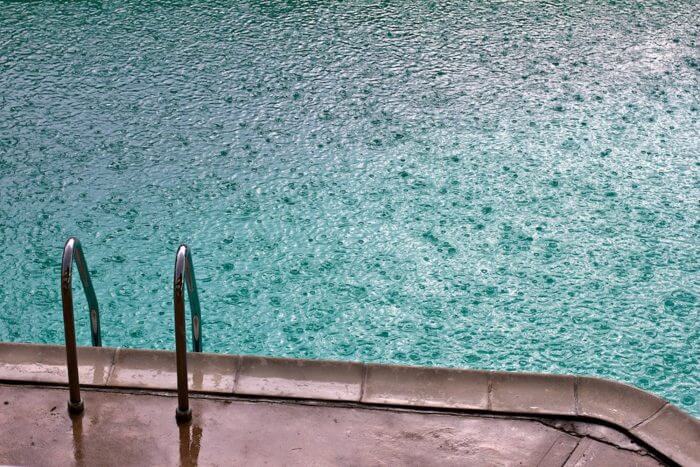
After a heavy rain hits your pool, you need to test the water chemistry, remove debris, lower the water level, and shock the pool to restore safe swimming conditions. Rainwater is naturally acidic, with a typical pH around 5.0 to 5.6 according to the U.S. Environmental Protection Agency, and it can quickly throw off your pool’s pH, alkalinity, and chlorine levels. Pool owners in Jefferson, Georgia and across North Georgia know this struggle well. The region averages 50 to 55 inches of rain per year according to the National Weather Service, with thunderstorms common during the spring and summer months. This article covers every step you need to take after a heavy rain, from cleaning and chemical balancing to preventing algae and protecting your pool equipment.
What Should I Do to My Pool After a Heavy Rain?
What you should do to your pool after a heavy rain is remove debris, lower the water level, test and rebalance the chemistry, and shock the pool. These steps protect your water quality and your pool equipment from long-term damage.
Start by skimming leaves, twigs, bugs, and dirt off the surface. According to the Pool & Hot Tub Alliance, organic debris left in pool water increases chlorine demand and accelerates algae growth. Empty your skimmer baskets and pump baskets next. Storm runoff in areas like Jefferson, GA often carries soil, mulch, and fertilizer residue straight into pools, which introduces phosphates and nitrates that feed algae.
After removing debris, brush the pool walls, steps, and floor. Even if surfaces look clean, invisible contaminants cling to them after a storm. Then vacuum the pool thoroughly. If you have an automatic cleaner, let it run while you handle the chemical side of things.
Homeowners across North Georgia who schedule regular pool cleaning services often recover from storms faster because their water chemistry is already well-balanced before the rain hits.
Should a Pool Be Shocked After Rain?
Yes, a pool should be shocked after rain, especially after a heavy downpour. Shocking raises the free available chlorine level high enough to destroy bacteria, algae spores, and organic contaminants that the rain introduced.
The Centers for Disease Control and Prevention recommends maintaining a minimum free chlorine level of 1 part per million in residential pools. After a heavy rain, chlorine levels often drop well below that threshold because the rainwater dilutes the existing chlorine. The CDC also recommends keeping pool pH between 7.2 and 7.8 for safe and effective sanitation.
When you shock, aim to raise the free available chlorine to about 10 ppm. This is called breakpoint chlorination, and it oxidizes all the organic matter that washed in during the storm. Shock in the evening so the sun does not burn off the chlorine before it has time to work. Run the pump and filter for at least 12 to 24 hours after shocking to circulate the treatment throughout the entire pool.
Pool owners near Braselton, Hoschton, and surrounding areas in Georgia often deal with back-to-back spring storms. Keeping shock treatment on hand is a smart move during storm season.
Will Rain Ruin Pool Water?
Rain will not permanently ruin pool water, but it will disrupt the chemical balance and introduce contaminants that can cause problems if left untreated. The severity depends on how much rain falls and how long you wait to address it.
According to the National Oceanic and Atmospheric Administration, normal rainwater has a pH of about 5.6, making it mildly acidic. Acid rain in parts of the eastern United States can drop as low as 4.0 on the pH scale. When this acidic water mixes with your pool, it lowers the pH and total alkalinity. Data from Lo-Chlor Specialty Chemicals shows that one inch of rain added to a typical 20,000-gallon pool increases the water volume by about 2%. That may sound small, but the contaminants that ride along with the rain, including algae spores, dust, and airborne debris, are what cause the real damage.
Low pH makes chlorine less effective. According to pool chemistry research, chlorine becomes over 90% inactive when pH rises above 8.4. The combination of diluted chlorine and lowered pH creates the perfect conditions for algae to bloom within hours.
What Happens if a Pool Gets Too Full From Rain?
If a pool gets too full from rain, the water level rises above the midpoint of the skimmer opening, which stops the skimmer from working properly. Debris floats on the surface instead of being pulled into the filtration system, and the pool cannot clean itself.
Overflow can also cause soil erosion around the pool deck. Water that spills over the edge can wash away dirt, mulch, and gravel that supports coping stones, pavers, and fencing. In Jefferson, Georgia, where clay-heavy soils are common, this erosion can happen quickly after a heavy downpour.
For inground pools, there is an added risk. According to pool structural engineers, hydrostatic pressure from saturated ground can push against an empty or low-water pool and cause the shell to crack or even pop out of the ground. That is why you should never fully drain your pool during or right after heavy rain. Instead, use the pump’s waste or backwash setting to lower the water a few inches at a time.
If a storm caused visible damage to your pool walls, floor, or equipment, a professional pool inspection can identify issues before they turn into expensive repairs.
Should You Turn Off the Pool Pump During Heavy Rain?
No, you should not turn off the pool pump during heavy rain unless there is a risk of lightning or electrical hazard. Keeping the pump running during rain helps circulate the water and allows the filter to catch debris as it enters the pool.
According to the National Weather Service, North Georgia experiences thunder on 50 to 60 days per year, mostly during spring and summer. If lightning is present, turn off all pool equipment and stay away from the water. Once the lightning passes, turn the pump back on immediately.
Running the pump during and after rain also prevents stagnant water from becoming a breeding ground for bacteria and algae. Some pool experts recommend running the circulation system for at least 10 hours after a heavy rainfall to make sure the water is fully filtered and treated.
What to Add to a Pool After Heavy Rain?
What to add to a pool after heavy rain depends on your water test results, but you will almost always need to add chlorine shock, pH increaser, and alkalinity increaser.
Here is a general guide based on common post-rain chemistry shifts:
pH: Rain typically drops pool pH below 7.2. Use sodium carbonate (soda ash) to raise it back to the ideal range of 7.4 to 7.6. According to the CDC, keeping pH between 7.0 and 7.8 is critical because it directly affects how well chlorine kills germs.
Total Alkalinity: Rainwater has a total alkalinity near zero. Data from In The Swim pool resources shows that heavy rains can reduce pool alkalinity by 5 to 10 ppm per day. Use sodium bicarbonate (baking soda) to raise alkalinity back to 80 to 120 ppm.
Chlorine: Shock the pool to raise free available chlorine to at least 10 ppm. Once levels drop back to 1 to 4 ppm, the pool is safe for swimming again.
Calcium Hardness: Rainwater has zero calcium hardness. If your levels fall below 180 ppm, add calcium chloride to prevent corrosive water conditions that can damage pool surfaces and equipment.
Families in Gainesville, Athens, and the greater Jefferson, Georgia area should always test water within a few hours of the rain stopping. The faster you catch the imbalance, the easier it is to fix.
How Much Chlorine to Add After Rain?
How much chlorine to add after rain depends on how much your free chlorine level dropped and the size of your pool. As a general rule, you need about 1 pound of calcium hypochlorite shock per 10,000 gallons to raise the chlorine level by approximately 10 ppm.
For a standard 15,000-gallon residential pool, that means about 1.5 pounds of shock after a heavy storm. Always test the water first. If your free chlorine is still at 2 ppm, you may only need a half dose. If it has dropped to zero, use the full amount.
According to the CDC, chlorine kills most bacteria like E. coli in less than one minute when the concentration and pH are in the proper range. But it needs to be at the right level first. Waiting too long after a storm gives contaminants time to multiply.
If you are not sure how much to add or your pool keeps turning green after storms, professional pool cleaning takes the guesswork out of post-rain recovery.
Can a Lot of Rain Cause Algae in the Pool?
Yes, a lot of rain can cause algae in the pool. Rain does not directly contain algae, but it creates the perfect conditions for algae to bloom quickly.
According to In The Swim’s Pool Algae Guide, algae spores constantly enter the pool through wind and rain. When conditions are right, including low chlorine, warm temperatures, sunlight, and the presence of nitrates and phosphates, an algae bloom can happen in a matter of hours. Rainwater introduces phosphates and nitrates from surrounding soil, lawns, and fertilizer. At the same time, it dilutes chlorine and lowers pH, which weakens your pool’s defense system.
Research from pool chemistry experts shows that phosphate levels above 500 parts per billion create a feeding frenzy for algae. Above 2,000 ppb, the pool will struggle to hold any chlorine at all. Heavy rain events often spike phosphate levels dramatically because of all the organic material that washes into the water.
Pool owners in Jefferson, GA and nearby communities like Winder and Loganville should add a phosphate remover after every major storm to cut off algae’s food supply. Keeping phosphate levels as close to zero as possible is one of the best long-term algae prevention strategies.
How to Get Rid of Algae in Pool Quickly?
To get rid of algae in a pool quickly, you need to brush, shock, filter, and treat with algaecide in that order.
First, brush all pool surfaces aggressively. Algae roots embed into plaster and grout, so brushing breaks them loose and exposes them to chemicals. Second, shock the pool with a heavy dose of calcium hypochlorite, raising free chlorine to at least 10 ppm for green algae or up to 30 ppm for black algae. Third, run the filter 24 hours a day until the water clears. Clean or backwash the filter every 8 to 12 hours during this process because it will load up with dead algae quickly.
Fourth, add a copper-based algaecide for a secondary layer of protection. According to Lo-Chlor Specialty Chemicals, copper-based algaecides persist in the water longer than chlorine alone because they are not broken down by sunlight.
If the algae has been a recurring problem, it may point to deeper issues like poor circulation, an undersized filter, or plumbing problems. A pool repair professional can evaluate your system and fix the root cause.
Should I Put Algaecide in My Pool After It Rains?
Yes, you should put algaecide in your pool after it rains as a preventive measure. Algaecide acts as a backup to chlorine and helps stop algae before it has a chance to bloom.
The best time to add algaecide is after you have already shocked the pool and the chlorine level has started to drop back toward normal. Adding algaecide while chlorine is very high can reduce the algaecide’s effectiveness. A maintenance dose of algaecide once a week during Georgia’s rainy spring and summer months gives your pool a strong defense against the phosphates and organic material that every storm brings.
According to pool chemistry data from Swimming Pool Steve, pools with consistent algaecide use are far less likely to turn green after rain because the algaecide provides a constant layer of protection that chlorine alone cannot always maintain, especially during heavy bather loads or back-to-back storms.
How Long Until a Pool Is Safe After Shock?
A pool is safe after shock once the free chlorine level drops back down to between 1 and 4 ppm. This typically takes 8 to 24 hours depending on the amount of shock used, water temperature, and sunlight exposure.
The CDC states that the recommended free chlorine range for residential pools is 1 to 3 ppm for safe swimming. After a heavy shock treatment where you raised chlorine to 10 ppm or higher, you must wait for it to come back into this range. Swimming in water with chlorine above 5 ppm can cause skin irritation, red eyes, and respiratory discomfort according to the American Chemistry Council.
Always test before swimming. Do not rely on a timer. Use a DPD test kit for the most accurate results. The CDC specifically recommends DPD kits over test strips for greater precision.
What Is the Quickest Way to Clear a Cloudy Pool?
The quickest way to clear a cloudy pool is to shock the water, run the filter continuously, and add a water clarifier. These three steps work together to remove the microscopic particles that cause cloudiness.
Cloudy water after rain is usually caused by suspended dirt, dead algae, and dissolved organic material. Shocking oxidizes the organics. The filter traps the particles. A clarifier helps by clumping tiny particles into larger ones that the filter can catch more easily.
Run the filter at least 24 hours straight after treating a cloudy pool. Clean or backwash the filter after 24 hours if the water is still not clear. For severe cloudiness, you may need to clean the filter two or three times during this process. According to pool maintenance data, most cloudy pools clear up within 24 to 48 hours with proper treatment and continuous filtration.
Pool owners in the Dacula, Buford, and Jefferson, Georgia area who deal with frequent cloudiness after storms may benefit from having a professional assess their filtration setup during a pool inspection.
Will Baking Soda Clear a Cloudy Pool After Shocking?
Baking soda will not directly clear a cloudy pool after shocking, but it helps by raising the total alkalinity and stabilizing the pH. Stable water chemistry allows chlorine to work more effectively, which in turn helps clear the water faster.
According to ASP (America’s Swimming Pool Company), a ratio of about 1.5 pounds of baking soda per 10,000 gallons of pool water is effective for raising pH after a heavy rain. Baking soda is sodium bicarbonate, which is the same active ingredient in many commercial alkalinity increasers.
If your pool is cloudy and has low alkalinity after rain, adding baking soda is a good first step. But it will not replace the need for shocking, filtering, and possibly adding a clarifier. Think of baking soda as part of the solution, not the whole fix.
Should You Add Acid to a Pool After Rain?
You should add acid to a pool after rain only if your pH is too high, which is less common after a rainstorm. Rain is acidic, so it usually lowers pH rather than raising it. Most pool owners need to add a pH increaser, not acid, after heavy rain.
However, if your pool had a very high pH before the storm, the rain may not have brought it down enough. Or if you overcorrected with too much soda ash, you may need muriatic acid to bring the pH back down. Always test first. The ideal pool pH is 7.4 to 7.6 according to the CDC.
Adding acid without testing is a common mistake that can make your water even more corrosive. Corrosive water damages pool plaster, metal ladders, light fixtures, and pump components over time.
What Are the Signs of Low Salt in a Pool?
The signs of low salt in a pool include the salt chlorine generator displaying a low-salt warning, reduced chlorine production, cloudy water, and algae growth. Saltwater pools in the Jefferson, Georgia area are especially vulnerable after heavy rain because the rainwater dilutes the salt concentration.
According to Coastal Luxury Outdoors, the saltwater chlorinator relies on a specific salt level, typically between 2,700 and 3,400 ppm, to produce enough chlorine. When heavy rain dilutes the salt below this range, the system cannot generate enough chlorine to sanitize the water. This leads to the same problems as a traditional chlorine pool with low sanitizer, including bacteria growth and algae blooms.
After a heavy rain, test the salt level and add pool-grade salt as needed to bring it back into range. This is one extra step that saltwater pool owners must not skip.
Do I Add Salt or Shock First?
You should add shock first, then add salt after the chlorine level comes back down. Shocking the pool is the priority because it immediately addresses the bacteria and algae risk created by the storm.
Once you have shocked and the free chlorine is back to normal operating levels, test the salt and add more if needed. Adding salt and shock at the same time is not harmful, but shocking is the urgent step. Salt adjustment can wait a few hours.
Can a Pool Collapse With Too Much Water?
An above-ground pool can be at risk of structural stress or collapse with too much water. The added weight of excess water from heavy rain puts pressure on the walls and frame. Inground pools do not typically collapse from too much water, but overflow can cause erosion, deck damage, and flooding around the pool area.
According to pool structural data, inground pools face a different risk. If the pool is drained while the surrounding ground is still saturated, hydrostatic pressure from the groundwater can push the shell upward. This is called pool popping and can cause cracks and permanent structural damage. That is why pool professionals always advise against draining your pool during or immediately after a heavy storm.
If you notice any shifting, cracking, or unusual movement in your pool structure after a storm, contact a pool repair specialist right away.
Pool Water Chemistry: Before Rain vs. After Rain
| Chemical Level | Ideal Range | Typical Level After Heavy Rain | How to Fix |
|---|---|---|---|
| pH | 7.4 to 7.6 | Below 7.0 | Add soda ash (sodium carbonate) |
| Total Alkalinity | 80 to 120 ppm | Drops 5 to 10 ppm per day of rain | Add baking soda (sodium bicarbonate) |
| Free Chlorine | 1 to 4 ppm | Near 0 ppm | Shock with calcium hypochlorite |
| Calcium Hardness | 180 to 220 ppm | Decreases from dilution | Add calcium chloride |
| Phosphates | Below 100 ppb | Spikes significantly | Add phosphate remover |
| Cyanuric Acid (Stabilizer) | 30 to 50 ppm | Decreases from dilution | Add cyanuric acid stabilizer |
Sources: CDC Healthy Swimming Guidelines, In The Swim Pool Resources, ASP (America’s Swimming Pool Company), Lo-Chlor Specialty Chemicals.
Is September Too Early to Close the Pool?
September is not too early to close the pool in most parts of North Georgia, but it depends on your local climate and how much you use the pool. Many families in Jefferson, Braselton, and Athens, GA keep their pools open through September because daytime temperatures still reach the 80s and low 90s.
According to the National Weather Service, September and October are the driest months in North Georgia. This actually makes late September or early October a good time to close because you will deal with less rain-related water chemistry problems. However, if you are done swimming for the year and want to save on chemicals and maintenance, closing in mid-September is perfectly fine.
When you are ready, professional pool closing services handle winterization properly so your pool stays protected through the colder months.
What Month Should You Winterize Your Pool?
You should winterize your pool when the water temperature consistently drops below 65 degrees Fahrenheit. In Jefferson, Georgia and the surrounding North Georgia area, this usually happens in October or early November depending on the year.
Closing too early while the water is still warm invites algae growth under the cover. Closing too late risks freeze damage to plumbing and equipment. The sweet spot for most North Georgia pool owners is mid-October to early November.
A seasonal opening service in the spring reverses the winterization process and gets your pool ready for the warm months ahead.
How to Get Crystal Clear Pool Water?
To get crystal clear pool water, you need to maintain proper chemical balance, run the filter long enough every day, brush and vacuum regularly, and keep phosphate levels low.
According to the CDC, a pH between 7.2 and 7.8 combined with a free chlorine level of at least 1 ppm is the foundation of clean, clear pool water. Most pool filters should run a minimum of 8 to 12 hours per day. In summer heat, especially in Georgia, running the filter 12 or more hours gives the best results.
Adding a water clarifier once a week helps the filter catch microscopic particles that cause haziness. Keeping calcium hardness between 180 and 220 ppm prevents cloudy scale buildup. And testing at least twice a week during peak swim season catches problems before they turn your water green or cloudy.
Homeowners in Hoschton, Lawrenceville, and across the Jefferson, GA area who want consistently clear water year-round often rely on professional pool cleaning services to stay on top of weekly maintenance.
At What Temperature Do Algae Stop Growing?
Algae stop actively growing when water temperatures drop below about 50 degrees Fahrenheit. Growth slows significantly below 60 degrees. Above 60 degrees, algae grow faster, and they thrive in water temperatures between 75 and 85 degrees Fahrenheit.
According to pool algae research published by In The Swim, algae are living organisms that use photosynthesis to grow, meaning they need light and warmth. Georgia’s warm summers, with water temperatures often reaching the mid-80s, create ideal conditions for rapid algae growth, especially after rain introduces nutrients into the pool.
This is why pool maintenance is more demanding during the summer months. Even in early fall, when air temperatures cool down, the water can stay warm enough to support algae for weeks.
Frequently Asked Questions
How Long After a Heavy Rain Should I Wait to Treat My Pool in Jefferson, GA?
You should not wait at all. Treat your pool as soon as the rain stops and it is safe to go outside. The longer you wait, the more time contaminants have to deplete chlorine and feed algae growth. Pool owners in Jefferson, Georgia and surrounding areas deal with spring and summer storms regularly. Getting into the habit of immediate post-rain treatment saves time and money in the long run.
Can I Swim in My Pool Right After It Rains?
You should not swim in your pool right after it rains until you test the water chemistry. Rainwater lowers pH, dilutes chlorine, and introduces bacteria. According to the CDC, a free chlorine level of at least 1 ppm and a pH between 7.2 and 7.8 are necessary for safe swimming. Test first, treat if needed, and swim once the numbers are right.
Why Does My Pool Turn Green After Every Storm in North Georgia?
Your pool turns green after every storm because rain introduces phosphates, lowers chlorine, and creates ideal conditions for algae growth. North Georgia receives rain on about 120 days per year according to the National Weather Service, which means pools here face constant chemical disruption during storm season. Checking and correcting water chemistry before and after every storm prevents recurring green water. If the problem keeps happening, your filtration system or chlorine delivery method may need professional evaluation.
Should I Cover My Pool Before a Storm in Georgia?
Covering your pool before a storm in Georgia helps keep out debris like leaves, dirt, and mulch. It also reduces the amount of rainwater that enters the pool. However, a pool cover will not completely prevent chemistry changes. You should still test and treat the water after any heavy rainfall, even if the cover was on.
How Often Should I Test Pool Water During Georgia’s Rainy Season?
You should test pool water at least twice a week during Georgia’s rainy season, and after every heavy rain event. The National Weather Service reports that thunder occurs on 50 to 60 days per year in North Georgia, mostly during spring and summer. Each storm can shift your chemical balance. Frequent testing is the fastest way to catch and correct problems.
Does My Pool Need a Professional Cleaning After a Major Storm?
A professional cleaning after a major storm is a good idea if your pool has significant debris, green water, equipment issues, or flooding. If the storm caused visible damage to your pool deck, equipment pad, or plumbing, a professional inspection is especially important. Families across Jefferson, Braselton, and Athens, Georgia trust local pool professionals to handle storm recovery quickly and correctly.
What Is the Best Way to Prevent Pool Damage From Heavy Rain in Jefferson, Georgia?
The best way to prevent pool damage from heavy rain in Jefferson, Georgia is to maintain proper water chemistry at all times, keep the pump running during storms (unless lightning is present), and address drainage issues before storm season. Pools with good drainage, balanced chemistry, and regular maintenance bounce back from heavy rain much faster than neglected pools.
Final Thoughts
Heavy rain does not have to ruin your pool. With quick action, the right chemicals, and regular testing, you can get your pool back to crystal clear condition within 24 to 48 hours after any storm. The key is to never wait. Remove debris fast, test the chemistry, shock the water, and run the filter until everything is back to normal. Pool owners across Jefferson, Georgia and the surrounding North Georgia communities deal with 50-plus inches of rain each year, so knowing these steps is not optional. It is part of responsible pool ownership.
If you want expert help recovering your pool after a storm, or if you need ongoing maintenance to keep your pool ready for anything Mother Nature throws at it, Sandals Luxury Pools is here to help. From storm recovery to weekly cleaning and seasonal care, the team has been serving Jefferson and the greater North Georgia area for over a decade. Reach out for pool cleaning services today and take the stress out of post-rain pool care for good.
