
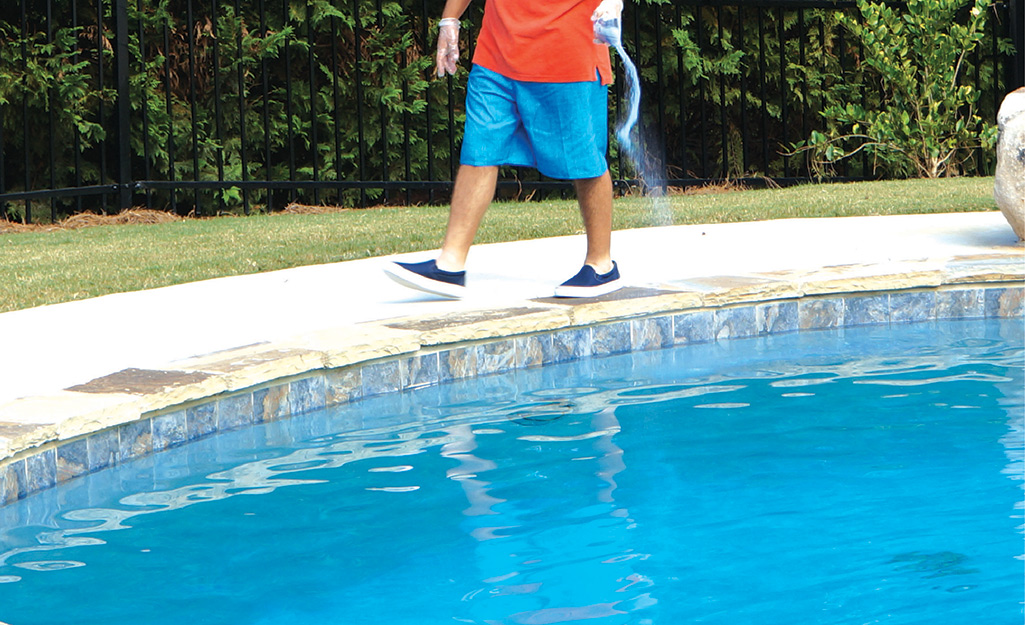
If you never shock your pool, your water will turn unsafe very quickly. Chlorine alone cannot keep up with the buildup of bacteria, algae, and harmful compounds called chloramines that form when swimmers sweat, sunscreen, and body oils mix with your pool water. Skipping shock treatment does not just make the water look bad. It creates a genuine health risk for everyone who swims. This article covers exactly what happens to your pool when you stop shocking it, the warning signs to watch for, how often you should shock, and why regular shocking is one of the most important things you can do to protect your pool and your family.
What Happens If You Don’t Shock Your Pool?
If you don’t shock your pool, your water becomes a growing breeding ground for bacteria, algae, and chloramines. Shocking raises your free chlorine level to a point high enough to destroy these contaminants all at once. When you skip it, your regular chlorine gets overwhelmed and stops working effectively.
According to the U.S. Centers for Disease Control and Prevention (CDC), free chlorine in a residential pool should stay at or above 1 part per million (ppm). The Association of Pool and Spa Professionals recommends keeping free chlorine between 2 and 4 ppm. When regular maintenance alone can’t hold that level, the water becomes unsafe. In hot, humid climates like Jefferson, Georgia, pools lose chlorine faster due to intense sun exposure and warm temperatures, making this an especially common problem for pool owners across Jackson County.
Pool owners across North Georgia who skip shocking often notice the problem within days. The water turns cloudy. Then it turns green. Then swimmers start complaining about red eyes and itchy skin. Those are not signs of too much chlorine. They are signs that chlorine has been used up and chloramines have taken over.
What Are the Symptoms of Pool Sickness?
The symptoms of pool sickness include red and stinging eyes, skin rashes, itching, respiratory irritation, coughing, and in more serious cases, nausea or stomach problems from accidentally swallowing contaminated water. These symptoms are caused by two main things: chloramines and harmful bacteria that grow when a pool is not properly treated.
A study published in the journal Occupational and Environmental Medicine tracked an outbreak at an indoor pool where chloramine levels reached 0.7 ppm, well above the acceptable maximum of 0.5 ppm. Of 128 people interviewed, 32 met the case definition for illness. The most common symptoms were coughing in 84% of cases, eye irritation in 78%, and skin rashes in 34%. Those who swam in the water were 72 times more likely to become ill than those who just stood near the pool. According to a 2023 CDC report, more than 200 pool-associated outbreaks were tracked across the United States between 2015 and 2019, affecting over 3,600 people.
Regular pool cleaning services combined with a consistent shock schedule are the best way to prevent these outcomes.
What Is Pool Flu?
Pool flu is not an official medical diagnosis, but the term refers to the cluster of symptoms swimmers get after exposure to poorly maintained pool water. Pool flu symptoms include fatigue, headache, nausea, sore throat, red or irritated eyes, and nasal congestion. These symptoms are caused by chloramines and, in some cases, bacteria like Pseudomonas or E. coli that thrive when sanitizer levels fall too low.
The CDC has documented multiple outbreaks of respiratory and eye illness linked to high chloramine levels at recreational pools. These events have resulted in emergency room visits and, in severe cases, hospitalization. A 2002 case study documented a child who developed serious respiratory distress after swimming in a hotel pool where chloramine levels far exceeded safe limits. The pool operator had not received proper training in pool maintenance, which included regular shock treatment.
What Are the Symptoms of Chlorine Sickness?
The symptoms of chlorine sickness, more accurately called chloramine exposure, include burning or red eyes, coughing, wheezing, skin irritation, and throat soreness. Despite the name, these symptoms are not caused by too much chlorine. They are caused by too little free chlorine and too many chloramines. According to the CDC, combined chlorine (chloramines) should be kept at 0.4 ppm or less. Most state and local health departments set the same limit.
Chloramines form when free chlorine reacts with nitrogen from sweat, urine, sunscreen, and body oils in the water. Once chlorine bonds to those contaminants, it stops sanitizing. The only way to break those bonds and restore free chlorine is to shock the pool. A strong chlorine smell at your pool is actually a red flag. A well-maintained pool has almost no odor at all.
Can You Get Sick from Swimming in a Pool Without Chlorine?
Yes, you can absolutely get sick from swimming in a pool without proper chlorine levels. A pool without adequate chlorine or without regular shock treatment can harbor dangerous bacteria, viruses, and parasites. Common illnesses from poorly treated pool water include swimmer’s ear, skin infections, eye infections, respiratory infections, and gastrointestinal illness.
The CDC’s Healthy Swimming program notes that chlorine does not work instantly and does not kill everything. Pathogens like Cryptosporidium can survive in chlorinated water for days. When free chlorine levels fall to zero because shocking has been skipped, even common bacteria like E. coli can thrive and cause illness. Pool owners in Braselton, Hoschton, and across the Jefferson area should test their water at least twice a week and shock regularly to keep these risks under control.
Can You Get Sick from Swimming in Dirty Pool Water?
Yes, swimming in dirty pool water can absolutely make you sick. Dirty pool water carries a range of pathogens including bacteria, viruses, algae-related contaminants, and parasites. Health effects range from mild skin rashes to serious gastrointestinal illness and respiratory distress.
When a pool is never shocked, the filtration system gets overwhelmed. Algae and organic debris accumulate in the filter, reducing its efficiency and allowing more contaminants to stay in the water. Bacteria like Pseudomonas aeruginosa, which causes hot tub rash and ear infections, multiply rapidly in under-treated water. Research published in the CDC’s Morbidity and Mortality Weekly Report documented E. coli O157:H7 outbreaks linked to improperly treated swimming pools. These were not public pools at water parks. They were private and semi-public pools just like the ones families use in communities across Georgia.
Knowing how a pool inspection works can help identify underlying chemistry and sanitation issues before they turn into illness.
Is Shocking a Pool Necessary?
Yes, shocking a pool is necessary. Regular chlorine tablets and liquid chlorine maintain baseline sanitizer levels, but they cannot break apart the chloramine compounds that build up over time from swimmer waste, sunscreen, debris, and rain. Shocking, also called superchlorination, raises free chlorine levels high enough to destroy those compounds and restore clean, safe water.
According to In The Swim, a major pool supply authority, when combined chlorine (chloramines) reaches 0.3 ppm, the pool should be shocked to raise free chlorine to at least 10 ppm to break the chloramine bonds. This is called breakpoint chlorination. Regular chlorine doses simply cannot achieve this on their own. Industry professionals agree that skipping shock treatment eventually leads to algae growth, unsafe water chemistry, and potential equipment damage. Pool owners in Commerce, Gainesville, and throughout North Georgia deal with warm summer conditions that accelerate chlorine loss, making regular shocking even more critical here than in cooler climates.
How Long Can a Pool Go Without Chlorine?
A pool can go without proper chlorine for as little as 24 to 48 hours before conditions start turning unsafe, especially in warm weather. In Georgia summers, where temperatures routinely climb into the 90s and UV radiation is intense, chlorine degrades quickly. According to pool chemistry experts, UV light can destroy unstabilized chlorine within a few hours on a hot, sunny day.
Without chlorine, algae spores, which are present in virtually all pool water and are carried in by wind, debris, and swimmers, begin reproducing. Green algae can take hold within one to two days under ideal warm conditions. Black algae, the most stubborn variety, grows even more aggressively and can embed into plaster surfaces, making it extremely difficult to remove without multiple rounds of aggressive shock treatment and brushing.
Homeowners throughout Winder, Loganville, and Monroe know that Georgia’s hot summers mean pools need more frequent monitoring than pools in cooler states. Running your pump at least 8 to 12 hours per day and maintaining a consistent shock schedule are the two most important habits for keeping water safe all season.
What Happens If You Swim in a Pool That Was Just Shocked?
Swimming in a pool that was just shocked can cause skin, eye, and respiratory irritation due to very high chlorine levels. Right after shocking, free chlorine is intentionally elevated to 10 ppm or higher to break down contaminants. At those levels, the water is too strong for comfortable or safe swimming.
Most pool professionals recommend waiting at least 24 hours after shocking before swimming again. The safest approach is to test the water and confirm that free chlorine has dropped back to the recommended range of 1 to 3 ppm before anyone enters the pool. Some non-chlorine shock products allow re-entry in as little as 15 minutes, but chlorine-based shocks require the full waiting period. Always add shock in the evening or at night. Sunlight burns off free chlorine rapidly, wasting the treatment and reducing its effectiveness.
Is It Better to Shock a Pool Day or Night?
It is better to shock a pool at night. The reason is simple: sunlight destroys unstabilized chlorine. UV rays from the sun can break down a significant portion of free chlorine within just a few hours, especially in direct sun. If you shock during the day, much of the treatment is lost before it has a chance to oxidize chloramines and kill bacteria.
Shocking at dusk or in the evening gives the chemicals the full overnight period to work with the pump running and no UV degradation. Run the filter for at least 8 hours after shocking to help circulate and distribute the treatment throughout the entire pool. By morning, chlorine levels should be coming back down toward the safe swimming range.
How Often Does a Pool Need to Be Shocked?
A pool needs to be shocked at least once every one to two weeks during the swimming season. Most pool professionals and industry organizations recommend shocking once a week for pools that are used regularly. If your pool gets heavy use, has been through a rainstorm, or sits in direct sun all day, you may need to shock more frequently.
According to certified pool and spa inspector Hubert Miles of NACHI, the general rule for how often to shock a pool is once every week to two weeks, depending on usage, weather, and water condition. In a hot, sunny climate like Jefferson, Georgia, weekly shocking during peak summer months is the safest standard. Pools that are opened after being closed for winter should always be shocked on opening day, and shocked again at the end of the season before closing.
The table below shows key chlorine and shock benchmarks from industry and health organizations:
| Measurement | Target Range | Action Required |
|---|---|---|
| Free Chlorine (FC) | 1.0 – 3.0 ppm | Maintain with regular chlorine; shock if below 1.0 ppm |
| Combined Chlorine / Chloramines (CC) | 0.3 ppm or less | Shock the pool when CC exceeds 0.3 – 0.5 ppm |
| Shock / Superchlorination Target | 10 ppm free chlorine | Raise to this level to achieve breakpoint chlorination |
| Pool pH (for shock effectiveness) | 7.2 – 7.6 | Balance pH before shocking; high pH reduces shock effectiveness |
| Cyanuric Acid / Stabilizer (CYA) | 30 – 50 ppm | Protects chlorine from UV degradation; test regularly |
| Recommended Shock Frequency | Every 1 – 2 weeks | Shock after parties, storms, heavy use, or visible algae |
Sources: U.S. Centers for Disease Control and Prevention (CDC), Association of Pool and Spa Professionals (APSP), In The Swim pool chemistry guidelines, NACHI certified inspector recommendations, Indiana State Department of Health breakpoint chlorination guide.
How to Tell If a Pool Needs Shock?
There are six clear signs a pool needs shock. The water looks cloudy or green. There is a strong chlorine smell. Swimmers complain of red or irritated eyes. Algae is visible on pool walls or the floor. Free chlorine tests at or below 1.0 ppm. Combined chlorine (chloramines) tests above 0.3 ppm. Any one of these signs is enough reason to shock immediately.
Many pool owners in Gainesville and surrounding areas make the mistake of thinking a strong chlorine smell means the pool has too much chlorine. The opposite is true. That smell is chloramines. It means free chlorine has been used up and the pool needs a shock treatment right away. A properly maintained pool should have almost no smell at all.
You can test for these conditions using a DPD test kit, which measures both free chlorine and total chlorine. If total chlorine is higher than free chlorine by more than 0.5 ppm, combined chlorine is too high and the pool needs to be shocked.
What Chlorine Level Is Considered Shock?
A chlorine level of 10 ppm free chlorine is considered shock level, also called breakpoint chlorination. This is the concentration needed to break apart chloramine bonds and destroy algae, bacteria, and other organic contaminants. Normal swimming water should return to 1 to 3 ppm before anyone enters the pool after shocking.
According to the Indiana State Department of Health’s breakpoint chlorination guide, you achieve breakpoint by raising free chlorine to at least 10 times the combined chlorine level in the water. For example, if combined chlorine is 0.5 ppm, you need to raise free chlorine to at least 5 ppm. If combined chlorine has been allowed to climb to 1.0 ppm, you need 10 ppm of free chlorine to break through.
Calcium hypochlorite (cal-hypo) is the most commonly recommended shock product for reaching these levels effectively. A general industry guideline is 1 pound of granular shock per 10,000 gallons of pool water for routine shocking, and 2 to 3 pounds per 10,000 gallons when dealing with algae outbreaks.
Can a Pool Stay Clean Without Chlorine?
No, a pool cannot stay clean without chlorine or an equivalent sanitizer. Algae spores, bacteria, and other pathogens are constantly being introduced into pool water by swimmers, rain, wind, and debris. Without a sanitizer to control them, these organisms multiply quickly and make the water unsafe to swim in.
Some pool owners use alternative systems like saltwater generators, UV systems, or ozone systems. These are effective tools, but they still require chlorine at some level. A saltwater pool uses electrolysis to generate free chlorine from salt. A UV or ozone system kills pathogens but does not provide a residual sanitizer in the water. All of these systems still benefit from periodic shock treatment to break down accumulated chloramines and restore water clarity. There is no maintenance-free pool chemistry system that can replace shocking entirely.
What Are the Symptoms of a Pool Parasite?
The symptoms of a pool parasite infection include watery diarrhea, stomach cramps, nausea, vomiting, and sometimes fever. The most common pool parasite is Cryptosporidium, often called Crypto. According to the CDC, Cryptosporidium is the leading cause of pool-related diarrheal outbreaks in the United States and is highly resistant to chlorine. Even at normal chlorine levels, it can survive for days in pool water.
Proper shocking and maintaining the correct free chlorine levels help reduce overall contamination in the water, but Crypto specifically requires UV or ozone treatment to eliminate. This is why keeping pool water clean through regular maintenance and chemical treatment matters so much. A visibly dirty, under-treated pool is far more likely to harbor dangerous parasites than a well-maintained one. Parents with young children swimming in pools across Jefferson, Braselton, and Arcade should be especially vigilant about water chemistry testing and shock schedules.
A professional pool inspection can identify chemical imbalances, equipment issues, and maintenance gaps before they turn into bigger problems.
What Happens to Pool Equipment When You Never Shock?
When you never shock your pool, organic matter, algae, and chloramines accumulate in your filtration system and clog filters, reducing their efficiency. Over time, unbalanced water chemistry and heavy organic load put serious strain on your pump, heater, and filter, shortening their lifespan and leading to costly repairs.
According to API Water, a pool equipment authority, consistent shocking can extend the life of pool equipment by eliminating organic contaminants before they accumulate in the filtration system. Unbalanced water with low pH is especially corrosive to metal components, seals, and gaskets. Algae that takes hold in the filter media can be very difficult to remove and may require full filter cleaning or replacement. In the context of Georgia’s swimming season, which runs from spring through late fall, letting pool chemistry slide for even a few weeks can cause damage that requires a full pool repair visit.
Can You Shock a Pool Two Days in a Row?
Yes, you can shock a pool two days in a row if the situation calls for it. When dealing with a severe algae bloom, especially green or black algae, a single shock treatment is often not enough. Pool professionals recommend double or triple doses of shock spread over consecutive days to kill algae more aggressively.
Industry guidelines suggest using two pounds of shock per 10,000 gallons for mild green algae, three pounds per 10,000 gallons for darker or heavier algae growth, and up to four pounds per 10,000 gallons for black algae. In each case, brush the pool thoroughly before adding shock, run the filter continuously, and test the water daily. Once free chlorine returns to the 1 to 3 ppm range and the water clears, the treatment is complete. Always wait until levels return to the safe range before allowing swimming.
How Much Chlorine Is Toxic to Humans?
Chlorine in pool water becomes harmful to humans at free chlorine levels above 5 ppm for prolonged swimming exposure. Skin, eye, and airway irritation become more likely as levels climb. At very high concentrations used during professional pool shocking, direct contact with undiluted shock chemicals can cause chemical burns to the skin, eyes, and respiratory tract.
According to the American Association of Poison Control Centers, chlorine-related pool chemical injuries send thousands of people to emergency rooms each year. The CDC tracked pool chemical injuries between 2008 and 2017 and found that the majority involved disinfectants including chlorine shock products. Most injuries happened during improper mixing or handling, not from swimming in a properly shocked pool with balanced chemistry. When used correctly, shock at appropriate doses and with proper waiting periods is safe. Never mix pool chemicals, always add shock to water rather than water to shock, and always wear gloves and eye protection when handling pool chemicals.
What Is Pool Poisoning?
Pool poisoning refers to illness caused by exposure to improperly treated pool water or pool chemicals. This can include chloramine exposure from under-shocked water, bacterial infections from water with low sanitizer levels, or chemical burns from direct contact with pool shock or chlorine products. The term is sometimes used loosely to describe any illness related to pool water exposure.
The most preventable form of pool poisoning is chloramine buildup from failing to shock the pool regularly. When combined chlorine rises above safe levels, it irritates the eyes, skin, and respiratory system. In an enclosed or poorly ventilated area, chloramine gases can accumulate and cause serious breathing difficulties. The U.S. Centers for Disease Control and Prevention recommends that combined chlorine in pools be kept at 0.4 ppm or less, and that pools be superchlorinated when levels exceed this threshold.
Pool owners who follow a proper shock schedule and maintain balanced water chemistry prevent this problem entirely. Families in Jefferson, Monroe, and Winder who use their pools heavily during summer months should keep a testing kit on hand and check their water at least twice a week.
What Time of Day Should I Shock My Pool?
The best time of day to shock a pool is in the evening, after the sun goes down. Sunlight rapidly degrades free chlorine through UV exposure. If you shock during the day, the sun destroys a significant portion of the treatment before it has a chance to oxidize contaminants and break apart chloramines.
Shocking at dusk allows the chemicals to work overnight without UV degradation. Run the pool pump throughout the night after shocking so the treatment circulates completely through the water. Test again in the morning. Most pools will show chlorine levels beginning to drop back toward the safe range within 8 to 12 hours after an evening shock treatment. Wait until free chlorine tests at 3 ppm or below before allowing anyone to swim.
What Organ Does Chlorine Affect?
Chlorine primarily affects the respiratory system, the eyes, and the skin when exposure occurs through pool water or chlorine gas. When chlorine or chloramine gases are inhaled, they irritate the mucous membranes of the nose, throat, and lungs. Prolonged or heavy exposure can trigger coughing, wheezing, and in people with asthma or other lung conditions, more serious breathing difficulties.
According to the U.S. Poison Control network, chloramine gas is heavier than air and settles close to the water surface, making it especially problematic for children and competitive swimmers who spend long periods with their face near the water. The eyes are also highly sensitive to chloramines, which cause the redness and stinging that many people incorrectly attribute to too much chlorine. These symptoms are almost always a sign of too little free chlorine, not too much. Regular shock treatment prevents chloramine buildup and protects swimmers from these effects.
Homeowners with backyard pools near Lake Lanier, along the Gainesville corridor, and across Jackson County can protect their families by sticking to a weekly shock routine that keeps chloramines in check all season long.
How Long Before You Can Use a Pool After It Has Been Shocked?
You can use a pool after it has been shocked once free chlorine levels drop back to the safe range of 1 to 3 ppm. This typically takes at least 24 hours after using chlorine-based shock. Some non-chlorine shock products allow swimming after just 15 minutes, but always read product instructions first.
The safest approach is to test the water before getting in, regardless of how much time has passed. High free chlorine levels above 5 ppm can cause skin and eye irritation. Always run the filter after shocking to help the chemicals circulate and the levels drop faster. Do not re-cover the pool with a solar blanket right after shocking, as this traps chlorine fumes and slows dissipation.
Is 2 Gallons of Chlorine Enough to Shock a Pool?
Whether 2 gallons of chlorine is enough to shock a pool depends entirely on the size of the pool and its current water chemistry. For a standard 10,000-gallon residential pool, 2 gallons of liquid chlorine may be sufficient for routine maintenance shocking. For larger pools or pools with an algae problem, more is needed. As a general rule, use 1 pound of granular shock per 10,000 gallons for routine shocking, and up to 3 pounds per 10,000 gallons for active algae treatment.
Homeowners with larger pools, common in areas like Monroe, Winder, and Braselton, need to calculate their pool’s volume accurately and follow product dosing guidelines. Undershocking is one of the most common mistakes pool owners make. If you don’t add enough product to reach breakpoint chlorination, you may actually make chloramine levels worse by partially reacting with them without fully breaking them apart.
The team at professional pool cleaning services can take the guesswork out of chemical dosing and make sure your pool is properly shocked every time.
How Many Times a Week Should a Pool Be Cleaned?
A pool should be cleaned at least once a week for routine upkeep, which includes skimming, brushing walls and steps, vacuuming the floor, and checking chemical levels. Testing the water chemistry should happen at least twice a week during peak swimming season, or daily if the pool is used heavily.
Shocking should be done at least once every one to two weeks as part of your regular cleaning schedule. After heavy pool parties, storms, or periods of very hot weather, an extra round of shocking may be needed even if it hasn’t been two weeks yet. Homeowners who combine weekly cleaning with a consistent shock schedule almost never deal with algae, cloudy water, or chemical imbalances. It is far easier and cheaper to maintain a clean pool than to recover one that has been neglected.
Pool owners near Traditions of Braselton, Sterling Lake, and Jefferson Walk who want reliable weekly care without the hassle can count on seasonal pool services to keep everything running smoothly from opening day through closing.
What Happens When You Close a Pool Without Shocking It First?
When you close a pool without shocking it first, you leave active algae spores, bacteria, and chloramines in the water all winter. Over the cold months, these contaminants continue to grow slowly, and by spring you will open a pool with green, murky water, heavy algae growth, and a full-blown chemistry problem that takes days or weeks to correct.
Pool professionals universally recommend shocking both at opening and at closing. A shock treatment at closing gives the chemicals time to work before the pool goes dormant, and leaves the water in better condition when you pull the cover off the following spring. It also reduces the risk of staining on plaster surfaces and damage to pool equipment from organic buildup over the winter.
If your pool is ready for its end-of-season treatment, the team at Sandals Luxury Pools handles complete pool closing services for homeowners across Jefferson, Braselton, Hoschton, and surrounding communities in Jackson County.
Frequently Asked Questions
What Happens If You Don’t Shock a Pool All Summer?
If you don’t shock a pool all summer, algae will take over the water, chloramines will build up to harmful levels, bacteria will multiply, and the pool will become unsafe to swim in. The longer you wait, the harder and more expensive the recovery process becomes. In Jefferson, Georgia, where summer heat accelerates chemical depletion, an unshocked pool can turn green in as little as a few days during peak summer heat.
Can Swimming in a Pool Without Shock Make Kids Sick?
Yes, swimming in a pool without adequate shock treatment can make children sick. Children are more vulnerable than adults to waterborne illness and chemical irritants. The CDC documents pool-associated outbreaks of illness every summer, many involving children exposed to improperly treated pool water. Symptoms include red eyes, skin rashes, ear infections, and gastrointestinal illness. Regular shocking protects young swimmers from these risks.
How Do I Know If My Pool in Jefferson, Georgia Needs to Be Shocked?
A pool in Jefferson, Georgia needs to be shocked if the water is cloudy or has a greenish tint, if there is a noticeable chlorine smell, if swimmers report red or irritated eyes, or if water testing shows free chlorine below 1.0 ppm or combined chlorine above 0.3 ppm. Given Jackson County’s warm, humid summers, pools here are especially prone to rapid chlorine depletion and should be tested at least twice a week during peak season.
Is It Safe to Swim in a Pool with Algae?
It is not safe to swim in a pool with visible algae growth. Algae makes pool surfaces slippery, which increases the risk of falls and injuries. It also clouds the water, making it impossible to see the bottom, which is a serious safety hazard. Green algae itself is generally non-toxic, but its presence signals that chlorine has failed and that other harmful bacteria and pathogens are likely present in the water as well. Treat algae immediately with aggressive shocking and brushing before allowing anyone to swim.
How Often Should I Shock My Pool During the Summer in Georgia?
During the summer in Georgia, pool owners should shock their pool at least once a week. The combination of intense sunlight, high temperatures, and frequent use depletes chlorine faster in this region than in cooler climates. After heavy rains, which are common during Georgia’s summer storm season, an additional shock treatment helps restore water chemistry quickly. A consistent weekly schedule is the simplest and most effective way to stay ahead of algae and bacteria growth.
What Happens to Pool Equipment If the Water Is Never Shocked?
If pool water is never shocked, organic waste and algae accumulate in the filter media, reducing filtration efficiency and forcing the pump to work harder. Unbalanced water chemistry erodes seals, gaskets, and metal components in the pump and heater. Over time, this leads to premature equipment failure and expensive repairs. Regular shocking protects your investment by keeping the water clean and reducing the strain on every part of the system. Homeowners in Braselton and Gainesville who want their equipment to last should treat shocking as a non-optional part of their weekly maintenance routine.
Can I Shock My Pool Myself or Should I Call a Professional?
Pool owners in Jefferson, Georgia can shock their pools themselves with basic safety precautions: wear gloves and eye protection, shock in the evening, pre-dissolve granular shock in a bucket of water, and run the filter overnight. However, if you are dealing with a full algae bloom, persistent cloudy water, or chemistry that won’t stabilize, calling a professional saves time and money. Pool technicians can accurately diagnose the underlying cause and apply the right treatment quickly. Sandals Luxury Pools offers professional pool cleaning and chemical treatment services for homeowners across Jackson County.
Final Thoughts
Shocking your pool is not optional. It is the single most important chemical treatment in any pool maintenance routine. Without it, regular chlorine gets overwhelmed by chloramines, bacteria multiply, algae takes over, and the water becomes a health hazard for everyone who uses it. The consequences build up fast, especially in Georgia’s hot summers, and restoring a neglected pool takes far more time and money than simply staying on schedule. Shock every one to two weeks during swimming season, always at night, with the filter running. Test your water at least twice a week. Shock after every party, storm, or period of heavy use. These habits cost very little and prevent enormous headaches.
If you want expert help keeping your pool clean, safe, and properly balanced all season long, the team at Sandals Luxury Pools has been serving Jefferson, Braselton, Hoschton, Commerce, and surrounding communities in North Georgia for over a decade. From weekly pool cleaning and chemical balancing to seasonal openings and closings, we handle every part of pool care so you can enjoy your backyard without the worry. Contact Sandals Luxury Pools today at (770) 771-1839 to schedule your service. Your pool, your family, and your investment deserve nothing less than the best.
