
Yes, you can extend your swimming pool season by several weeks or even months by using the right combination of heating equipment, pool covers, windbreaks, and smart maintenance habits. Pool owners in Jefferson, Georgia and the surrounding North Georgia area do not have to close up at the first sign of cooler weather. With a few smart upgrades, your pool can stay open well into fall and even welcome you back earlier in spring. This guide covers every method that works, backed by real data, so you can get the most out of your backyard investment.
How to Extend Your Swimming Pool Season Longer in North Georgia
Extending your pool season is one of the best ways to get real value out of your pool. According to Pool Research, using a pool heater alone can extend a swimming season by up to 4 months. That means a pool that normally runs from late May through August in the Jefferson, Georgia area could stay open from April through October. That is a massive difference in enjoyment, especially when North Georgia falls and springs are often mild and beautiful.
The key is layering your approach. No single method does everything on its own. A heater works best with a pool cover. A pool cover works even better with a windbreak. Smart water chemistry keeps everything running smoothly. Each piece supports the others, and together they make a longer season realistic and affordable.
What Is the Best Way to Heat a Pool to Extend the Season?
The best way to heat a pool to extend the season depends on your pool size, budget, and how many extra months you want. Gas heaters, electric heat pumps, and solar heaters are the three main options, and each has real strengths depending on your situation.
Gas pool heaters are the fastest and most powerful choice. According to the U.S. Department of Energy, gas heaters using natural gas or propane can raise pool water temperatures by 30 degrees Fahrenheit or more. That kind of power means you can jump in even on a crisp October morning in the Gainesville or Hoschton area without waiting hours for the water to warm up. Gas heaters work in any weather, which makes them the top pick when you need heat fast.
Electric heat pumps are the more energy-efficient option for steady use. Research from Medallion Energy shows that heat pumps cost about one-third as much per month to operate compared to gas heaters. They pull heat from the surrounding air and transfer it into the pool water. They do need outdoor temperatures to stay above 50 degrees Fahrenheit to work well, which makes them a great fit for the North Georgia shoulder seasons of spring and fall. Many pool owners in the Jefferson and Braselton area find heat pumps ideal because our fall temperatures stay mild well into November.
Solar pool heaters are the most budget-friendly over the long term. They use the sun’s energy at no ongoing fuel cost. Under the right conditions, solar heaters can raise pool temperatures by up to 20 degrees Fahrenheit, according to Leslie’s Pool Supply. North Georgia gets plenty of sunshine from spring through early fall, which makes solar heating a strong choice for homeowners who want to stretch the season without running up a monthly fuel bill.
Is a Gas Pool Heater or Heat Pump Better for Extending Pool Season?
A gas pool heater is better when you need fast results in unpredictable weather. A heat pump is better when you want steady, affordable warmth during mild temperatures. For most families in Jackson County, using a heat pump as the main heater and keeping a gas heater as backup for sudden cold snaps is the smartest long-term setup. Many pool owners pair both systems so they are covered no matter what fall weather brings.
Does a Pool Cover Really Help Extend the Pool Season?
Yes, a pool cover really does help extend the pool season, and it may be the single most cost-effective tool available. The U.S. Department of Energy confirms that evaporation is the largest source of pool heat loss by far. Each pound of 80-degree water that evaporates removes a massive amount of heat energy from your pool. A pool cover stops that process cold.
A good solar cover can raise your pool temperature by 8 to 15 degrees Fahrenheit on its own, according to research from Solar Tech Online. When used with a heater, that same cover cuts your energy use dramatically because the heater does not have to fight constant heat loss. Data from Swimmer Living shows that solar pool covers can reduce evaporation by up to 95%, which also saves water and cuts chemical use by 35 to 60 percent.
Without a cover, pools in areas like Commerce and Winder can lose 4 to 5 degrees Fahrenheit overnight, according to pool industry data from Pool and Spa News. With a quality cover in place, that overnight loss is cut in half or better. Over a full week of cooler fall nights, that difference adds up to staying in the pool versus shivering and staying inside.
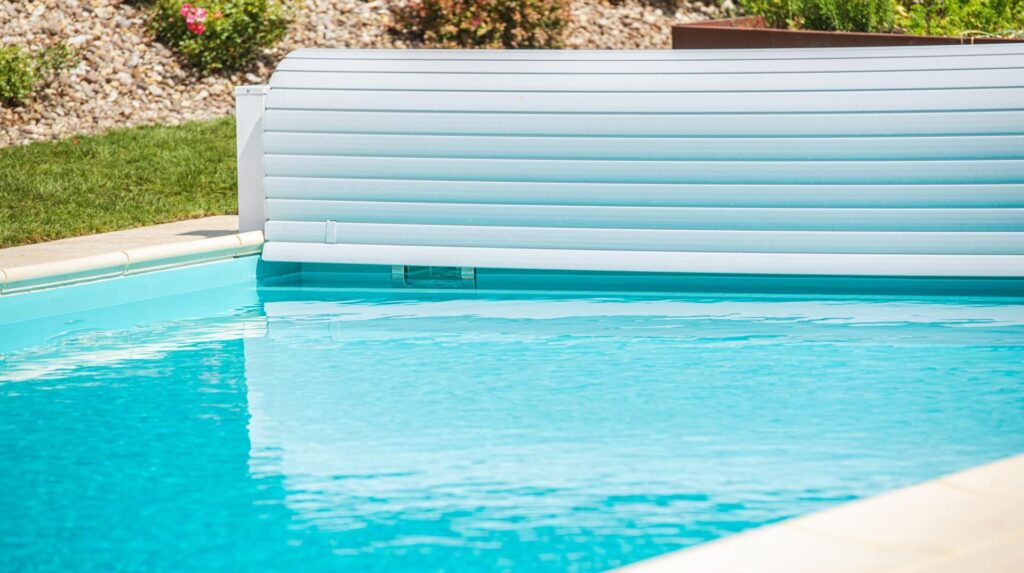
Homeowners who want the most convenience often add a cover reel, which makes rolling and unrolling the cover a quick daily habit instead of a chore.
How Many Hours Should You Run Your Pool Pump in the Winter?
You should run your pool pump for at least 8 hours per day, even in cooler months. Pool industry guidelines recommend that every drop of water passes through the filter at least once daily. Reducing pump run time to save energy in winter can backfire by allowing algae and bacteria to grow in still water. If you have a heater running, set your pump timer to circulate during the warmest part of the day, between 10 a.m. and 4 p.m., to move warmed water through the pool efficiently. Running the pump during peak heating hours can improve heat retention by 15 to 20 percent, according to Swimmer Living.
Pool owners in areas like Hoschton and Braselton who switch to a variable-speed pump often see major savings. Data from WifiTalents shows that replacing a single-speed pump with a variable-speed model saves an average of $1,500 over three years, all while keeping the water properly circulated year-round.
How to Use Your Pool All Year Round
Using your pool all year round is possible in North Georgia with a few smart additions beyond just heating. The goal is to control your pool’s environment from every angle: heat the water, hold the heat in, block the wind, and maintain water chemistry throughout the cooler months.
How Do Windbreaks Help Keep Pool Water Warmer?
Windbreaks help keep pool water warmer by blocking cold air from moving across the pool surface, which is one of the fastest ways heat escapes. Research from Swimmer Living confirms that natural windbreaks like dense hedges and privacy fences can reduce wind speed by up to 75%, dramatically cutting heat loss. The U.S. Department of Energy backs this up, noting that windbreaks reduce evaporation, which is the main driver of pool heat loss.
For homeowners in Jefferson and Gainesville, evergreen shrubs planted on the windward side of the pool are a practical solution. They block cold fall and winter breezes, look attractive year-round, and add privacy to your backyard oasis. Fences and retaining walls work well too, and a company like Sandals Luxury Pools builds custom retaining walls and hardscapes that can do double duty as stylish wind protection around your pool area.
Do Pool Enclosures Help You Swim Year-Round?
Yes, pool enclosures help you swim year-round by creating a sheltered, controlled environment around your pool. They trap warm air, block wind and rain, and keep debris out of the water. Options range from retractable enclosures that open up in summer to permanent glass or polycarbonate structures that function like an outdoor greenhouse for your pool.
Polycarbonate panel enclosures allow 80 to 90 percent of natural sunlight to pass through while insulating the pool area, according to Swimmer Living research. This means you get free solar warmth even in cooler months. Retractable enclosures give you the flexibility to swim open-air in summer and fully enclosed in fall and winter. For pool owners in the Lawrenceville and Monroe areas who want a true four-season pool, a permanent enclosure paired with a heat pump is the most complete solution.
Does Adding a Spa Help You Enjoy Your Pool Area Longer?
Yes, adding a spa helps you enjoy your pool area longer because a heated spa is comfortable at water temperatures that would make the main pool feel cold. Many pool owners in the Jefferson and Braselton areas discover that even when the main pool is a little cool in October or April, a spillover spa kept at 100 degrees makes the whole backyard worth using. A spillover spa integrated with your pool design is one of the best investments for extending your outdoor enjoyment well beyond summer.
How to Get Rid of Algae in a Pool Quickly in Cooler Months
To get rid of algae in a pool quickly in cooler months, shock the water with a large dose of chlorine, brush all surfaces thoroughly, and run the filter continuously until the water clears. Algae can still grow in fall when water temperatures stay above 60 degrees Fahrenheit, especially if the pump runs less and sunlight still hits the water. Homeowners in areas like Arcade and Commerce should not assume cooler weather eliminates the risk.
The key to preventing algae during an extended season is keeping water chemistry balanced throughout. The ideal pool pH should stay between 7.2 and 7.8, as confirmed by pool industry data from WifiTalents. Letting chemistry slide in September or October is one of the most common reasons pool owners end up with green water right when they want a few more weeks of swimming.
Scheduling regular pool cleaning services through the shoulder season keeps algae from taking hold. A professional team adjusts chemicals, brushes walls, and tests water at each visit so small problems never become expensive ones.
How to Keep a Pool Crystal Clear Through Fall
To keep a pool crystal clear through fall, maintain consistent chemical balance, run your pump and filter on a set schedule, use your pool cover when the pool is not in use, and clean out leaves and debris before they break down in the water. Leaf and organic debris are a much bigger issue in fall around Jefferson and Gainesville, where trees drop heavily in October and November.
Leaves introduce tannins and phosphates into the water that feed algae and cloud the pool. Skimming daily and emptying baskets frequently during fall keeps this under control. Installing a pool closing service from a trusted local team at the right time, after you have truly finished swimming, protects everything you worked to maintain all season long.
What Does Baking Soda Do to a Swimming Pool?
Baking soda raises the total alkalinity of pool water without dramatically changing the pH level. Total alkalinity acts as a buffer that keeps pH stable. When alkalinity drops too low, pH swings wildly and chlorine stops working as well. Adding baking soda is a simple, widely used fix that most pool owners can handle on their own. Pool industry guidelines recommend keeping total alkalinity between 80 and 120 parts per million for a properly balanced pool.
How to Extend Pool Season With Outdoor Living Upgrades
Extending your pool season is not just about the water. It is also about making the area around the pool comfortable enough to use when temperatures drop. A fire pit or outdoor fireplace near the pool deck keeps the air around you warm even on a 55-degree October evening in Jefferson. When you can sit poolside with a fire nearby, the cool air feels like ambiance instead of a reason to go inside.
Outdoor kitchens and covered patios extend the time families spend near the pool even when swimming ends for the day. Pool owners across North Georgia who add fire pits or outdoor fireplaces near their pools consistently report using their outdoor space more months per year. The pool becomes the center of a full backyard living area rather than just a summer swim spot.
Waterfall features and decorative lighting also extend the appeal of a pool into the evening and into cooler months. The sight and sound of a flowing natural waterfall or sheer descent makes the pool area feel alive and inviting even when it is too cool to swim. Many homeowners in Hoschton and Dacula keep their pool running as a backyard focal point throughout fall just for the ambiance.
Comparison Table: Pool Heating Methods for Extending Season
| Heating Method | Heat Speed | Best Climate Fit | Energy Efficiency | Season Extension Potential |
|---|---|---|---|---|
| Gas Heater | Very Fast | Any, including cold | Lower (high fuel use) | Up to 4 months |
| Electric Heat Pump | Moderate | Mild climates (above 50°F) | High (~1/3 gas cost) | Up to 4 months |
| Solar Heater | Slow (sun-dependent) | Sunny, warm climates | Very High (free fuel) | Up to 2-3 months |
| Solar Cover Alone | Gradual | Warm to mild | Highest (no energy use) | Up to 4-6 weeks |
| Heater + Solar Cover Combined | Fast | All climates | Best combination efficiency | Up to 5-6 months |
Sources: U.S. Department of Energy (energy.gov), Pool Research, Medallion Energy, Leslie’s Pool Supply, Solar Tech Online
Why Pool Maintenance Matters More When You Extend the Season
When you keep your pool open longer, maintenance becomes even more important because conditions change fast in fall. Water temperature affects how quickly chlorine dissipates and how fast algae can grow. A pool that stays clean in July without much effort may need more attention in October when cooler water chemistry behaves differently.
According to data from WifiTalents, automatic pool covers alone can reduce chemical consumption by 35 to 60 percent. That is money back in your pocket while also protecting the water quality. A pool inspection from a trained professional can catch equipment wear before it becomes a breakdown right in the middle of your extended season. Staying ahead of repairs means more swim days, not fewer.
Homeowners in neighborhoods across Jackson County, from Jefferson Walk to Braselton Farms, rely on professional pool teams to handle this transition well. Scheduling a pool inspection in late summer or early fall gives you a clear picture of what your heater, pump, and filter need before the cooler months arrive.
How Often Should You Test Pool Water in Fall?
You should test pool water at least once a week in fall, and ideally twice a week during periods of heavy rain or when leaves are falling heavily. Rain dilutes chemicals and throws off pH and alkalinity. Leaves introduce phosphates and organic matter that fuel algae. Weekly testing gives you the information to make small adjustments before they become large problems.
Many pool owners in the Winder and Loganville areas benefit from having a professional testing service run a full chemical panel once a month during the extended season. This goes beyond what a basic home test kit measures and catches stabilizer levels, calcium hardness, and other factors that a quick strip test misses.
What Can You Do in the Off-Season to Prepare for a Longer Next Season?
The off-season is the best time to plan the upgrades that will give you a longer pool season next year. Installing a heat pump or heater, adding a solar cover reel, upgrading to a variable-speed pump, and planning a windbreak are all projects that pay off for years. Pool repair work, including fixing leaks, cracks, and equipment issues, is easier and cheaper to address during winter than at the height of swim season.
Data from news.poolandspa.com confirms that a heated pool can double the usable season in most regions of the U.S. In a climate like North Georgia, where springs and falls are mild, the gain is often even more. Families in the Athens and Commerce areas who add a heater often go from a 3-month season to a 6-month or even 7-month season without dramatically changing their water costs or maintenance routine.
Planning a pool repair or equipment upgrade during the off-season also means you are first in line when the busy spring season starts, rather than waiting weeks for service while your neighbors are already swimming.
Frequently Asked Questions
How Long Is the Pool Season in Jefferson, Georgia?
The pool season in Jefferson, Georgia typically runs from late May through early September without any heating equipment. With a gas heater or heat pump, homeowners in Jefferson and the surrounding Jackson County area can comfortably extend that season from April through October or even later. North Georgia’s mild spring and fall weather makes it one of the better regions in the U.S. for a naturally extended pool season, with outdoor temperatures often staying in the 60s well into November.
Can I Swim in My Pool Every Day If I Use a Heater?
Yes, you can swim in your pool every day if you use a heater that maintains a consistent water temperature. The ideal pool water temperature for most swimmers is between 77 and 82 degrees Fahrenheit, as recommended by health and swimming experts. A gas heater or heat pump keeps your pool at that range on demand, regardless of the outdoor temperature. Pool owners in Gainesville and Braselton who install quality heating systems often swim from early spring through late fall with no interruption.
What Is the 80/20 Rule in Swimming Pool Maintenance?
The 80/20 rule in swimming pool maintenance means that 80 percent of your pool problems come from 20 percent of the causes, which are usually chemical imbalance, poor filtration, and skipping routine cleaning. Staying on top of those core tasks prevents the vast majority of cloudy water, algae, and equipment issues. For pool owners in Jefferson and Hoschton looking to extend the season, keeping that 20 percent under control through regular professional service keeps the pool ready for swimming whenever the weather cooperates.
How Do I Keep My Pool Crystal Clear in October in North Georgia?
To keep your pool crystal clear in October in North Georgia, test and balance your water chemistry weekly, run your pump at least 8 hours per day, use a pool cover when the pool is not in use, and remove leaves and debris daily. Fall leaf drop in the Jefferson and Gainesville areas can overwhelm a pool quickly if skimming and basket emptying are skipped even for a few days. Scheduling a professional cleaning service through October keeps everything managed without making it feel like a second job.
Does Adding an Outdoor Fireplace or Fire Pit Help Extend Pool Season?
Yes, adding an outdoor fireplace or fire pit near your pool area helps extend the season by making the poolside environment comfortable even when air temperatures drop. Homeowners in Braselton and Hoschton who add fire features near their pools consistently use their outdoor spaces more months per year. A custom outdoor fireplace or fire pit from Sandals Luxury Pools can transform a cool October evening into a cozy backyard gathering, making the pool feel like the center of the party even when swimming ends for the night.
Is It Worth Installing a Pool Heater in North Georgia?
Yes, it is absolutely worth installing a pool heater in North Georgia. The region’s mild fall and spring temperatures mean you only need moderate heating to add weeks or months of swim time. Unlike colder northern states, Georgia pool owners do not need to fight freezing temperatures for most of the shoulder season. A heat pump that functions above 50 degrees Fahrenheit works well throughout April, May, September, and October in the Jefferson area, turning what would be a 3-month season into a 6-month or longer one with minimal ongoing energy cost.
When Should I Open My Pool in Jefferson, Georgia?
You should open your pool in Jefferson, Georgia when sustained daytime temperatures consistently reach 65 degrees Fahrenheit or warmer and overnight lows stay above 50 degrees. In most years, that means mid-April to early May in Jackson County. Opening 2 to 3 weeks before you plan to swim gives the water chemistry time to balance properly. A seasonal opening service from a local pool team removes the guesswork and gets your system running correctly from day one.
Final Thoughts
Extending your swimming pool season is not complicated, but it does take the right equipment, the right habits, and a plan. A quality heater or heat pump combined with a solar cover, a windbreak, and consistent water maintenance can turn a 3-month pool into a 6-month or longer backyard experience. In North Georgia, where springs and falls are beautiful and mild, that extra time in the water is absolutely within reach. From heating options to outdoor fire features to professional maintenance, every upgrade you make pays back in more swim days and more memories with your family.
If you are ready to get more out of your pool this year, the team at Sandals Luxury Pools is here to help. Whether you need a professional inspection before the shoulder season, a custom pool design that is built for year-round enjoyment, or expert advice on the best upgrades for your backyard, we serve Jefferson, Braselton, Gainesville, Hoschton, and the surrounding North Georgia communities. Reach out today, schedule a consultation, and let’s make your pool work harder for you all year long. You have already made the investment. Now it is time to enjoy it to the fullest. Contact us at Sandals Luxury Pools and let’s get started.
