
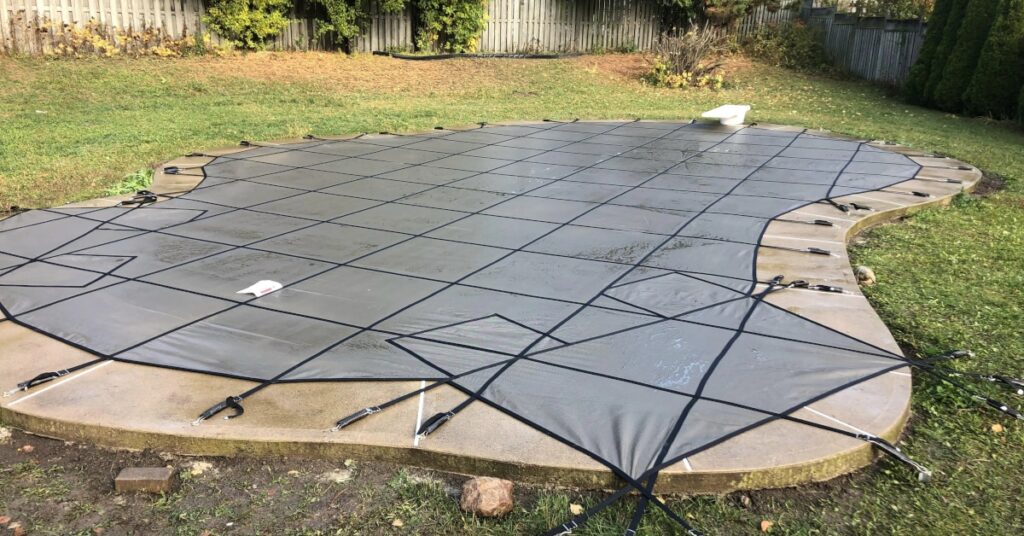
The right winter pool cover for your pool is the one that matches your climate, pool shape, budget, and how much off-season maintenance you want to deal with. The main choice is between a mesh safety cover and a solid safety cover. Each type has real advantages and real tradeoffs. This article walks through exactly what separates them, when each one makes sense, what questions to ask before buying, and what pool owners in Jefferson, Georgia and the surrounding communities specifically need to know about protecting their pools through winter.
What Type of Winter Pool Cover Is Best?
The best winter pool cover is a safety-rated cover, either mesh or solid, that fits your pool precisely and is anchored securely to your deck. Standard tarp-style covers are not the best option. According to Swimmingpool.com, most basic winter tarp covers only hold up for one to two seasons and offer no meaningful protection against accidental falls or submersion. Safety covers, by contrast, are engineered with industrial-strength anchors drilled into the pool deck and are designed to support the weight of a child, adult, or pet who accidentally ventures onto the cover.
Between the two safety cover types, mesh covers are the most popular choice for mild-winter climates like North Georgia. They are lightweight, drain automatically, require no pump, and typically cost $200 to $600 less than solid covers, according to pool cover comparison data from Fixr.com. Solid covers cost more but block sunlight and all debris completely, giving you cleaner water and a faster opening in spring. The right choice depends heavily on your situation, which this guide covers in full detail below.
Is Mesh or Vinyl Pool Cover Better?
Whether a mesh or vinyl (solid) pool cover is better depends entirely on your priorities. Mesh covers are better for low off-season maintenance, ease of installation, water drainage, and budget. Solid vinyl covers are better for keeping water clean over winter, blocking algae growth, and making spring opening faster and easier.
Mesh covers allow rain and melted snow to drain through the cover into the pool, which means you never need a pump on top to remove standing water. That makes them nearly maintenance-free during the off-season. The tradeoff is that fine particles, UV light, and some debris still pass through, which can lead to algae growth over a long winter. Solid vinyl covers block all of that. They block 100% of UV rays and keep the water in almost exactly the same condition it was in when you closed the pool. The tradeoff is that water accumulates on top of the cover and must be pumped off regularly to prevent the cover from sagging or tearing.
Pool owners in Jefferson and Braselton dealing with Georgia’s mild winters and heavy fall leaf season often find that a well-made mesh cover with tight weave, sometimes called a high-shade or super-mesh cover, provides the best balance of protection and convenience. A good pool closing service can assess your pool’s specific conditions and recommend the right cover type before winter sets in.
What Is the Best Way to Cover a Pool for the Winter?
The best way to cover a pool for the winter involves four steps: balance and shock the water first, clean the pool thoroughly, lower the water level to the correct position, and then install a properly fitted safety cover anchored to the deck. Skipping any of these steps reduces how well the cover protects your pool.
According to Allen Pool Service in Atlanta, you should wait to install your cover until pool water temperature consistently drops below 65 degrees Fahrenheit. Covering a pool too early, when the water is still warm, increases the risk of algae growth forming under the cover before true cold weather arrives. In the Atlanta and North Georgia region, the average first freeze comes around November 13, though it can arrive as early as October 11. Pool owners in Jefferson, Commerce, and Gainesville should keep an eye on the 10-day forecast in late October and start the closing process as soon as temperatures begin trending downward.
After the cover is on, use water bags or the manufacturer’s cable-and-winch system to anchor it around the perimeter. A loose cover allows wind and debris to get underneath and can sag into the pool water. If you use a solid cover, place an automatic cover pump in the center immediately after installation to handle any rainfall or snowmelt that accumulates on top.
Should Winter Pool Cover Be Tight or Loose?
A winter pool cover should be tight, not loose. A safety cover should be pulled taut and anchored firmly at multiple points around the pool deck with brass or stainless steel hardware. A cover that sags into the water defeats the purpose of keeping the pool clean and creates a drowning hazard if water pools on top.
Anchors for safety covers need to be drilled into the pool deck at regular intervals around the perimeter. For most inground pools, this requires approximately 36 inches of solid deck space around the pool’s edge to properly seat the anchors. The cover straps connect from the cover’s edges to these anchors and are tightened until the cover sits flat and firm above the water surface. The cover should not be touching the water. It should be suspended a few inches above it, held in place by the tension of the straps.
For above-ground pools using a basic winter tarp cover, use water bags or a cable and winch system around the perimeter to keep the cover from blowing off in winter winds. Do not use heavy stones or blocks on the cover edges, as these can damage the cover and the pool walls if they shift.
Should My Winter Pool Cover Touch the Water?
No, a safety pool cover should not touch the water. It should sit taut above the pool’s water surface, held by anchors and straps attached to the pool deck. A cover that touches or rests in the water sits without tension, which reduces its protective function and makes it easier for debris to accumulate and push the cover into the pool.
However, the water level in the pool does need to be set correctly before the cover goes on. For most inground pools, the water should be lowered to about 1 inch below the skimmer opening. This gives the proper gap for the cover to sit above the water. Never drain an inground pool completely for winter. The water acts as a counterweight against ground pressure, which is called hydrostatic pressure. Without water, that external pressure from the soil can crack or shift the pool structure. Pool professionals across Jefferson, Hoschton, and Braselton consistently advise against full drainage for this reason.
What Month Should You Winterize Your Pool?
In North Georgia, you should winterize your pool in October or early November, before the first freeze arrives. The exact timing depends on your pool’s water temperature. Most pool professionals recommend waiting until the water consistently stays below 65 degrees Fahrenheit. This temperature threshold is important because algae needs warm water to grow. If you close too early, algae can bloom under the cover before the cold fully sets in.
According to Allen Pool Service’s winterization checklist for the Atlanta area, the average first freeze in North Georgia arrives around November 13, with the earliest possible freeze as early as October 11. Pool owners in Jefferson, Gainesville, and Winder should monitor their 10-day forecast starting in early October and plan their closing date accordingly. Do not wait until the first hard freeze has already arrived. Frozen water in pipes and equipment can cause serious damage that costs $1,500 to $3,000 or more to repair, according to pool industry estimates from Pool Chemical Calculator.
The pool closing service team at Sandals Luxury Pools handles professional winterization for homeowners across Jackson County and surrounding communities, so you never have to guess on timing or miss the window.
What Is the Difference Between a Pool Cover and a Winter Pool Cover?
The difference between a pool cover and a winter pool cover is in their purpose, construction, and durability. A standard pool cover, like a solar cover or solar blanket, is designed to retain heat, reduce evaporation, and keep debris out during the swimming season. A winter pool cover is built to withstand months of harsh outdoor conditions, heavy rain, leaf buildup, and occasional ice and snow.
Winter covers are made from much heavier-duty materials. Standard tarp-style winter covers use extruded polyethylene fabric with multiple laminated protective layers for UV resistance and puncture protection. Safety covers, the best category of winter cover, go further by using anchor hardware drilled into the deck and thick, load-bearing mesh or vinyl materials rated to support the weight of a person. Solar covers, by contrast, are made of thin bubble-wrap-like material and are not designed for safety or for heavy off-season conditions.
What Thickness Pool Cover Is Best?
A thicker pool cover is better for durability, longevity, and protection. For basic winter tarp covers, an 8-year cover is adequate for mild climates, but a 15 to 20 year cover offers significantly more laminated layers, heavier fabric weight, and tighter weave that resists punctures and UV degradation over many seasons. According to In The Swim, the difference in thickness between an 8-year and a 20-year cover is very noticeable, with higher-quality covers using heavier fibers and more laminate layers on both sides.
For safety covers, which are the recommended choice for inground pools in Jefferson and surrounding communities, the thickness and construction of the mesh or solid vinyl material is what determines its strength rating and lifespan. High-quality mesh safety covers last 10 to 15 years. Solid vinyl safety covers have a similar lifespan with proper care. Standard tarp-style winter covers, regardless of their year rating, typically only hold up for one to three seasons and must be replaced more frequently. The higher upfront investment in a quality safety cover almost always pays off over the long run.
Why Put an Air Pillow Under a Pool Cover?
An air pillow goes under a pool cover to protect the pool walls and cover from the pressure of expanding ice during winter freezes. When water freezes, it expands. In an above-ground pool, that expansion pushes outward against the walls, which can warp or crack them. An air pillow placed under the cover in the center of the pool absorbs that expansion force, directing it inward toward the pillow rather than outward against the walls.
Air pillows also create a dome shape in the middle of the pool that helps prevent rain, snow, and ice from collecting in one heavy spot on top of the cover. That collected weight can stretch, sag, or tear a cover over time. According to swimmingpool.com, air pillows should be inflated to only about half capacity so they have room to compress as the ice expands. Secure the pillow under the cover with nylon cords or straps. Air pillows are primarily used with above-ground pools. Inground pool owners typically rely on proper water level management and solid deck anchoring to handle freeze pressure instead.
How to Keep a Pool Warm During Winter?
The most effective ways to keep a pool warm during winter are to use a thermal pool cover or solar cover, run a pool heater, and keep the cover on whenever the pool is not in use. A solid winter cover also contributes to heat retention by blocking wind from cooling the water’s surface.
In Georgia, many pool owners in Jefferson and the surrounding area choose to keep their pools open year-round with a pool heater rather than closing and covering them for winter. Georgia winters are mild compared to the rest of the country, and most years only bring a few hard freezes. According to Pinnacle Pool Services, 100% of their Georgia-based clients keep their pools open year-round, using freeze protection thermostats on the equipment to automatically run the pump when temperatures near freezing. This prevents pipe damage without requiring full winterization. If you choose this path, you will need to continue routine maintenance through winter, including weekly water testing, chemical balancing, and keeping the pump running during cold snaps.
Whether you close or keep your pool open, having a professional pool inspection done in the fall helps catch any equipment issues before they become a bigger problem during the cold months.
At What Temperature Will Pool Pipes Freeze?
Pool pipes freeze when the temperature drops to 32 degrees Fahrenheit (0 degrees Celsius) and the water inside them stops moving. Standing water in exposed equipment like pumps, filters, and heaters can begin to freeze in under an hour when air temperatures drop to or below freezing, according to pool equipment experts at Calm Water Pools. Underground plumbing lines are better insulated by surrounding soil and take much longer to freeze, but they are not immune during extended hard freezes.
The key risk factor is still water. Moving water resists freezing much better than water that is sitting still. This is why freeze protection controllers, which automatically run the pool pump when temperatures approach 32 degrees, are so valuable for Georgia pool owners who want to keep their pools open year-round. If the pump runs and keeps water circulating through the pipes and equipment, the risk of freeze damage drops dramatically. If you have fully winterized and shut everything down, the solution is to blow out all plumbing lines completely and drain all equipment so there is no standing water left to freeze in the first place.
Does Winter Pool Cover Color Matter?
Yes, winter pool cover color matters in terms of how much sunlight reaches the water. Darker covers, especially solid dark blue or black covers, block more light than lighter or translucent covers. Since sunlight is what fuels algae growth in a closed pool, a cover that blocks more light keeps the water cleaner over winter and reduces the chemical work required to restore water quality at opening.
For mesh covers, the weave density matters more than the color. A standard mesh cover allows a significant amount of UV light through, which is why high-shade or super-mesh covers, which block up to 99% of sunlight despite being mesh, have become popular. These cover types combine the drainage convenience of mesh with light-blocking performance closer to a solid cover, making them a strong choice for pool owners in Braselton, Jefferson, and Hoschton who want easy off-season maintenance without a green pool in spring.
How to Pick a Pool Cover Color?
When picking a pool cover color, prioritize UV-blocking performance over aesthetics. For solid covers, dark colors like deep blue or black block more sunlight and better inhibit algae growth. For mesh covers, look for a “high-shade” or “super-mesh” designation that indicates a tighter weave blocking 99% of UV rays, regardless of the specific color.
Most safety covers available from major manufacturers like Loop-Loc, Meyco, and GLI come in standard dark tones specifically because those tones perform better at blocking light. If you have a strong aesthetic preference, some manufacturers offer custom colors and patterns for inground safety covers, but this typically adds to the cost. For most homeowners across Jefferson, Gainesville, and Commerce, choosing a well-rated cover from a reputable manufacturer in whatever standard color it comes in is the right call. Performance matters far more than color when it comes to protecting a pool over a Georgia winter.
Is It Better to Have a Lighter or Darker Pool Liner?
A darker pool liner makes the pool water appear warmer and more natural but can fade faster in direct sunlight. A lighter pool liner makes the water look brighter and more visually clear, and generally shows staining or algae more quickly, which can be an advantage for monitoring water quality. The choice between lighter and darker liners is mostly a matter of personal preference and aesthetic style rather than a safety or chemistry issue.
What matters more than liner color when it comes to winter protection is maintaining proper water chemistry before closing. Unbalanced water with low pH is corrosive and can bleach or degrade any liner color over the winter. The ideal pre-closing chemistry targets include a pH of 7.2 to 7.6, total alkalinity of 80 to 120 ppm, and calcium hardness of 200 to 400 ppm. Achieving these levels before the cover goes on protects the liner through the off-season regardless of its color.
Pool owners with custom pools built by Sandals Luxury Pools across North Georgia often choose their liner color based on the overall backyard aesthetic, and the team can advise on which finishes hold up best in Georgia’s climate before the cold season.
How Long Can a Pool Stay Empty in the Winter?
An inground pool should not be left empty during winter, even for a few weeks. The answer to how long a pool can stay empty in winter is: not long at all. The water in an inground pool provides critical ballast against hydrostatic pressure from the soil surrounding the structure. When a pool is drained, that external ground pressure has nothing to push against. In areas with high water tables or certain soil types, a drained inground pool can pop out of the ground, shift, or develop serious structural cracks in a matter of days.
This is especially important in Georgia, where the clay-heavy soil common throughout Jackson County and surrounding areas holds moisture and exerts significant lateral pressure on pool walls. Latham Pool, a major inground pool manufacturer, explicitly warns against draining inground pools completely, noting it can void the pool’s structural warranty. The correct approach for winter closing is to lower the water level to just below the skimmer, not to drain the pool.
If your pool needs a partial or full drain for repair or renovation work before winter, that is a job for a professional. The team at Sandals Luxury Pools handles pool repair and renovation work and can advise on safe water level management during any service that requires draining.
What Chemicals Should I Put in My Pool to Winterize It?
The chemicals to put in a pool when winterizing it are a chlorine shock treatment, an algaecide, and a winterizing chemical kit that typically includes a clarifier and stain prevention product. You should also balance pH, alkalinity, and calcium hardness before adding any winterizing chemicals, since unbalanced water that sits under a cover for months can damage the pool surface and equipment.
Target pH between 7.2 and 7.6 before closing. Set total alkalinity to 80 to 120 ppm and calcium hardness to 200 to 400 ppm. Once chemistry is balanced, shock the pool with 2 pounds of calcium hypochlorite per 10,000 gallons of water. Then add a polyquat algaecide, which is the recommended algae inhibitor for winterizing because it does not foam and works effectively in cold water. Adding these chemicals 24 to 48 hours before putting the cover on gives them time to circulate fully before the pool is sealed for the season.
Never pour winterizing chemicals directly onto the pool liner. Pre-mix them in a bucket of water and pour around the perimeter with the pump running. Homeowners who want a professionally balanced and chemically treated pool at closing can count on the pool closing service from Sandals Luxury Pools to handle every step correctly.
Should I Keep My Pool Pump Running in Winter?
Whether to keep a pool pump running in winter depends on whether the pool is fully winterized or kept open. If the pool is fully winterized with all water blown out of the lines and equipment drained, the pump should not be running. Running a pump that has been drained can damage the motor and impeller. If the pool is kept open year-round, the pump should be set to run on a timer and triggered automatically by a freeze protection controller whenever temperatures drop near freezing.
In Georgia, where winters are generally mild, many pool owners choose to keep their pumps running through winter at reduced daily hours rather than fully closing down. Brown’s Pools and Spas, a Georgia-based pool service company, recommends testing the water weekly when keeping a pool open through winter and running the pump continuously during any cold snap with forecast temperatures approaching 32 degrees. Once a saltwater system’s water drops too low in temperature, the salt cell stops generating chlorine. At that point, owners of saltwater pools need to switch to standard chlorine shock and tablets to maintain sanitizer levels through the cold months.
Will My Inground Pool Freeze in Winter?
An inground pool in Georgia will not typically freeze solid during a normal winter, but the equipment, pipes, and exposed fittings absolutely can freeze during hard cold snaps. Pool pipes and equipment begin to freeze at 32 degrees Fahrenheit when water is standing still inside them. Underground lines are better insulated by soil and take longer to freeze, but surface equipment like pumps, filters, and heaters can begin forming ice in under an hour when exposed to freezing air temperatures with still water inside them.
Jefferson, Georgia and Jackson County see an average first freeze around November 13 each year, based on Atlanta-area weather data. However, North Georgia can experience sudden and severe cold snaps, particularly along the I-20 and I-85 corridors. Pool owners who keep their pools open year-round should have freeze protection equipment installed that automatically runs the pump when temperatures drop below a set threshold, typically 36 to 38 degrees. This keeps water moving and prevents ice from forming in the most vulnerable components.
What Are the Negatives of a Pool Cover?
The negatives of a pool cover include the upfront cost of a quality safety cover, the time and labor required for installation and removal each season, the need for a pump to remove standing water from solid covers, the possibility of debris accumulating on top of the cover, and the fact that water chemistry can still shift under some cover types during winter.
Mesh covers require less off-season attention but allow some fine debris and UV light through, which means you may deal with some algae and cloudiness at spring opening. Solid covers need a submersible pump on top throughout winter to prevent water from pooling and weighing the cover down, which adds to ongoing off-season maintenance. Basic tarp covers, while inexpensive, blow off easily, tear quickly, and do not offer safety protection, making them a poor long-term investment.
Despite these negatives, the alternative, leaving a pool uncovered through winter, is far worse. An uncovered pool in Jefferson, Commerce, and surrounding areas collects leaves, debris, and organic matter all winter long, leading to severe water chemistry problems, heavy algae growth, and potential equipment damage that costs significantly more to correct in spring than the cover itself.
For pool owners who want all the benefits of a proper winter cover without handling the installation themselves, the team at Sandals Luxury Pools provides full seasonal pool closing services including cover installation across Jefferson, Braselton, Hoschton, Arcade, and surrounding Jackson County communities.
Mesh vs. Solid Safety Cover: Side-by-Side Comparison
| Feature | Mesh Safety Cover | Solid Safety Cover |
|---|---|---|
| Water Drainage | Drains through automatically; no pump needed | Water pools on top; requires a submersible pump |
| Sunlight / UV Blocking | Standard mesh: partial blockage. High-shade mesh: up to 99% UV blockage | Blocks 100% of sunlight |
| Algae Risk Over Winter | Moderate (higher with standard mesh; low with high-shade mesh) | Very low; minimal algae growth |
| Spring Opening Condition | May require more cleaning and chemical adjustment | Pool often opens nearly as clean as when closed |
| Weight and Installation | Lightweight; often installed by one person | Heavier; typically requires two people |
| Typical Lifespan | 10 to 15 years | 10 to 15 years with proper care |
| Relative Cost | $1,200 to $3,000 installed | $1,800 to $3,600 installed |
| Off-Season Maintenance | Very low; clear debris as needed | Moderate; check and run pump regularly |
| Best Climate Fit | Mild winters with light snow; warm climates like North Georgia | Colder regions with heavy snow or longer freeze seasons |
Sources: Fixr.com inground pool cover cost data; Pool Guard USA mesh vs. solid comparison; In The Swim safety cover guide; River Pools solid vs. mesh cover analysis; Royal Swimming Pools safety cover selection guide.
Frequently Asked Questions
What Is the Best Way to Winterize an Inground Pool in Jefferson, Georgia?
The best way to winterize an inground pool in Jefferson, Georgia is to wait until water temperature drops below 65 degrees Fahrenheit, then balance chemistry, shock the pool, add algaecide, blow out the plumbing lines, drain all equipment, lower the water level to just below the skimmer, and install a quality safety cover anchored to the deck. Given that the average first freeze in the Atlanta and North Georgia region arrives around November 13, most Jefferson-area homeowners should start their closing process in mid to late October. A professional pool closing service ensures every step is done correctly before winter hits.
How Do I Choose a Winter Pool Cover for a Custom-Shaped Pool?
For custom-shaped pools, choose a safety cover that is made to measure. Most major safety cover manufacturers, including Loop-Loc, Meyco, and GLI, offer custom-cut covers for freeform, L-shaped, kidney, and any other non-rectangular pool shapes. Sandals Luxury Pools, which builds custom inground pools throughout Jefferson, Braselton, and Jackson County, can help homeowners identify the right cover manufacturer and specifications for their specific pool shape and deck layout.
Should I Close My Pool or Keep It Open in Winter in Georgia?
In Georgia, either option is reasonable due to the mild climate. Keeping your pool open year-round saves you the cost and labor of closing and reopening, but requires ongoing weekly maintenance, weekly water testing, and a freeze protection controller on the equipment. Closing the pool and installing a safety cover reduces chemical use and monitoring time through winter but involves upfront costs for a good cover and proper closing procedures. For pools in Jefferson, Braselton, and Commerce, the decision often comes down to whether you have the time and tools for year-round maintenance or prefer a clean seasonal break.
How Do I Know If My Pool Cover Is Tight Enough?
A properly installed safety cover should sit flat and taut above the water’s surface without sagging or touching the water. After installation, push down lightly in the middle of the cover. It should give slightly but spring back, not sag into the pool. Check that all straps are connected to deck anchors and fully tightened. If any sections of the cover are loose, flapping in wind, or dipping toward the water, tighten the affected straps or add anchors in those areas. Homeowners in Jefferson, Hoschton, and Arcade who have their pools closed by Sandals Luxury Pools can rely on the team to verify the fit is correct before they leave.
What Happens If You Don’t Put a Cover on Your Pool in Winter?
If you don’t put a cover on your pool in winter, you will deal with heavy debris accumulation, significant algae growth once the water warms in spring, serious water chemistry imbalances, and potential staining on the pool surface from decaying organic matter. In Georgia, fall and winter bring significant leaf fall and organic debris across Jefferson, Braselton, and surrounding communities. An uncovered pool quickly fills with this material, and the decomposition process consumes chlorine, drops pH, and creates conditions for heavy algae blooms. Spring recovery from an uncovered pool can take several weeks and require multiple rounds of shock treatment, brushing, vacuuming, and filter cleaning.
How Far in Advance Should I Schedule Pool Closing in North Georgia?
Schedule your pool closing service in North Georgia by early to mid-October at the latest. The window for proper closing in Jefferson, Commerce, and Gainesville is narrower than many homeowners expect. You want the closing done before the first hard freeze but after the water temperature has dropped below 65 degrees Fahrenheit to minimize algae risk under the cover. Pool closing services fill up fast in October as the season ends. Booking early with Sandals Luxury Pools ensures your pool is protected before the first cold snap arrives.
Who Makes the Best Inground Pool Covers?
The best inground safety pool cover manufacturers include Loop-Loc, Meyco, GLI, and HPI. All four offer both mesh and solid safety cover options with custom fitting for any pool shape. Loop-Loc is widely regarded as a premium brand known for exceptional tensile strength and durability. Meyco and GLI offer strong mid-range and premium options with good coverage of complex pool shapes. The right brand depends on your pool’s dimensions, shape, and anchor spacing. The team at Sandals Luxury Pools can help homeowners in Jefferson and surrounding communities identify the best cover option for their specific pool and deck configuration.
Final Thoughts
Choosing the right winter pool cover is one of the most important decisions you make as a pool owner. The cover is the last line of defense between your pool and months of cold weather, debris, and chemical drift. For most inground pool owners in Jefferson, Braselton, Hoschton, and surrounding Jackson County communities, a quality mesh safety cover is the strongest choice for Georgia’s mild winters. It drains automatically, requires minimal off-season attention, lasts 10 to 15 years, and provides the safety protection that a basic tarp cover simply cannot match. If you want the cleanest possible water at spring opening and are willing to manage a cover pump through winter, a solid safety cover is worth the additional investment. Either way, a properly installed, well-anchored safety cover combined with professionally balanced closing chemistry protects your pool, your equipment, and your family all winter long.
If you are ready to close your pool the right way this season, the team at Sandals Luxury Pools provides complete pool closing and winterization services for homeowners across Jefferson, Braselton, Hoschton, Commerce, Gainesville, and the surrounding North Georgia region. From chemistry balancing and equipment winterization to safety cover installation and spring seasonal opening service, every step is handled with the care and precision your pool deserves. Call Sandals Luxury Pools at (770) 771-1839 today to get your pool protected before winter arrives.
