
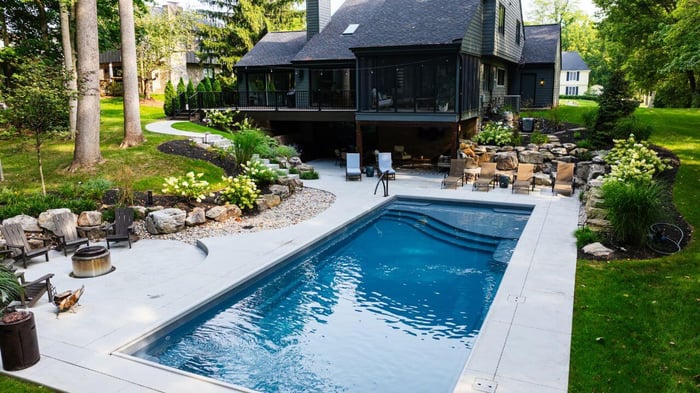
Inground swimming pools last anywhere from 20 to 50 years or more, depending on the material used, how well the pool is built, and how consistently it is maintained. Concrete and gunite pools can last over 50 years with proper care. Fiberglass pools typically last 30 or more years. Vinyl liner pools last 20 to 30 years as a structure, though the liner itself needs replacement every 6 to 12 years. This guide breaks down exactly how long each type of inground pool lasts, what destroys a pool faster, and what you can do to get the most years out of your investment.
Which Inground Pools Last the Longest?
The inground pools that last the longest are concrete and gunite pools. According to America’s Swimming Pool Company, the actual concrete structure of a gunite or concrete pool can last 50 years or more. The surface finish will need attention every 10 to 15 years, but the core shell itself is built to stand for generations. Fiberglass pools come in second, with a typical lifespan of 30 or more years. Vinyl liner pools come in third as a structure, but their liner is the weak link and must be replaced regularly.
That said, the type of pool is only one part of the equation. A poorly built gunite pool may fail in 15 years. A well-maintained fiberglass pool can outlast a neglected concrete one. The quality of the original installation matters just as much as the material.
Homeowners across Jefferson, Braselton, and the greater North Georgia area often ask this question before committing to a build. Knowing the lifespan of each type helps you make a smarter long-term decision for your property.
How Long Does a Concrete or Gunite Pool Last?
A concrete or gunite pool lasts 50 years or more when properly maintained. According to America’s Swimming Pool Company, the concrete shell itself does not have an expiration date. What does need regular attention is the surface finish applied on top of the gunite shell. That finish, whether plaster, quartz, pebble, or tile, typically needs to be resurfaced every 10 to 15 years.
Gunite is a specific type of concrete. It is made from cement, sand, and water, and it is sprayed on in high-pressure layers rather than poured. This spraying technique creates a seamless shell without joints, which are a common weak point in other types of construction. Because there are no joints, there are fewer spots where cracks can start or water can seep through over time.
Data from the Pool Industry Statistics report shows the average lifespan of a concrete pool is 25 years before significant renovation is required, but that number reflects pools that did not get consistent upkeep. Pools that are well cared for regularly last far beyond that milestone.
Sandals Luxury Pools builds its custom inground pools using shotcrete, which is applied after excavation, plumbing, and steel installation are complete. This method creates a durable, long-lasting shell that forms the backbone of every pool built in Jefferson, Hoschton, and the surrounding communities.
How Often Does a Concrete Pool Need to Be Resurfaced?
A concrete pool needs to be resurfaced every 10 to 15 years. When the plaster surface begins to peel, crack, stain, or feel rough to the touch, it is time to resurface. A standard plaster resurface involves removing the old finish and applying a fresh coat. Options include basic white plaster, quartz aggregate, pebble finishes, and glass tile. A good pebble finish can last 20 or more years if the water chemistry is managed properly and the pool is not acid-washed too aggressively. According to Pool Industry Statistics data, the average cost to resurface a pool ranges from $5,000 to $10,000, depending on size and finish type.
How Long Does a Fiberglass Pool Last?
Fiberglass pools last 30 years or more and are one of the lowest-maintenance inground pool options available. According to Leisure Pools, fiberglass pools are engineered for long-term durability, backed by lifetime structural warranties from top manufacturers. The non-porous surface of fiberglass resists algae growth, reduces chemical consumption, and does not develop the rough texture issues that concrete pools face over time.
Fiberglass pools are less prone to cracking because the material has natural flex. When the ground shifts slightly, a fiberglass shell can move with it instead of fracturing. That said, temperature fluctuations over many years can cause separation in the gelcoat surface. This can typically be repaired without replacing the entire pool.
Fiberglass pool owners typically save $375 per year on operating costs compared to concrete pool owners, according to Pool Industry Statistics. Over a 30-year lifespan, that adds up to over $11,000 in savings. Families in Gainesville, Commerce, and Lawrenceville who want a long-lasting pool with fewer maintenance demands often find fiberglass to be the right fit.
How Long Does a Vinyl Liner Pool Last?
A vinyl liner pool, as a structure, lasts 20 to 30 years. The liner itself, however, needs replacement every 6 to 12 years. According to America’s Swimming Pool Company, usage frequency and water chemistry balance are the two biggest factors that determine how fast a vinyl liner wears out.
What destroys a pool liner fastest is a combination of sun exposure, unbalanced pH levels, and heavy use. Ultraviolet rays dry out the vinyl over time, making it brittle. If the pool’s pH drops too low, acidic water accelerates liner deterioration from the inside. Wrinkles, fading, cracking near the waterline, and reduced elasticity are the signs that a liner replacement is coming.
A new inground vinyl liner typically costs $3,000 to $4,000 according to HomeGuide’s 2026 pool maintenance data. While vinyl liner pools are less expensive to build initially, the recurring liner replacement cost is a long-term budget consideration that homeowners should factor in before choosing this type.
What Is the Average Lifespan of an Inground Pool Overall?
The average lifespan of an inground pool is 20 to 30 years according to multiple industry sources including Scott Payne Custom Pools and Royal Swimming Pools. This average covers all pool types together. When you separate by material, the range becomes clearer. Concrete and gunite pools sit at the top with 50 or more years. Fiberglass pools average 30 or more years. Vinyl liner pools average 20 to 30 years as a structure. Above-ground pools, by comparison, typically last just 8 to 15 years, making inground pools a far stronger long-term investment.
According to data from the Pool & Hot Tub Alliance, there are over 6.1 million residential inground pools in the United States. With that kind of investment at stake across the country, understanding lifespan is not just academic; it is a real financial planning question.
For homeowners in Jefferson, Georgia, and surrounding areas, the hot and humid climate of North Georgia adds a layer of consideration. Pools in the South tend to see heavy seasonal use, which puts more wear on finishes and equipment than pools that sit dormant for six months of the year.
What Pool Has the Least Maintenance?
The pool that has the least maintenance is a fiberglass pool. Fiberglass is non-porous, which means algae cannot embed itself into the surface the way it does in concrete or plaster. That reduces the chemical treatment needed to keep the water clean. There is no liner to replace, no replastering required, and no need for aggressive acid washing. Most fiberglass pool owners simply need to maintain proper water chemistry, clean the filter regularly, and use a cover when the pool is not in use.
Concrete pools require the most maintenance of the three types. They need more chemicals to fight algae growth, resurfacing every 10 to 15 years, and regular brushing to keep the porous surface clean. Vinyl liner pools fall in the middle, with liner replacements as the primary ongoing cost.
Proper pool cleaning services are essential no matter which type of pool you own. Even a low-maintenance fiberglass pool needs consistent water testing, debris removal, and equipment checks to reach its full lifespan potential.
What Are the Disadvantages of an Inground Pool?
The disadvantages of an inground pool are the upfront cost, ongoing maintenance expenses, and the need for periodic resurfacing or liner replacement. According to Pool Industry Statistics, the average annual cost of maintaining a swimming pool is around $3,000 per year. HomeGuide’s 2026 data shows that monthly pool maintenance ranges from $80 to $150 for weekly or bi-weekly service. Over a 20-year period, maintenance alone represents a significant investment on top of the original build cost.
Other disadvantages include the insurance increase that comes with pool ownership. According to WorldMetrics, the average insurance premium for a home with a pool runs $550 to $900 per year above standard coverage. Safety considerations, permit requirements, and the need for fencing also add to the overall cost and complexity of ownership.
Despite these costs, an inground pool increases home value by 5% to 7% on average, according to HomeGuide. On a $400,000 home, that translates to an increase of $20,000 to $28,000. For many families in Braselton and Hoschton, the lifestyle value and resale benefit outweigh the annual upkeep costs.
What Is the Most Expensive Part of an Inground Pool?
The most expensive part of an inground pool is the initial construction and excavation. The labor and materials involved in digging the site, installing the plumbing and steel, spraying the shell, and finishing the surface make up the bulk of the total cost. Equipment such as pumps, filters, and heaters also represent a significant investment, both upfront and as replacement parts over time.
For concrete and gunite pools specifically, resurfacing is the largest recurring cost, ranging from $5,000 to $10,000 per resurface cycle. For vinyl liner pools, liner replacement at $3,000 to $4,000 every 6 to 12 years is the biggest repeated expense. Equipment typically starts to fail after 15 to 20 years, according to Scott Payne Custom Pools, adding another layer of cost as a pool ages into its second decade.
Families planning a new inground pool in North Georgia should also budget for hardscape features. A pool without a quality deck, coping, or patio around it loses much of its appeal. Pairing your pool build with custom patio installation from the start creates a cohesive, finished outdoor space that holds its value over time.
What Destroys a Pool Liner?
The main things that destroy a pool liner are UV sun exposure, unbalanced water chemistry, heavy use, and physical punctures or tears. According to America’s Swimming Pool Company, prolonged sun exposure dries out vinyl, especially near the waterline, causing it to crack and lose its natural elasticity. When the pool’s pH level drops below the recommended range, the acidic water eats away at the liner from the inside. High chlorine levels, if not properly balanced, accelerate the same process.
Heavy foot traffic on the liner surface, sharp objects in the pool, and improper draining that leaves the liner exposed to heat also shorten its life. A liner that is regularly covered when not in use, kept at a proper pH of 7.2 to 7.6, and inspected each season can last toward the upper end of the 6 to 12 year range.
Does an Inground Pool Use a Lot of Electricity?
Yes, an inground pool does use a notable amount of electricity, primarily through the pump, heater, and lighting systems. The pool pump alone, which must run daily to circulate and filter the water, is one of the highest energy-consuming appliances in a home. Traditional single-speed pumps can cost $500 to $1,000 per year in electricity depending on pool size and local energy rates.
Variable-speed pumps use significantly less energy and are now required by law in many U.S. states for new pool installations. They can reduce pump-related energy costs by up to 70% compared to single-speed models, according to the U.S. Department of Energy. Switching to a variable-speed pump is one of the most effective upgrades any pool owner in Jefferson or Gainesville can make to lower long-term operating costs.
Heaters, automated cleaning systems, and LED lighting add to the electricity bill as well. Energy-efficient equipment is a smart investment when building a new pool because the savings compound over decades.
Is Saltwater or Chlorine Pool More Expensive?
A saltwater pool has a higher upfront cost than a chlorine pool because of the salt chlorine generator required, but it typically costs less to operate over time. The salt system generates its own chlorine from dissolved salt in the water, reducing the need to purchase chlorine separately. Over several years, the reduced chemical costs often offset the initial cost of the generator. Saltwater pools also tend to be gentler on surfaces and equipment, which can reduce maintenance expenses over the long run. Many homeowners in Braselton and Commerce are choosing saltwater systems for this reason.
What Is the Best Shape for an Inground Pool?
The best shape for an inground pool depends on the size and layout of the yard, the intended use, and the homeowner’s style preference. Rectangular pools are ideal for lap swimming and sports, and they fit cleanly in formal backyard designs. Freeform pools with curved edges work well in larger or irregularly shaped yards and create a more natural, resort-like feel. Kidney-shaped pools are a popular middle ground, offering curves without a fully freeform design.
In terms of long-term value, shape does not significantly affect a pool’s lifespan. What matters more is the quality of the construction and the surface finish used. Geometric shapes may be slightly easier to resurface due to their clean lines, but a skilled contractor handles any shape with equal care. Homeowners across North Georgia choose from all of these layouts based on their property and lifestyle.
When you work with a custom pool builder, the shape is designed around the specific conditions of your yard, including slope, drainage, sun exposure, and proximity to the home. A custom inground pool built to match your exact site conditions will almost always outlast a generic layout forced into a yard it was not designed for.
What Pool Finish Lasts 25 Years?
The pool finish that lasts 25 years or more is an exposed aggregate or pebble finish. This type of finish is made from a mix of small pebbles, quartz, glass beads, and cement. It is harder and more resistant to wear than standard white plaster, which typically lasts 5 to 10 years before showing signs of deterioration. A quality pebble installation, according to Alan Smith Pools, can last over 20 years when water chemistry is well managed and the pool is not acid-washed too frequently. Tile is another long-lasting option that can hold up for decades without the same surface wear issues as plaster.
Glass bead and quartz aggregate finishes fall between standard plaster and pebble in terms of durability. They typically last 10 to 15 years and offer a smoother texture than exposed pebble. Whichever finish you choose, the key is maintaining proper pH levels because acidic water is the single fastest way to break down any cementitious pool finish.
How Long Do Pool Pumps, Filters, and Heaters Last?
Pool pumps typically last 8 to 12 years. Pool filters last 5 to 10 years depending on the type and maintenance frequency. Pool heaters last 7 to 12 years. According to Scott Payne Custom Pools, most pool equipment begins to fail between 15 and 20 years of use, meaning that a 20-year-old pool is likely due for a full equipment overhaul even if the shell is still in good condition.
Regular maintenance extends equipment life significantly. Cleaning or replacing filter cartridges every 4 to 6 months, keeping water chemistry balanced to reduce corrosion, and winterizing equipment properly each season all contribute to longer-lasting pumps and heaters. Skipping these steps accelerates wear and leads to costly repairs.
Scheduling a professional pool inspection annually helps catch equipment issues early before they become expensive failures. A trained inspector will check pumps, filters, heaters, plumbing, and the structural shell for any signs of wear or deterioration.
How Do You Extend the Life of an Inground Pool?
You extend the life of an inground pool by maintaining proper water chemistry, keeping the pool clean, using a cover, scheduling regular professional service, and addressing repairs promptly before they grow into larger structural problems.
Water chemistry is the most important factor. A pH level between 7.2 and 7.6 is the target range. When pH drops below this, the acidic water corrodes plaster, attacks metal fittings, and degrades vinyl liners. When pH climbs too high, scale deposits form on the surface and cloud the water. According to South West Pools, most pool owners underestimate their yearly maintenance costs by about 40%, often because they delay addressing minor issues that become major ones.
Using a pool cover when the pool is not in use reduces UV damage to vinyl liners and the water surface, slows evaporation, cuts chemical costs, and keeps debris out of the water. Brushing the walls weekly, skimming debris daily, and vacuuming regularly prevent algae buildup and surface staining that can lead to premature resurfacing needs.
Homeowners in Winder, Dacula, and throughout Jackson County benefit from setting up a seasonal opening service each spring to make sure the pool is properly started after winter. A correct spring startup protects surfaces and equipment from the chemical imbalances that can occur after months of being closed.
Does Closing a Pool Properly Extend Its Life?
Yes, closing a pool properly extends its life. When a pool is not winterized correctly, residual water in the plumbing lines can freeze and crack the pipes. Equipment that is left running or filled with standing water through a cold winter will deteriorate faster. Improper water chemistry at closing allows algae and bacteria to establish themselves in the off-season, leading to staining, surface damage, and a difficult spring startup.
A professional pool closing service balances the water chemistry, lowers the water level, blows out the plumbing lines, protects equipment, and installs a secure cover. This one-time annual service can add years to the life of a pool by preventing damage that compounds year over year if left unaddressed.
What Are the Signs That an Inground Pool Needs to Be Replaced?
The signs that an inground pool needs to be replaced are major structural cracks in the shell, persistent leaks that cannot be repaired, failing equipment across multiple systems, and a surface that has deteriorated beyond the point where resurfacing is cost-effective. According to Royal Swimming Pools, homeowners should watch for structural cracks, persistent leaks, failing equipment, and severe surface wear as indicators that a pool may be approaching the end of its practical life.
Most inground pools, however, do not need to be fully replaced if they were built well. They need renovation. Resurfacing the interior finish, replacing equipment, updating the plumbing, and adding new tile and coping can give a 30-year-old pool another 20 or more years of reliable service. Full replacement is typically only warranted when the structural shell itself has failed beyond repair.
Homeowners across Loganville, Monroe, and Oakwood who notice their pool staying dirty no matter how much they clean it, or who find themselves adding water constantly to compensate for a slow leak, should have their pool assessed by a professional promptly. Early diagnosis is almost always less expensive than waiting for a small problem to become a structural one. Scheduling pool repair service as soon as a problem surfaces is the smart move.
Inground Pool Lifespan Comparison by Type
| Pool Type | Structure Lifespan | Surface / Liner Lifespan | Resurfacing / Liner Cost | Maintenance Level |
|---|---|---|---|---|
| Concrete / Gunite | 50+ years | 10 to 15 years per resurface | $5,000 to $10,000 | High |
| Fiberglass | 30+ years | Gelcoat lasts 20+ years | Varies; gelcoat repair as needed | Low |
| Vinyl Liner | 20 to 30 years | 6 to 12 years per liner | $3,000 to $4,000 per liner | Medium |
| Above-Ground | 8 to 15 years | Liner every 5 to 9 years | $500 to $1,500 | Medium |
Sources: America’s Swimming Pool Company, HomeGuide 2026, Pool Industry Statistics / WorldMetrics, Angi, Royal Swimming Pools, Leisure Pools, Scott Payne Custom Pools.
Frequently Asked Questions
How long do inground pools last in Georgia?
Inground pools in Georgia last 25 to 50 or more years depending on the material and maintenance. The hot and humid climate in North Georgia means pools see heavy seasonal use from late spring through early fall. Concrete and gunite pools built and maintained well in the Jefferson, Braselton, and Gainesville area regularly reach 30 to 50 years before requiring significant renovation. The warm climate can also accelerate algae growth, so consistent water chemistry management is especially important for pool longevity here.
Which inground pools last the longest?
Concrete and gunite pools last the longest of all inground pool types, with lifespans of 50 years or more when properly maintained. The gunite shell itself has no defined expiration date. What will need periodic attention is the surface finish, which requires resurfacing every 10 to 15 years. Fiberglass pools are the second longest-lasting type at 30 or more years. Vinyl liner pools as a structure last 20 to 30 years, though the liner must be replaced every 6 to 12 years regardless.
What is the yearly cost of an inground pool in North Georgia?
The yearly cost of an inground pool in North Georgia, including cleaning, chemicals, equipment maintenance, and opening and closing services, typically runs $1,000 to $4,000 or more annually. Homeowners who use professional pool cleaning services will be on the higher end of that range. Pool Industry Statistics data puts the national average annual maintenance cost at approximately $3,000. Pools in warmer climates like Jefferson and Gainesville, where the swim season is longer, may run closer to the higher end of that range due to extended chemical and cleaning demands.
What pool shape is the cheapest to build and maintain?
Rectangular pools are generally the most straightforward and cost-efficient to build because their clean geometry simplifies excavation, plumbing layout, and surface finishing. Freeform pools require more complex formwork and can add to labor costs. In terms of ongoing maintenance, the shape of the pool has little effect on cost. What matters more is the surface finish and the type of equipment installed. Homeowners across Jefferson and Braselton can choose from rectangular, freeform, or kidney designs without significantly affecting the long-term maintenance cost.
Does an inground pool add value to a home in Jefferson, GA?
Yes, an inground pool adds value to a home in Jefferson, Georgia. According to HomeGuide, a pool increases a home’s value by 5% to 7% on average. On a $400,000 home in the Jefferson area, that is an increase of $20,000 to $28,000. In a region like North Georgia where the warm climate supports a long swim season, a well-maintained pool is a desirable feature that appeals to buyers and helps homes sell faster in competitive neighborhoods like Braselton, Hoschton, and Commerce.
How do I know when my inground pool needs resurfacing?
Your inground pool needs resurfacing when you notice stains that will not brush out, a rough or sandpaper-like texture on the walls or floor, peeling or flaking plaster, visible cracks, or persistent water loss that points to a surface leak. According to Alan Smith Pools, pool owners often keep their surfaces well past the point when they should have been resurfaced, which leads to larger repair needs down the road. Pools in the Jefferson and surrounding area that are more than 10 years old should be visually inspected annually for these signs.
Is it worth repairing an old inground pool or building a new one?
It is almost always worth repairing an old inground pool rather than replacing it entirely, provided the structural shell is still sound. Resurfacing, equipment replacement, and updated tile or coping can give a 25 to 30 year old pool another 20 or more years of reliable service at a fraction of the cost of a new build. Full replacement is only warranted when the shell itself has failed structurally. A professional pool inspection is the best way to determine which path makes more sense for your specific pool’s condition.
Final Thoughts
Inground swimming pools are long-term investments, and the good news is that with the right material choice, quality construction, and consistent care, most pools will serve a family for decades. Concrete and gunite pools sit at the top for longevity, often reaching 50 or more years. Fiberglass pools offer 30 or more years with less ongoing maintenance. Vinyl liner pools are a budget-friendly starting point but come with recurring liner replacement costs. No matter which type you choose, water chemistry management, regular cleaning, proper seasonal closing, and prompt repairs are the keys to maximizing your pool’s lifespan.
If you are ready to build a pool that is designed to last in North Georgia’s climate, or if you have an existing pool that needs professional care, Sandals Luxury Pools is ready to help. We have been serving Jefferson, Braselton, Gainesville, Commerce, and the surrounding communities for over a decade, building custom inground pools that are crafted for durability and designed for the life you want to live in your backyard. Reach out to Sandals Luxury Pools today to schedule a consultation. For homeowners ready to build from the ground up, explore our custom inground pool options and let us design something built to last for your property.
