
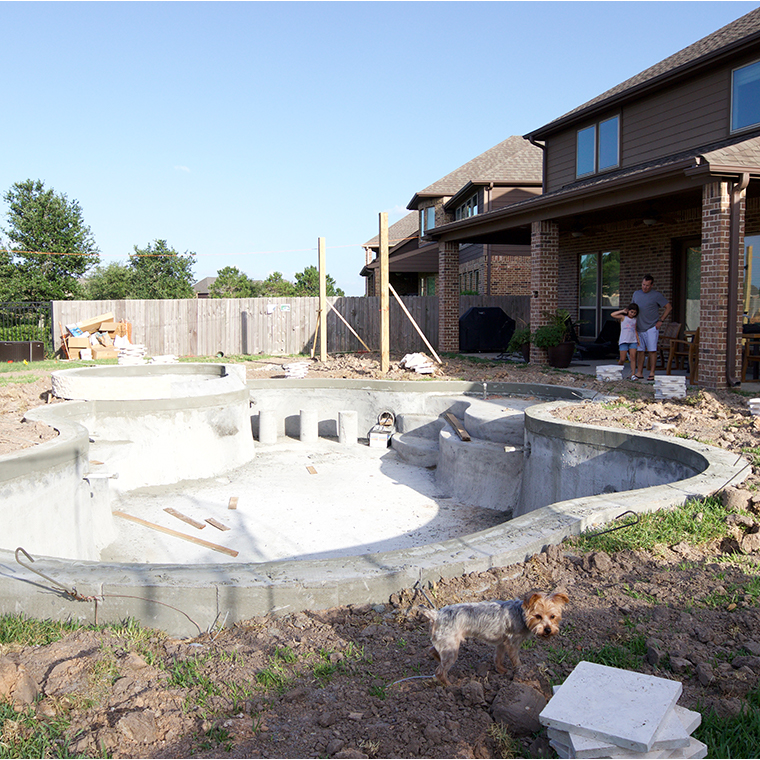
Building your first pool is one of the most exciting home investments you can make, but it comes with decisions, costs, and details that most first-time buyers never expect. According to Angi’s 2025 cost data, the average inground pool installation costs $65,909, with most homeowners paying between $44,000 and $87,000 depending on pool type, size, and features. Before you break ground, there is a lot to know. Pool type, site conditions, permits, ongoing maintenance, insurance, and how you plan to use your backyard all shape the right decision for your home. This guide covers every key consideration so you can go into the process informed, confident, and ready to build the pool your family will love.
What Do I Wish I Knew Before Building a Pool? The Real Answers First-Time Owners Share
The things most first-time pool owners wish they had known before building center on three areas: the true total cost, the ongoing maintenance commitment, and the importance of planning the surrounding space from the start. The pool itself is only part of the project. Decking, fencing, electrical work, permits, landscaping, and water features are all separate costs that add up fast and often surprise buyers who focused only on the pool shell price.
First-time pool owners in Jefferson, Gainesville, and the surrounding Jackson County area consistently mention that they wish they had planned their full backyard layout before construction began, rather than trying to add patios, outdoor kitchens, or fire features after the pool was already finished. Doing it all in one build is almost always less expensive and looks far more cohesive than adding elements one by one. Understanding this early is one of the most valuable things a new pool owner can take away before a single shovel hits the ground.
What Are the 3 C’s of Pool Maintenance?
The 3 C’s of pool maintenance are circulation, cleaning, and chemistry. Circulation means running your pump and filter long enough each day to turn over all the water in your pool at least once, which typically takes 8 to 10 hours depending on pool size. Cleaning means regularly skimming the surface, brushing the walls and floor, and vacuuming debris before it sinks and breaks down into algae-feeding particles. Chemistry means testing and balancing pH, alkalinity, chlorine, and stabilizer levels on a consistent schedule to keep water safe, clear, and comfortable.
These three pillars work together. Circulation without proper chemistry leads to cloudy, unsafe water. Chemistry without cleaning leaves debris that consumes sanitizer and promotes algae growth. Cleaning without circulation means the chemicals and filtered water never reach every corner of the pool. For homeowners in Braselton and Hoschton who are new to pool ownership, committing to all three from day one prevents the most common and costly pool problems.
What Are the 3 B’s of Pool Care?
The 3 B’s of pool care are brushing, balancing, and backwashing. Brushing means scrubbing pool walls, steps, and corners at least once a week to break up biofilm and early algae before it takes hold. Balancing means keeping water chemistry in the correct ranges, with pH between 7.2 and 7.8 and alkalinity between 80 and 120 parts per million. Backwashing means cleaning your sand or D.E. filter by reversing water flow through the filter media to flush trapped debris out of the system, which should be done when the filter pressure gauge reads 8 to 10 PSI above its clean starting pressure.
What Pool Shape Is the Cheapest to Build?
The cheapest pool shape to build is a rectangle. Rectangular pools have straight lines, right angles, and no curves, which means the formwork, plumbing, and construction labor are all simpler and faster compared to freeform or custom shapes. According to pool industry research, rectangular and square pools reduce labor time significantly because there are no complex curves that require extra formwork, custom cutting, or careful concrete work. They are also easier to cover, which reduces ongoing heating and chemical costs.
Freeform pools and custom shapes are more expensive because they require more skilled labor, more material adjustments, and more complex plumbing runs to reach every curve. If budget is the top priority for homeowners in Commerce or Winder who want a clean, functional pool, a rectangle or lap-style shape delivers the most pool for the money. If the goal is a show-stopping backyard, a custom pool design with flowing shapes and integrated water features is worth the investment for the visual impact it delivers.
What Is the Most Expensive Part of Building a Pool?
The most expensive part of building a pool is the pool shell and excavation combined. For a concrete or gunite pool, the shell construction, including the shotcrete application, steel reinforcement, and finished plaster or pebble surface, represents the largest single cost in the entire project. Excavation for an inground pool averages between $1,000 and $5,000 on its own, according to Thursday Pools’ 2026 cost data, and that figure can climb significantly on properties with rocky soil, slope, or difficult access.
Labor is also a major driver. Angi data shows that 25 to 50 percent of the total project cost goes toward labor alone. This is why quotes can vary dramatically between builders. A lower quote often means fewer included features, less experienced crews, or shortcuts in the construction process that show up as problems years later. In North Georgia, where properties in Jefferson, Hoschton, and Gainesville often have variable terrain, site conditions play a significant role in the final excavation and preparation cost.
What Should Every Pool Owner Have Before Their Pool Opens?
Every pool owner should have a quality test kit, a skimmer net, a pool brush, a vacuum system, the proper startup chemicals, and a pool cover before their pool opens for the first time. These are the basic tools of day-to-day pool care. Without them, even a brand-new pool can turn green or cloudy within days of filling.
Beyond the basics, every first-time pool owner in Jackson County should also have a relationship with a professional pool team before they ever need one. Knowing who to call for a sudden equipment issue, a water chemistry problem, or a pool repair before swim season starts makes the difference between a minor inconvenience and a ruined weekend. Pool professionals also perform the startup chemical process for new pools, which is more involved than routine weekly balancing and requires specific steps to protect the new plaster or pebble finish.
What Chemicals Should I Put in My Pool First?
The first chemicals to add to a new pool are pH adjusters to bring water into the 7.2 to 7.8 range, followed by alkalinity increaser to stabilize that pH in the 80 to 120 ppm range, then calcium hardness increaser to protect the pool shell, and finally a chlorine sanitizer to establish a safe disinfection level of 1 to 3 ppm. Stabilizer (cyanuric acid) is added next to protect chlorine from being broken down by UV sunlight. For a brand-new plastered pool, the startup process is more complex and involves brushing the new plaster multiple times over the first two weeks while chemicals are carefully dosed. This is one area where having a professional team handle the startup pays for itself immediately.
Pool chemical balance is not a one-time task. Water in areas like Jefferson and Gainesville is affected by rain, temperature swings, and the natural mineral content of Georgia’s municipal water supply. Regular testing, ideally twice a week during swim season, keeps all levels in range and prevents the kind of rapid chemistry shifts that cause cloudy water or algae blooms. Scheduling regular pool cleaning services from a professional team takes this entire task off your plate.
Does a Pool Add Value to a Home in North Georgia?
Yes, a pool does add value to a home in North Georgia, but the financial return depends on how much you spend and the local real estate market. According to data from RubyHome, inground pools typically increase a home’s property value by around 7 percent nationally. Based on the National Association of Realtors’ median home price of $435,500 as of mid-2025, a 7 percent increase translates to roughly $30,000 in added value. Since the average pool costs $65,000 to build, the pool rarely pays for itself as a pure investment on paper.
The real value is in lifestyle. Families who use their pool regularly for years get far more than $30,000 in enjoyment, health benefits, and backyard living from the investment. In warm-climate states like Georgia, pools are viewed as desirable amenities that make homes easier to sell and attract a broader pool of buyers, especially in neighborhoods around Braselton, Gainesville, and the communities surrounding Jefferson. Research from Redfin and Curbio suggests that in sunny, warm-climate markets, homes with pools can sell for up to 7 percent more than comparable homes without one. For families planning to stay in their home long term, a pool is a lifestyle upgrade with strong residual value.
Is It Difficult to Sell a House with a Pool?
It depends on the market. In warm climates like North Georgia, a well-maintained pool is typically a selling advantage rather than a drawback. Data from Palm Paradise Realty shows that in warm-weather markets, homes with pools can command significant premiums, with some Southern cities seeing pools add 14 to 24 percent to sale prices compared to similar homes without pools. In colder regions, a pool can shrink the buyer pool because many buyers do not want the maintenance responsibility. In the Jefferson and Gainesville area, where summers are long and warm, a clean, well-kept pool is generally a positive feature that helps attract buyers rather than deter them.
Condition matters enormously. A pool with visible cracks, green water, failing equipment, or outdated decking can raise red flags for buyers and home inspectors. A pool that is in excellent condition, properly maintained, and surrounded by attractive hardscaping is a strong selling point. Annual professional inspections and consistent upkeep protect the value of the pool throughout ownership. A pool inspection before listing a home gives sellers and buyers confidence that the pool is in sound, well-maintained condition.
How Much Will a Pool Add to My Insurance Bill?
A pool will add to your insurance bill, and the increase depends on your coverage level, insurer, and pool type. According to Agile Rates insurance research, the average homeowner with a pool pays around $440 more per year in insurance compared to a homeowner without one. Adding an inground pool can raise annual premiums by 10 to 30 percent, according to insurance industry data from Getrawbox. Insurers treat pools as an “attractive nuisance,” which is a legal term for a property feature that could draw in children and pose a safety risk, creating liability exposure for the homeowner.
Most standard homeowners policies include $100,000 in liability coverage. Pool owners are typically advised to increase this to $500,000, which adds a moderate premium increase but significantly improves your protection if a guest is ever injured in or around the pool. According to Zacks Investment Research, increasing liability from $100,000 to $500,000 for a pool adds roughly $50 to $75 per year in most markets. Installing a proper fence around the pool area, using a safety cover, and adding self-locking gate hardware are all steps that can reduce the liability risk in the eyes of your insurer and sometimes lower the premium impact.
What Are Common Pool Maintenance Mistakes First-Time Owners Make?
The most common pool maintenance mistakes first-time owners make are neglecting to test water chemistry regularly, running the pump too few hours, skipping brushing, and forgetting to clean the filter. Most new pool owners start strong in June and let their routine slide by August, which is exactly when warm water temperatures and heavy swimmer use create the worst conditions for algae and cloudiness. Consistency is everything in pool maintenance.
Another major mistake is adding chemicals without testing first. Pouring in extra chlorine when the real problem is low pH or low alkalinity does not fix the issue and can damage pool surfaces or irritate swimmers. Always test before treating. A quality digital or drop-based test kit gives accurate readings for pH, chlorine, alkalinity, and stabilizer levels and costs very little compared to the expense of fixing a green pool or replacing a damaged liner.
What Are Common DIY Pool Mistakes?
Common DIY pool mistakes include incorrect chemical dosing, running the pump on a fixed timer without adjusting for seasonal changes, ignoring early signs of a leak, and skipping the filter backwash until the pressure spike causes equipment damage. Many first-time owners in Hoschton and Winder also make the mistake of letting pH drift low, which causes the water to become corrosive and slowly damages plaster, grout, metal fittings, and pool equipment over time.
Another frequent mistake is closing the pool too early in fall or opening it too late in spring, which leaves water untreated for too long in either direction and increases the likelihood of algae growth or equipment corrosion. Pairing a proper seasonal opening service and a professional pool closing service with consistent year-round care prevents the most expensive maintenance problems before they start.
What Is the Lifespan of an Inground Pool?
The lifespan of an inground pool depends on its material. Concrete and gunite pools last 50 years or more with proper maintenance and periodic resurfacing. Fiberglass pools last 25 to 30 years before major structural work is typically needed, and their smooth surface resists algae better than concrete, which reduces maintenance costs over time. Vinyl liner pools have the shortest lifespan for the liner itself, typically 8 to 20 years, but the pool structure beneath can last indefinitely if the liner is replaced on schedule.
Sandals Luxury Pools builds pools using a proven shotcrete process that produces a durable, long-lasting shell designed to hold up against Georgia’s seasonal temperature swings, clay soil movement, and years of heavy use. The quality of the construction and the materials used in the build have a far greater impact on long-term lifespan than any other single factor. Choosing an experienced builder with a strong track record in Jefferson and the surrounding North Georgia communities is one of the best decisions a first-time pool owner can make.
Can You Swim in a New Pool Without Chemicals?
No, you cannot swim in a new pool without chemicals. Untreated pool water is a breeding ground for bacteria, algae, and pathogens. Without chlorine or another approved sanitizer, the water becomes unsafe for swimming within days of filling, especially in warm Georgia weather. New pools also require a specific chemical startup process to cure the plaster or pebble finish properly. Skipping this process can cause white scaling, staining, or uneven curing that permanently damages the pool surface. The startup process should always be handled by a professional team who knows the correct sequence and dosing for a freshly finished pool.
How Far Away From the House Should the Pool Be?
The pool should generally be at least 10 feet away from the house, though local building codes in Georgia and Jackson County may require a different minimum setback. Most municipalities also require pools to be set back from property lines by at least 5 to 10 feet. Before designing your pool, your builder will review local zoning requirements and setback rules to make sure the placement is code-compliant. In addition to legal setbacks, practical considerations matter too. Keeping the pool far enough from the house reduces splash-back onto siding and windows, allows room for comfortable poolside decking, and gives your landscaping and hardscaping room to breathe and look natural.
Properties in Braselton and Gainesville with irregular lot shapes or sloping yards sometimes require creative placement to meet setbacks and still achieve the best backyard layout. This is exactly where working with an experienced custom pool builder pays off, because they can read your yard’s unique conditions and design a pool placement that maximizes your outdoor space.
Comparison Table: Inground Pool Types at a Glance
| Pool Type | Typical Install Cost | Lifespan | Maintenance Level | Best For |
|---|---|---|---|---|
| Concrete / Gunite | $65,000 – $120,000 | 50+ years | High (resurfacing needed) | Custom shapes, durability |
| Fiberglass | $45,000 – $85,000 | 25–30 years | Low (algae-resistant surface) | Low maintenance, smooth finish |
| Vinyl Liner | $35,000 – $80,000 | Liner 8–20 years | Moderate (liner replacement) | Lower upfront cost |
Sources: Angi 2025 Cost Data, Thursday Pools 2026 Pricing Guide, River Pools and Spas, RubyHome Swimming Pool Statistics
What Does a New Pool Build Process Look Like in Jefferson, Georgia?
A new pool build in Jefferson, Georgia starts with a design consultation, site assessment, and permit pulling. Permits are required by Jackson County and can range from $100 to $1,800 depending on the scope of the project, according to NerdWallet’s pool cost data. Once permits are approved, excavation begins, followed by steel and plumbing installation, shotcrete application, tile and stone work, decking, and finally the pebble or plaster interior finish. The pool is then filled and the startup chemical process begins.
Concrete pool builds typically take 3 to 6 months from contract to completion depending on weather, permit timelines, and material availability. The Sandals Luxury Pools construction process covers every phase from forming and excavation through tile, stone, decking, pebble application, and final startup, all with a single experienced team rather than a parade of uncoordinated subcontractors. Homeowners in Jefferson, Braselton, and Gainesville can see exactly how the process works and what to expect at every stage before they sign anything.
Adding hardscape elements like a patio, outdoor kitchen, fire pit, or retaining walls at the same time as the pool is almost always more cost-efficient than returning later. A custom patio or outdoor kitchen designed alongside the pool creates a cohesive backyard living space that looks intentional and finished from day one.
What Is a Ghost Pool?
A ghost pool is an inground pool that has been improperly abandoned or left structurally unsound, often causing the soil above or around it to collapse or settle over time. The term is also used informally to describe pools that are not regularly maintained or used but remain filled, slowly deteriorating without upkeep. Ghost pools are a liability for homeowners because an abandoned or neglected pool can still be classified as an attractive nuisance under insurance law, meaning you are responsible for any injury that occurs in or around it even if you are not actively using it. If you purchase a home in the Jefferson or Commerce area with an existing pool, a professional pool inspection is the right first step to assess its true condition.
Frequently Asked Questions
What Do I Need to Know Before Building a Pool in Jefferson, Georgia?
Before building a pool in Jefferson, Georgia, you need to know your local setback and permit requirements from Jackson County, understand the full project cost including decking and landscaping, choose a pool type that fits your budget and maintenance tolerance, and plan your full backyard layout before construction begins. Jefferson and the surrounding Jackson County communities have specific building codes that govern pool placement, fencing requirements, and electrical work. Working with an experienced local pool builder who knows these requirements from the start prevents costly delays and corrections later in the project.
Does a Pool Increase Property Taxes in Georgia?
Yes, a pool can increase your property taxes in Georgia because it increases the assessed value of your home. Georgia uses an annual assessment process, and adding a major permanent structure like an inground pool triggers a reassessment in most counties. The tax increase will vary based on how much the pool raises your assessed value and Jackson County’s current millage rate. Homeowners in Jefferson and Gainesville should factor this ongoing cost into their total pool budget alongside insurance, maintenance, and utilities.
How Long Does It Take to Build a Pool in Braselton or Hoschton?
A concrete or gunite pool in Braselton or Hoschton typically takes 3 to 6 months from permit approval to final startup. The timeline depends on permit processing speed, weather conditions, soil conditions, and the complexity of the design. Fiberglass pools install faster, sometimes in 3 to 6 weeks for the shell installation phase, but permitting and site preparation still add time before and after. Working with a local builder who knows Jackson County’s permitting process helps move the timeline along as efficiently as possible.
What Pool Shape Looks Best in a North Georgia Backyard?
The best pool shape for a North Georgia backyard depends on your lot size, yard layout, and personal style. Rectangle and geometric shapes work well for smaller lots and give a clean, formal look. Freeform and kidney-shaped pools blend naturally into larger, landscaped yards and feel more organic and relaxed. For homeowners in Jefferson and Gainesville who want a truly custom backyard experience, a freeform pool integrated with waterfalls, stone coping, and lush landscaping creates the resort-style feel that North Georgia’s wooded properties lend themselves to naturally.
Should I Add a Spa When Building My First Pool in Georgia?
Yes, adding a spa when building your first pool in Georgia is a smart decision if you can fit it in your budget, because it costs significantly less to build a spa during pool construction than to add one later. A spillover spa integrated into the pool design extends your backyard enjoyment into the cooler months, giving you a heated retreat even when the pool water is too cool to swim. Many homeowners in Braselton and Gainesville find that their spa gets used more frequently year-round than the main pool, making it one of the highest-return add-ons in the entire project.
What Are the Most Common Pool Building Mistakes in North Georgia?
The most common pool building mistakes in North Georgia include underestimating the full project cost by focusing only on the pool shell price, not planning the decking and outdoor living space in the same build, choosing a builder without a local track record in Jackson County’s soil and terrain conditions, and not pulling the required permits before construction begins. Homeowners in Jefferson and Hoschton who skip the permit process face fines, mandatory demolition orders, and insurance problems that are far more expensive than the permit cost itself. Working with a licensed, experienced local pool builder prevents every one of these mistakes from the start.
How Much Does It Cost to Maintain a Pool Per Year in Jefferson, Georgia?
Maintaining a pool in Jefferson, Georgia typically costs between $1,200 and $5,000 per year depending on pool size, the level of professional service, and whether you heat the pool. This figure includes chemicals, electricity for the pump and filter, professional cleaning visits, and routine equipment maintenance. Homeowners who invest in a variable-speed pump can significantly reduce electricity costs, with pool industry data showing savings of up to $1,500 over three years compared to a single-speed pump. Budgeting for annual maintenance before building the pool is one of the most important things a first-time owner can do to avoid financial surprises after the pool is complete.
Final Thoughts
Building your first pool is a major decision, and the homeowners who get the most out of it are the ones who go in informed. Know the full cost before you commit, including permits, decking, landscaping, ongoing maintenance, and insurance. Choose a pool type and size that fits your yard and your lifestyle. Plan your entire backyard layout in one build rather than piecing it together over years. And choose a builder who has done this hundreds of times in your specific community, with your specific soil, terrain, and local codes.
The team at Sandals Luxury Pools has been building custom pools in Jefferson, Braselton, Hoschton, Gainesville, and the surrounding North Georgia communities for over a decade. From the first design consultation to the final startup chemicals, we guide you through every step of the process. If you are ready to turn your backyard into the outdoor space your family has always wanted, contact us today or visit our custom pool page to schedule a consultation. Your dream pool starts with a single conversation.
