
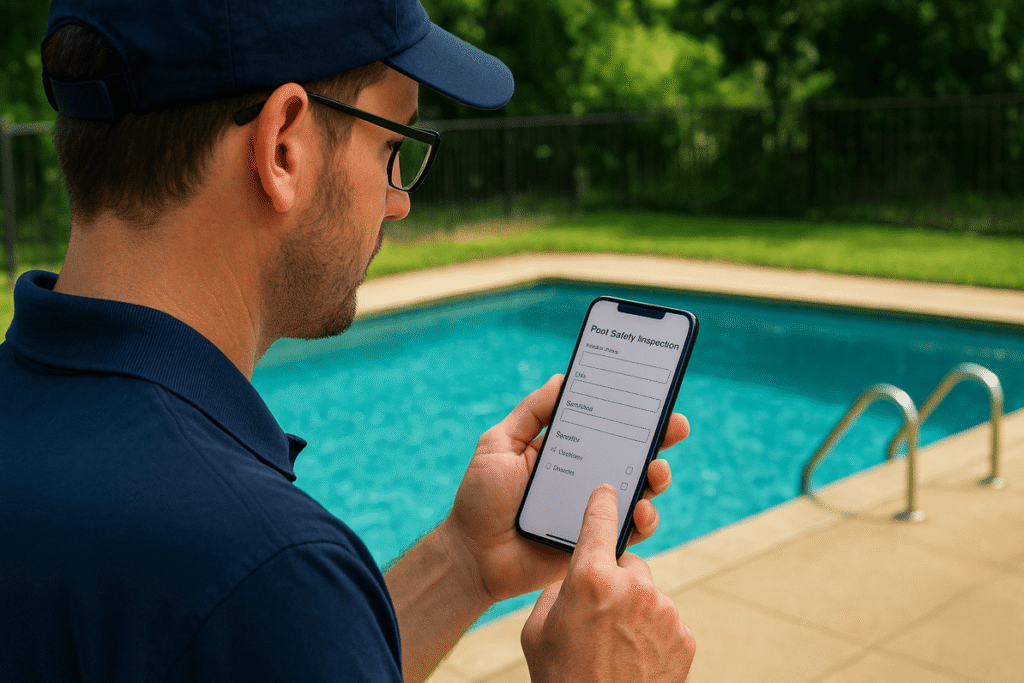
A pool safety inspection checks five main areas: water chemistry, structural condition, equipment function, safety barriers, and electrical systems. Each area must be in good shape for a pool to be safe, code-compliant, and enjoyable to use. Skipping any one of them can lead to costly repairs, safety violations, or serious injury. This guide covers what every pool owner in Jefferson, Braselton, and across North Georgia needs to know about what gets checked, why it matters, and what happens when problems are found.
What to Look for in a Pool Inspection
What to look for in a pool inspection includes the pool shell, water chemistry, all mechanical equipment, fencing and safety barriers, electrical wiring, and the surrounding deck. A thorough inspection covers every visible and accessible part of the pool system, from the plumbing lines to the drain covers to the gate latch on the fence. According to SafetyCulture’s pool inspection framework, a comprehensive checklist addresses safety features, physical condition, equipment operation, water quality, and local code compliance in a single visit.
Pool owners in Jefferson, Hoschton, Commerce, and surrounding communities often schedule inspections for one of three reasons: they are buying or selling a home with a pool, they are preparing for the swim season, or they want to catch small problems before they turn into large ones. All three are smart reasons. An inspection that takes just one to two hours can save thousands of dollars in repairs that go undetected until they become structural failures.
According to data from the CDC, routine pool inspections identified serious code violations in 12.1% of pools inspected in one national study, resulting in immediate pool closures. That is roughly one in eight pools. Most of those problems would not have been visible without a trained eye evaluating the pool systematically.
What Are the 3 C’s of Pool Maintenance?
The 3 C’s of pool maintenance are Circulation, Cleaning, and Chemistry. These three elements work together to keep a pool safe, clear, and structurally sound. Every pool inspection reviews all three of them because a failure in any one area creates problems across the other two.
Circulation refers to how well the pump and filter system moves water through the pool. Water that is not circulating properly becomes stagnant, which promotes algae growth and bacterial buildup. Cleaning covers the physical removal of debris, brushing of walls and floors, vacuuming, and skimmer maintenance. Chemistry is the balance of chlorine, pH, alkalinity, and other chemical levels that keep the water safe to swim in and protect the pool surface from deterioration.
According to the CDC, disinfectant level violations were found in 10.7% of pool inspections in a national study, and pH level violations appeared in 8.9% of inspections. These numbers reflect how common chemical imbalances are, even in pools that appear clean from the outside. Regular pool cleaning services address all three C’s consistently throughout the season.
What Is the First Thing an Inspector Wants to See?
The first thing an inspector wants to see is water clarity. If the pool water is clear enough to see the main drain at the deepest point, that is a strong early indicator that the circulation and chemical systems are functioning. Cloudy water is both a health risk and a safety risk because it can hide a swimmer in distress beneath the surface. According to the Water Quality and Health Council, pool water should be as clear as drinking water by industry standard.
After checking water clarity, a professional inspector typically notes the pool’s age, type, and size. This information helps determine which equipment is likely original versus replaced, what surface materials are present, and how much wear to expect based on the pool’s history. If maintenance records are available, a good inspector reviews them before starting any hands-on evaluation.
What Happens During a Pool Inspection?
During a pool inspection, a trained professional evaluates the pool and all connected systems in a structured sequence. The inspection covers the pool shell, interior surface, tile and coping, decking, all mechanical equipment, plumbing, electrical components, fencing and barriers, water chemistry, and any special features like spas, slides, or water features. According to HomeGuide’s 2026 data, most pool inspections take one to two hours and cost $200 to $500 on average, depending on pool size, design complexity, and geographic location.
Inspectors typically power on the equipment during the visit to test it live. If pumps, filters, or heaters are running, an inspector can identify unusual sounds, pressure irregularities, or operational failures in real time. What they cannot do in a standard inspection is dismantle or open equipment internally. The inspection is a visual and operational evaluation, not a full mechanical teardown.
After the inspection, the homeowner receives a written report with findings, photos, and recommended actions ranked by priority. Issues are generally categorized as immediate safety concerns, code violations, maintenance items, and general observations.
What Do Home Inspectors Check for Around a Pool?
Home inspectors check for safety barriers, electrical hazards, deck condition, drainage, and the general compliance of the pool area with local codes when evaluating the surroundings of a pool. The immediate pool area, including the deck, fencing, lighting, and any adjacent structures, is part of the inspection because many pool injuries happen not in the water but getting to it or from it.
Cracked or uneven deck surfaces are a common finding. A deck that has separated from the pool wall, shifted due to ground settling, or developed trip hazards near entry steps is flagged as a safety concern. The position of roof gutters and the slope of surrounding land are also noted, since improper drainage can push water toward the pool, affect water chemistry, and contribute to deck deterioration over time. In neighborhoods across Braselton, Gainesville, and Winder, drainage from nearby slopes is something inspectors pay close attention to.
What Are Red Flags in a Home Inspection Related to a Pool?
The red flags in a home inspection related to a pool are structural cracks in the shell, unexplained water loss, non-compliant fencing, corroded or exposed electrical wiring near the pool, failed or missing drain covers, and equipment that does not turn on or operate correctly. Any one of these issues can be a sign of a larger problem beneath the surface. Multiple red flags found together typically indicate a pool that has not been properly maintained and may require significant investment to bring back to safe operating condition.
An inspector may recommend a secondary pressure test of the plumbing system if multiple red flags appear. This test identifies hidden leaks in underground pipes that would not be visible during a standard visual inspection. According to Guardian Angel Inspections, imbalanced water chemistry that has been left uncorrected often leads to surface staining and calcium deposits, which are additional red flags that point to a history of neglect.
What to Check During a Pool Inspection: The Full Checklist
Water Chemistry
Water chemistry checks during an inspection measure pH, free chlorine, alkalinity, and cyanuric acid levels. The safe pH range for pool water is 7.2 to 7.8, according to the CDC. Chlorine should test between 1 and 4 parts per million for a residential pool. When pH is too low, the water becomes acidic and corrodes metal fittings, strips pool plaster, and irritates swimmers’ skin and eyes. When pH climbs too high, chlorine loses much of its ability to kill bacteria and other pathogens.
An unsafe chlorine level in a pool is anything outside the 1 to 4 ppm range. Levels below 1 ppm allow bacteria to multiply rapidly. Levels above 10 ppm can cause skin reactions, respiratory irritation, and damage to pool surfaces. According to the CDC’s pool safety guidelines, pool chemical injuries send approximately 4,500 people to U.S. emergency departments each year, and over one-third of those injured are children or teenagers. Regular testing keeps chlorine at a level that is both effective and safe.
Pool Shell and Interior Surface
The pool shell inspection covers the interior surface for cracks, discoloration, pitting, rough patches, and any signs of structural movement. According to SafetyCulture’s pool inspection framework, inspectors check coping stones and tiles for chips or looseness, examine the plaster or pebble finish for spalling and staining, and look for open joints that could indicate water intrusion or settling beneath the shell.
For vinyl liner pools, the inspector examines the liner for tears, wrinkles, fading, and loss of elasticity near the waterline. Any separation at the bead or track is noted. Liner tears, even small ones, allow water to seep between the liner and the pool wall, where it can cause structural damage that is far more expensive to repair than the liner itself. For concrete and gunite pools, hairline cracks may be normal, but structural cracks that run continuously or show water seepage require immediate attention.
Equipment: Pump, Filter, and Heater
The equipment inspection verifies that the pump, filter, and heater are all operating correctly. The pump is tested while running to check for unusual noise, leaks at fittings, and proper pressure. The filter, whether cartridge, sand, or diatomaceous earth, is checked for condition and flow. A clogged or failing filter leads directly to poor water clarity and reduced chemical effectiveness. The heater, if present, is checked for proper installation, adequate clearances, correct installation downstream of the pump and filter, and visible bonding and grounding connections.
According to HomeGuide’s 2026 repair cost data, replacing a pool pump runs $300 to $1,600, a filter system costs $250 to $1,700, and a new heater ranges from $1,600 to $5,200. Finding a heater that is beginning to fail during an inspection, rather than after it breaks down mid-season, allows homeowners to plan and budget rather than face an emergency replacement. Timely pool repair following an inspection keeps these costs manageable.
Plumbing and Drain Covers
The plumbing inspection includes all visible pipes, fittings, skimmer lines, and return jets. Inspectors check for dripping, staining around fittings, and evidence of prior repairs that may indicate recurring leaks. Drain covers receive special attention during every inspection because a missing, broken, or non-compliant drain cover creates an entrapment risk. The Virginia Graeme Baker Pool and Spa Safety Act requires that all public pools and spas use drain covers that meet ASME/ANSI standards to prevent suction entrapment. While this federal law applies to public pools, residential pool owners are encouraged to meet the same standard for safety.
A simple bucket test can indicate whether the pool is losing water through evaporation or through a plumbing leak. If the water level in a bucket placed on the pool step drops at the same rate as the pool’s overall water level, evaporation is the likely cause. If the pool loses water faster than the bucket does, a plumbing leak is suspected and a pressure test is recommended.
Electrical Systems
Electrical safety near a pool is one of the most critical parts of any inspection. Inspectors verify that all electrical wiring is not routed directly over the pool, that receptacles within 6 to 20 feet of the pool edge are protected by ground fault circuit interrupters (GFCIs), and that the pool’s bonding and grounding connections are visible and intact. The InterNACHI pool inspection checklist specifically calls out bonding and grounding verification as a mandatory item.
GFCI protection is not optional. Electrical current in water can incapacitate a swimmer instantly, leading to drowning without any visible shock injury. According to the International Swimming Pool and Spa Code referenced by Georgia’s pool safety standards, all electrical equipment associated with the pool recirculation system and equipment within 5 feet of the pool wall must be bonded and grounded. The disconnect switch must be located at least 5 feet from the pool edge.
Safety Barriers: Fencing and Gates
The fencing and gate inspection verifies that the pool barrier meets local code requirements and is physically secure. In Georgia, all pools deeper than 2 feet must be enclosed by a lockable fence at least 4 feet high, according to the Rules and Regulations of the State of Georgia, Chapter 511-3-5. Jackson County, which includes Jefferson, follows the Georgia state pool fence code closely. Gates must be self-closing and self-latching, with the latch located at a minimum of 54 inches above the ground, or no lower than 3 inches below the top of the gate on the pool side. Gaps between fence slats and under the fence cannot exceed 4 inches.
According to the CPSC, 69% of child drownings occur when a parent or caregiver was nearby but momentarily distracted. A compliant, functioning fence is the single most effective barrier between an unsupervised child and an open pool. Inspectors check that no gaps exist in the barrier, that the gate swings outward away from the pool, and that no furniture, equipment, or landscape features within 36 inches of the fence exterior can be used as a climbing aid. Homeowners across Braselton, Hoschton, and Gainesville are subject to these same standards.
Pool Lighting
Pool lights are checked for proper function, the presence of GFCI protection, and condensation inside the lens housing. Condensation inside an underwater light fixture is a sign of water infiltration, which can lead to electrical failure and mold inside the niche. LED underwater lights are now the standard for new pool builds because they consume less energy and last significantly longer than traditional incandescent fixtures. Deck lighting around the pool perimeter is checked for function and for placement that minimizes trip hazards in low-light conditions.
Deck and Surrounding Area
The pool deck is inspected for cracks, surface separation from the pool coping, standing water due to poor drainage, and trip hazards at steps or transitions. Decking around a pool in Jefferson or Gainesville absorbs heavy foot traffic during the long Georgia swim season, and surface wear is expected over time. Minor surface cracking is normal, but deck sections that have shifted or heaved due to ground movement beneath them are a concern because they can indicate deeper settlement issues near the pool shell itself.
Pairing a well-maintained deck with quality custom patio hardscape around the pool not only improves the appearance of the outdoor space but creates a more durable, slip-resistant surface that holds up better season after season than standard concrete.
Special Features: Spas, Slides, and Water Features
If the pool includes a spillover spa, a waterslide, or any water features, those are inspected as well. Spas are checked for proper bonding, correct temperature controls, functioning jets, and the presence of an emergency shut-off switch that is clearly labeled and accessible. Slides are examined for rust, sharp edges, structural stability, and proper approach depth in the landing zone. Water features such as waterfalls, sheer descents, and deck jets are checked for leaks at the fittings and proper operation of the water pump and valve system.
Homeowners in Jefferson and Braselton who have spillover spas connected to their pools should make sure the spa portion of the system is included explicitly in any inspection they schedule. Spa systems have unique electrical and plumbing components that require separate verification.
What Is an Unsafe Chlorine Level in a Pool?
An unsafe chlorine level in a pool is below 1 part per million or above 10 parts per million. Below 1 ppm, chlorine cannot effectively neutralize bacteria, viruses, and algae. According to the CDC, pools should not operate with a sanitizer level of zero ppm under any circumstances. At that level, the risk of recreational water illness increases dramatically. Above 10 ppm, chlorine can irritate swimmers’ eyes, skin, and respiratory systems. In very high concentrations, it can cause more serious health reactions, particularly in children.
The target range for a residential pool is 1 to 4 ppm for free chlorine, with a pH of 7.2 to 7.8. Cyanuric acid, which is a stabilizer that protects chlorine from UV degradation, should not exceed 100 ppm in an outdoor pool, according to multiple state pool health codes. When cyanuric acid climbs too high, it reduces the effectiveness of chlorine even when the chlorine level tests within range. This is sometimes called “chlorine lock” and can make a pool appear clean while still being unsafe.
Why Do People Put Baking Soda in Their Swimming Pools?
People put baking soda in their swimming pools to raise the total alkalinity and stabilize the pH level. Baking soda, which is sodium bicarbonate, acts as a pH buffer. When a pool’s alkalinity is too low, the pH becomes unstable and fluctuates rapidly in response to rain, swimmer load, or chemical additions. This instability can cause pH to swing into the acidic range, which damages pool surfaces, irritates swimmers, and reduces chlorine effectiveness.
The ideal total alkalinity range for pool water is 80 to 120 ppm. When alkalinity drops below this range, adding baking soda raises it back into the proper zone, which also helps stabilize the pH. It is a common and safe adjustment that most pool owners perform at some point during the season. However, baking soda should always be added in measured amounts, dissolved in a bucket of pool water before being distributed around the pool perimeter, not dumped directly in one spot.
What Are the Signs of an Unhealthy Pool?
The signs of an unhealthy pool are cloudy or discolored water, a strong chemical smell, slippery or slimy walls, visible algae growth, foamy water, eye or skin irritation after swimming, and a pool that cannot maintain clarity even after treatment. Each of these signs points to a specific underlying problem. Cloudy water usually means filtration failure or chemical imbalance. A strong chlorine smell is not a sign of too much chlorine. It is actually a sign that chlorine is combining with contaminants like sweat and organic debris to form chloramines, which are less effective at sanitizing the water.
Green water is a clear sign of algae growth, which happens when chlorine levels drop and sunlight triggers rapid algae reproduction. Yellow or mustard-colored water can indicate mustard algae, which is more resistant to standard chlorine treatment. Brown or rust-colored water often points to metals in the water, typically iron or copper, that have oxidized. Any of these conditions should prompt an immediate professional assessment before the pool is used. Scheduling a pool inspection at the first sign of chronic water issues is the most cost-effective step a homeowner can take.
Pool Safety Inspection: What Each Area Covers at a Glance
| Inspection Area | What Gets Checked | Common Issues Found |
|---|---|---|
| Water Chemistry | pH, chlorine, alkalinity, cyanuric acid | pH out of range, low chlorine, high stabilizer |
| Pool Shell & Surface | Cracks, staining, plaster condition, tiles | Structural cracks, spalling plaster, loose coping |
| Equipment | Pump, filter, heater, skimmers, timers | Pump leaks, clogged filters, failing heater |
| Plumbing & Drains | Pipes, fittings, drain covers, return jets | Hidden leaks, missing/broken drain covers |
| Electrical | GFCI protection, bonding, grounding, wiring | Missing GFCIs, improper wiring proximity |
| Fencing & Gates | Height, latch, self-closing mechanism, gaps | Non-compliant height, broken latch, gap violations |
| Deck & Surroundings | Cracks, drainage, trip hazards, gutters | Settlement cracks, poor drainage, heaved sections |
| Lighting | Underwater lights, deck lighting, GFCI | Condensation in fixtures, failed bulbs |
| Special Features | Spa, slide, waterfall, water features | Rust on slides, spa bonding issues, leaking fittings |
Sources: InterNACHI Pool & Spa Inspection Checklist, SafetyCulture Pool Inspection Framework, CDC Healthy Swimming Guidelines, HomeGuide 2026, Georgia Pool Safety Code Chapter 511-3-5, Halogen Supply Company.
Frequently Asked Questions
What to look for in a pool inspection in Jefferson, GA?
In a pool inspection in Jefferson, Georgia, a professional will check water chemistry, the pool shell and surface, all mechanical equipment, plumbing, electrical systems, fencing and gates, the deck, and any additional features like spas or water features. Jackson County follows Georgia’s state pool safety code closely, and pools in ZIP codes 30549, 30517, and 30565 must meet fencing and barrier requirements under state regulations. A full inspection in Jefferson typically takes one to two hours and produces a written report with prioritized findings.
How long do pool inspections take?
Pool inspections take one to two hours on average for a standard residential inground pool. According to HomeGuide’s 2026 data, larger pools with more complex designs, extra water features, or spas attached may take longer to inspect thoroughly. Pools in communities like Braselton, Hoschton, and Commerce that include waterfalls, attached spillover spas, or automated systems may require additional time to verify all components. The written report is typically provided the same day or within 24 hours after the visit.
How much should a pool inspection cost in North Georgia?
A pool inspection in North Georgia typically costs $200 to $500 on average, based on 2026 data from HomeGuide. The cost depends on the pool size, design complexity, age, and the number of extra features being evaluated. Larger pools with connected spas, slides, or extensive water feature systems may be on the higher end of that range. Combining a pool inspection with a seasonal opening service is a cost-effective way to get a full system evaluation before the swim season begins.
What are common pool maintenance mistakes homeowners make?
Common pool maintenance mistakes are neglecting water chemistry testing, failing to clean the filter on schedule, not winterizing the pool correctly, ignoring small cracks or leaks until they worsen, and skipping annual professional inspections. According to South West Pools, most pool owners underestimate their annual maintenance costs by about 40%, often because they delay addressing minor issues. Homeowners across Gainesville, Winder, and Lawrenceville who skip the spring inspection often discover equipment that failed over winter only after the pool is already open and full of water.
What is a 7-point pool inspection?
A 7-point pool inspection is a structured checklist format that covers seven key areas of the pool system: water chemistry, pool shell and surface, mechanical equipment, plumbing and drains, electrical safety, barriers and fencing, and the deck and surrounding area. Some inspectors use this framework as a baseline, while others expand their checklist to include spas, water features, lighting, and special accessories. The term is used by different service providers and may vary slightly in scope, but the core intent is always the same: a complete, systematic evaluation of the pool’s safety and condition.
What does vinegar do to a pool?
Vinegar lowers the pH of pool water because it is a mild acid. Some homeowners use diluted white vinegar to clean calcium and scale deposits from pool tile at the waterline, since the acid dissolves mineral buildup without the aggressiveness of stronger chemicals. However, adding vinegar directly to pool water in significant amounts will lower the pH and alkalinity, potentially making the water corrosive to pool surfaces and equipment. It is not a substitute for proper pH adjustment using pool-grade chemicals like muriatic acid. Any pH adjustments should be made carefully with the correct pool chemicals and tested before swimmers use the pool.
Do pools in Braselton and Jefferson require a safety fence?
Yes, pools in Braselton and Jefferson require a safety fence. Under Georgia state law and local Jackson County regulations, all pools deeper than 2 feet must be enclosed by a lockable fence at least 4 feet high. Gates must be self-closing and self-latching, with the latch positioned at least 54 inches above the ground. Gaps under and between fence sections cannot exceed 4 inches. Failure to maintain a compliant barrier can result in code violations, insurance complications, and personal liability if an accident occurs on the property.
Final Thoughts
A pool safety inspection is not just a checklist. It is a systematic review of every component that keeps a pool safe, functional, and enjoyable. Water chemistry, the pool shell, mechanical equipment, plumbing, electrical systems, safety fencing, and the deck all need to be evaluated together as one interconnected system. A problem in one area almost always has effects on another. Catching issues early, before they compound into structural failures or safety hazards, is what makes annual inspections so valuable for pool owners across Jefferson, Braselton, Hoschton, and the rest of North Georgia.
If your pool is due for an inspection, or if you have noticed any of the warning signs discussed in this guide, now is the time to act. Sandals Luxury Pools serves homeowners throughout Jackson County and the greater North Georgia area with professional pool inspections, repairs, cleaning, and seasonal services. Reach out to Sandals Luxury Pools today to schedule a thorough assessment. For homeowners who have not yet had a pool built and want to start with a system designed to last and pass every inspection from day one, explore our custom inground pool options and let us design something built right from the ground up.
