
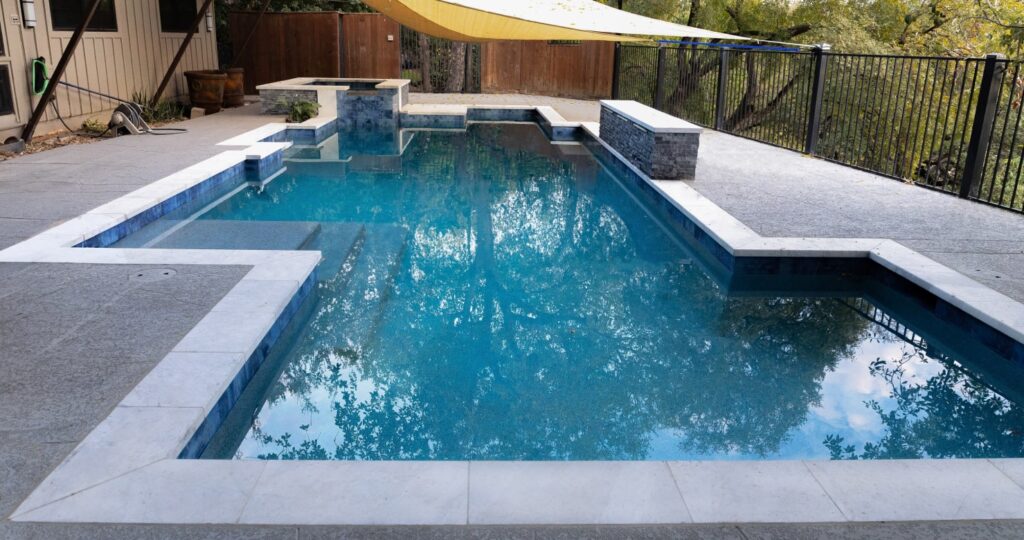
The signs you need to replaster your swimming pool include rough or abrasive surfaces, persistent stains that will not come off, visible cracks, plaster flaking or peeling, dark spots where the concrete shows through, unexplained water loss, and recurring algae despite proper chemical treatment. On average, pool plaster lasts about 7 to 10 years before it needs to be replaced according to multiple pool industry sources. Gunite pools, which are the most common type in Jefferson, Georgia, typically need replastering every 7 to 15 years depending on water chemistry, usage, and climate. If your pool is showing any of these warning signs, acting quickly protects the structure, keeps the water safe, and saves you money on bigger repairs down the road.
How Do I Know if My Pool Needs to Be Replastered?
You know your pool needs to be replastered when the surface shows clear signs of deterioration that cleaning and chemical treatment cannot fix. The plaster on your pool is not just decorative. It is the waterproof barrier that protects the concrete or gunite shell from water damage. When that barrier fails, problems multiply fast.
The most reliable indicators are physical changes you can see and feel. Run your hand along the pool wall. If it feels like sandpaper instead of smooth stone, the plaster is breaking down. Look for stains that remain after brushing and chemical treatment. Check for peeling or flaking. Watch your water level for unusual drops. And pay attention to whether algae keeps coming back in the same spots even though your chlorine levels are fine.
According to TaylorMade Pools, a pool replastering specialist, several factors influence how quickly plaster deteriorates, including the age of the existing surface, the quality of water chemistry maintenance, and the amount of wear and tear the pool experiences. Pool owners in Jefferson, Georgia who maintain proper water balance and schedule regular pool cleaning services often get more years out of their plaster than those who let maintenance slide.
What Does a Pool That Needs to Be Replastered Look Like?
A pool that needs to be replastered looks worn, stained, and uneven. The surface may appear mottled with patches of lighter and darker color. Stains from copper, iron, calcium, and salt deposits create blueish-gray, brown, or white discoloration that makes the pool look dirty even when the water is chemically balanced.
You may also see areas where the plaster has peeled away, exposing rough patches of the underlying concrete. In some spots, the plaster may be so thin that dark areas show through where the gunite shell is visible beneath the surface. Cracks, both small spider-web patterns and larger straight or zigzag lines, may be visible on the walls, floor, and steps.
According to Alan Smith Pools, one of the largest pool resurfacing companies in the United States, rough areas are found in up to 78% of pools requiring replastering. The roughness traps dirt and algae, making the pool harder to clean and less inviting to swim in. If your pool looks like it has aged beyond its years, replastering restores it to like-new condition.
How to Tell if Pool Plaster Is Bad?
To tell if pool plaster is bad, check for these specific signs: a rough or gritty texture when you touch the walls or floor, visible pitting or divots in the surface, plaster that is flaking or peeling in sheets (called spalling), stains that resist all cleaning efforts, dark spots where the plaster has worn thin, and cracks that are growing wider or deeper over time.
According to 4EverClear Pool Chemical, a pool maintenance company, the first thing many pool owners notice is the feel of the surface. Scratched or roughened feet after stepping out of the pool, snagged swimsuits, and an unpleasant feeling when running your hand along the walls are all signs the plaster is past its prime. Visible dirt collecting in cracks and pitted areas is another clear indicator.
Bad plaster is more than a cosmetic issue. A deteriorating surface becomes porous, which means it absorbs chemicals, minerals, and organic material. This makes it nearly impossible to maintain balanced water chemistry and creates a breeding ground for bacteria and algae. The Centers for Disease Control and Prevention recommends maintaining a free chlorine level of at least 1 ppm and a pH between 7.2 and 7.8 for safe swimming. When the plaster is failing, holding those levels becomes a constant battle.
Homeowners in Jefferson, GA and across North Georgia who are fighting a losing battle with water clarity and chemistry despite regular maintenance should have the plaster inspected. A professional pool inspection can confirm whether replastering is the right solution.
How to Tell if a Pool Crack Is Structural?
To tell if a pool crack is structural, look at the crack’s size, depth, location, shape, and whether it is growing over time. Structural cracks are wider than 1/8 inch, extend deep into or through the pool shell, run in straight or zigzag patterns, and often appear on the walls or floor of the pool. They may also be accompanied by water loss, uneven deck surfaces, or bulging walls.
Non-structural cracks, also called surface or cosmetic cracks, are typically hairline thin, shallow, and limited to the plaster layer. Spider web cracking (also known as craze cracking) is a common cosmetic issue caused by the natural curing process of cement. These cracks do not penetrate the shell and usually do not cause leaks. According to Torque Lock, a pool structural repair company, surface cracking is generally a maintenance or repair issue, not a structural threat.
Structural cracks, on the other hand, can compromise the entire pool. According to Superior Pool Service, a pool repair specialist, structural cracks are caused by soil movement, ground settling, hydrostatic pressure, or poor construction. If a structural crack goes unrepaired, the water leaking through it can erode the soil underneath the pool, create voids, and cause further settling and cracking. The crack will grow larger over time and become more expensive to fix.
If you notice any crack wider than a hairline, or if you see a crack paired with unexplained water loss, contact a professional immediately. Pool repair specialists can determine whether a crack is cosmetic or structural and recommend the right repair method before the damage spreads.
What Do Non-Structural Cracks Look Like?
Non-structural cracks look like thin, shallow lines or web-like patterns on the plaster surface. They are typically less than 1/8 inch wide and do not extend beyond the plaster into the concrete or gunite shell beneath. The most common type is spider web cracking, which appears as a cluster of small cracks radiating from a central point.
According to pool structural experts, these surface cracks are a normal part of cement aging. They become more visible over time, especially when the pool is drained and exposed to sunlight. Dirt and debris can settle into these fine cracks and darken them, making them look worse than they are. In most cases, non-structural cracks can be addressed during replastering without any structural repair needed.
However, pool owners should not assume all small cracks are harmless. If a crack is growing, if multiple cracks appear in the same area, or if the crack is accompanied by water loss, it deserves a professional evaluation. Homeowners near Braselton, Hoschton, and Jefferson, Georgia can schedule a pool inspection to get a clear answer.
Why Is My Pool Losing 2 Inches of Water a Day?
Your pool losing 2 inches of water a day is not normal evaporation and almost certainly indicates a leak. Normal evaporation in a Georgia summer removes about 1/4 to 1/2 inch of water per day depending on temperature, humidity, wind, and sun exposure. Losing 2 inches per day points to a crack in the plaster or shell, a failing fitting, or a plumbing leak.
According to pool leak detection experts, the first step is to do a simple bucket test. Fill a bucket with pool water and set it on the pool step with the water level inside the bucket matching the pool water level. Wait 24 hours. If the pool water level drops significantly more than the water in the bucket, you have a leak, not just evaporation.
Cracks in deteriorating plaster are a common source of pool leaks. As plaster ages and becomes porous, water can seep through the surface into the shell and eventually into the surrounding soil. According to CalTech Pools, a pool repair company, water leaking through structural cracks will erode the soil underneath the pool and can create hollow pockets that lead to further settling and damage.
If your pool is losing water at this rate, do not wait. Contact a pool repair professional to locate the leak and assess whether replastering, crack repair, or plumbing work is needed.
Is It Better to Replaster or Resurface a Pool?
It is better to replaster a pool when the old plaster has failed and needs to be completely removed down to the shell. It is better to resurface when you want to add a new layer over the existing surface or upgrade to a different material like quartz or pebble. In practice, the terms are often used interchangeably, but they describe slightly different processes.
According to Miller Pools, a pool replastering company with over 30 years of experience, replastering involves stripping the old plaster completely, repairing the exposed shell, applying a bond coat, and then applying fresh plaster. Resurfacing can mean applying a new finish over the existing surface after proper preparation. Replastering is more thorough and typically lasts longer because it starts from a clean foundation.
If your pool has significant cracking, spalling, or structural damage, replastering is the right choice because it allows the crew to repair the shell before applying the new surface. If the existing surface is mostly intact but worn and stained, resurfacing may be sufficient and less expensive.
Pool owners across Jefferson, Georgia and the greater North Georgia area who are unsure which approach is best should have the pool evaluated by a professional. The condition of the existing surface determines the right path forward.
Can You Replaster a Pool Over Old Plaster?
You can replaster a pool over old plaster in some cases, but it is not the recommended approach for pools with significant damage, cracking, or delamination. Applying new plaster over a failing surface creates a weak bond that will not last. The new plaster is only as strong as what it is attached to.
According to pool industry best practices, the old plaster should be removed or at least roughened and bond-coated before new material is applied. Chipping, sandblasting, or hydro-blasting removes the old surface and gives the new finish a solid foundation. Skipping this step often leads to premature failure of the new plaster, sometimes within just a few years.
If the old plaster is still in reasonably good condition with no delamination, a thin resurfacing layer can sometimes be applied successfully. But for most pools in the 7 to 15 year range that are showing signs of failure, a full removal and replaster is the better investment. It costs more upfront but delivers a surface that lasts the full expected lifespan of the chosen material.
How Many Times Can a Pool Be Replastered?
A pool can be replastered multiple times over its life. There is no set limit. As long as the concrete or gunite shell underneath is structurally sound, a new plaster surface can be applied. Many pools have been replastered three, four, or even five times over decades of use.
Each replastering job strips the old surface back to the shell, repairs any damage, and applies a fresh finish. The shell itself can last 50 years or more with proper care. According to Pool Research, it does not always make sense to keep replastering a pool that constantly needs repairs. If the shell has extensive structural damage, repeated replastering is just putting new skin on a failing structure. At some point, more significant renovation or even rebuilding may be the smarter choice.
For most well-built pools in Jefferson, GA and surrounding areas, multiple replastering cycles over the pool’s lifetime are completely normal and expected.
What Is the Best Time of Year to Replaster a Pool?
The best time of year to replaster a pool is during the fall or spring when temperatures are between 50 and 75 degrees Fahrenheit. Plaster cures best in mild conditions. If it is too hot, the plaster dries too quickly and can crack. If it is too cold, it takes longer to cure and may not bond properly.
According to Angi (formerly Angie’s List), wind and rain are also important factors. Wet plaster that gets rained on before curing will not set correctly. Windy conditions can blow dust and debris onto the sticky surface. Choosing a stretch of calm, dry weather is essential for the best result.
In Jefferson, Georgia, the ideal window falls between October and early April. According to the National Weather Service, September and October are the driest months in North Georgia, making early fall an excellent choice. Spring works well too, but March is the wettest month in the region, so timing around rain is important. Planning replastering during the off-season also means your pool is ready to go when summer arrives.
If your pool is approaching the end of its plaster life, scheduling the work before pool closing for winter means you start the next season with a fresh, beautiful surface.
How Long Does Replastering a Pool Take?
Replastering a pool takes 5 to 14 days on average, depending on the pool size, the condition of the shell, the material chosen, and weather conditions. Simple plaster jobs on standard residential pools typically take 5 to 7 days. More complex projects involving structural repairs, tile replacement, and premium finishes can extend to 2 to 3 weeks.
According to Emerald Pools and Spas, a pool resurfacing company, the core work includes draining (1 day), surface prep and repairs (2 to 5 days), finish application (1 to 2 days), and filling plus initial water treatment (7 to 10 days). The initial curing period requires daily monitoring, twice-daily brushing, and careful chemical management to protect the new surface as it hardens underwater.
Weather delays are the biggest variable. One day of unexpected rain can push the entire schedule back. Pool owners in Jefferson, GA should plan for a 2-week window to be safe and avoid scheduling during the wettest periods of the year.
What Happens if You Do Not Replaster a Pool?
If you do not replaster a pool when it needs it, the problems will compound and become more expensive to fix. Small cracks grow into large cracks. Rough patches spread across the entire surface. Stains penetrate deeper into the material. Algae becomes harder and more expensive to control because it embeds in the porous, failing finish.
According to Summerhill Pools, a pool renovation specialist, untreated cracks can lead to leaks that drastically raise water bills and can damage the pool’s foundation. Water seeping through a cracked surface erodes the soil around the shell, which can cause deck settling, coping damage, and further structural cracking. What starts as a simple replastering job can turn into a major structural repair project if it is ignored too long.
A deteriorating surface also affects water chemistry. Porous plaster absorbs chemicals, making it harder to maintain proper chlorine and pH levels. According to the CDC, a free chlorine level of at least 1 ppm and a pH between 7.2 and 7.8 are necessary for safe recreational swimming. When the plaster is failing, maintaining those levels becomes a constant, losing battle.
For homeowners across Athens, Gainesville, and Jefferson, Georgia, the message is clear: catching plaster failure early and acting on it saves money and protects the long-term value of your pool.
What Are the 3 B’s of Pool Care?
The 3 B’s of pool care are Brush, Balance, and Backwash. These three habits form the foundation of routine pool maintenance and directly affect how long your plaster lasts.
Brush: Brushing the pool walls, floor, and steps at least once a week removes algae, calcium deposits, and debris before they can embed in the surface. According to pool maintenance experts, regular brushing prevents buildup that can stain and erode plaster over time.
Balance: Keeping the water chemistry balanced is the single most important factor in plaster longevity. pH, total alkalinity, calcium hardness, and chlorine levels must all stay within recommended ranges. Acidic water (low pH) dissolves the calcium in plaster, causing etching and roughness. High calcium causes scale deposits that harden on the surface. Balanced water protects the plaster and keeps it smooth for years.
Backwash: Cleaning or backwashing the filter regularly keeps the circulation system working efficiently. A dirty filter forces the pump to work harder, reduces water turnover, and allows contaminants to stay in the water longer. Proper filtration supports everything else you do to maintain the pool.
Pool owners in Jefferson, GA who follow the 3 B’s consistently extend the life of their plaster and spend less on repairs. Professional pool cleaning services handle all three of these tasks on a regular schedule.
What Are the Signs of an Unhealthy Pool?
The signs of an unhealthy pool include cloudy or green water, a strong chemical smell, eye and skin irritation after swimming, visible algae on walls or floors, slippery surfaces, and foam on the water surface. These signs indicate that the water chemistry is out of balance, the filtration system is not working properly, or the pool surface is failing.
According to the CDC, a properly maintained pool should have clear water with no strong odor. The smell most people associate with chlorine is actually caused by chloramines, which form when chlorine reacts with contaminants like sweat, urine, and body oils. A strong chemical smell means the pool needs more chlorine, not less.
Algae growth despite regular chemical treatment is a particularly telling sign that the plaster may be the problem. When the surface is porous and cracked, algae spores embed in the crevices where chlorine cannot reach them. No amount of shocking or algaecide will permanently solve the problem until the surface is replastered.
If your pool in the Dacula, Buford, or Lawrenceville area shows these signs, start with a water chemistry test. If the chemistry is fine but the problems persist, the surface itself is likely the culprit and a professional pool inspection is the next step.
What Is the Longest Lasting Pool Resurfacing?
The longest lasting pool resurfacing is a pebble finish. According to PebbleTec, the leading manufacturer of pebble pool finishes, their products can last over 20 years with proper water chemistry and maintenance. Pebble finishes resist staining, cracking, and fading far better than plaster or quartz aggregate.
Quartz aggregate finishes like Diamond Brite and StoneScapes are the next most durable option, lasting 12 to 15 years according to B&D Pools. Standard white plaster has the shortest lifespan at 7 to 10 years. Glass bead finishes fall in between at 10 to 15 years. Full tile finishes can last decades but are the most expensive option.
For pool owners in North Georgia who want to minimize the number of times they replaster over the life of their pool, investing in a pebble or quartz finish pays for itself in longevity, reduced maintenance, and fewer disruptions. A custom pool with a premium finish starts strong and stays strong for decades.
Is It Cheaper to Remodel a Pool or Build a New One?
It is almost always cheaper to remodel a pool than to build a new one. Replastering, equipment upgrades, tile replacement, and deck resurfacing combined still cost a fraction of new pool construction. According to data from the National Association of Realtors, the average cost of building a new inground pool runs $50,000 or more, while resurfacing and remodeling projects range from a few thousand to around $15,000 depending on the scope.
The exception is when the pool shell has extensive structural damage that makes repair impractical. If the gunite or concrete shell is cracked in multiple places, shifting, or compromised beyond reasonable repair, rebuilding may be the only viable option. A professional evaluation can determine whether your pool is a candidate for remodeling or needs more extensive work.
For most pool owners in Jefferson, Georgia and the surrounding communities, replastering and updating the existing pool is the smart financial move. It restores the pool to new condition at a fraction of the cost of starting from scratch.
What Are Common Pool Replastering Problems?
Common pool replastering problems include crazing (fine surface cracks), discoloration or mottling, delamination (new plaster separating from the shell), rough spots from uneven application, and premature staining. Most of these problems are caused by improper application technique, poor surface preparation, or incorrect initial water treatment during curing.
According to pool industry forensics experts cited on Trouble Free Pool, the vast majority of plaster issues are a direct result of applicator errors, not water chemistry. Improperly mixed plaster, application over a dirty or wet surface, rushed curing, and failure to remove all old material before replastering are the most common causes of early failure.
Discoloration is the most frequent complaint. Colored plaster will naturally fade over time, especially with chlorine use. According to Creative Edge Pools, a pool plastering specialist with over 30 years of experience, every colored plaster pool will experience some bleaching within the first few years. This is a normal characteristic of cement-based finishes, not a defect. White plaster is the only finish immune to chlorine bleaching.
Choosing an experienced, reputable plastering crew is the best protection against these problems. In Jefferson, GA and across North Georgia, working with established pool repair professionals who have a track record of quality work gives you the best chance of a long-lasting result.
Pool Plaster Lifespan by Type
| Finish Type | Average Lifespan | Key Weakness | Key Strength |
|---|---|---|---|
| White Plaster | 7 to 10 years | Prone to staining, etching, roughness | Most affordable, classic smooth finish |
| Colored Plaster | 7 to 10 years | Chlorine bleaching causes fading | Custom water color, hides minor stains |
| Quartz Aggregate | 12 to 15 years | Higher cost than plaster | Better stain resistance, longer lasting |
| Pebble Finish | 15 to 20+ years | Higher upfront cost, textured feel | Most durable, stain and crack resistant |
| Glass Bead | 10 to 15 years | Newer material, less long-term data | Sparkling appearance, smooth feel |
Sources: PebbleTec, B&D Pools, Creative Edge Pools, TaylorMade Pools, Phoenix Pools and Spas.
Frequently Asked Questions
How Often Does an Inground Pool Need to Be Replastered in Jefferson, Georgia?
An inground pool in Jefferson, Georgia needs to be replastered every 7 to 15 years on average, depending on the finish material and how well the water chemistry is maintained. North Georgia’s hot summers, heavy rainfall (50 to 55 inches per year according to the National Weather Service), and temperature swings between seasons put extra stress on cement-based finishes. Regular maintenance and balanced water chemistry can push that timeline closer to 15 years, while neglected pools may need work in as little as 5 to 7 years.
Is It Okay to Replaster a Pool in Cold Weather?
It is not recommended to replaster a pool when temperatures are below 50 degrees Fahrenheit. Cold weather slows the curing process and can prevent proper bonding between the new plaster and the shell. According to Angi, the ideal temperature range for replastering is 50 to 75 degrees Fahrenheit. In Jefferson, GA, winter temperatures can dip into the 20s, so scheduling replastering for fall or early spring is the safest bet.
What Is the Next Step After Plastering a Pool?
The next step after plastering a pool is filling it with water and performing the initial water treatment. This curing phase lasts 7 to 10 days and requires daily water chemistry testing, twice-daily brushing of all surfaces, and careful chemical adjustment to protect the new finish as it hardens. Skipping or rushing this phase is one of the most common causes of premature plaster failure. Many pool owners in North Georgia hire a professional to manage this critical step.
What Is the Most Common Pool Plaster?
The most common pool plaster is standard white marcite plaster. It is a mixture of white cement, marble sand or limestone, and water. It provides a smooth, classic look and is the most affordable plaster option. White plaster has been the industry standard for decades and remains the most widely used finish on residential pools across the country, including in the Jefferson, Georgia area.
What Are the 3 C’s of Pool Maintenance?
The 3 C’s of pool maintenance are Circulation, Chemistry, and Cleaning. Circulation means running the pump and filter long enough each day to turn over all the water in the pool, typically 8 to 12 hours. Chemistry means testing and balancing pH, chlorine, alkalinity, and calcium hardness regularly. Cleaning means brushing, skimming, and vacuuming to remove debris and prevent buildup. Together, these three practices keep the water safe and protect the plaster surface for years.
How Do I Know When My Pool Needs Resurfacing vs. Just Cleaning?
You need resurfacing when the problems are in the plaster itself, not just on the surface. If stains come off with brushing or chemical treatment, your pool just needs cleaning. If stains remain despite treatment, if the surface feels rough, if plaster is flaking, or if you see cracks, the plaster is failing and cleaning will not fix it. A professional inspection can quickly tell you whether cleaning, acid washing, or full replastering is the right call for your pool in Jefferson, Georgia.
Does Replastering a Pool Add Value to My Home?
Yes, replastering a pool adds value to your home by improving both the appearance and the functional condition of the pool. According to the National Association of Realtors, a well-maintained inground pool can boost a home’s value by 5% to 8% in warm climate markets. A freshly replastered pool signals to buyers that the property has been well cared for, reducing concerns about expensive near-term repairs.
Final Thoughts
Your pool’s plaster is its first line of defense against water damage, algae, and structural deterioration. Recognizing the signs of failing plaster early, whether it is rough texture, stubborn stains, cracks, spalling, or unexplained water loss, gives you time to plan the replastering on your terms instead of in an emergency. The right finish material, a skilled crew, and proper curing and maintenance after the job is done will give you a surface that lasts for years and keeps your pool looking beautiful through every Georgia summer.
If your pool in Jefferson, Georgia or anywhere across North Georgia is showing signs that the plaster is wearing out, Sandals Luxury Pools has the expertise to evaluate the surface, recommend the best course of action, and deliver a replastering job that stands the test of time. From initial inspection through ongoing maintenance, the team is here to keep your pool in top shape. Reach out to the pool repair team today and give your pool the fresh start it deserves.
