
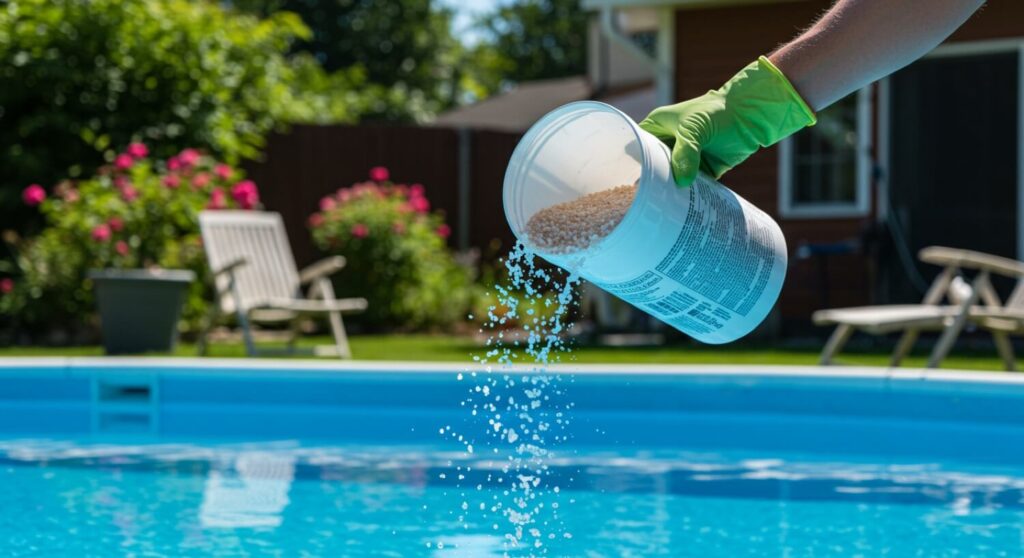
The fastest way to reduce chlorine levels in a pool is to add sodium thiosulfate (chlorine neutralizer) at a rate of 2 ounces per 10,000 gallons to lower chlorine by 1 ppm. This chemical works within minutes. Other methods include adding hydrogen peroxide, using ascorbic acid (vitamin C), partially draining and refilling, or letting sunlight naturally break down the chlorine over 2 to 4 days. The ideal free chlorine level for a residential pool is 1 to 3 ppm according to the CDC. Anything above 5 ppm can cause skin irritation, red eyes, and respiratory discomfort. This guide walks homeowners in Jefferson, Georgia through every safe method for bringing chlorine back to a comfortable, swimmable level.
What Causes High Chlorine in a Pool?
High chlorine in a pool is caused by over-shocking, adding too many chlorine tablets, running a saltwater chlorine generator for too long, or miscalculating the dosage when adding liquid chlorine. The most common scenario is shocking the pool and then not waiting long enough for the chlorine to dissipate before testing, or accidentally double-dosing because the first test strip was hard to read. According to In The Swim, a major pool supply retailer, extended periods of high chlorine can damage pool covers, floats, swimsuits, and even the pool surface itself.
Cool, cloudy weather and low bather loads also contribute to high chlorine because the two biggest chlorine consumers, UV sunlight and swimmer contamination, are reduced. A pool that was shocked before a rainy week in North Georgia can hold elevated chlorine levels for days because the clouds block the UV rays that would normally burn off excess chlorine. Homeowners in the Jefferson, Georgia area should always test chlorine before swimming, not just after adding chemicals. Regular pool cleaning services include chlorine monitoring that prevents over-treatment before it starts.
What Are the Symptoms of Too Much Chlorine in a Pool?
The symptoms of too much chlorine in a pool include red, burning eyes, itchy or dry skin, a strong chemical smell, breathing difficulty (especially for asthma sufferers), nausea, and discolored or brittle hair. According to Zagers Pool & Spa, these symptoms typically appear when chlorine exceeds 5 ppm and worsen as the concentration increases. Faded swimsuits and a harsh bleach smell around the pool area are also telltale signs that chlorine is too high.
According to the CDC, pool chemical injuries lead to approximately 4,500 U.S. emergency department visits each year, with over one-third involving children or teens. While most high-chlorine situations in residential pools cause temporary discomfort rather than serious injury, prolonged exposure to levels above 10 ppm can cause chemical burns to the skin, eyes, and respiratory tract. If anyone experiences severe breathing difficulty, persistent coughing, or chest tightness after swimming, seek medical attention immediately.
Is It Okay to Swim in a Pool With High Chlorine?
No, it is not okay to swim in a pool with chlorine above 5 ppm. The CDC recommends maintaining free chlorine between 1 and 4 ppm for safe, comfortable swimming. At levels above 5 ppm, swimmers may experience skin irritation, eye burning, and respiratory discomfort. At levels above 10 ppm, the water can cause chemical burns and should be treated as a hazard. Children, elderly adults, and people with asthma, eczema, or sensitive skin are especially vulnerable to high chlorine.
After shocking a pool, always test the water before allowing anyone to swim. Most shock treatments raise chlorine to 5 to 10 ppm or higher. According to Swim University, a pool education resource, chlorine needs to drop below 3 to 5 ppm before it is safe for swimming. This typically takes 12 to 24 hours with the pump running and the pool uncovered in sunlight.
How to Lower Chlorine in a Pool Quickly: 5 Methods
Method 1: Add Sodium Thiosulfate (Chlorine Neutralizer)
Sodium thiosulfate is the fastest and most reliable way to lower chlorine in a pool. It works within minutes by chemically converting chlorine into a harmless compound. According to In The Swim, add 2 ounces of granular sodium thiosulfate per 10,000 gallons to lower chlorine by 1 ppm. Sprinkle the product around the pool’s perimeter with the pump running. Wait 30 minutes to 2 hours, then retest. Repeat if needed.
Be careful not to overdose. Adding too much sodium thiosulfate can crash your chlorine to zero, making it difficult to re-establish sanitizer levels. Sodium thiosulfate also has a low pH, so test and adjust pH after treatment. A 2.25-pound container costs about $10 to $15 and is available at most pool supply stores. For homeowners in the Athens and Jefferson area, keeping a small container on hand is smart insurance against accidental over-chlorination.
Method 2: Let Sunlight Burn Off Chlorine Naturally
Sunlight is a free, effective chlorine reducer. UV rays break down free chlorine at a rate of approximately 1 ppm every 2 to 3 hours of direct sunlight, according to Sublime Pools. Remove the pool cover, leave the pool uncovered during daylight hours, and let the sun do the work. This method works best in pools without cyanuric acid (CYA), because CYA’s entire purpose is to protect chlorine from UV degradation. If your pool has CYA at 30 to 50 ppm, the sun will still lower chlorine, just more slowly.
In the hot, sunny Jefferson, Georgia summers, leaving the pool uncovered on a bright day can bring a chlorine level of 8 ppm down to 3 to 4 ppm within one to two days without adding any chemicals. This is the simplest method for slightly elevated chlorine (5 to 8 ppm) when you are not in a hurry to swim.
Method 3: Partially Drain and Refill
Partially draining the pool and refilling with fresh, unchlorinated water dilutes the chlorine concentration immediately. If chlorine is at 10 ppm and you replace 50% of the water, chlorine drops to approximately 5 ppm. This method also dilutes other chemicals, so you will need to retest and rebalance pH, alkalinity, calcium hardness, and CYA afterward. Use a submersible pump or the filter’s waste setting to drain. Never drain more than one-third of a concrete pool at a time to avoid hydrostatic uplift.
Method 4: Add Hydrogen Peroxide (Pool Grade)
Pool-grade hydrogen peroxide (27% to 35% concentration) breaks down chlorine by oxidizing it into water and oxygen. According to In The Swim, 7 ounces of 27% hydrogen peroxide per 10,000 gallons lowers chlorine by approximately 3 ppm. Hydrogen peroxide does not leave chemical residues, but it can affect pH (lowering it), so test and adjust after treatment. This method is effective but more expensive than sodium thiosulfate and harder to find in stores.
Do not use household 3% hydrogen peroxide for a full-size pool. The concentration is too weak to be practical for large volumes of water. Pool-grade hydrogen peroxide is a concentrated chemical that requires safety gear (gloves and goggles) when handling.
Method 5: Add Ascorbic Acid (Vitamin C)
Ascorbic acid, commonly known as vitamin C, neutralizes chlorine on contact. According to In The Swim, 10 ounces of ascorbic acid per 10,000 gallons lowers chlorine by approximately 3 ppm. Ascorbic acid is primarily used as a pool stain remover but is effective as a chlorine reducer in a pinch. It is more expensive than sodium thiosulfate and can lower pH, so it is not the first choice for routine chlorine correction but works well for smaller adjustments.
Chlorine Reduction Methods Comparison Table
| Method | Speed | Cost | Dosage per 10,000 Gallons | Side Effects |
|---|---|---|---|---|
| Sodium Thiosulfate | Minutes to hours | $10 to $15 | 2 oz lowers chlorine 1 ppm | Can lower pH; overdose crashes chlorine to zero |
| Sunlight (No Cover) | 2 to 4 days | Free | ~1 ppm per 2 to 3 hours of direct sun | Slower with CYA present; UV dependent |
| Partial Drain and Refill | Immediate (dilution) | Cost of water | Proportional to water replaced | Dilutes all chemicals; requires full rebalancing |
| Hydrogen Peroxide (27%) | Hours | $20 to $40 | 7 oz lowers chlorine ~3 ppm | Lowers pH; harder to find |
| Ascorbic Acid (Vitamin C) | Hours | $15 to $30 | 10 oz lowers chlorine ~3 ppm | Lowers pH; primarily a stain remover |
Sources: In The Swim, Swim University, Sublime Pools, Pool Research, Trouble Free Pool
Will Shocking a Pool Lower Chlorine?
No, shocking a pool will not lower chlorine. Shocking does the exact opposite. Pool shock is a concentrated dose of chlorine (or non-chlorine oxidizer) that raises chlorine levels significantly to destroy bacteria, algae, and organic contaminants. After shocking, chlorine levels spike to 5 to 10 ppm or higher and then gradually drop over 12 to 48 hours as the chlorine does its work. Never shock a pool to try to lower chlorine. It will make the problem worse.
How Long Does It Take to Lower Chlorine in a Pool?
The time it takes to lower chlorine in a pool depends on the method used. Sodium thiosulfate works within minutes to a few hours. Sunlight naturally lowers chlorine by about 1 ppm every 2 to 3 hours of direct exposure (without CYA protection). Hydrogen peroxide and ascorbic acid work within a few hours. A partial drain and refill provides instant dilution. According to Sublime Pools, UV rays reduce chlorine levels by about 1 ppm every 2 to 3 hours of direct sunlight in a pool without CYA. With CYA at 30 to 50 ppm, the process is slower because CYA shields the chlorine from UV breakdown.
After shocking, chlorine typically takes 24 to 48 hours to return to swimmable levels (below 5 ppm) with the pump running and the pool uncovered. If you need the pool swim-ready faster than that, sodium thiosulfate is the answer.
How Long Do Chlorine Levels Stay High After Shock?
Chlorine levels stay high after shock for 12 to 48 hours, depending on the amount of shock used, sunlight exposure, water temperature, bather load, and CYA level. According to Swim University, you should wait until free chlorine drops below 3 to 5 ppm before swimming. In hot, sunny weather like a typical North Georgia summer day, chlorine from a standard shock dose can drop to safe levels in 12 to 24 hours. In cool, cloudy weather, or in a pool with high CYA, it can take 48 hours or longer.
Running the pump continuously after shocking helps circulate and dissipate the chlorine. Leaving the pool uncovered exposes the water to UV rays that accelerate chlorine breakdown. If you are planning to swim the day after shocking, test the water first and do not rely on guesswork.
Does Letting Water Sit for 24 Hours Remove Chlorine?
Yes, letting pool water sit uncovered for 24 hours allows some chlorine to dissipate, but the amount depends on sunlight, temperature, and CYA levels. In a pool without CYA, 24 hours of sun exposure can reduce chlorine by 4 to 8 ppm or more. In a pool with CYA at 30 to 50 ppm, the reduction is slower because the CYA protects chlorine from UV degradation. According to Orenda Technologies, chlorine’s half-life in direct sunlight without CYA protection is approximately 20 to 45 minutes. With CYA, chlorine lasts 3 to 5 times longer.
Simply letting the water sit with the cover on, in the shade, or at night will not reduce chlorine significantly because UV light is the primary driver of natural chlorine loss.
Does Heating a Pool Reduce Chlorine?
Yes, heating a pool does reduce chlorine, but indirectly. Warmer water accelerates all chemical reactions, including the rate at which chlorine is consumed. Bacteria and algae grow faster in warm water, which uses up chlorine more quickly. However, heating alone is not a practical or cost-effective method for lowering chlorine. The effect is small compared to sunlight exposure or chemical neutralization. Running the heater specifically to lower chlorine wastes energy and money.
What Lowers Chlorine in a Swimming Pool?
Chlorine in a swimming pool is lowered by UV sunlight, bather load (sweat, oils, urine), organic debris (leaves, pollen, dirt), high water temperature, chemical neutralizers (sodium thiosulfate, hydrogen peroxide, ascorbic acid), dilution (adding fresh water), and natural off-gassing over time. According to Swim University, the biggest daily chlorine consumers are sunlight and swimmer contamination. A pool with heavy use on a hot, sunny day can lose 2 to 4 ppm of chlorine in a single afternoon.
This is exactly why pools need continuous chlorine replenishment through tablets, liquid chlorine, or a saltwater generator. The goal is to maintain a steady 1 to 3 ppm, not to add a large dose and wait for it to drop. Consistent, small additions keep the level stable. A professional pool cleaning service manages this balance as part of routine weekly visits.
Can Baking Soda Lower Chlorine Levels in a Pool?
No, baking soda cannot lower chlorine levels in a pool. Baking soda (sodium bicarbonate) raises total alkalinity and slightly raises pH. It has no effect on chlorine concentration. This is a common misconception. If you need to lower chlorine, use sodium thiosulfate, hydrogen peroxide, sunlight exposure, or dilution. If you need to raise alkalinity, use baking soda. They solve different problems and are not interchangeable.
Does Adding Chlorine to a Pool Lower pH?
It depends on the type of chlorine. Liquid chlorine (sodium hypochlorite) has a very high pH of about 13, so it raises pH. Trichlor tablets are acidic (pH around 2.8), so they lower pH over time. Cal-hypo shock has a high pH and raises it temporarily. Dichlor shock is close to neutral. According to Swim University, each chlorine type affects pH differently, which is why testing pH after every chlorine addition is important.
If your pH has dropped after treating high chlorine with sodium thiosulfate (which is also acidic), add soda ash or aerate the pool to bring pH back to the 7.2 to 7.8 range before swimming.
Does Shocking a Pool Raise pH?
Yes, shocking a pool with calcium hypochlorite (cal-hypo) or liquid chlorine temporarily raises pH because both products have a very high pH. According to Swim University, this pH spike is normal and typically settles within 24 to 48 hours as the excess chlorine dissipates. If pH remains high after the chlorine has dropped, add muriatic acid or sodium bisulfate to bring it back into range. Always balance alkalinity before adjusting pH for the most stable results.
Should You Run a Pump When Shocking a Pool?
Yes, you should run the pump when shocking a pool. Running the pump circulates the shock treatment throughout the entire pool, ensuring even distribution and preventing concentrated “hot spots” of chlorine that can damage surfaces. Run the pump for at least 8 hours after shocking, preferably overnight. According to multiple pool chemistry experts, shocking at night and running the pump until morning gives the chlorine maximum contact time in the dark (no UV loss) to kill bacteria, algae, and organic matter.
Why Is My Pool Green but Chlorine Is High?
A pool that is green despite high chlorine usually has elevated cyanuric acid (CYA) that is making the chlorine ineffective. When CYA exceeds 100 ppm, the chlorine in the water becomes “locked,” meaning it is chemically bound and cannot actively kill algae or bacteria. The chlorine test strip shows adequate levels, but the chlorine is not working. This condition is called overstabilization or chlorine lock.
The fix is to lower CYA through partial draining and refilling, not to add more chlorine. Other possible causes of a green pool with high chlorine include a phosphate problem feeding algae growth, a failed filter that is not removing dead algae, or metals (copper) in the water causing a green tint. A pool inspection can diagnose the exact cause and recommend the right solution.
How to Treat a Pool With Too Much Chlorine
To treat a pool with too much chlorine, follow these steps in order. First, stop all chlorine additions immediately. Turn off the saltwater generator, remove chlorine tablets from the floater or skimmer, and disconnect any automatic chlorinator. Second, remove the pool cover and expose the water to direct sunlight. Third, test the chlorine level to determine exactly how far above the target (1 to 3 ppm) the reading is. Fourth, choose a reduction method based on how urgently you need the pool ready. If you need to swim within hours, add sodium thiosulfate. If you can wait 1 to 2 days, sunlight and aeration will bring it down naturally.
After the chlorine drops to safe levels, test pH, alkalinity, and CYA to make sure the correction process did not throw other chemistry parameters out of balance. Resume normal chlorine additions only after all levels are confirmed in range. Homeowners in the Braselton, Hoschton, and Jefferson area who are unsure about the right dosage should contact a pool professional rather than risk overcorrecting.
What Is a Chlorine Reducer?
A chlorine reducer is a chemical product, usually sodium thiosulfate, that neutralizes excess chlorine in pool water. When added to the pool, sodium thiosulfate reacts with chlorine and converts it into a harmless chloride compound. According to Clear Choice Pool Care, sodium thiosulfate removes both free chlorine and combined chlorine (chloramines). It is sold under brand names like “Chlorine Neutralizer,” “Chlorine Reducer,” and “Declor” at pool supply stores. A typical container costs $10 to $15 and lasts for several treatments.
How Long Does It Take for Chlorine Poisoning to Happen?
Chlorine irritation from swimming in an over-chlorinated pool can begin within minutes to hours of exposure, depending on the chlorine concentration and the swimmer’s sensitivity. Mild symptoms like eye redness and skin itching can start within 15 to 30 minutes at chlorine levels above 5 ppm. More serious symptoms like difficulty breathing, coughing, and nausea may develop with prolonged exposure or at levels above 10 ppm. According to the CDC, if anyone experiences persistent respiratory symptoms after pool chemical exposure, they should move to fresh air immediately and seek medical attention if symptoms do not resolve.
True chlorine “poisoning” in the medical sense typically involves swallowing concentrated chlorine products or inhaling chlorine gas, which are more serious scenarios than swimming in an over-treated pool. However, even residential pool chlorine levels that are moderately too high can cause significant discomfort and should be addressed before swimming.
Frequently Asked Questions
How Long Should I Wait to Swim After Shocking My Pool in Jefferson, Georgia?
You should wait until free chlorine drops below 5 ppm, and ideally below 3 ppm, before swimming after shocking your pool in Jefferson, Georgia. In the hot, sunny North Georgia summer, this typically takes 12 to 24 hours with the pump running and the pool uncovered. In cooler or overcast weather, it may take 24 to 48 hours. Always test the water before swimming, regardless of how many hours have passed.
Can I Use Household Hydrogen Peroxide to Lower Pool Chlorine?
Household hydrogen peroxide (3% concentration) is too weak to be practical for a full-size swimming pool. You would need very large quantities to make a measurable difference. Pool-grade hydrogen peroxide (27% to 35%) is the correct product for pool use. It is significantly more concentrated and requires protective gear when handling. For most homeowners, sodium thiosulfate is a more affordable and easier-to-find option.
Does Rain Lower Chlorine in a Pool Near Athens, Georgia?
Yes, rain lowers chlorine in a pool near Athens, Georgia through dilution. Rainwater contains no chlorine, so it reduces the overall concentration. A heavy thunderstorm can noticeably dilute chlorine, especially in smaller pools. Rain also introduces contaminants (dirt, debris, bacteria) that consume chlorine faster. After any significant rain, test and adjust chlorine, pH, and alkalinity before swimming.
What Should I Do If I Over-Chlorinated My Saltwater Pool?
If you over-chlorinated your saltwater pool, turn off the saltwater chlorine generator immediately. Leave the pool uncovered in sunlight and run the pump to circulate and aerate the water. If chlorine is significantly above 10 ppm and you need the pool usable quickly, add sodium thiosulfate at 2 ounces per 10,000 gallons per 1 ppm reduction needed. Do not restart the generator until chlorine drops to your target range (1 to 3 ppm for chlorine pools, 1 to 3 ppm for saltwater pools with CYA at 60 to 80 ppm).
Why Does My Pool Smell Like Chlorine Even Though Chlorine Is Not High?
A pool that smells strongly of chlorine probably has high levels of chloramines (combined chlorine), not high free chlorine. Chloramines form when free chlorine combines with nitrogen compounds from sweat, urine, body oils, and other organic matter. According to Zagers Pool & Spa, the strong chemical smell is actually from chloramines, not from excess chlorine. The fix is to shock the pool (raise free chlorine to breakpoint, about 10 times the combined chlorine reading) to destroy the chloramines. This temporarily raises total chlorine but eliminates the smell and restores effective sanitization.
How Often Should I Test Chlorine in North Georgia During Summer?
You should test chlorine in North Georgia during summer at least twice per week, and daily during periods of heavy use. The hot, humid Georgia climate, combined with strong UV sunlight and frequent afternoon thunderstorms, causes rapid chlorine fluctuation. Testing before and after each swim session, after rainstorms, and after adding any chemicals keeps you ahead of problems. A seasonal opening service includes a comprehensive water test and baseline chemical setup for the start of swim season.
Is It Dangerous to Mix Chlorine Reducer With Other Pool Chemicals?
You should never mix any pool chemicals directly together, including chlorine reducer. Always add chemicals to the pool water separately, with the pump running, and wait at least 30 minutes between different products. According to the CDC, mixing incompatible pool chemicals is one of the leading causes of pool chemical injuries. Sodium thiosulfate should be added to the pool water alone, never combined with chlorine, acid, or any other product in the same container.
Final Thoughts
High chlorine in a pool is a common problem with simple solutions. The fastest fix is sodium thiosulfate, the most natural fix is sunlight, and the most thorough fix is partial dilution. The most important step is to stop adding chlorine the moment you realize levels are too high. For homeowners in Jefferson, Georgia and across the North Georgia area, the hot summer sun is your ally in naturally burning off excess chlorine. But when you need the pool ready fast, a small investment in chlorine neutralizer gets you back to swimming safely in hours, not days.
If your pool chemistry feels overwhelming, or if high chlorine is just one of several issues you are dealing with, Sandals Luxury Pools is here to help. Their team has been serving homeowners across Jefferson, Athens, Gainesville, Braselton, and the surrounding communities for over a decade with expert pool maintenance, water chemistry management, and equipment repair. Contact them today to take the stress out of pool ownership.
