
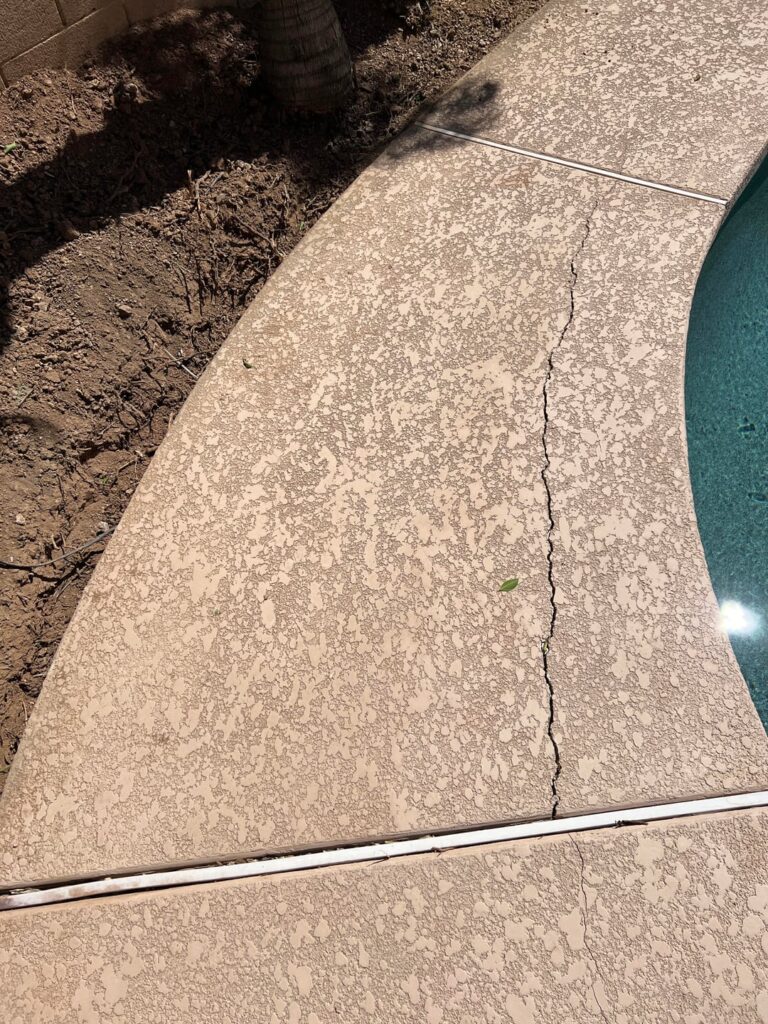
A crack in a concrete pool can be repaired with hydraulic cement or epoxy filler for surface cracks, epoxy injection for deeper cracks, and structural stapling for cracks that penetrate the pool shell. Surface cracks in the plaster are cosmetic and do not cause leaks. Structural cracks go through the concrete shell, cause water loss, and require professional repair. According to Angi, repairing small cracks in a concrete pool costs about $75 per linear foot, while full resurfacing costs $10,000 to $20,000. This guide helps homeowners in Jefferson, Georgia identify what type of crack they have, understand what caused it, and choose the right repair method to protect their investment.
Why Do Concrete Pools Crack?
Concrete pools crack because of soil movement, poor construction practices, hydrostatic pressure from groundwater, temperature changes, improper curing during installation, and natural settling over time. According to Ron Lacher, a civil engineer specializing in pool structures quoted by Pool Engineering, the two most common factors behind structural pool failure are soil conditions and workmanship. These two factors are directly related because the soil conditions at the build site should dictate the structural design of the pool.
Expansive clay soils, which are common in parts of North Georgia, swell when wet and shrink when dry. This constant expanding and contracting puts tremendous pressure on the pool shell and can cause cracks over months or years. According to Torque Lock, a pool structural repair company, poorly compacted soil left behind during excavation is one of the most frequent causes of pool cracking. If the contractor did not compact the backfill correctly, the pool can settle unevenly and crack.
Other causes include adding too much water to the gunite or shotcrete mix during application, failing to keep the concrete moist during curing (especially in hot weather), insufficient rebar tying, and building the pool without proper soil testing. In the Jefferson, Georgia area, the red clay soil can be particularly problematic because it expands significantly when saturated by heavy rain. Working with an experienced custom pool builder who understands local soil conditions is the best defense against future cracking.
How to Tell If a Pool Crack Is Structural
A pool crack is structural if it goes through the entire concrete shell, causes the pool to lose water, appears as a deep fissure rather than a thin surface line, and often mirrors through both the plaster and the tile above the bond beam. According to Torque Lock, the majority of structural cracks that run through the concrete will also be visible through the plaster coating and even the tile line. Surface cracks, on the other hand, only affect the plaster layer and do not penetrate the shell underneath.
There are several signs that help distinguish structural from surface cracks. If you can see concrete through the crack where plaster has fallen away, but the concrete itself is intact, it is likely a surface crack. If the crack looks deep, like a fissure or cleft that cuts through the concrete, it is structural. If your pool is losing water faster than normal evaporation (more than a quarter inch per day), a structural crack with a leak is likely. A professional leak detection test, which costs $100 to $500 according to HomeAdvisor, can confirm whether the crack is causing water loss.
Pools that are visibly out of level, with one side sitting higher than the other, often have structural cracking caused by soil movement. V-shaped cracks are among the most serious, according to Buyers Ask, a home inspection resource, and almost always indicate a leak. Homeowners in Jefferson, Georgia who notice any of these signs should schedule a pool inspection immediately, before the damage spreads.
What Does a Crack in a Pool Look Like?
A crack in a pool can look like a thin hairline in the plaster, a cluster of small spider web lines, a single deep line running along the wall or floor, or a wide fissure with visible concrete underneath. Hairline cracks are the most common and are usually surface-level cosmetic issues caused by the natural aging of plaster, temperature changes, and minor concrete shrinkage during curing. They are typically less than 1/16 of an inch wide and do not cause leaks.
Spider web cracks (also called crazing) appear as a network of small, shallow lines across the plaster surface. These are caused by over-troweling during plaster application, improper curing, or adding too much water to the plaster mix. They are almost always surface-level. Structural cracks are usually single lines, wider than a hairline, and may run vertically, horizontally, or diagonally. They feel deep when you run your fingernail across them, and you may see or feel the concrete shell beneath the plaster at the crack line.
Can a Crack in a Pool Be Repaired?
Yes, a crack in a pool can be repaired. Surface cracks in the plaster can be filled with hydraulic cement, pool putty, or replastered over during a routine resurfacing. Structural cracks in the concrete shell can be repaired with epoxy injection, structural stapling, or in severe cases, a section of the shell may need to be cut out and rebuilt. According to Team PoolWorks, a pool repair company, the best approach depends on the severity and cause of the crack. Minor surface cracks are a simple maintenance issue. Structural cracks require professional assessment and repair.
The key is acting fast. According to River Pools, a pool manufacturer and industry educator, small cracks can expand over time if left unrepaired. Water that seeps into a structural crack can erode the soil behind the shell, worsen hydrostatic pressure problems, and accelerate the damage. In North Georgia, where heavy spring rains can saturate the ground quickly, a small crack can become a serious structural problem in a single season.
How Much Does It Cost to Fix a Crack in a Concrete Pool?
Fixing a crack in a concrete pool costs $75 per linear foot for small cracks and $700 to $1,000 for larger, more complex cracks including spider web patterns, bulges, or divots. According to Angi, resurfacing the entire interior of a concrete pool costs $10,000 to $20,000 if the cracking is widespread. HomeGuide reports that professional pool leak detection costs $100 to $1,000, with minor patching sometimes included. ConsumerAffairs puts the average pool repair cost at $250 to $1,200, with concrete pool repairs on the higher end.
Bond beam repairs, which address cracks in the concrete strip that supports the pool wall at the waterline, cost $70 to $80 per linear foot according to HomeGuide. A full bond beam repair along the length of a standard pool runs $4,000 to $6,000, including tile and coping replacement. Structural crack repair using stapling methods costs $500 to $3,000 depending on the crack length and the number of staples needed.
Homeowners in the Athens, Winder, and Jefferson area should get multiple quotes from experienced pool repair professionals before starting any crack repair project. The repair method and cost depend heavily on accurate diagnosis.
How to Fix Cracks in a Cement Pool
Fixing cracks in a cement pool follows different steps depending on whether the crack is surface-level or structural. Here are the methods for each type.
How to Repair Surface Cracks (Plaster Only)
Surface cracks that only affect the plaster and do not penetrate the concrete shell can be repaired without draining the pool in many cases. For small hairline cracks, apply an underwater pool putty or hydraulic cement directly into the crack. Clean the crack with a wire brush first to remove loose material, press the filler into the crack, and smooth the surface. For larger surface cracks or areas where plaster is spalling (flaking off), the affected section can be chipped out and re-plastered by a professional. If surface cracking is widespread, a full resurfacing is the most cost-effective long-term solution.
How to Repair Structural Cracks (Shell Damage)
Structural cracks that go through the concrete shell must be repaired by a professional. The most common methods are epoxy injection, which involves injecting high-strength epoxy or polyurethane into the crack under pressure to seal and bond the concrete; structural stapling, which uses metal staples installed across the crack to apply compression and hold the concrete in place while new cement fills the crack; and section replacement, where the damaged section of concrete is cut out, new rebar is tied in, and fresh gunite or shotcrete is applied.
According to Torque Lock, structural stapling is the only permanent solution for cracks that are caused by ongoing soil pressure or ground movement. Staples apply controlled compression to the sides of the crack, opposing the force that is trying to open it. Once the staples are in place, new cement is packed into the crack and adheres permanently because the crack is no longer moving.
How Do You Fix a Crack in a Pool Without Draining It?
You can fix a crack in a pool without draining it by using underwater epoxy, pool putty, or specialized underwater repair products. For small surface cracks, knead a two-part underwater epoxy putty until it is a uniform color, press it firmly into the crack, and smooth it with your fingers or a putty knife. The epoxy cures underwater and creates a watertight seal. According to The Pool Butler, a pool service resource, some specialized epoxy injection techniques can also be performed underwater to seal and reinforce deeper cracks without draining.
However, larger cracks, structural cracks, and any crack that is actively leaking are best repaired with the pool drained. Draining gives the repair technician full access to the crack, allows proper cleaning and preparation of the concrete surface, and produces a more durable, long-lasting repair. If the pool needs to be drained for repair in the Jefferson area, a professional handles the process safely to prevent hydrostatic uplift. A pool cleaning service can manage the drain, repair, refill, and chemical balancing process from start to finish.
How Often Do Concrete Pools Crack?
Concrete pools develop surface cracks relatively often as part of normal aging. Hairline cracks in the plaster can appear within the first few years, especially during the curing process of new plaster. Structural cracks are much less common and are usually the result of a specific problem like poor construction, soil movement, or hydrostatic pressure. According to River Pools, most major concrete pool damage happens when the pool is designed, built, or maintained incorrectly.
A well-built concrete pool on properly compacted soil with correct engineering can last 50 years or more without structural cracking. The plaster surface will need to be replaced every 10 to 15 years, which addresses any surface cracks that have accumulated. Regular maintenance, balanced water chemistry, and prompt repair of small cracks all help prevent small issues from becoming expensive structural problems.
Are Pool Cracks Covered by Homeowners Insurance?
Pool cracks are sometimes covered by homeowners insurance, but only if the damage was caused by a sudden, accidental event like a fallen tree, an earthquake (if you have earthquake coverage), or another covered peril. According to HomeAdvisor, most insurance policies do not cover damage from normal wear and tear, poor maintenance, or gradual settling. Cracks caused by soil movement, poor construction, or age are typically not covered.
If a covered event causes a crack that leads to a leak, the insurance may pay for the repair of the crack and any resulting water damage to the property. However, the policy usually does not cover the cost of draining, refilling, or rebalancing the pool water. Homeowners in Jefferson, Georgia should review their homeowners policy and speak with their insurance agent to understand exactly what pool damage is covered before a problem occurs.
What Is the Life Expectancy of a Concrete Pool?
The life expectancy of a concrete pool is 50 years or more with proper maintenance. According to ConsumerAffairs, concrete pools last 30 to 50 years, with well-maintained pools exceeding that range. The concrete shell itself can last indefinitely if it was built correctly and is not subjected to extreme soil movement or other structural stresses. The plaster surface needs replacement every 10 to 15 years, and equipment like pumps, heaters, and filters needs to be replaced as components wear out.
Proper maintenance includes balanced water chemistry (which prevents the water from corroding the plaster or depositing scale), regular cleaning, annual inspections, and timely repair of any cracks or equipment issues. A seasonal opening service and a pool closing service each year protect the pool from off-season damage and catch problems early.
How to Seal a Crack in a Swimming Pool
To seal a crack in a swimming pool, clean the crack thoroughly, widen it slightly with a chisel to create a clean edge for the filler to bond to, and fill it with the appropriate material. For surface cracks, use hydraulic cement or a pool-specific plaster patching compound. For deeper cracks, use a two-part epoxy or polyurethane injection system. For structural cracks, install structural staples across the crack before filling with cement.
After the filler cures, smooth the surface to match the surrounding plaster. If the repair is visible, the area may need to be spot-plastered or blended with the surrounding finish. For widespread cracking, a full resurfacing provides the most uniform and durable result. Always address the underlying cause of the crack (soil movement, hydrostatic pressure, chemical imbalance) to prevent it from returning.
What Is the Best Filler for Concrete Cracks?
The best filler for concrete pool cracks depends on the crack type. For surface cracks in plaster, hydraulic cement is the most commonly used filler because it sets quickly, bonds well to wet surfaces, and expands slightly as it cures to create a tight seal. For structural cracks in the concrete shell, epoxy injection is the preferred method because it restores structural strength and creates a waterproof bond. Polyurethane injection is used for cracks that are still moving because it remains flexible after curing.
Pool putty (two-part underwater epoxy) is the best choice for small emergency repairs that need to be done without draining. It can be applied underwater and cures within 24 hours. For large-scale repairs, shotcrete or gunite applied by a professional is the most durable solution for rebuilding damaged sections of the pool shell.
Pool Crack Repair Cost Comparison Table
| Repair Type | Best For | Average Cost | Drain Required? |
|---|---|---|---|
| Pool Putty / Underwater Epoxy | Small surface cracks, emergency patches | $10 to $50 (DIY) | No |
| Hydraulic Cement Patch | Surface cracks in plaster | $100 to $300 (professional) | Usually yes |
| Epoxy Injection | Deeper cracks, waterproofing | $300 to $1,000 | Depends on method |
| Structural Stapling | Structural cracks in shell | $500 to $3,000+ | Yes |
| Bond Beam Repair | Waterline cracks, tile area | $4,000 to $6,000 (full length) | Yes |
| Full Pool Resurfacing | Widespread cracking, aging plaster | $10,000 to $20,000 | Yes |
Sources: Angi, HomeGuide, ConsumerAffairs, HomeAdvisor, Torque Lock
What Is the Average Cost to Have a Pool Resurfaced?
The average cost to have a pool resurfaced is $10,000 to $20,000 for a standard residential concrete pool. According to Angi, the final cost depends on the pool size, the finish material chosen, and the condition of the existing surface. Basic white plaster is the most affordable option. Pebble finishes like Pebble Tec cost more but last longer and resist staining better. Quartz and glass bead finishes fall in between. Resurfacing includes draining the pool, chipping or sanding the old plaster, applying the new finish, filling with water, and rebalancing the chemistry.
Pool resurfacing is typically needed every 10 to 15 years for plaster finishes. Pebble and quartz finishes may last 15 to 20 years before needing replacement. If your pool has widespread surface cracking, resurfacing addresses all of the cracks at once and gives the entire pool a fresh, uniform appearance.
Is It OK to Put Cement Over Cracked Concrete?
Putting cement over cracked concrete is a temporary fix at best and is not recommended for pool shells. A thin layer of cement applied over a crack will not bond well to the old concrete, will not stop a structural crack from growing, and will crack again as the underlying problem continues. According to River Pools, the cause of the crack must be identified and addressed before any repair material is applied. Simply covering a crack hides the problem without solving it.
For pool surfaces, the correct approach is to clean the crack, widen it slightly for better filler adhesion, apply the appropriate repair material (hydraulic cement, epoxy, or structural staples depending on crack type), and then resurface the area to match the surrounding finish. For structural issues, an engineer or experienced pool contractor should evaluate the crack and recommend a repair plan that addresses both the crack itself and the underlying cause.
Frequently Asked Questions
How Do I Know If My Pool Crack Is Serious in Jefferson, Georgia?
You know your pool crack is serious in Jefferson, Georgia if the pool is losing water, the crack appears deep and runs through both the plaster and tile line, the crack is wider than a hairline, or the pool appears to be settling unevenly. According to pool structural experts, V-shaped cracks and cracks that mirror through multiple layers almost always indicate structural damage. A professional leak detection test ($100 to $500) confirms whether the crack is causing water loss.
Does Georgia’s Red Clay Soil Cause Pool Cracks?
Yes, Georgia’s red clay soil can contribute to pool cracks. Clay soils are expansive, meaning they swell when wet and shrink when dry. This repeated expansion and contraction puts pressure on the pool shell and can cause cracking over time. According to Pool Engineering, expansive soils are one of the most problematic soil types for pool construction. Proper soil testing and engineering before construction, combined with correct compaction during the build, significantly reduces this risk.
Can I Repair My Pool Crack Myself?
You can repair small surface cracks in pool plaster yourself using pool putty, underwater epoxy, or hydraulic cement. DIY repair kits cost $10 to $50 and are available at most pool supply stores. Structural cracks should never be a DIY project. They require professional assessment, specialized equipment, and structural knowledge to repair correctly. A bad DIY repair on a structural crack can make the problem worse and cost more to fix later.
How Long Does a Pool Crack Repair Last?
A properly done pool crack repair lasts 5 to 15 years for surface repairs and potentially the remaining life of the pool for structural staple repairs. According to Torque Lock, structural staples create a permanent fix because they apply compression that opposes the forces trying to open the crack. Surface patches last until the surrounding plaster reaches the end of its lifespan (10 to 15 years), at which point a full resurfacing is needed anyway.
Should I Repair or Replace My Cracked Concrete Pool Near Athens, Georgia?
You should repair your cracked concrete pool near Athens, Georgia if the cracks are limited to specific areas and the rest of the shell is structurally sound. You should consider replacement or major renovation if the pool has multiple structural cracks, has popped out of the ground, or if repair costs approach 50% or more of the cost of a new pool. According to River Pools, removing a severely damaged pool costs $5,000 to $15,000. Getting a professional assessment first is always the smartest step.
Where Is the Most Common Place for a Pool Leak in North Georgia?
The most common place for a pool leak in North Georgia is at the bond beam, which is the concrete strip at the top of the pool wall where the tile and coping sit. This area is prone to cracking because the expansion and contraction of the surrounding concrete deck puts pressure on the bond beam. Other common leak locations include around light fixtures, return jets, skimmers, and the main drain, all points where plumbing penetrates the pool shell.
What Should I Do If I Find a Crack in My Pool During Winter in Braselton, Georgia?
If you find a crack in your pool during winter in Braselton, Georgia, document it with photos, measure its length and width, and contact a pool professional for an assessment as soon as weather permits. Do not attempt to drain the pool for repair during the coldest months, as temperature swings and saturated soil increase the risk of hydrostatic uplift. If the crack is actively leaking, temporary underwater patches can slow the water loss until a full repair can be scheduled in spring.
Final Thoughts
A crack in a concrete pool does not have to mean the end of your pool. Surface cracks are a normal part of pool ownership and can be patched or addressed during routine resurfacing. Structural cracks are more serious but can still be repaired when caught early and fixed by a qualified professional. The most important steps are identifying the type of crack, understanding what caused it, and acting quickly before the damage spreads. For homeowners in Jefferson, Georgia and across the North Georgia area, the red clay soil and seasonal rain patterns make proper construction and ongoing maintenance especially important.
If you have noticed a crack in your pool, do not wait for it to get worse. Sandals Luxury Pools has been helping homeowners in Jefferson, Athens, Gainesville, Braselton, and the surrounding communities with everything from pool crack repair to full pool renovation for over a decade. Their experienced team can assess the damage, recommend the right repair, and get your pool back in perfect condition. Contact them today to schedule an inspection.
