
An inground pool maintenance schedule for beginners includes daily skimming and pump checks, weekly water testing and brushing, monthly filter cleaning, and seasonal opening and closing tasks. Keeping up with this schedule protects your pool, keeps the water safe, and saves you money on costly repairs. According to HomeGuide, the average homeowner spends $960 to $1,800 per year on pool maintenance, but skipping routine care can triple that number in emergency repair bills. This guide breaks down exactly what to do and when to do it, so you can enjoy your pool in Jefferson, Georgia without the guesswork.
What Maintenance Does an Inground Pool Require?
An inground pool requires regular circulation, cleaning, water chemistry balancing, and equipment checks to stay safe and clear. These four areas make up the foundation of all pool care. Without consistent attention to each one, even a brand-new pool can develop algae, cloudy water, or equipment damage within weeks.
The good news is that most of these tasks are simple once you know the routine. Pool maintenance is not about doing a lot of work all at once. It is about doing small, consistent things at the right time. A daily task might take two minutes. A weekly task might take 30 minutes. But together, they keep your pool running smoothly all season long.
Homeowners in Jefferson, Georgia and the surrounding North Georgia area typically enjoy a swim season that runs from May through September, sometimes longer depending on the weather. That is roughly five months where your pool needs active care. The rest of the year involves closing, winterizing, and reopening, all of which have their own checklist. A well-built custom pool with quality equipment makes maintenance easier from day one, but every pool needs regular care regardless of how it was built.
What Are the 3 C’s of Pool Maintenance?
The 3 C’s of pool maintenance are Circulation, Cleaning, and Chemistry. These three principles work together to keep your water clear, safe, and pleasant to swim in. If any one of the three falls behind, the other two have to work harder to compensate.
Circulation means keeping the water moving through the pump and filter system. Still water is where algae grows, bacteria multiplies, and debris settles. Your pool pump should run at least 8 to 12 hours per day during swim season to turn over the entire volume of water at least once. According to the U.S. Department of Energy, reducing pump filtration time to 6 hours per day can still maintain clean water in many residential pools, especially with a variable speed pump.
Cleaning is the physical removal of leaves, dirt, and algae from the pool’s surfaces and water. This includes skimming the surface, brushing the walls and floor, and vacuuming. Even pools with automatic cleaners still benefit from regular manual brushing to knock algae loose from spots the cleaner misses.
Chemistry is the balance of sanitizer, pH, alkalinity, and other levels in the water. Properly balanced water kills harmful bacteria, protects your pool surfaces and equipment, and keeps swimmers comfortable. According to the CDC, pool water should maintain a pH between 7.2 and 7.8 and a free chlorine level of at least 1 part per million for safe swimming.
What Is a Good Pool Maintenance Schedule?
A good pool maintenance schedule breaks tasks into daily, weekly, monthly, and seasonal categories. This keeps everything manageable and prevents any single task from being forgotten. Here is a straightforward schedule that works for most inground pool owners in Jefferson, Georgia and across North Georgia.
What Should You Do for Your Pool Every Day?
Every day, you should skim the pool surface, check the water level, inspect the pump and filter gauge, and empty the skimmer basket. These tasks take just a few minutes and prevent small problems from becoming big ones.
Skimming removes leaves, bugs, pollen, and other floating debris before they sink and create stains or clog the filter. North Georgia has a lot of trees, especially oaks and pines, so pools in the Jefferson, Braselton, and Athens areas tend to collect more surface debris than pools in open landscapes.
Checking the pump pressure gauge takes seconds but tells you a lot. A reading that is 8 to 10 PSI above the clean baseline means the filter is getting dirty and may need attention. A sudden drop in pressure could mean a blockage between the skimmer and the pump. Keeping the skimmer and pump strainer baskets clear of debris is essential for proper water flow and filtration.
Water level matters too. The water should sit at the midpoint of the skimmer opening. Too low and the pump can suck air, which damages the motor. Too high and the skimmer cannot pull in surface debris effectively.
What Pool Maintenance Should Be Done Weekly?
Weekly pool maintenance should include testing water chemistry, brushing the walls and floor, vacuuming, and shocking the pool. This is the most hands-on part of your routine and typically takes 30 to 60 minutes.
Water testing is the most important weekly task. Use a test kit or test strips to check free chlorine, pH, and total alkalinity at minimum. According to industry standards from the Association of Pool and Spa Professionals (APSP), ideal ranges are: free chlorine at 1 to 3 parts per million (ppm), pH at 7.4 to 7.6, and total alkalinity at 80 to 120 ppm. If any of these are out of range, adjust them before doing anything else.
Brushing the pool walls, floor, steps, and ladders prevents algae from taking hold. Algae starts as an invisible film on surfaces long before you see green water. Brushing loosens it so the filter and sanitizer can do their jobs. For concrete and plaster pools, use a stiff-bristled brush. For fiberglass and vinyl, use a softer nylon brush to avoid surface damage.
Shocking the pool once a week is standard practice during swim season. Shock is a concentrated dose of chlorine (or non-chlorine oxidizer) that destroys chloramines, bacteria, and organic contaminants that regular chlorine levels cannot handle alone. Always shock in the evening so the sun does not burn off the chlorine before it can work. Homeowners who keep up with weekly pool cleaning services rarely deal with algae blooms or cloudy water problems.
What Pool Maintenance Needs to Happen Monthly?
Monthly pool maintenance needs to include cleaning or backwashing the filter, testing calcium hardness and cyanuric acid levels, inspecting all pool equipment, and checking the deck and coping for damage.
Your pool filter is the workhorse of the system. How you clean it depends on the type. Sand filters need backwashing when the pressure gauge rises 8 to 10 PSI above the clean reading. Cartridge filters should be removed and hosed off. DE (diatomaceous earth) filters need backwashing and fresh DE powder added. According to Prestige Pools, pool filters need media replacement or cartridge swaps every 1 to 3 years, depending on usage and type.
Calcium hardness should stay between 200 and 400 ppm. Low calcium causes water to pull minerals from your pool’s plaster or grout, leading to etching and rough surfaces. High calcium leads to scale buildup on tile, equipment, and inside pipes. Cyanuric acid (stabilizer) should be between 30 and 50 ppm for chlorine pools. It acts as sunscreen for chlorine, preventing the sun from burning it off too quickly.
Take a walk around your pool equipment pad each month. Look for leaks around the pump, check hose connections, inspect the heater for corrosion, and make sure all valves move freely. Catching a small drip now prevents a flooded equipment pad later. If something looks off, scheduling a pool repair early is always cheaper than waiting until the problem gets worse.
What Chemicals Should I Put in My Pool for the First Time?
The chemicals you should put in your pool for the first time are chlorine (as your primary sanitizer), pH adjuster (up or down), alkalinity increaser, calcium hardness increaser, and cyanuric acid (stabilizer). These five chemicals establish the baseline water balance that keeps your pool safe and protects its surfaces.
Start by testing the water with a reliable test kit. Do not add anything until you know your starting numbers. Then adjust in this order: total alkalinity first, pH second, calcium hardness third, and sanitizer (chlorine) last. This order matters because alkalinity acts as a buffer for pH. If alkalinity is off, your pH will swing wildly no matter how much pH adjuster you add.
According to the In The Swim Pool Chemical Charts, balanced pool water should have pH at 7.2 to 7.8, total alkalinity at 80 to 120 ppm, calcium hardness at 180 to 220 ppm, cyanuric acid at 30 to 50 ppm, and free chlorine at 1 to 3 ppm. Getting these numbers right from the start prevents problems like cloudy water, algae, staining, and equipment corrosion.
For pool owners in the Jefferson, Georgia area, the local water supply can affect your starting chemistry. Well water in parts of North Georgia tends to run higher in minerals, which can raise calcium hardness and sometimes iron levels. City water may have different characteristics. Testing your fill water before adding it to the pool gives you a head start on balancing.
How Long Can a Pool Go Without Being Cleaned?
A pool can go about one week without being cleaned before water quality starts to decline. After two weeks without any maintenance, algae growth, cloudy water, and unsafe bacteria levels become likely, especially in warm weather. Going longer than that can lead to green water, clogged filters, and stained surfaces that require professional treatment to fix.
Georgia’s hot, humid summers speed this timeline up. When air temperatures sit in the 90s, which is common in Jefferson and across North Georgia from June through August, pool water warms quickly. Warm water combined with sunlight and organic debris creates ideal conditions for algae. According to a survey of 500 pool owners cited by South West Pools, homeowners who skip regular upkeep end up paying 3 to 4 times more in repair costs compared to those who stick to a schedule.
If you are going on vacation, the best approach is to shock the pool before you leave, set the pump timer to run its full cycle, and ask a neighbor or hire a professional to check on it midweek. Even a five-minute skim and a quick glance at the pressure gauge can prevent a week’s worth of neglect from turning into a costly cleanup.
Is It Better to Run Your Pool Pump at Night or in the Day?
It is better to run your pool pump during the day when the sun is strongest, because that is when chlorine gets used up the fastest and algae growth is most active. Running the pump during daylight hours keeps fresh, filtered water circulating when your pool needs it most.
That said, there is an exception. If you shock your pool, you should do it in the evening and run the pump overnight. This gives the shock treatment time to work without the sun degrading the chlorine. Many pool owners in the Jefferson area run their pump during the day for regular filtration and add a short overnight cycle after shocking.
Variable speed pumps have changed the math on this question. According to the U.S. Department of Energy, switching from a single-speed pump to a variable speed pump can cut pool electricity usage by up to 80 percent. With a variable speed pump, you can run the pump at a low speed for 12 to 18 hours a day, including overnight, and still pay less in electricity than running a single-speed pump for 8 hours. Since July 2021, federal regulations from the Department of Energy require that most new or replacement pool pumps be variable speed, making this energy-saving technology the new standard.
Should a Pool Be Vacuumed Every Day?
No, a pool should not be vacuumed every day. Vacuuming two to three times per week is enough for most inground pools. Pools with heavy tree coverage, pools near construction, or pools that get a lot of use may need more frequent vacuuming. Pools with robotic cleaners can run the robot daily without any extra effort on your part.
Manual vacuuming is one of the more time-consuming maintenance tasks, so doing it efficiently matters. Vacuum the pool after brushing, not before. Brushing loosens debris and algae from the walls and floor, and vacuuming picks it all up. If you vacuum first and brush second, you will just stir up what you missed.
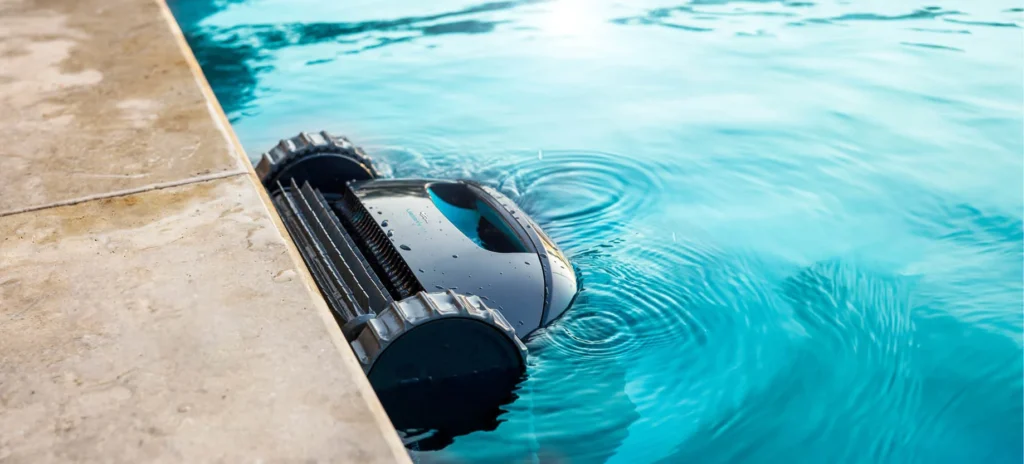
Automatic and robotic pool cleaners are a worthwhile investment for many homeowners. They clean the pool floor and sometimes the walls on a set schedule, freeing you up for other tasks. According to HomeAdvisor, robotic pool cleaners cost around $1,000 but can significantly reduce the time you spend on manual cleaning each week.
What Are Common Pool Maintenance Mistakes?
Common pool maintenance mistakes are not testing water often enough, adding chemicals without testing first, neglecting the filter, running the pump too few hours, ignoring small leaks, and not brushing the pool regularly.
The biggest mistake beginners make is guessing at chemical levels instead of testing. Pool water can look perfectly clear and still have dangerously low chlorine or a pH that is eating away at your equipment. Testing takes less than a minute with strips or a liquid test kit, and it should happen at least once a week during swim season.
Another common mistake is ignoring the filter. A dirty filter forces the pump to work harder, which shortens its lifespan and increases your electric bill. According to industry data, pool pumps last 8 to 10 years on average, but running them against a clogged filter can cut that life in half. Regular filter maintenance is one of the simplest ways to protect your most expensive piece of pool equipment.
Skipping brushing is the third big mistake. Many pool owners rely entirely on the filter and chemicals to keep the pool clean. But algae clings to surfaces and will not let go without physical scrubbing. Brushing twice a week, especially on steps, corners, and behind ladders, prevents algae from ever gaining a foothold.
Why Do People Put Baking Soda in Their Swimming Pools?
People put baking soda in their swimming pools to raise total alkalinity. Baking soda, which is sodium bicarbonate, is a gentle and affordable way to increase alkalinity without causing a dramatic spike in pH. It is the same active ingredient found in many commercial alkalinity increaser products.
If your total alkalinity is below the ideal range of 80 to 120 ppm, adding baking soda brings it up gradually. A general rule of thumb is about 1.5 pounds of baking soda per 10,000 gallons of water to raise alkalinity by 10 ppm. Always dissolve it in a bucket of pool water first and pour it in front of a return jet with the pump running to help it distribute evenly.
Baking soda should not be confused with soda ash (sodium carbonate), which is used to raise pH. They do different jobs. Baking soda primarily raises alkalinity with a small bump to pH. Soda ash primarily raises pH with a smaller effect on alkalinity. Knowing the difference prevents overcorrecting one level while trying to fix the other.
Does Having a Pool Make Your Water Bill Go Up?
Yes, having a pool does make your water bill go up. You need water to fill the pool initially, and then you need additional water throughout the season to replace what is lost to evaporation, splash-out, and filter backwashing. According to Onshore Mortgage, refilling a typical 15,000 to 20,000 gallon pool can increase your water bill by $30 to $75 per month, depending on climate and pool cover usage.
Evaporation is the biggest source of water loss. In the heat of a North Georgia summer, an uncovered pool can lose a quarter inch of water per day or more. A solar cover or liquid solar blanket dramatically reduces evaporation. It also helps retain heat, which means your heater works less, and it keeps debris out of the water, which means less cleaning.
The total annual cost of owning a pool goes beyond just the water bill. According to HomeGuide, the average annual cost of pool ownership is $3,000 to $6,000, including maintenance, minor repairs, electricity, and water. Planning for these costs from the start prevents unpleasant surprises and helps you enjoy your pool without financial stress.
What Is the Correct Order for Pool Chemicals?
The correct order for pool chemicals is total alkalinity first, pH second, calcium hardness third, and sanitizer (chlorine) last. This order matters because each chemical level affects the others, and adjusting them out of sequence leads to constant re-adjustments.
Total alkalinity is the foundation. It acts as a buffer that stabilizes pH. If alkalinity is too low, your pH will bounce up and down unpredictably. If alkalinity is too high, it will push pH up and make it hard to bring down. Get alkalinity into the 80 to 120 ppm range first.
Once alkalinity is stable, adjust pH to the 7.4 to 7.6 range. Use a pH increaser (sodium carbonate) if it is too low or a pH decreaser (sodium bisulfate or muriatic acid) if it is too high. Then check calcium hardness and adjust if needed. Chlorine goes last because its effectiveness depends on pH. At a pH of 7.2, about 65 percent of your chlorine is in its active killing form. At a pH of 8.0, that drops to roughly 20 percent, according to In The Swim’s water balancing guide. Getting the order right means your chlorine actually works.
How Do I Get My Pool Crystal Clear?
To get your pool crystal clear, you need proper circulation, balanced chemistry, a clean filter, and consistent physical cleaning. Crystal clear water is the result of all four working together, not just one.
Start with the filter. If your filter is dirty or the media is worn out, no amount of chemicals will give you clear water. Clean or backwash the filter and check the pressure gauge. If cleaning does not restore the pressure to near-baseline levels, it is time to replace the filter media or cartridge.
Next, test and balance the water. Focus on chlorine, pH, and alkalinity. If the water is hazy or slightly green, it often means chlorine is too low or pH is too high. A good shock treatment combined with running the pump for 24 hours straight can clear up mild cloudiness in a day or two. Adding a clarifier after shocking helps the filter catch the tiny particles that make water look dull.
Consistent brushing and vacuuming remove the microscopic algae and debris that contribute to cloudiness. Pools that are brushed twice a week and vacuumed regularly almost never have clarity problems. If your pool in Jefferson, Georgia looks clear but not sparkling, try adding a clarifier and running the pump an extra few hours. Often that last bit of polish is just a filtration issue.
Ideal Pool Water Chemistry Levels
| Chemical Parameter | Ideal Range | What Happens if Too Low | What Happens if Too High |
|---|---|---|---|
| Free Chlorine | 1-3 ppm | Algae growth, bacteria, unsafe water | Skin and eye irritation, bleached swimwear |
| pH | 7.4-7.6 | Corrosion of equipment, skin irritation, liner damage | Cloudy water, scale buildup, weak chlorine |
| Total Alkalinity | 80-120 ppm | pH swings wildly, corrosive water | pH drifts high, cloudy water, scale |
| Calcium Hardness | 200-400 ppm | Etching of plaster, rough surfaces | Scale deposits on tile and equipment |
| Cyanuric Acid (Stabilizer) | 30-50 ppm | Chlorine burns off in sunlight quickly | Chlorine becomes less effective |
Sources: Association of Pool and Spa Professionals (APSP), CDC Healthy Swimming Guidelines, In The Swim Pool Chemical Charts.
What Is the Best Time of Year to Install a Pool?
The best time of year to install a pool is late fall or winter, when pool builders typically have shorter wait times and more flexible schedules. Building during the off-season means your pool is ready to go when warm weather arrives in spring.
In North Georgia, the ground rarely freezes deep enough to stop construction entirely, which makes winter builds possible in most years. Starting a pool project in November or December in the Jefferson area means you could be swimming by April or May. Waiting until spring or summer to start means competing with every other homeowner who had the same idea, and that often pushes completion into mid-summer or even later.
According to the National Association of Realtors, a well-maintained inground pool adds 5 to 8 percent to a home’s value. That added value starts the day the pool is finished, but only if the pool is kept in good condition. Starting your maintenance routine on day one, rather than waiting until problems appear, protects that investment from the start.
Can I Use Dawn Dish Soap to Clean My Pool Filter?
No, you should not use Dawn dish soap to clean your pool filter. Dish soap creates suds and foam that are extremely difficult to rinse out of filter media. Any soap residue left behind will foam up in your pool water and can clog the filter further. It can also throw off your water chemistry.
Instead, use a commercial filter cleaner designed specifically for pool filters. These products dissolve oils, sunscreen, body lotions, and mineral deposits without creating suds. For cartridge filters, soak the cartridge in the filter cleaner solution overnight, then rinse thoroughly with a garden hose. For sand and DE filters, follow the manufacturer’s backwash instructions and use a filter cleaning solution as directed.
A clean filter is one of the most important parts of your maintenance routine. According to pool equipment data, cartridge filter elements should be deep cleaned every 1 to 3 months during swim season and replaced entirely every 1 to 3 years. Sand filter media lasts 5 to 7 years before it needs to be replaced. Staying on top of filter care keeps your water clear and your pump running efficiently.
What Are the 3 B’s of Pool Care?
The 3 B’s of pool care are Brush, Balance, and Basket. These three simple habits, done consistently, cover the core of daily and weekly pool maintenance.
Brushing the pool walls, floor, and steps removes algae spores and biofilm before they become visible problems. Balance refers to keeping your water chemistry in the proper ranges for pH, chlorine, alkalinity, and calcium. Basket means checking and emptying your skimmer and pump strainer baskets regularly so water flows freely through the system.
These three actions prevent the vast majority of common pool problems. If you do nothing else, brushing twice a week, testing and balancing the water weekly, and clearing the baskets daily will keep your pool in good shape. Homeowners in Gainesville, Georgia and throughout the North Georgia area who follow this simple routine spend less time troubleshooting and more time swimming.
How Much Does a Pool Add to Your Monthly Expenses?
A pool adds approximately $80 to $150 per month to your expenses for routine maintenance, plus additional costs for electricity, water, and insurance. According to HomeGuide, the total annual cost of owning a pool ranges from $3,000 to $6,000 when you factor in all expenses.
Breaking that down, chemicals typically cost $50 to $80 per month for a chlorine pool. Electricity to run the pump adds $65 to $100 per month on average, though a variable speed pump can cut that significantly. According to the U.S. Department of Energy, an ENERGY STAR certified pool pump can save more than $300 over its lifetime compared to a standard single-speed pump. Water replacement due to evaporation and splash-out adds another $10 to $75 per month depending on climate and whether you use a pool cover.
Professional weekly service, if you choose to hire someone, costs $80 to $150 per month according to HomeGuide. Many pool owners in the Jefferson, Georgia area handle weekly tasks themselves and hire a professional for seasonal opening and closing, which runs $300 to $500 per service. That approach gives you the best of both worlds: hands-on familiarity with your pool, plus expert help during the most complex parts of the year.
Scheduling a seasonal opening service with a professional team takes the stress out of spring startup and helps catch any issues that developed over the winter months.
What Happens If You Never Maintain Your Pool?
If you never maintain your pool, the water will turn green with algae, the equipment will fail, the surfaces will stain and deteriorate, and the pool will become unsafe to swim in. Neglect leads to expensive repairs that far exceed the cost of routine maintenance.
Algae is the first visible sign of a neglected pool. It can appear within days in warm weather. Left unchecked, green algae turns into black algae, which roots itself into concrete and plaster and is extremely difficult and expensive to remove. Cloudy water follows as the filter cannot keep up with the contamination load.
Equipment suffers too. A pump running against a clogged filter overheats. Unbalanced water corrodes metal fittings and eats away at plaster. Scale builds up inside pipes and heater components, reducing flow and efficiency. According to industry surveys, pool owners who skip regular upkeep end up paying 3 to 4 times more in repair costs compared to those who maintain a consistent schedule.
The financial picture gets even worse if the pool needs to be drained and acid washed, or if the surface needs complete resurfacing. Concrete pools need resurfacing every 10 to 15 years under normal conditions, but neglected pools may need it much sooner. A professional pool inspection once a year can catch problems early and keep repair costs manageable.
Frequently Asked Questions
How Often Should You Test Pool Water in Jefferson, Georgia?
You should test pool water at least once a week in Jefferson, Georgia during swim season, and two to three times per week during the hottest months of June, July, and August. Georgia’s heat and humidity cause chlorine to deplete faster, which means testing more often helps you catch drops before algae gets a chance to grow. According to the CDC, maintaining a free chlorine level of at least 1 ppm and a pH between 7.2 and 7.8 is the baseline for safe swimming water.
When Should I Open My Pool in North Georgia?
You should open your pool in North Georgia when daytime temperatures consistently stay above 70 degrees Fahrenheit, which typically happens in mid-April to early May. Opening earlier prevents algae and pollen from building up in warming water. If you wait too long, you may be dealing with a green pool on the first warm weekend. A seasonal pool opening from a professional team in the Jefferson area gets everything running correctly from the start.
When Should I Close My Pool for Winter in Georgia?
You should close your pool for winter in Georgia when temperatures consistently drop below 65 degrees Fahrenheit, usually in late October or November. Closing too early means you may need to reopen if a warm spell hits. Closing too late risks freeze damage to plumbing and equipment. A professional pool closing service protects your investment through the winter months.
Do I Need to Run My Pool Pump Every Day?
Yes, you need to run your pool pump every day during swim season. The pump circulates water through the filter, distributes chemicals evenly, and prevents stagnation that leads to algae. Most pool experts recommend running the pump 8 to 12 hours per day. According to the U.S. Department of Energy, variable speed pumps can run at a low speed for longer periods while using up to 80 percent less electricity than single-speed models, making daily operation affordable.
Can You Swim in a New Pool Without Chemicals?
No, you cannot safely swim in a new pool without chemicals. Fresh fill water contains no sanitizer, which means bacteria and other pathogens can grow unchecked within hours. Even a brand-new pool needs chlorine, proper pH, and balanced alkalinity before anyone gets in. Test and balance the water fully, let the pump circulate for at least 24 hours, and confirm all levels are in range before swimming.
How Much Does Professional Pool Maintenance Cost in North Georgia?
Professional pool maintenance costs $80 to $150 per month in North Georgia for weekly service, which includes skimming, brushing, vacuuming, water testing, and chemical adjustments. According to HomeGuide, a first-time deep cleaning service runs $150 to $350. Seasonal opening or closing services typically cost $300 to $500 per visit. Many homeowners in Jefferson, Georgia find that a combination of DIY weekly care and professional seasonal services gives the best balance of cost and peace of mind.
What Is the Most Low Maintenance Pool Type?
The most low maintenance pool type is fiberglass. Its smooth, non-porous surface resists algae growth and does not need resurfacing like concrete. Fiberglass pools use fewer chemicals and require less brushing. According to River Pools, a fiberglass pool’s gelcoat finish can last the life of the pool when properly maintained, compared to concrete pools that need resurfacing every 10 to 15 years at a cost of around $10,000 each time.
Final Thoughts
Owning an inground pool in Jefferson, Georgia is one of the best ways to enjoy your backyard from spring through fall. The maintenance might seem like a lot when you are just starting out, but once you build the routine, it becomes second nature. Daily tasks take minutes. Weekly tasks take less than an hour. And the payoff is crystal clear water, equipment that lasts, and a pool that adds real value to your home.
The key is consistency. Stick to a schedule, test your water regularly, keep the filter clean, and do not skip brushing. According to the National Association of Realtors, a well-maintained pool increases home value by 5 to 8 percent. That is a return you only get when the pool is in great shape, not when it is neglected and green.
If you are a first-time pool owner in the Jefferson, Georgia area and want help getting started, or if your pool needs a professional eye, reach out to Sandals Luxury Pools today. Our team has over a decade of experience building and servicing pools across North Georgia, from Athens to Braselton to Gainesville. Whether you need a professional cleaning service, seasonal help, or a full pool inspection, we are here to make pool ownership easy and enjoyable. Contact us now to get your pool in perfect shape for the season ahead.
