
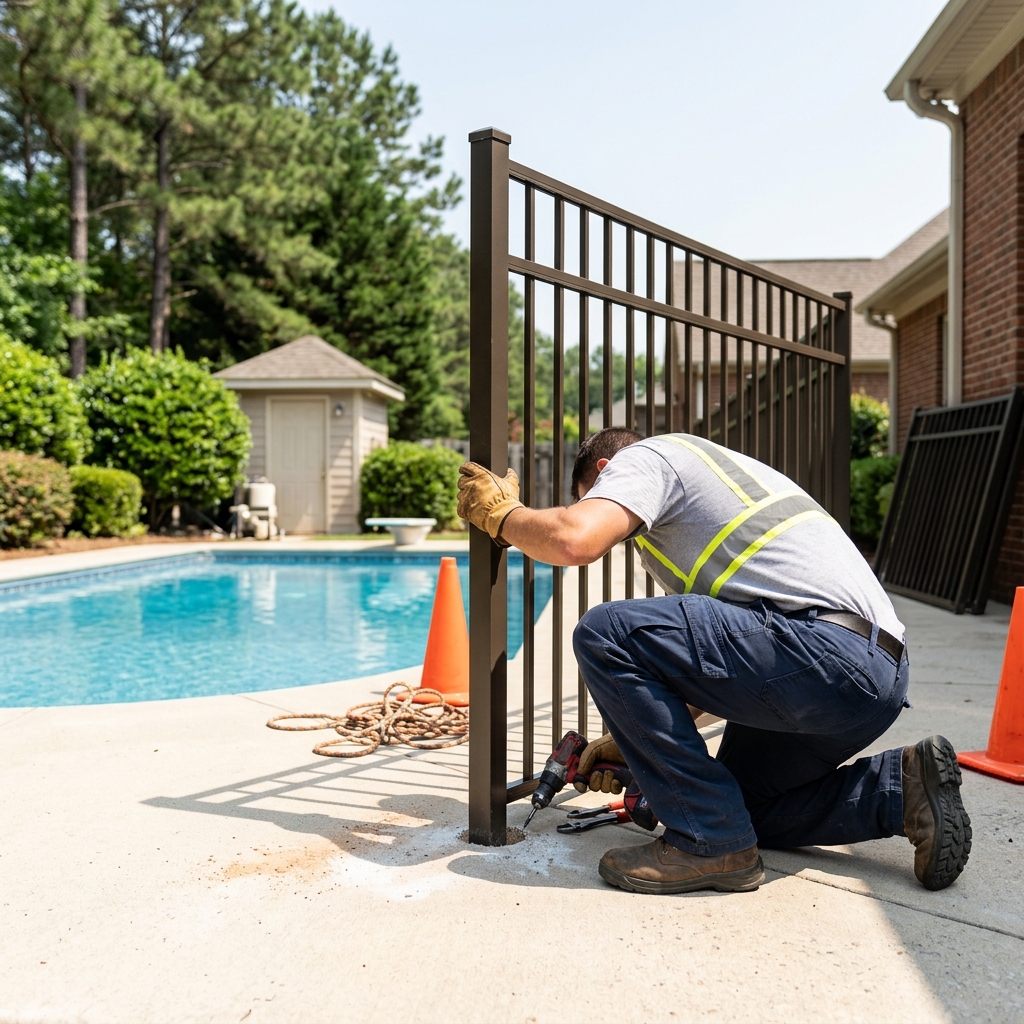
Installing a pool fence in Georgia involves navigating specific state and local codes while budgeting for materials, labor, and potential upgrades. In 2026, homeowners can expect to pay between $1,500 to $5,000 for standard pool fence installation, with costs varying based on material choice, pool perimeter size, and additional safety features. Georgia law requires all residential pools to have a barrier at least 4 feet high with self-closing, self-latching gates that open outward from the pool area. The fence must have no gaps larger than 4 inches, and chain-link fences require privacy slats if the diamond openings exceed 1.75 inches. Local jurisdictions like Jefferson, Athens, and Braselton may have stricter requirements, making it essential to check with your local building department before installation begins.
Understanding Georgia Pool Fence Code Requirements
Georgia’s pool fence regulations follow the International Swimming Pool and Spa Code (ISPSC) as a baseline, but enforcement happens at the county and municipal level. The state mandates that all outdoor swimming pools, including above-ground pools with water depth exceeding 24 inches, must have an approved barrier system. This requirement applies to both new construction and existing pools when substantial modifications occur.
The minimum fence height of 48 inches must be measured from the outside ground level, and if the fence sits on a raised surface, additional height may be required. Horizontal fence members must be spaced to prevent climbing, with the smooth side facing outward. For picket-style fences, the spacing between vertical members cannot exceed 1.75 inches, preventing small children from squeezing through.
Gate specifications represent one of the most critical aspects of pool fence cost Georgia code compliance. All gates must be self-closing with a self-latching mechanism located at least 54 inches above ground level or on the pool side of the gate at least 3 inches below the top. The latch release must require deliberate action to open, and many inspectors now recommend magnetic self-closing hinges for optimal safety.
Breaking Down Pool Fence Installation Costs in Georgia
The total investment for a code-compliant pool fence depends on several interconnected factors. Material selection significantly impacts both initial costs and long-term value, with each option offering distinct advantages for Georgia’s climate and aesthetic preferences.
Material Cost Comparison
Aluminum fencing remains the most popular choice for Georgia pool owners, typically costing $15 to $25 per linear foot installed. This material resists rust and requires minimal maintenance, making it ideal for humid Southern climates. Black aluminum fencing offers a classic appearance that complements most architectural styles while meeting all safety requirements.
Mesh safety fencing, often called removable pool fencing, costs between $12 to $20 per linear foot installed. While initially less expensive than permanent options, these systems require professional installation to ensure proper tension and anchor placement. The removable nature appeals to homeowners who want seasonal flexibility or plan to remove the fence once children are older.
Glass panel fencing represents the premium option at $200 to $600 per linear foot installed. Despite the higher upfront cost, tempered glass panels provide unobstructed views and add significant property value. The installation requires specialized equipment and expertise, particularly for curved pool designs or sloped terrain common in North Georgia.
Wood and vinyl fencing options range from $10 to $30 per linear foot but may require modifications to meet pool fence cost Georgia code specifications. Privacy fence styles need additional hardware to ensure proper gate function and may not satisfy the non-climbable requirement without design adjustments.
Labor and Installation Factors
Professional installation typically accounts for 35-50% of the total project cost. Georgia’s clay soil conditions often require specialized equipment for post-hole digging, potentially adding $500 to $1,000 to the base installation price. Sloped lots common in areas like Jefferson and Commerce necessitate custom fabrication or stepped fence panels, increasing both material and labor expenses.
Permit fees vary by jurisdiction but generally range from $75 to $300. Some counties require separate electrical permits for pool equipment, which may affect fence placement around pump and filter areas. Many contractors include permit costs in their estimates, but homeowners should verify this inclusion to avoid surprise expenses.
Additional Safety Features and Code Considerations
Beyond basic fence requirements, Georgia pool codes address multiple layers of protection. Door and window alarms for any house access points within the fence perimeter may be required if these serve as part of the barrier system. These alarms must produce a continuous sound for at least 30 seconds when activated.
Pool covers meeting ASTM safety standards can supplement but not replace proper fencing. If you’re considering what pool safety features do home insurance companies require in Georgia, many insurers offer premium discounts for homes with multiple safety barriers including fences, alarms, and safety covers.
Above-ground pools present unique challenges for code compliance. Ladders and steps must be removable or equipped with locking mechanisms when the pool is not in use. Some jurisdictions require fencing around above-ground pools even when the pool wall height exceeds 48 inches, particularly if permanent decking provides access.
Local Code Variations Across North Georgia
While state guidelines provide the framework, individual counties and cities often implement stricter requirements. Gwinnett County, for example, requires all pool fence posts to be core-drilled into concrete when installed on pool decking. This specification can add $50 to $100 per post to installation costs but ensures superior stability.
Athens-Clarke County mandates annual pool fence inspections for commercial properties and may require residential inspections during property transfers. Understanding these requirements becomes crucial when preparing your pool before selling your home.
Metro Atlanta Special Requirements
Jurisdictions within Metro Atlanta often reference both state codes and local amendments. Fulton County requires double-gate systems for fence openings wider than 4 feet, effectively doubling hardware costs for these access points. DeKalb County specifies minimum post depth based on fence height, with 5-foot fences requiring 30-inch deep post holes in undisturbed soil.
Building departments in rapidly growing areas like Braselton and Buford frequently update their requirements. Contractors familiar with local code evolution can help homeowners avoid costly retrofits. This local expertise proves particularly valuable when dealing with unique situations like corner lots or properties adjacent to common areas.
Smart Budgeting Strategies for Pool Fence Installation
Creating a realistic budget for pool fence cost Georgia code compliance requires understanding both immediate expenses and long-term considerations. Start by obtaining detailed quotes from at least three licensed contractors, ensuring each bid includes the same scope of work and materials.
Consider timing your installation during contractors’ slower seasons, typically late fall through early winter. Many installers offer discounts during these periods, potentially saving 10-15% on labor costs. However, frozen ground conditions can complicate installation, so November through early December often provides the best combination of availability and weather.
Group your pool fence installation with other outdoor improvements to maximize efficiency. If you’re planning the best pool shape for a backyard renovation or adding outdoor living features, coordinating these projects can reduce mobilization costs and may qualify for package pricing.
Long-term Cost Considerations
While initial installation represents the largest expense, maintenance costs vary significantly by material. Aluminum and glass fencing require minimal upkeep beyond occasional cleaning, while wood fences need regular sealing or staining in Georgia’s humid climate. Factor in these ongoing expenses when comparing material options.
Insurance implications deserve careful consideration. Many homeowners see premium reductions of $100 to $500 annually after installing code-compliant pool fencing. Over the fence’s 15 to 25-year lifespan, these savings can offset a significant portion of the initial investment. Document your installation with photos and permits to ensure smooth insurance claims if storm damage occurs.
Common Code Violations and How to Avoid Them
Understanding frequent compliance issues helps homeowners avoid costly corrections during inspection. Gate placement represents the most common violation, particularly when homeowners install gates that swing inward toward the pool area. This seemingly minor detail can require complete gate reinstallation, adding hundreds of dollars in unexpected costs.
Fence modifications after installation often create compliance problems. Adding decorative elements, planters, or storage units near the fence can create climbing hazards. Even well-intentioned improvements like adding lattice tops for privacy may violate non-climbable surface requirements.
Mesh fence tension presents ongoing challenges, particularly after Georgia’s temperature swings. Professional installers should provide tension adjustment instructions, as loose mesh can create gaps exceeding the 4-inch maximum. Regular inspection and adjustment prevent both safety hazards and code violations.
Working with Professional Installers
Selecting the right contractor significantly impacts both project cost and code compliance success. Licensed fence contractors in Georgia must carry general liability insurance and understand current building codes. Request proof of license and insurance before signing any contracts, and verify their standing with local building departments.
Experienced installers familiar with pool fence cost Georgia code requirements can identify potential compliance issues before they become expensive problems. They should provide detailed drawings showing gate locations, fence heights on sloped areas, and any special conditions requiring code official approval.
Quality installers offer comprehensive warranties covering both materials and workmanship. Look for minimum one-year labor warranties and manufacturer-backed material guarantees. Some premium fence systems include lifetime warranties on aluminum coatings or glass panels, providing exceptional long-term value despite higher initial costs.
Future Code Changes and Property Value Impact
Pool fence codes continue evolving as safety technology advances and accident data drives regulatory updates. Smart pool monitoring systems and advanced gate sensors may become required features in coming years. Installing infrastructure for these future upgrades during initial fence construction can save significant retrofit costs.
Code-compliant pool fencing consistently increases property values in Georgia’s competitive real estate market. Proper documentation of permits, inspections, and warranties provides crucial information during property transfers. Homes with established safety features often sell faster and command premium prices, particularly in family-oriented neighborhoods.
Making the Right Investment Decision
Pool fence installation represents both a legal requirement and an investment in family safety and property value. While costs vary based on material choices and site conditions, budgeting $2,500 to $4,000 for a typical residential pool provides a realistic starting point for planning purposes. Premium materials or challenging installations may exceed these estimates, but the peace of mind and legal compliance justify the investment.
Understanding Georgia’s specific requirements helps homeowners make informed decisions that balance safety, aesthetics, and budget constraints. Whether choosing economical aluminum fencing or investing in frameless glass systems, ensure your installer understands and follows all applicable codes. This attention to detail prevents costly corrections and provides the safe environment your family deserves.
For homeowners in North Georgia considering pool construction or renovation, Sandals Luxury Pools, Inc. brings over a decade of experience navigating local codes and creating safe, beautiful pool environments. Their comprehensive approach includes not just pool construction but complete outdoor living spaces designed with safety and code compliance as foundational elements. To discuss your pool fencing needs and ensure full compliance with Georgia regulations, contact their team at (770) 771-1839 for a professional consultation that addresses both your safety requirements and aesthetic vision.
