
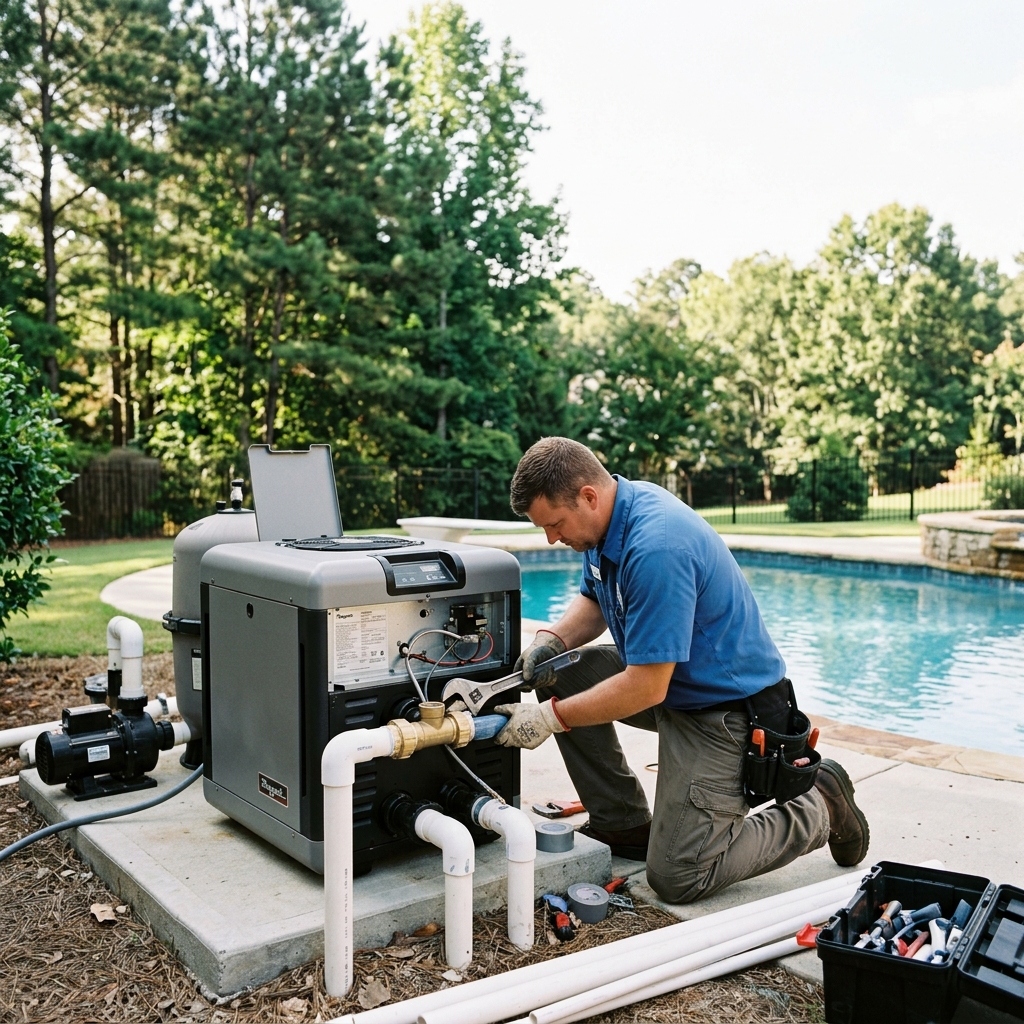
When planning to install a pool heater in Georgia, homeowners typically face costs ranging from $1,500 to $5,000 for a gas heater versus $2,500 to $7,500 for a heat pump, including professional installation. The primary cost difference stems from the equipment itself and installation complexity. Gas heaters generally cost less upfront but require natural gas or propane connections, while heat pumps have higher initial costs but offer significantly lower operating expenses. In Georgia’s climate, heat pumps can reduce heating costs by 50-80% compared to gas heaters, making them increasingly popular despite the higher purchase price. Your final investment depends on pool size, desired temperature rise, existing utility connections, and how frequently you plan to heat your pool throughout Georgia’s extended swimming season.
Breaking Down Pool Heater Installation Costs in Georgia
Understanding the complete cost breakdown helps Georgia pool owners make informed decisions. Gas heater installations typically include $1,000 to $3,500 for the unit itself, plus $500 to $1,500 for professional installation. Heat pump systems require a larger initial investment, with units costing $2,000 to $5,500 and installation fees ranging from $500 to $2,000. These installation costs can vary significantly based on your location within metro Atlanta and North Georgia, existing electrical or gas infrastructure, and the complexity of integrating the heater with your current pool equipment.
Additional expenses often surprise first-time pool heater buyers. Gas heaters may require new gas lines, which can add $500 to $2,000 to your project. Heat pumps might need electrical panel upgrades or dedicated circuits, potentially adding $800 to $1,500. Permits, required in most Georgia counties, typically cost $50 to $300. Professional pool builders like those who handle custom pool installations often include these infrastructure considerations in their initial quotes, helping avoid unexpected costs.
Gas Pool Heaters: Pros, Cons, and Total Costs
Gas heaters remain popular in Georgia for their rapid heating capabilities and lower upfront costs. These systems can raise pool water temperature by 1-2 degrees per hour, making them ideal for occasional heating or quick warm-ups before weekend gatherings. Natural gas models typically cost $1,500 to $3,000, while propane versions range from $1,500 to $2,500. Installation complexity varies based on existing gas connections, with new gas line installations potentially doubling your total project cost.
Operating costs for gas heaters in Georgia depend heavily on local utility rates and usage patterns. Natural gas currently costs Georgia homeowners approximately $1.20 per therm, translating to $4-8 per hour of operation for an average-sized pool. Propane users face higher costs at $3-4 per gallon, resulting in $7-12 hourly operating expenses. Over a typical Georgia swimming season, gas heater owners might spend $300 to $800 monthly if heating regularly, making operational budgeting crucial for long-term satisfaction.
Installation Requirements for Gas Heaters
Proper gas heater installation involves several critical components beyond the unit itself. Professional installers must ensure adequate gas supply, proper ventilation, and safe distances from windows, doors, and property lines per Georgia building codes. Most installations require a concrete pad or stable mounting surface, adding $200 to $500 to your project. Connecting to existing pool plumbing typically involves PVC modifications and new valves, contributing another $300 to $600 to installation costs.
Heat Pump Pool Heaters: Long-Term Value Analysis
Heat pump technology offers Georgia pool owners exceptional efficiency by extracting heat from ambient air rather than generating it through combustion. While initial costs range from $2,500 to $7,500 installed, these systems typically pay for themselves through energy savings within 2-4 years. Heat pumps work optimally when air temperatures exceed 50°F, making them perfectly suited for Georgia’s climate where even winter days often reach suitable operating temperatures.
The efficiency advantage of heat pumps becomes clear when examining operating costs. Where gas heaters might cost $5-10 per hour to operate, heat pumps typically run for $0.80 to $2.00 hourly, depending on your electrical rates and desired temperature. This dramatic difference means Georgia pool owners can maintain comfortable swimming temperatures throughout the extended season without breaking their utility budgets. Many homeowners report saving $2,000 to $4,000 annually compared to gas heating, especially when maintaining consistent temperatures rather than heating sporadically.
Heat Pump Installation Considerations
Installing a heat pump requires careful attention to electrical infrastructure and placement. These units typically need 50-60 amp dedicated circuits, which may necessitate electrical panel upgrades in older homes. Proper airflow is crucial for efficiency, requiring installers to maintain adequate clearances around the unit. Georgia’s humid climate also demands consideration for condensate drainage, as heat pumps can produce significant water during operation. Professional installers familiar with seasonal pool preparation understand these regional requirements.
Comparing Operating Costs: Real Georgia Examples
To illustrate the cost differences between gas and heat pump pool heaters, consider a typical 20,000-gallon pool in North Georgia. Maintaining this pool at 82°F from April through October using a gas heater would cost approximately $400-600 monthly in natural gas, totaling $2,800 to $4,200 for the season. The same pool heated with a heat pump would incur monthly costs of $80-150, resulting in seasonal expenses of $560 to $1,050. These calculations assume average Georgia utility rates and moderate usage patterns.
The cost comparison becomes even more favorable for heat pumps when considering year-round or extended season heating. Georgia’s mild winters allow heat pump operation on many days when temperatures exceed 50°F. Pool owners who enjoy winter swimming or maintain spas year-round find heat pumps particularly economical. Some North Georgia pool owners report heating their pools through December and starting again in early March, extending their swimming season by three months or more while keeping heating costs manageable.
Factors Affecting Your Pool Heater Choice in Georgia
Several factors unique to Georgia influence the gas versus heat pump decision. Pool size obviously impacts both equipment sizing and operating costs, with larger pools requiring more powerful units and consuming more energy. Usage patterns matter significantly – families who heat their pools daily benefit more from heat pump efficiency, while those who heat occasionally for parties might prefer gas heaters’ rapid response. Location within Georgia also affects choices, as mountain properties in North Georgia face cooler temperatures that can reduce heat pump efficiency.
Environmental considerations increasingly influence pool heater decisions. Heat pumps produce significantly lower carbon emissions than gas heaters, appealing to environmentally conscious homeowners. Local utility incentives sometimes favor one technology over another, with some Georgia electric cooperatives offering rebates for heat pump installations. Future utility cost projections also merit consideration, as natural gas and propane prices tend to fluctuate more than electricity rates.
Pool Cover Impact on Heating Costs
Regardless of heater type, pool covers dramatically reduce heating costs in Georgia. A quality solar or insulated cover can reduce heat loss by 50-70%, translating to hundreds or thousands in annual savings. When factoring pool heater cost gas vs heat pump comparisons, including a cover in your budget often provides the best return on investment. Many Georgia pool professionals recommend allocating 10-15% of your heater budget for a high-quality cover system.
Professional Installation vs. DIY Considerations
While some handy homeowners consider DIY installation to reduce pool heater costs, professional installation offers numerous advantages in Georgia. Licensed installers understand local building codes, permit requirements, and safety regulations. They also provide warranties on both equipment and labor, protecting your investment. Gas heater installations particularly benefit from professional expertise, as improper gas connections pose serious safety risks. Electrical work for heat pumps similarly requires licensed professionals to ensure code compliance and safety.
Professional installers also optimize heater placement and integration with existing pool equipment. They understand how to size units properly for Georgia’s climate conditions and your specific pool characteristics. This expertise often results in better efficiency and longer equipment life, offsetting any savings from DIY installation. Many manufacturers void warranties for DIY installations, making professional installation even more valuable for protecting your investment.
Maintenance Costs and Longevity Comparison
Long-term ownership costs extend beyond initial installation and operation. Gas heaters typically last 5-10 years in Georgia’s climate, with annual maintenance costs of $150-300. Common maintenance includes burner cleaning, heat exchanger inspection, and control system checks. Heat pumps generally offer longer service life, often lasting 10-15 years with proper maintenance costing $100-200 annually. This maintenance primarily involves coil cleaning, refrigerant checks, and electrical connection inspections.
Component replacement costs also differ significantly between technologies. Gas heater heat exchangers, the most expensive component, cost $1,000-2,000 to replace. Heat pump compressors, their costliest part, range from $1,500-2,500. However, heat pumps’ longer lifespan often means fewer major repairs over time. Regular professional pool inspections help identify potential issues early, extending equipment life regardless of heater type.
Making the Right Choice for Your Georgia Pool
Choosing between gas and heat pump pool heaters ultimately depends on your specific circumstances and priorities. Gas heaters make sense for occasional users who value rapid heating and lower upfront costs. They’re also preferable for smaller pools or spas where the efficiency advantage of heat pumps is less pronounced. Properties with existing natural gas service and limited electrical capacity might also favor gas installations.
Heat pumps excel for regular pool users who prioritize low operating costs and environmental responsibility. Georgia’s climate perfectly suits heat pump operation, with mild temperatures enabling efficient heating most of the year. Larger pools particularly benefit from heat pump efficiency, as the operational savings multiply with increased water volume. Homeowners planning to heat their pools frequently or maintain consistent temperatures find heat pumps deliver the best long-term value.
Future-Proofing Your Pool Heating Investment
When evaluating pool heater cost gas vs heat pump options, consider future trends affecting both technologies. Electric heat pumps benefit from ongoing efficiency improvements and increasing renewable energy adoption. As Georgia’s electrical grid incorporates more solar and wind power, heat pumps become even more environmentally friendly. Gas heaters face potential challenges from rising fossil fuel costs and increasing environmental regulations that might affect future availability or pricing.
Smart technology integration represents another consideration for forward-thinking pool owners. Modern heat pumps often include advanced controls, remote monitoring, and integration with home automation systems. These features enable optimal scheduling, energy management, and maintenance alerts. While some gas heaters offer similar capabilities, heat pumps typically provide more sophisticated control options that enhance both comfort and efficiency.
Conclusion: Maximizing Your Pool Heating Investment
The decision between gas and heat pump pool heaters in Georgia involves balancing upfront costs against long-term operating expenses. While gas heaters cost less initially, heat pumps typically provide better value over their lifetime through dramatically lower operating costs. For most Georgia pool owners who use their pools regularly throughout the extended swimming season, heat pumps represent the most economical choice despite higher installation costs.
Professional guidance ensures you make the best choice for your specific situation. At Sandals Luxury Pools, Inc., we help North Georgia homeowners evaluate their pool heating options based on usage patterns, budget constraints, and long-term goals. Our experienced team understands how local climate conditions, utility costs, and pool characteristics affect heater performance and economics. Whether you’re building a new custom pool or upgrading existing equipment, we provide honest recommendations tailored to your needs. Contact us today at (770) 771-1839 to discuss your pool heating options and receive a comprehensive cost analysis for your specific situation.
