
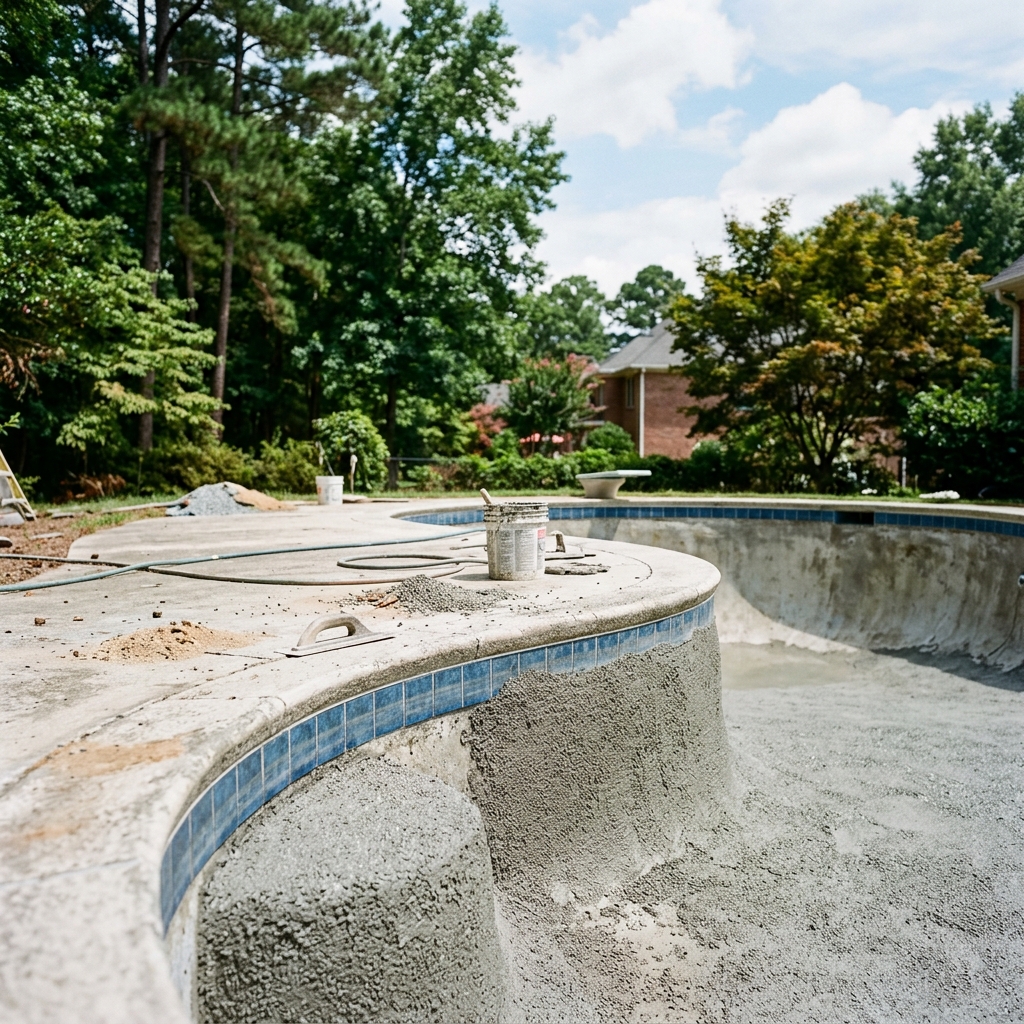
When deciding between pool replastering and resurfacing in Georgia, homeowners typically face costs ranging from $4,000 to $15,000, with replastering averaging $4,000-$7,000 and full resurfacing costing $6,000-$15,000 or more. The key difference lies in the scope of work: replastering involves applying a new layer of plaster over your existing pool surface, while resurfacing is a more comprehensive process that may include removing the old surface entirely and addressing underlying structural issues. In Georgia’s climate, with its hot summers and occasional freezing winters, most pools need replastering every 7-10 years, while a quality resurfacing job can last 15-20 years. Your choice depends on the current condition of your pool surface, your budget, and how long you plan to stay in your home. Minor surface staining, small cracks, and rough texture typically call for replastering, while extensive cracking, delamination, or repeated repair issues indicate the need for full resurfacing.
Understanding Pool Replastering vs. Resurfacing
Pool replastering and resurfacing are often confused, but understanding the distinction is crucial for making the right decision for your Georgia pool. Replastering involves applying a fresh coat of plaster material over your existing pool surface. This process typically takes 3-5 days and addresses cosmetic issues like staining, etching, and minor surface roughness. The new plaster layer is usually about 3/8 to 1/2 inch thick and bonds directly to the existing surface.
Resurfacing, on the other hand, is a more intensive renovation that may involve completely removing the old surface material down to the gunite or concrete shell. This comprehensive approach allows contractors to address structural issues, repair cracks properly, and apply entirely new surface materials. Modern resurfacing options include pebble finishes, quartz aggregates, and even fiberglass coatings, each offering different benefits in terms of durability, appearance, and maintenance requirements.
The climate in North Georgia plays a significant role in how quickly pool surfaces deteriorate. Temperature fluctuations between seasons, combined with the region’s occasional ice storms and hot, humid summers, can accelerate surface wear. Additionally, Georgia’s well water can cause pool problems due to high mineral content, which may lead to staining and faster surface degradation.
Cost Breakdown: Replastering Your Pool in Georgia
Pool replastering costs in Georgia typically range from $4,000 to $7,000 for an average-sized residential pool (approximately 450 square feet of surface area). Several factors influence the final price, starting with the size of your pool. Larger pools naturally require more materials and labor, with costs averaging $8-$10 per square foot for standard white plaster application.
The type of plaster finish you choose significantly impacts the cost. Basic white plaster is the most economical option, while colored plaster adds $500-$1,000 to the total project cost. Premium finishes like quartz-enhanced plaster or pebble-tec style finishes can increase costs by $2,000-$4,000 but offer superior durability and aesthetic appeal. These enhanced finishes are particularly popular in Georgia’s luxury home market, where homeowners prioritize longevity and visual impact.
Additional factors affecting replastering costs include:
- Pool accessibility (equipment access, backyard obstacles)
- Necessary prep work (draining, cleaning, minor crack repair)
- Tile and coping repairs needed during the process
- Water fill and chemical balancing after completion
- Seasonal timing (spring and early summer typically see higher demand)
Labor costs in the greater Atlanta and North Georgia region account for approximately 60-70% of the total replastering expense. Experienced pool contractors charge more but deliver superior results that last longer, ultimately providing better value. When choosing the right pool repair company in Jefferson, GA, prioritize experience with replastering projects and check references from recent jobs.
Cost Analysis: Full Pool Resurfacing in Georgia
Full pool resurfacing represents a more substantial investment, with costs ranging from $6,000 to $15,000 or more for standard residential pools. This higher price point reflects the comprehensive nature of the work, which often includes complete surface removal, structural repairs, and application of premium finishing materials. The process typically takes 1-2 weeks, depending on the extent of repairs needed and the chosen surface material.
Surface material options for resurfacing vary widely in both cost and performance characteristics. Aggregate finishes like pebble or quartz start around $12-$15 per square foot installed, while premium glass bead finishes can reach $20-$25 per square foot. These materials offer exceptional durability and resistance to Georgia’s varying weather conditions, making them popular choices despite the higher upfront cost.
The resurfacing process often reveals hidden issues that add to the overall cost. Common discoveries include:
- Structural cracks requiring professional repair ($500-$2,000)
- Plumbing issues at return lines or skimmers ($300-$800 per repair)
- Tile replacement needs ($30-$50 per linear foot)
- Coping repairs or replacement ($35-$55 per linear foot)
- Equipment upgrades recommended during renovation
Geographic location within Georgia affects resurfacing costs, with metro Atlanta typically commanding higher prices than rural areas. However, the availability of experienced contractors in cities like Jefferson, Braselton, and Gainesville often results in competitive pricing due to market competition.
Key Factors That Determine Your Pool’s Needs
Determining whether your pool needs replastering or full resurfacing requires careful evaluation of several indicators. Signs you need to replaster your swimming pool include rough texture that catches swimsuits, visible staining that won’t respond to cleaning, and minor surface cracks. These issues typically appear after 5-10 years of use and indicate that the plaster surface has worn thin but the underlying structure remains sound.
More severe symptoms suggest the need for complete resurfacing. Large structural cracks, areas where plaster has delaminated from the shell, and recurring leaks despite repairs all point to deeper issues. In Georgia’s climate, freeze-thaw cycles can exacerbate these problems, causing expansion and contraction that separates the surface from the substrate. Pools experiencing multiple issues simultaneously often benefit more from comprehensive resurfacing than piecemeal repairs.
Water chemistry history plays a crucial role in surface longevity. Consistently unbalanced water, particularly low pH or high chlorine levels, accelerates surface deterioration. Too much chlorine can damage your pool surface, leading to premature replastering or resurfacing needs. Regular water testing and proper chemical balance can extend the life of any pool surface significantly.
The age of your pool provides important context for decision-making. Pools under 10 years old with minor surface issues typically respond well to replastering. However, pools over 15-20 years old often benefit from complete resurfacing, as this allows for modernization of the surface material and addressing accumulated wear throughout the structure.
Regional Pricing Variations Across North Georgia
Pool replastering vs resurfacing cost varies significantly across North Georgia’s diverse markets. In affluent areas like Braselton and parts of Gainesville, premium finishes and high-end contractors push average costs toward the upper range. These markets often see more elaborate pool designs requiring specialized expertise, which commands premium pricing. Conversely, rural areas in the region may offer lower base prices but could incur additional charges for travel and material delivery.
Metro Atlanta’s influence extends into North Georgia’s pricing structure, particularly in counties closer to the city. Areas like Buford and Sugar Hill, straddling the metro boundary, typically see prices 10-15% higher than more distant locations. This pricing pressure reflects higher operational costs for contractors and increased demand from a denser population of pool owners.
Seasonal demand patterns unique to Georgia also affect pricing. Late winter through early spring sees heightened demand as homeowners prepare for swimming season, potentially increasing costs by 15-20%. Conversely, late summer and fall often offer better pricing as contractors seek to maintain steady workloads. Planning your replastering or resurfacing project during these off-peak periods can result in substantial savings without compromising quality.
Local factors including permit requirements, water costs, and disposal fees also influence final pricing. Some North Georgia municipalities require specific permits for pool resurfacing, adding $200-$500 to project costs. Water rates for refilling vary dramatically between jurisdictions, with some areas charging premium rates during drought conditions.
Hidden Costs and Budget Considerations
Beyond the base price for replastering or resurfacing, several hidden costs can impact your project budget. Proper surface preparation often reveals unexpected repairs, particularly in older pools. Addressing these issues during the resurfacing process is more cost-effective than delaying them, but can add 20-30% to the original estimate. Common unexpected expenses include fixing underground plumbing leaks, replacing worn fittings, and addressing structural movement in the pool shell.
Water and chemical costs for refilling and balancing your pool post-project represent a often-overlooked expense. In North Georgia, filling an average 20,000-gallon pool costs $150-$300 depending on local water rates. Initial chemical balancing requires specialized startup chemicals costing $200-$400, plus professional testing and adjustment services. Some contractors include these services in their quotes, while others bill them separately.
Temporary pool covering or safety measures during the project may be necessary, especially for households with children or pets. Safety fencing rental runs $100-$200 per week, while temporary covers cost $300-$500. These expenses, while not always required, provide peace of mind during the construction period and may be mandated by homeowner’s insurance policies.
Long-term maintenance considerations should factor into your surface choice decision. While premium surfaces like pebble finishes cost more initially, they typically require less frequent acid washing and resist staining better than standard plaster. This reduced maintenance can save $2,000-$4,000 over the surface’s lifetime, offsetting the higher upfront investment. Understanding the best pool cleaning schedule for Georgia summers helps maintain any surface choice effectively.
Making the Right Choice for Your Pool
Choosing between replastering and resurfacing ultimately depends on your pool’s condition, budget, and long-term plans. For newer pools with primarily cosmetic issues, replastering offers an economical refresh that can extend pool life by another decade. This option works particularly well for homeowners planning to sell within 5-7 years, as it provides an attractive pool surface without the investment of full resurfacing.
Complete resurfacing makes sense for pools showing structural issues or those over 15 years old. While the initial investment is higher, the extended lifespan and reduced maintenance of modern surface materials provide superior long-term value. Additionally, resurfacing allows for aesthetic upgrades that can transform an outdated pool into a contemporary backyard centerpiece, potentially increasing home value beyond the cost of the renovation.
Timing your project strategically can yield significant savings. Planning work during Georgia’s mild fall months allows for optimal curing conditions while avoiding peak season pricing. This timing also ensures your pool is ready for the following summer without the rush and potential delays of spring scheduling. Working with an experienced contractor who understands local conditions and can accurately assess your pool’s needs is crucial for making the right choice.
Professional Assessment and Project Planning
Before committing to either replastering or resurfacing, obtaining a professional assessment provides valuable insights into your pool’s actual needs. Experienced contractors can identify underlying issues not visible to untrained eyes, potentially saving thousands in future repairs. During evaluation, contractors should perform a thorough inspection including hollow spot detection, crack analysis, and surface adhesion testing.
Project planning extends beyond choosing surface materials to considering complementary improvements. Many homeowners use resurfacing projects as opportunities to update tile, coping, and equipment. Coordinating these improvements with surface work often reduces overall costs compared to separate projects. Additionally, addressing pool preparation for summer season during the resurfacing process ensures optimal performance when swimming season arrives.
Documentation and warranties play crucial roles in project planning. Reputable contractors provide detailed written estimates outlining all work phases, materials, and potential additional costs. Warranty terms vary significantly between replastering and resurfacing, with premium surfaces often carrying 10-15 year material warranties compared to 1-2 years for standard plaster. Understanding these differences helps inform your investment decision.
Conclusion: Investing in Your Pool’s Future
The decision between pool replastering vs resurfacing cost considerations extends beyond initial price to encompass long-term value, maintenance requirements, and lifestyle impact. Georgia pool owners face unique challenges from weather variations and water chemistry that make proper surface selection particularly important. While replastering offers an economical solution for pools with minor wear, complete resurfacing provides comprehensive renovation that addresses both aesthetic and structural concerns.
Investing in quality materials and experienced contractors pays dividends through extended surface life and reduced maintenance costs. Whether you choose replastering or resurfacing, working with established professionals ensures proper execution that maximizes your investment. For North Georgia pool owners seeking expert guidance on replastering or resurfacing projects, Sandals Luxury Pools, Inc. brings over a decade of experience in pool renovation and construction. Their team can assess your pool’s specific needs and recommend the most cost-effective solution. Contact them at (770) 771-1839 to schedule a consultation and discover how the right surface treatment can transform your pool while protecting your investment for years to come.
