
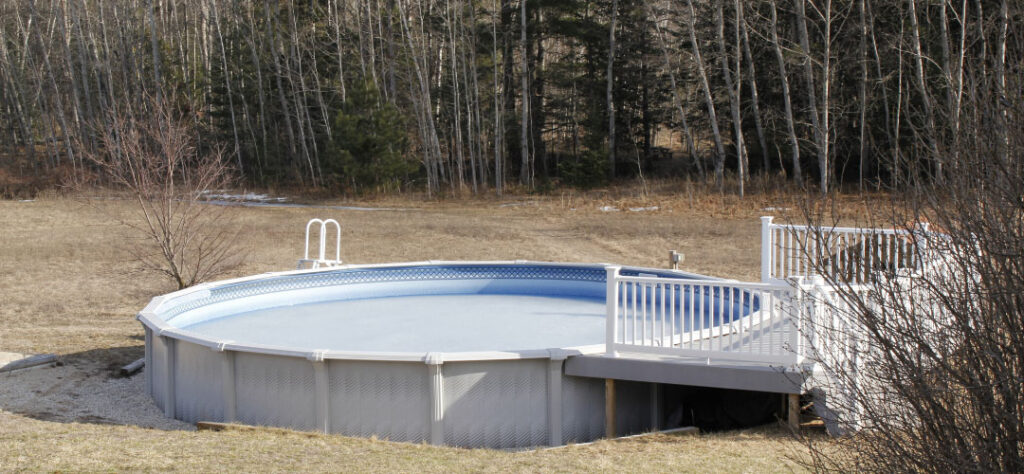
Closing an above ground pool for winter involves balancing the water chemistry, cleaning the pool thoroughly, adding winterizing chemicals, lowering the water level below the skimmer, draining all equipment, and securing a winter cover with an air pillow underneath. This process protects your pool from freeze damage, algae growth, and costly repairs. For pool owners in Jefferson, Georgia and across North Georgia, the best time to close is when water temperatures consistently drop below 65°F, which usually happens in late October to mid-November. This guide walks through every step, answers the most common winterizing questions, and helps you protect your above ground pool investment all winter long.
How to Properly Close Down an Above Ground Pool for Winter
You properly close down an above ground pool for winter by completing a series of steps in the right order: balance the water, clean the pool, add closing chemicals, lower the water, drain the equipment, and install a winter cover. Skipping any of these steps puts your pool at risk for freeze damage, liner problems, or a green swamp when spring arrives.
According to the Pool Chemical Calculator, skipping winterization can lead to repair bills of $1,500 to $3,000 from cracked pumps, split filter tanks, and damaged plumbing. Data from Fixr.com shows that the national average cost to winterize an above ground pool is only about $150 for a DIY approach, compared to thousands in potential freeze damage. Spending a few hours closing your pool correctly now saves a lot of money and frustration later.
Pool owners in Jefferson, GA and surrounding areas like Athens, Braselton, and Gainesville face a slightly different situation than homeowners in the deep South or the far North. Georgia winters are mild compared to the Northeast, but freezing temperatures are still very much a possibility. According to Allen Pool Service in Atlanta, average low temperatures from December through February in Georgia are in the 30s. That is cold enough to crack pump housings, split filter tanks, and damage vinyl liners if the pool is not winterized properly.
If your pool needs attention before winter arrives, scheduling a pool inspection can catch small problems before the cold weather makes them worse.
What Chemicals Are Needed to Close an Above Ground Pool for Winter?
The chemicals needed to close an above ground pool for winter are a chlorine-free shock, winter algaecide, stain and scale preventer, and optionally a slow-release winter floater. You should also have standard water balancing chemicals on hand to adjust pH, alkalinity, and calcium hardness before adding the closing chemicals.
According to In The Swim, the most commonly used winterizing chemicals include chlorine-free pool shock (added 2 days before closing to oxidize contaminants), stain and scale treatment (added 1 day before closing to protect pool surfaces from mineral buildup), and winter algaecide (poured into the pool just before covering to prevent algae growth). Many pool owners use a winterizing chemical kit that bundles all of these products together for convenience.
Swim University recommends using a copper-free, 60% Polyquat algaecide for winter closing because it is strong enough to prevent algae for months and does not cause staining. Copper-based algaecides can leave stains on vinyl liners, which is a real concern for above ground pool owners.
Before adding any closing chemicals, test your water and adjust it to these ranges: pH between 7.2 and 7.6, total alkalinity between 80 and 120 ppm, calcium hardness between 175 and 250 ppm, and free chlorine between 1 and 3 ppm. According to INYOPools.com, getting the water balanced before closing protects the pool from corrosion and scale buildup during the months it sits unused.
Many families across Jefferson, Georgia and Hoschton prefer to purchase a pre-made winterizing chemical kit sized for their pool. These kits typically treat pools up to 12,000 or 15,000 gallons and take the guesswork out of the process. For pools in the North Georgia area that deal with red clay runoff and heavy pollen, an extra dose of algaecide provides added insurance against green water in the spring.
How Low to Drain an Above Ground Pool for Closing?
You should drain an above ground pool 4 to 6 inches below the skimmer opening for winter closing. This prevents water from entering the skimmer and freezing, which can crack the skimmer housing and damage the pool wall.
Never drain an above ground pool completely. According to Swimming Pool Steve, draining an above ground pool causes the vinyl liner to shrink, shift, and become permanently wrinkled or damaged. The liner loses elasticity after being exposed to chemicals and sunlight, and once it dries out, it can become stiff and brittle. Very old liners can even shatter like glass when left dry.
The water inside your pool is also a critical part of the pool’s structure. According to The Great Backyard Place, the outward pressing force of the water is what keeps the pool walls stable and the liner stretched to its full size. An empty above ground pool can sag inward, pop out of its tracks, or even collapse in high winds. One winter without water could permanently damage the walls and tracks.
An alternative to lowering the water is using a skimmer cover plate (sometimes called an Aquador). This plastic plate snaps over the skimmer opening and blocks water from entering it. When using a skimmer plate, you can keep the water at its normal level, which is actually better for supporting the winter cover. According to Swim University, keeping the water level at normal height reduces the stress on a solid winter cover when rain and snow collect on top of it.
Pool owners in Braselton and Winder, Georgia who are unsure about how low to drain should use the skimmer plate method for the simplest and safest winter close. If you need help, a professional pool closing service can handle this step for you.
What Happens if You Don’t Close Your Above Ground Pool in the Winter?
If you don’t close your above ground pool in the winter, freezing water can crack the pump housing, split the filter tank, and damage the skimmer and plumbing lines. Unbalanced, untreated water will also develop severe algae growth and staining that can take weeks and hundreds of dollars to fix in the spring.
According to American Pool, when water freezes inside pool equipment, it expands and has nowhere to go. This can shatter pumps, crack filter tanks, and rupture PVC plumbing. The damage is often systemic, meaning one frozen pipe can lead to problems that extend under decks, through walls, or underground. Repair costs for freeze damage can easily reach $1,500 to $3,000 or more when you factor in parts, excavation, and labor.
Above ground pools are especially vulnerable because they sit above the ground and are more directly exposed to cold air from every direction. According to Swimmingpool.com, above ground pools are particularly susceptible to winter damage and need extra care. Ice expansion can push outward against the pool walls, causing them to buckle. A frozen skimmer can become so heavy that it pulls the pool wall down and causes a partial collapse.
For homeowners in the Jefferson, Georgia area, the risk is real. While Georgia winters are milder than the Northeast, nighttime temperatures regularly dip into the 20s and 30s from December through February. A single hard freeze is all it takes to crack a pump or split a filter tank. Even pool owners in Athens and Gainesville who think their winters are mild should protect their equipment with proper winterization.
Can You Leave Steps in an Above Ground Pool for Winter?
No, you should not leave steps in an above ground pool for winter. Metal steps can rust and corrode during the off-season, which stains the vinyl liner and contaminates the water. Plastic steps can become brittle in freezing temperatures and crack under the weight of ice or snow.
According to Swim University, leaving accessories in the pool can damage the items or, worse, the pool itself. Corroded metal can contaminate the water and cause staining that is difficult to remove in the spring. Remove all steps, ladders, rails, and accessories. Clean them with a multi-purpose pool surface cleaner, let them dry completely, and store them in a clean, dry location away from direct sunlight.
This also applies to automatic pool cleaners, floating chlorinators, and any toys or inflatables. Everything that is not permanently attached should come out of the pool before the cover goes on.
Can You Close a Pool Without a Cover?
No, you should not close a pool without a cover. A winter cover is one of the most important parts of the winterization process. Without a cover, leaves, dirt, insects, and other debris fall directly into the water for months, creating a massive mess and promoting algae growth. Rain and snow also dilute the winterizing chemicals, making them less effective.
According to Tom’s Guide, leaving a pool uncovered during winter means you will face extensive cleanup, rebalancing of water chemistry, and possibly dealing with freeze damage to the pool interior. A winter cover also keeps sunlight out, which slows down algae growth. With a good solid cover in place, your winterizing chemicals can last five to six months without needing to be topped off.
For above ground pools, winter covers typically attach using a cable and winch system that tightens around the top ledge of the pool. In windy areas like parts of North Georgia, using additional cover clips or a winter cover seal wrap helps keep wind from getting underneath the cover and pulling it off. An air pillow placed under the cover before it is secured provides an added layer of protection.
Will an Above Ground Pool Collapse if Drained?
Yes, an above ground pool can collapse if drained. The water inside the pool provides the structural support that keeps the walls upright and the liner in place. Without that weight pushing outward, the walls can sag inward, come out of their tracks, or collapse entirely in strong wind or under the weight of snow.
According to The Pool Factory, an empty above ground pool is susceptible to collapse, especially in high winds and bad weather. Even a pool that is only one-quarter full is at risk. The vinyl liner can shrink from heat exposure on a sunny day and become permanently damaged. Swimming Pool Steve warns that once a vinyl liner has dried out, it will become stiff and brittle, and very old liners can shatter like glass.
According to Latham Pool Products, above ground vinyl liners typically last 6 to 10 years with proper care. Draining the pool and letting the liner dry out can cut that lifespan dramatically. The safest rule for above ground pool owners in Jefferson, Georgia and surrounding communities is to never leave the pool empty for any extended period, including during winter.
If your liner is already showing signs of wear and you are considering a replacement, a pool repair professional can evaluate the condition and recommend the best course of action before the cold weather sets in.
Can You Completely Drain an Above Ground Pool for Winter?
No, you should not completely drain an above ground pool for winter. The only above ground pools that should be fully drained and stored are temporary, inflatable, or soft-sided pools that are not built to withstand freezing temperatures. Any above ground pool with a metal or resin frame and a vinyl liner must keep water in it year-round to maintain structural integrity.
The water does two critical jobs during winter. First, it pushes outward against the liner, keeping it stretched and smooth. Second, it stabilizes the walls by providing weight and tension that the frame relies on. According to The Great Backyard Place, an entire winter without water could permanently disfigure the walls and ruin the tracks that hold them in place.
Lower the water 4 to 6 inches below the skimmer (or use a skimmer plate and keep it at the normal level), but never drain it all the way down. Homeowners in Athens and Oakwood, Georgia should follow this rule even during milder winters, as the liner damage from draining is not caused by cold alone. It is caused by the absence of water.
Do You Need Antifreeze to Close a Pool for Winter?
Yes, pool antifreeze is recommended for above ground pools in areas that experience freezing temperatures. Pool antifreeze is a non-toxic formula (not the same as automobile antifreeze) that is poured into the plumbing lines to protect them from freeze damage.
According to INYOPools.com, after blowing water out of the plumbing lines with an air compressor or shop vacuum, pool antifreeze should be added to the lines and the skimmer as extra insurance. The non-toxic formula is safe for pool water and will not affect water chemistry. It protects the pipes down to approximately -50°F when used at the recommended concentration of 1 gallon per 10 feet of pipe.
For above ground pools in Jefferson, Georgia and across North Georgia, antifreeze is an inexpensive safeguard. Even though Georgia winters are not as severe as northern states, overnight temperatures in the 20s can freeze water inside short plumbing runs quickly. A gallon or two of pool antifreeze costs very little compared to replacing a cracked pipe or fitting in the spring.
Where to Put Antifreeze When Closing a Pool?
You put antifreeze in the plumbing lines, the skimmer, and any exposed pipes that could hold water during winter. After using an air compressor or shop vacuum to blow as much water out of the lines as possible, pour pool antifreeze into each line to fill the remaining space and prevent any residual water from freezing and expanding.
Pour antifreeze directly into the skimmer well after installing a skimmer plug or Gizzmo (a device that fits into the skimmer and absorbs ice expansion pressure). Also pour antifreeze into the return line before installing a threaded winter plug. If your above ground pool has a main drain line, add antifreeze to that line as well.
Always use non-toxic pool antifreeze, never automotive antifreeze. Automotive antifreeze is toxic and will contaminate your pool water. Pool antifreeze is propylene glycol-based and is safe for swimmers once the pool is reopened in the spring.
How Do You Winterize an Above Ground Vinyl Pool?
You winterize an above ground vinyl pool by following these steps in order:
- Test and balance the water chemistry. Aim for pH 7.2 to 7.6, alkalinity 80 to 120 ppm, and calcium hardness 175 to 250 ppm.
- Brush the walls and floor, vacuum the pool, and skim all debris from the surface. A clean pool is less likely to develop stains or algae over winter.
- Shock the pool with a chlorine-free shock to oxidize contaminants. Wait at least 24 hours before adding other winterizing chemicals.
- Add stain and scale preventer, then winter algaecide. Run the pump for 2 to 4 hours to distribute chemicals evenly.
- Remove all accessories: steps, ladders, automatic cleaners, floats, and toys. Clean and store them indoors.
- Lower the water level 4 to 6 inches below the skimmer, or install a skimmer cover plate and keep the water at normal level.
- Disconnect and drain all equipment: pump, filter, hoses, chlorinator, and heater. Remove all drain plugs and store them together in the pump basket so they are easy to find in spring.
- Blow out the plumbing lines with an air compressor or shop vacuum. Add pool antifreeze to the lines and skimmer.
- Install threaded winter plugs in the return fittings.
- Inflate an air pillow to about two-thirds full and tie it in the center of the pool.
- Place the winter cover over the pool, black side down, and secure it with the cable and winch system. Add cover clips or wall bags for extra security in windy areas.
According to Leslie’s Pool Supplies, you should not close your pool too early. Winterizing before water temperatures are consistently below 65°F can increase the risk of algae growth because warmer water uses up sanitizer more quickly. For pool owners in Jefferson, Georgia, this typically means waiting until late October or November.
Homeowners in Gainesville and Commerce, Georgia who are closing their pool for the first time may want professional help from a trusted pool closing service to make sure every step is done correctly.
Should I Shock the Pool Before Closing for Winter?
Yes, you should shock the pool before closing for winter. Shocking kills bacteria, destroys organic contaminants, and gives your pool a strong sanitizer level heading into the off-season. According to In The Swim, adding a chlorine-free shock two days before closing oxidizes impurities without interfering with other winterizing chemicals or damaging the vinyl liner.
For above ground vinyl pools, using a non-chlorine shock is the safer choice. High concentrations of chlorine can bleach or damage vinyl liners over time. Non-chlorine shock (potassium monopersulfate) oxidizes contaminants effectively without the risk of liner damage. After shocking, run the pump for at least 2 to 4 hours to circulate the treatment throughout the entire pool.
After the shock has circulated, wait at least 24 hours before adding the algaecide and stain preventer. Adding algaecide at the same time as shock can reduce the algaecide’s effectiveness because the oxidizer breaks it down before it has a chance to work.
What Month Do People Close Pools?
Most pool owners close their pools between September and November, depending on their location and local climate. In the northern United States, pools are often closed in September or early October. In the Southeast, including Georgia, pool closing typically happens in late October to mid-November.
According to Swim University, the key indicator is water temperature, not the calendar date. Wait until water temperatures consistently drop below 65°F before closing. Closing too early, while the water is still warm, increases the risk of algae growth under the cover because warmer water burns through sanitizer much faster.
According to data from Sandals Luxury Pools, pool owners in Jefferson, Georgia and along the I-985 corridor should plan their winterization based on local weather patterns. The average first freeze in the greater Atlanta area is around November 13, but early freezes have happened as soon as mid-October. Checking the 10-day forecast and acting before the first hard freeze is the smartest approach.
Families in Braselton, Hoschton, and Winder who want to squeeze every last swim out of the season can wait until the water temperature is in the mid-50s, but should have all their winterizing supplies ready to go so they can close quickly if a cold snap is forecast.
Is It Normal to Losing 1 Inch of Water a Day in a Pool?
No, losing 1 inch of water a day in a pool is not normal and likely indicates a leak. Normal evaporation for a residential pool is about one-quarter inch per day during hot, dry weather. According to the Alliance for Water Efficiency, even a pinhole-sized leak in pool plumbing under 40 PSI of pressure can lose approximately 970 gallons per day.
If you suspect a leak, perform a simple bucket test. Fill a bucket with pool water and set it on the top step of the pool. Mark the water level inside the bucket and the pool water level on the outside. Wait 24 hours. If the pool water dropped more than the bucket water, you likely have a leak. This should be addressed before closing the pool for winter, because a leak that continues under a winter cover can drain the pool to dangerous levels, causing liner shrinkage, wall collapse, or floor damage.
Pool owners in Jefferson, Georgia who notice rapid water loss before winter closing should schedule a pool repair to find and fix the leak before the freeze season arrives.
Why Do People Put Baking Soda in Their Swimming Pools?
People put baking soda in their swimming pools to raise the total alkalinity of the water. Baking soda (sodium bicarbonate) is a common and inexpensive way to increase alkalinity, which helps stabilize the pH level and prevent it from swinging wildly up and down.
Proper alkalinity acts as a buffer for pH. When alkalinity is too low, pH becomes unstable and can change rapidly, which corrodes metal equipment and irritates swimmers’ skin and eyes. When alkalinity is in the correct range of 80 to 120 ppm, pH stays more consistent and easier to manage. About 1.5 pounds of baking soda per 10,000 gallons of water raises the alkalinity by roughly 10 ppm.
Before closing your above ground pool for winter, checking and adjusting the alkalinity is one of the first steps. Getting it right before adding winterizing chemicals helps those chemicals work more effectively throughout the off-season.
Can You Put Antifreeze in a Swimming Pool?
Yes, you can put non-toxic pool antifreeze in a swimming pool’s plumbing lines. Pool antifreeze is specifically designed for this purpose. It is a propylene glycol-based formula that is safe for pool water and will not harm swimmers when the pool is reopened.
You should never put automotive antifreeze (ethylene glycol) in a swimming pool. Automotive antifreeze is highly toxic to humans, pets, and the environment. Always look for the label “non-toxic pool antifreeze” or “swimming pool antifreeze” when purchasing.
Pool antifreeze is added to the plumbing lines, skimmer, and return fittings after the water has been blown out. It fills the low spots in the pipes where residual water may sit and prevents that water from freezing and expanding. According to In The Swim, pool antifreeze is effective down to -50°F when used at the proper concentration.
Will My Pool Pipes Freeze in One Night?
Yes, pool pipes can freeze in one night if the temperature drops below 32°F and the water inside the pipes is not moving. Still water in an above ground pool’s plumbing can freeze in just a few hours when exposed to sub-freezing air temperatures, especially because above ground plumbing sits fully exposed to the cold air rather than being buried underground.
According to In The Swim, moving water will not freeze in most of the United States as long as the pumps are running and all valves are at least partially open. However, if the power goes out or the pump fails during a freeze, the still water in the pipes can freeze quickly. This is why draining the equipment and adding antifreeze is so important for pools that are being fully closed for the winter.
In Jefferson, Georgia and the surrounding area, nighttime temperatures regularly dip into the 20s during December and January. A single night at 25°F is more than enough to freeze water in exposed above ground pool pipes. The cost of a couple gallons of pool antifreeze is nothing compared to the cost of replacing cracked fittings and hoses.
Pool Winter Closing Checklist: Step-by-Step Comparison
| Step | What to Do | Why It Matters |
|---|---|---|
| 1. Balance Water Chemistry | pH 7.2-7.6, alkalinity 80-120 ppm, calcium hardness 175-250 ppm | Prevents corrosion, scaling, and staining during winter |
| 2. Clean the Pool | Brush walls, vacuum floor, skim surface debris | Removes organic matter that feeds algae |
| 3. Shock the Pool | Add chlorine-free shock 2 days before closing | Oxidizes bacteria and contaminants |
| 4. Add Winter Chemicals | Algaecide, stain/scale preventer, winter floater | Prevents algae, staining, and mineral buildup for months |
| 5. Remove Accessories | Ladders, steps, cleaners, toys, floats | Prevents rust, corrosion, and liner damage |
| 6. Lower Water Level | 4-6 inches below skimmer (or use skimmer plate) | Prevents skimmer from freezing and cracking |
| 7. Drain Equipment | Remove drain plugs from pump, filter, hoses, heater | Prevents freeze damage to equipment ($400-$800+ per item) |
| 8. Blow Out Lines & Add Antifreeze | Use air compressor or shop vac, then add non-toxic antifreeze | Protects plumbing from ice expansion |
| 9. Install Air Pillow | Inflate 2/3 full, tie in center of pool | Absorbs ice pressure, protects walls and cover |
| 10. Secure Winter Cover | Cable and winch system, cover clips, or wall bags | Keeps out debris, blocks sunlight, prevents algae |
Sources: INYOPools.com, Swim University, Leslie’s Pool Supplies, In The Swim, HTH Pools, Fixr.com, Pool Chemical Calculator
Frequently Asked Questions
When Should I Close My Above Ground Pool in Jefferson, Georgia?
You should close your above ground pool in Jefferson, Georgia when water temperatures consistently stay below 65°F, which typically happens in late October to mid-November. According to Allen Pool Service, the average first freeze in the greater Atlanta area is around November 13, but early freezes have been recorded in mid-October. Watch the 10-day forecast and plan to have your pool fully closed before the first hard freeze hits.
How Much Does It Cost to Winterize an Above Ground Pool?
The cost to winterize an above ground pool ranges from $100 to $200 for a DIY approach, according to Royal Swimming Pools. This includes purchasing a winter cover, chemical kit, air pillow, and antifreeze. Hiring a professional to winterize your pool typically costs $150 to $300, according to Fixr.com. That cost is a fraction of the $1,500 to $3,000 in potential freeze damage from skipping winterization.
Do I Need an Air Pillow for My Above Ground Pool in Winter?
Yes, you need an air pillow for your above ground pool in winter. The air pillow (also called an ice compensator) sits under the winter cover and absorbs the pressure from expanding ice. Without it, ice pushes directly outward against the pool walls, which can cause them to buckle or warp. According to Fixr.com, air pillows cost about $10 to $30 and are one of the cheapest and most effective ways to protect your pool structure. A 24-foot round above ground pool typically needs two air pillows.
Can I Keep My Above Ground Pool Open All Winter in Georgia?
You can keep your above ground pool open all winter in Georgia, but it requires active maintenance. You will need to run the pump during any period when temperatures drop near or below freezing to keep water moving through the lines. According to Pinnacle Pool Services in Atlanta, all that is truly required to keep a pool open year-round in Georgia is freeze protection installed on the equipment, such as a thermostat that automatically turns the pump on when temperatures drop. However, above ground pools are more exposed to cold air than in-ground pools, making them riskier to leave open. Most pool professionals in North Georgia recommend fully winterizing above ground pools for safety.
What Happens if I Don’t Put Chemicals in My Pool Before Closing?
If you don’t put chemicals in your pool before closing, the water will become a breeding ground for algae and bacteria over the winter months. Without winterizing chemicals, you will almost certainly open the pool to green, cloudy water in the spring. According to Swimmingpool.com, pool closing chemicals are designed to remain effective for five to six months in a covered pool. Skipping them means you will need to spend significantly more time and money on cleanup, shocking, and rebalancing when you reopen.
Should I Hire a Professional to Close My Above Ground Pool in Jefferson, GA?
Hiring a professional to close your above ground pool in Jefferson, GA is a smart choice if you are a first-time pool owner, unsure about the process, or simply want peace of mind. A trained pool technician knows how to properly drain equipment, blow out lines, and apply the right chemicals for your specific pool setup. According to Fixr.com, most winterization-related freeze damage happens when homeowners attempt to do it themselves and miss a critical step. Professional pool closing services in the Jefferson area take the guesswork out of the process and protect your investment.
How Do I Protect My Above Ground Pool Cover From Wind in North Georgia?
You protect your above ground pool cover from wind in North Georgia by using the cable and winch system that comes with the cover, adding cover clips around the perimeter, and optionally wrapping the top edge with winter cover seal. In areas like Braselton, Gainesville, and Commerce, Georgia that see strong winter storms, these extra precautions keep the cover from lifting and exposing the pool to debris. Weighting the cover with water bags on the outside or placing water jugs around the edge can also help, but never use bricks or concrete blocks, as they can tear the cover and damage the pool deck.
Final Thoughts
Closing your above ground pool for winter is one of the most important things you can do to protect your investment and avoid expensive repairs in the spring. The process takes just a few hours: balance the water, clean the pool, add winterizing chemicals, lower the water, drain the equipment, add antifreeze, and secure a winter cover with an air pillow. Every step matters, and skipping even one can lead to cracked equipment, liner damage, or a green pool that takes weeks to restore.
For pool owners in Jefferson, Georgia and across the North Georgia area, from Athens to Braselton to Gainesville, getting the timing right is just as important as getting the steps right. Wait until water temperatures drop below 65°F, but do not wait until after the first hard freeze. If you would rather have a professional handle the entire process, Sandals Luxury Pools is ready to help. Contact the team today to schedule a pool closing service and head into winter knowing your pool is fully protected.
