
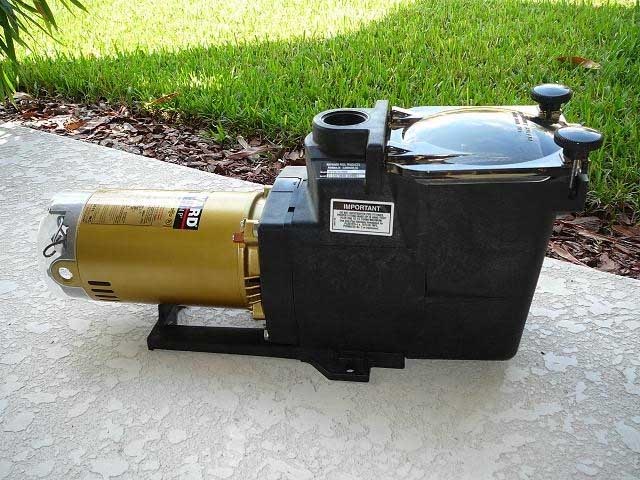
The size pool pump you actually need depends on your pool’s water volume, your desired turnover rate, your plumbing size, and your filter’s flow capacity. Most residential pools need a pump that can circulate all the water in 8 to 10 hours, which translates to a flow rate of roughly 25 to 60 gallons per minute depending on pool size. Bigger is not always better. An oversized pump wastes energy, damages filters, and drives up your electric bill. This guide walks you through every step of choosing the right pump for your pool, with real data and practical advice for pool owners in Jefferson, Georgia and across North Georgia.
What Size Pool Pump Do I Need for My Pool?
The size pool pump you need for your pool is determined by three things: your pool’s volume in gallons, your target turnover rate, and the flow rate in gallons per minute (GPM) that matches those numbers. The goal is to find a pump that can filter all of the water in your pool within 8 to 10 hours without overpowering your plumbing or filter system.
According to the U.S. Department of Energy, pool pumps are the second largest energy consumer in most homes, behind only the air conditioner or heat pump. A properly sized pump can save hundreds of dollars per year on electricity compared to an oversized one. The DOE also notes that a 0.75 horsepower or smaller pump is generally sufficient for many residential pools, based on a study of 120 pools conducted by the Center for Energy Conservation at Florida Atlantic University.
Pool owners in Jefferson, Georgia who are building a new pool or replacing an old pump should take the time to do the math. Getting the right pump from the start means cleaner water, lower energy bills, and less wear on your entire system. If you are planning a custom pool, your builder can help size the pump perfectly during the design phase.
How Do I Calculate What Size Pool Pump I Need?
To calculate what size pool pump you need, start by figuring out your pool’s total water volume in gallons. Then divide that number by your target turnover time in minutes to get the minimum flow rate in GPM.
Here is the step-by-step process. First, calculate your pool volume using the right formula for your pool shape. For a rectangular pool, multiply the length times the width times the average depth times 7.5. For a round pool, multiply the diameter times the diameter times the average depth times 5.9. For an oval pool, multiply the length times the width times the average depth times 6.7. These formulas give you the total gallons of water in your pool.
Next, divide the pool volume by your target turnover hours converted to minutes. Most pool experts recommend an 8-hour turnover for residential pools. So for an 8-hour turnover, divide your pool volume by 480 minutes. That gives you your minimum GPM. For example, a 20,000-gallon pool divided by 480 minutes equals about 42 GPM. That means your pump needs to push at least 42 gallons per minute to filter all the water in 8 hours.
Homeowners across North Georgia with pools ranging from 10,000 to 30,000 gallons can use this simple formula to find the right starting point. From there, you factor in your plumbing and filter to narrow down the exact pump.
What Size Pool Pump Do I Need for a 20,000 Gallon Pool?
For a 20,000 gallon pool, you need a pump with a minimum flow rate of about 42 GPM to achieve an 8-hour turnover, or about 33 GPM for a 10-hour turnover. In most cases, a pump rated between 1.0 and 1.5 horsepower will deliver this flow rate, depending on the total head pressure in your system.
According to Pentair, one of the largest pool equipment manufacturers, a properly sized variable speed pump on a 20,000-gallon pool can save up to 90% on energy costs compared to an oversized single-speed pump running at full speed. The U.S. Environmental Protection Agency estimates that a conventional single-speed pump costs an average of $400 to $500 per year to operate, while an ENERGY STAR variable speed pump drops that to $100 to $150 per year.
Many pools in the Jefferson, Georgia area fall in the 15,000 to 25,000 gallon range. If your pool is close to 20,000 gallons and your plumbing uses standard 1.5-inch PVC pipe, the maximum flow rate through that pipe is about 42 to 44 GPM. Going above that creates excessive velocity and can damage your system. A 1.0 to 1.5 HP variable speed pump is the sweet spot for most pools this size.
What Size Pool Pump Do I Need for a 30,000 Gallon Pool?
For a 30,000 gallon pool, you need a pump with a minimum flow rate of about 63 GPM for an 8-hour turnover, or 50 GPM for a 10-hour turnover. Pools this size typically need a pump rated between 1.5 and 2.0 horsepower, and they benefit greatly from 2-inch PVC plumbing, which supports up to 73 GPM.
According to Leslie’s Pool Supplies, the maximum flow rate through 1.5-inch PVC pipe is only about 42 GPM. If you have a 30,000-gallon pool with 1.5-inch plumbing, even the most powerful pump cannot safely push more than 42 GPM through those pipes. In that case, you either need to accept a longer turnover time of about 12 hours, or upgrade your plumbing to 2-inch pipe.
This is a common issue for larger pools in North Georgia. If your pool was built with undersized plumbing, adding a bigger pump will not fix the problem. It will just create more strain on the system. A pool inspection can help identify whether your plumbing is the bottleneck before you invest in a new pump.
Can a Pool Pump Be Too Big for a Pool?
Yes, a pool pump can absolutely be too big for a pool. An oversized pump pushes water through the system faster than the filter can handle, which causes poor filtration, higher filter pressure, and wasted energy. According to INYO Pools, one of the most persistent myths in the pool industry is that higher horsepower always means better performance.
Too large of a pump can cause several problems. It can push dirt straight through the filter instead of trapping it, according to In The Swim’s troubleshooting guide. It can cause pump cavitation, where bubbles form inside the pump and burst with enough force to damage the impeller. It can also void your filter and heater warranties. And it drives up your electric bill significantly because the motor is consuming far more energy than necessary.
A study published by the National Renewable Energy Laboratory (NREL) on behalf of the U.S. Department of Energy confirmed that oversized single-speed pumps are one of the biggest sources of wasted energy in residential pools. The study found that many pool builders install 2 HP pumps as a default, regardless of actual pool size, because they do not want to lose a sale by recommending less horsepower. This practice costs pool owners hundreds of extra dollars every year.
If your pool is in the Jefferson, Georgia area and your filter pressure is consistently running 20 to 30 PSI or higher, your pump may be oversized. A pool professional can measure actual flow rates and recommend the right size.
Will a Bigger Pool Pump Make a Difference?
A bigger pool pump will not make a positive difference if your current pump is already sized correctly for your pool. In most cases, a bigger pump just means higher energy bills, more noise, and more wear on your filter and plumbing. The flow rate through your system is limited by the smallest pipe and the filter’s maximum rated flow, not just the pump’s horsepower.
According to Pool Plaza, even if you install a pump capable of moving 100 GPM, it will not help if your plumbing only allows 44 GPM through. The pump will strain against the restriction and can actually be damaged in the process. An oversized pump on undersized plumbing is like putting a fire hose on a garden spigot. It creates pressure, not performance.
The only situation where upgrading to a larger pump makes sense is if you have added new water features like a waterfall, spa jets, or an in-floor cleaning system that require higher flow rates. Even then, a variable speed pump that can ramp up for features and run low for daily filtration is a smarter choice than a bigger single-speed pump. Homeowners in the Athens and Braselton areas who have added waterfalls or spillover spas to their pool should have their flow requirements recalculated by a professional.
What Happens if a Pool Pump Is Oversized?
If a pool pump is oversized, water moves through the filter too fast for the filter media to trap debris. The filter pressure runs high, the filter needs to be cleaned more often, and dirt can blow right back into the pool. Over time, the excessive pressure can damage filter internals, erode sand filter laterals, and shorten the life of cartridge elements.
According to In The Swim’s filter troubleshooting guide, an oversized pool pump is a direct cause of dirt being pushed through the filter and back into the pool. This is especially common with sand filters, where high flow rates create channels in the sand bed that allow water to bypass the filtering process entirely.
Oversized pumps also increase the risk of cavitation, which happens when the pump tries to move more water than the suction line can supply. The pump starves for water, creates air pockets, and the resulting vibration damages the impeller and bearings. This leads to premature pump failure and expensive repairs.
If you notice your pool filter is not clearing the water even after cleaning, or if you hear rattling or vibrating from the pump, it may be worth having a professional evaluate whether your pump is too large. Scheduling a pool repair service can catch these issues before they cause bigger damage.
Is It Better to Have a Higher HP Pool Pump?
No, it is not better to have a higher HP pool pump unless your pool’s volume, plumbing, and features specifically require it. Horsepower is just one factor in pump performance. What matters more is the flow rate in GPM at your system’s actual head pressure. A lower HP pump that matches your system will outperform a higher HP pump that overwhelms it.
The U.S. Department of Energy found that pool owners in a Florida Atlantic University study saved an average of 60% on their pumping electricity bills simply by using a smaller, more efficient pump and operating it less. Some saved as much as 75%. That data is significant because it proves that right-sizing your pump is one of the single biggest ways to cut pool operating costs.
Since July 2021, the U.S. Department of Energy’s Dedicated-Purpose Pool Pump (DPPP) rule requires all new pumps to meet minimum efficiency standards measured by Weighted Energy Factor (WEF). This regulation effectively made variable speed pumps the standard for most residential pools over 1 HP. Pool owners in North Georgia who are replacing a pump today will almost certainly end up with a variable speed model, which is the right choice for both performance and savings.
Should I Get a 2 Speed Pool Pump?
A 2-speed pool pump is better than a single-speed pump but not as good as a variable speed pump. A dual-speed pump gives you a high setting and a low setting. The low setting uses significantly less energy for everyday filtration, while the high setting handles tasks like vacuuming, backwashing, or running water features.
According to Solar Tech Online’s pool pump cost guide, dual-speed pumps running on the low setting can reduce monthly operating costs to $30 to $50, compared to $71 to $98 per month for a single-speed pump. But variable speed pumps drop that even further, to just $8 to $31 per month, because they can run at any speed between 600 and 3,450 RPM.
Variable speed pumps save more money because of the Pump Affinity Law. This physics principle states that reducing pump speed by 50% cuts energy consumption by roughly 87%. That is not a typo. Cutting speed in half uses almost eight times less power. According to Clean Energy Connection, a variable speed pump set at 22 GPM uses only 2.2 kWh per day, compared to 12.6 kWh for a single-speed pump doing the same turnover, a savings of about 83%.
For pool owners near Jefferson and across North Georgia, a variable speed pump is the best long-term investment. The upfront cost is higher, but the payback period is typically 12 to 24 months through energy savings alone.
Will a Pool Pump Make Your Electric Bill Go Up?
Yes, a pool pump will make your electric bill go up, but how much depends entirely on the pump type, size, and how long you run it. According to the U.S. Environmental Protection Agency, a single-speed pool pump costs an average of $400 to $500 per year to run. For many homeowners, the pool pump is the second most expensive appliance to operate after the air conditioner.
An oversized single-speed pump running 8 to 12 hours a day can consume 2,000 to 3,000 watts per hour. Over a full season, that adds up to thousands of kilowatt-hours and hundreds of dollars in electricity. By contrast, a variable speed pump running at optimal low speeds uses just 200 to 500 watts, costing as little as $8 to $25 per month according to Solar Tech Online.
Georgia electricity rates currently average around $0.13 to $0.14 per kWh, which is slightly below the national average. That means pool owners in the Jefferson area already have a slight cost advantage. But choosing the right pump size and type can multiply those savings dramatically. A properly sized variable speed pump on a 20,000-gallon pool in North Georgia could save $300 to $400 per year compared to an oversized single-speed model.
Is It Best to Run a Pool Pump at Night or Day?
It is best to run a pool pump during the day, especially during the warmest and sunniest hours. Sunlight breaks down chlorine, and running the pump while the sun is strongest helps distribute freshly sanitized water throughout the pool when it is needed most. If you have a solar heating system or solar cover, daytime circulation also helps distribute warm water evenly.
The U.S. Department of Energy recommends reducing pool filtration time to about 6 hours per day if you have a variable speed pump. If the water appears cloudy, you can increase the run time in half-hour increments until you find the right balance. Running during off-peak electricity hours, which vary by utility, can also save money in areas with time-of-use pricing.
For pool owners in Jefferson, Georgia, running the pump from about 9 AM to 5 PM during the swim season covers the peak UV hours and keeps the pool clean for evening use. If you have a variable speed pump, running it at a low speed for longer periods, even up to 24 hours, can provide better filtration at a lower cost than running a single-speed pump for just 8 hours.
How Many Years Should a Pool Pump Motor Last?
A pool pump motor should last 8 to 12 years on average with proper maintenance. Variable speed pump motors tend to last longer, often 10 to 15 years, because they operate at lower speeds and generate less heat and friction. Single-speed motors typically last 7 to 10 years.
According to Pool Troopers, a pool industry service company, traditional copper-winding motors last about 3 to 5 years in southern climates where they run for many months per year. Modern magnetic drive motors, which are standard in variable speed pumps, last 6 to 10 years or longer, though the technology is still relatively new in the pool industry and long-term data is still being collected.
The pump housing itself can last 10 to 12 years. Sometimes you can replace just the motor without replacing the entire pump, which saves money. Signs that the motor is failing include grinding or screeching noises, the pump shutting off due to overheating, visible water leaks near the motor seal, and the motor humming but not starting.
Scheduling regular pool cleaning services that include pump basket cleaning and visual equipment checks helps catch small issues before they turn into motor failures.
Should I Replace My Entire Pool Pump or Just the Motor?
You should replace just the motor if the pump housing is in good shape and the motor is the only problem. You should replace the entire pump if the housing is cracked, warped, corroded, or if your current pump is the wrong size for your pool. You should also replace the whole unit if your pump is a single-speed model over 8 years old, because upgrading to a variable speed pump will pay for itself in energy savings.
According to Shasta Pool Supply, a motor replacement typically costs $250 to $2,000 depending on the motor type and brand. A complete pump replacement, including installation, runs $700 to $6,000 depending on features and size. If you are spending $500 or more on a motor for a 10-year-old pump, it often makes more sense to invest in a new variable speed pump that comes with a fresh warranty and lower operating costs.
Pool owners in North Georgia who are considering a pump upgrade should also have the rest of their equipment evaluated at the same time. Your filter, heater, and plumbing all work together as a system. An experienced pool professional can recommend the right combination for your specific setup.
How Often Should I Run a Pool Pump in Winter?
In winter, you should run a pool pump for 4 to 6 hours per day in mild climates, or continuously when temperatures drop near or below freezing. Running the pump keeps water moving through the pipes, which prevents freezing and potential pipe damage.
In Jefferson, Georgia, winters are generally mild but can include cold snaps with overnight lows in the 20s. During these freezing events, running the pump continuously is critical. Moving water freezes at a much lower temperature than still water. If your pump has a freeze protection feature, it will turn on automatically when temperatures drop below a set threshold.
If you prefer to shut down your pool for winter entirely, a professional pool closing service will drain the pump, blow out the lines, and add antifreeze to protect your plumbing. This is the safest option for homeowners who do not want to worry about freeze damage during the colder months.
How to Pick the Right Size Pool Pump?
To pick the right size pool pump, follow these steps in order. First, calculate your pool volume in gallons. Second, determine the minimum flow rate in GPM based on an 8 to 10 hour turnover. Third, check your pipe size to make sure it can handle the flow rate, since 1.5-inch pipe maxes out around 42 GPM and 2-inch pipe handles up to 73 GPM. Fourth, check your filter’s maximum rated flow and make sure your pump does not exceed it. Fifth, choose a variable speed pump that can deliver the needed GPM at low to medium speed settings, with the ability to ramp up for features or cleaning.
According to Doheny’s Pool Supply, a common and costly mistake is mismatching the pump and filter. If the pump pushes more water than the filter can handle, filtration quality drops and equipment wears out faster. The ideal setup has the pump’s flow rate at or just below the filter’s rated maximum.
For pools in the Jefferson, Georgia area that include water features like deck jets, bubblers, or natural waterfalls, add about 10 to 15 GPM per feature to your base flow rate calculation. Some larger features like therapy jets in a spa may need 60 to 80 GPM on their own, which often requires a dedicated feature pump or a variable speed pump with a high-speed setting.
Pool Pump Sizing Comparison Table
| Pool Size (Gallons) | Min. GPM (8-hr Turnover) | Min. GPM (10-hr Turnover) | Typical HP Range | Recommended Pipe Size |
|---|---|---|---|---|
| 10,000 | 21 GPM | 17 GPM | 0.5 – 0.75 HP | 1.5 inch |
| 15,000 | 31 GPM | 25 GPM | 0.75 – 1.0 HP | 1.5 inch |
| 20,000 | 42 GPM | 33 GPM | 1.0 – 1.5 HP | 1.5 – 2 inch |
| 25,000 | 52 GPM | 42 GPM | 1.5 HP | 2 inch |
| 30,000 | 63 GPM | 50 GPM | 1.5 – 2.0 HP | 2 inch |
| 40,000 | 83 GPM | 67 GPM | 2.0 – 2.5 HP | 2 – 3 inch |
Sources: U.S. Department of Energy, Leslie’s Pool Supplies pump sizing guide, INYO Pools flow rate data, Pool Plaza pump sizing formulas. HP ranges assume standard residential plumbing with moderate head pressure. Actual sizing should account for total system head, filter type, and water features.
Is It Normal to Lose 1/2 Inch of Water a Day in a Pool?
Losing 1/4 to 1/2 inch of water per day from a pool is normal and is caused by evaporation. According to the U.S. Department of Energy, evaporation is the single largest source of water loss in swimming pools. The rate depends on air temperature, humidity, wind speed, and water temperature. In hot, dry, or windy conditions, you may lose more than half an inch per day.
If you are losing more than 1/2 inch per day consistently, especially during calm, humid weather, your pool may have a leak. A bucket test can help you determine whether the loss is from evaporation or a leak. Fill a bucket with pool water, set it on the pool step, and mark the water levels inside the bucket and in the pool. Check both levels after 24 hours. If the pool level dropped more than the bucket level, you likely have a leak and should schedule a pool repair visit to find and fix it.
How to Make a Cloudy Pool Clear?
To make a cloudy pool clear, start by checking your pump and filter. A cloudy pool is almost always a circulation or filtration problem. Make sure your pump is running long enough to turn the water over at least once per day. Clean or backwash your filter. Test and balance your water chemistry, especially chlorine and pH levels. If the water is still cloudy after these steps, run the pump continuously for 24 to 48 hours until the water clears.
An undersized or failing pump often cannot circulate water fast enough to keep up with contaminants. Dead zones form in areas of poor circulation, and algae and bacteria grow in those spots. A properly sized pump eliminates dead zones and keeps sanitizer distributed evenly throughout the pool.
Regular pool cleaning that includes filter maintenance, water testing, and equipment checks is the best way to prevent cloudy water from happening in the first place. North Georgia pool owners who stay on a consistent maintenance schedule rarely deal with persistent cloudiness.
Frequently Asked Questions
How Many HP Pumps Do I Need for a 15,000 Gallon Pool?
For a 15,000 gallon pool, you need a pump rated at 0.75 to 1.0 HP. This provides a flow rate of about 25 to 31 GPM, which achieves an 8 to 10 hour turnover. A variable speed pump in this range gives you the best balance of performance and energy savings. Many pools in the Jefferson, Georgia area fall in this size range and do perfectly well with a 1.0 HP variable speed pump.
Is It OK to Replace a 1 HP Pool Pump With a 1.5 HP?
It is OK to replace a 1 HP pool pump with a 1.5 HP only if your plumbing and filter can handle the increased flow rate. Before upsizing, check that your pipe diameter supports the higher GPM and that your filter is rated for the increased flow. In many cases, the better move is to replace with a 1.5 HP variable speed pump and run it at lower speeds for daily filtration. This gives you extra power when needed without overwhelming the system.
Can I Pull My Filter Out and Just Run the Pool Pump?
You can technically run the pool pump without a filter for a very short time during maintenance, but you should never do this as a regular practice. Running the pump without a filter means unfiltered water is circulating back into the pool, and debris and contaminants build up quickly. Always have your filter in place during normal operation. If your filter needs repair or replacement, contact a professional to get it fixed promptly.
Is a 220 Pool Pump More Efficient?
A 220-volt pool pump is not inherently more efficient than a 110-volt pump in terms of energy use. Both consume the same total wattage to do the same job. However, a 220-volt pump draws half the amperage, which means it puts less stress on your electrical wiring and circuit breaker. For pumps over 1.5 HP, a 220-volt connection is typically required. Most variable speed pumps designed for inground pools in the Jefferson area operate on 220 volts.
How Long Should I Run My Pool Pump Each Day in North Georgia?
You should run your pool pump 8 to 10 hours per day during the swim season in North Georgia if you have a single-speed pump. If you have a variable speed pump, you can run it 10 to 12 hours at a lower speed for better filtration at the same or lower energy cost. During winter months, 4 to 6 hours is usually enough. Always run the pump continuously when temperatures drop near freezing to prevent pipe damage.
Is It Expensive to Run a Pool Pump 24 Hours a Day?
Running a single-speed pool pump 24 hours a day is very expensive, potentially costing $150 or more per month depending on the pump size and local electricity rates. However, running a variable speed pump 24 hours a day at low speed can cost as little as $8 to $25 per month, according to Solar Tech Online. Continuous low-speed circulation actually provides better water quality than running a single-speed pump for a few hours at full blast. For pool owners in Jefferson, Georgia, a variable speed pump running around the clock is often the most efficient and effective approach.
What Runs Up the Electric Bill the Most With a Pool?
The pool pump runs up the electric bill the most. According to the U.S. Department of Energy, a pool pump can use up to a few thousand kilowatt-hours per year, making it the largest energy consumer in a pool system and the second largest in most homes. Switching from a single-speed pump to a variable speed pump can reduce pumping energy costs by 60% to 90%, according to Pentair and the U.S. Department of Energy. Pool owners in North Georgia who still have old single-speed pumps are leaving significant savings on the table.
Final Thoughts
Picking the right pool pump is one of the most important decisions you will make as a pool owner. An oversized pump wastes money and damages equipment. An undersized pump leaves your water cloudy and unsafe. The right pump, matched to your pool’s volume, plumbing, and filter, keeps the water crystal clear while keeping your energy bills as low as possible. For pool owners in Jefferson, Georgia and across North Georgia, a variable speed pump sized correctly for your pool is the smartest investment you can make.
Whether you are building a new pool, replacing an aging pump, or just want a professional to evaluate your current setup, Sandals Luxury Pools is here to help. With over a decade of experience building and servicing luxury pools across the Metro Atlanta and North Georgia area, their team knows exactly how to match the right equipment to your pool. Contact Sandals Luxury Pools today to schedule a consultation and start saving money while keeping your pool in perfect shape.
