
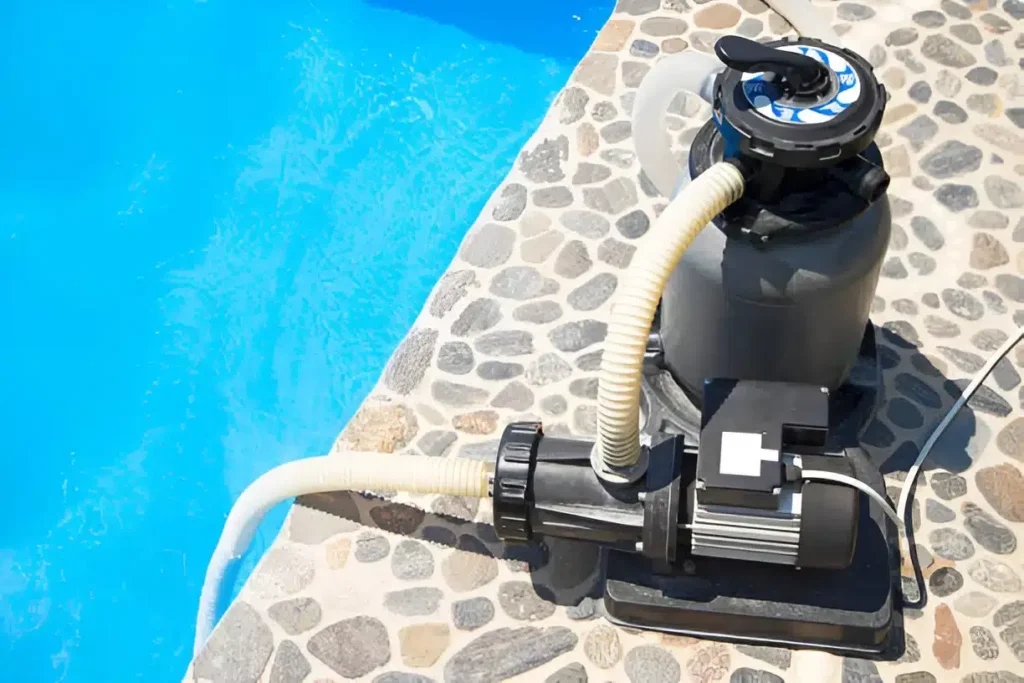
To prime a pool pump that lost prime, turn off the pump, open the pump lid, fill the strainer basket with water from a garden hose, tighten the lid, open the air relief valve on the filter, and turn the pump back on. Water should begin flowing through the pump basket within 30 to 45 seconds. If it does not, repeat the process. A pool pump that has lost prime is one of the most common issues pool owners face, and running a pump without water can cause serious damage. According to Angi, pool pump repairs average $100 to $700, and a full pump replacement costs $700 to $4,000. This guide covers everything you need to know about priming your pool pump, what causes it to lose prime, and how to prevent it from happening again.
What Does It Mean When a Pool Pump Loses Prime?
When a pool pump loses prime, it means the pump is no longer pulling water from the pool and is instead trying to move air. The pump housing (the clear-lidded pot at the front of the pump) is either empty or only partially full, and water circulation has stopped.
Your pool pump is the heart of the entire circulation system. It pulls water from the pool through the skimmer and main drain, pushes it through the filter, and returns clean water to the pool. When that cycle breaks, your pool loses filtration, sanitation slows down, and water quality drops fast. According to the Association of Pool and Spa Professionals, proper circulation is one of the three pillars of pool care, along with water chemistry and cleaning.
Pool owners in Jefferson, Georgia who notice their pump strainer is empty or hear the pump running louder than normal should shut it off right away. Running a pump dry even for a few minutes can overheat the motor and damage the mechanical seal, which leads to leaks and expensive repairs. According to HomeAdvisor, pool pump motor repairs cost $50 to $300, while a full motor replacement runs $250 to $650.
How Do I Manually Prime My Pool Pump?
You manually prime your pool pump by turning it off, removing the pump lid, filling the pump basket housing with water, resealing the lid, opening the filter’s air relief valve, and turning the pump back on. Here is the step-by-step process.
First, turn off the pump at the breaker. Do not just flip the switch or timer. Cut power at the breaker box so the pump cannot accidentally turn on while you are working on it. Safety is the most important part of this process.
Second, turn the multiport valve on your filter to “Recirculate” if you have one. This bypasses the filter media and lets water flow through the system with less resistance, which makes priming easier. If you have a diverter valve, set it so water draws from the skimmer rather than the main drain.
Third, remove the pump lid by turning it counterclockwise (on most models). Inspect the O-ring for cracks, dryness, or flat spots. A bad O-ring is one of the most common reasons a pump will not hold prime. According to Leslie’s Pool Supplies, if you rub your fingers along the O-ring and black rubber streaks off on your hand, it is time for a new one. Apply a thin coat of silicone-based pool lubricant to the O-ring before reinstalling.
Fourth, use a garden hose to fill the pump basket housing completely with water. Let it fill until water overflows out the top. This pushes air out of the housing and gives the impeller enough water to create suction.
Fifth, place the lid back on and tighten it firmly. Make sure the O-ring seats properly in its groove with no pinching. A loose or crooked lid will let air in and the pump will not prime.
Sixth, open the air relief valve on top of your pool filter. This lets trapped air escape from the system as water fills the lines. Turn the pump on. Water should begin flowing through the basket within 30 to 45 seconds. You will hear air hissing out of the relief valve. Once a steady stream of water comes out of the valve instead of air, close it.
If the pump does not prime after 45 seconds, turn it off immediately and repeat the steps. Do not let the pump run dry. If it still will not prime after two or three attempts, there is likely an air leak or blockage that needs to be found and fixed. Pool owners in Athens and Braselton, Georgia who cannot get their pump to prime should contact a professional for pool repair service before the motor suffers permanent damage.
How Long Does It Take for a Pool Pump to Prime?
It takes 30 seconds to 2 minutes for a pool pump to prime under normal conditions. Most self-priming pumps will pull water into the housing and establish full flow within about a minute. If the pump has not primed within 2 minutes, turn it off to prevent damage.
According to Leslie’s Pool Supplies, if the pump basket is not full and constantly flowing within 30 to 45 seconds, something is wrong. Repeated failed attempts without shutting the pump off between tries can burn the motor and destroy the shaft seal. The shaft seal is the part that keeps water from leaking into the motor. When it overheats from running dry, it warps and fails. According to Angi, replacing a shaft seal costs $100 to $250.
Will a Pool Pump Eventually Prime Itself?
Yes, a self-priming pool pump will eventually prime itself in most cases, as long as the pump housing has enough water in it and there are no air leaks in the system. Self-priming pumps are designed to use the water in the strainer housing to push air out and pull new water in.
However, if the pump housing is completely empty, or if there is an air leak on the suction side, the pump cannot prime itself. It needs help. That is when you manually fill the housing with a garden hose and go through the priming steps. According to Blue Science Pools, making sure the water level in the pool is high enough to flow into the skimmers and checking that skimmer weirs are not stuck accounts for about 90% of all pumps that will not prime.
Above-ground pool pumps are usually not self-priming because they sit below the water level and rely on gravity to feed water into the pump. If an above-ground pump loses prime, it typically means a blockage or leak needs attention.
What Would Cause a Pool Pump to Lose Prime?
The most common causes of a pool pump losing prime are low water level in the pool, air leaks on the suction side, clogged skimmer or pump baskets, a bad pump lid O-ring, a cracked pump housing, a faulty check valve, or a dirty filter that restricts flow.
According to SwimmingPoolSteve.com, a respected pool industry resource, the first step in diagnosing a pump that loses prime is to note or recreate the exact circumstances that cause it to happen. Does the pump lose prime only when it first starts up, or does it run for a while and then lose prime? Does it lose prime only from one specific suction line? The answer points you toward the cause.
Low water level is the simplest and most common reason. When the water drops below the skimmer opening, the pump sucks air instead of water. This happens from evaporation, splash-out, or a leak. According to the U.S. Department of Energy, an uncovered pool can lose about 1 inch of water per week in warm climates. In the hot Jefferson, Georgia summers, that loss can be even higher.
Air leaks on the suction side are the second most common cause. Any connection between the pool and the pump’s impeller is considered the suction side. That includes the skimmer, the pipe from the skimmer to the pump, the pump lid, the O-ring, and any valve in between. Even a tiny air leak at a fitting or a hairline crack in a pipe can prevent the pump from maintaining suction. Pool owners in Hoschton and Gainesville, Georgia who notice bubbles in the pump basket or returning to the pool through the jets are almost certainly dealing with a suction-side air leak.
What Happens If Air Gets Into Your Pool Pump?
If air gets into your pool pump, the pump loses its ability to create suction. Water flow drops or stops completely, the pump runs louder than normal, and the motor can overheat from running without water to cool it. Over time, air in the pump damages the mechanical seal and can burn out the motor.
According to Angi, air leaks in the suction line are the number one reason pool pumps lose prime. Even a loose fitting that lets in a small amount of air will reduce the pump’s efficiency. You might notice air bubbles forming in the pump basket or see a stream of bubbles shooting out of the return jets in the pool. Both are signs that air is entering the system.
The most common sources of air leaks are a worn O-ring on the pump lid, loose union fittings on the suction side of the pump, cracked PVC pipe, and a bad valve stem O-ring. A quick way to test for a suction-side air leak is to run the pump and slowly pour water over each fitting and connection. If the leak is there, the water will briefly seal it and you will see the air bubbles in the basket stop momentarily.
Air in the system can also damage your filter. According to In The Swim, trapped air in a filter tank can build dangerous pressure. When the system cycles off, that compressed air can decompress suddenly, sometimes causing water to rush backward through the lines. That is why you should always open the air relief valve on the filter when priming the pump.
How to Tell If a Pool Pump Has Air in It
You can tell if a pool pump has air in it by looking through the clear pump lid. If you see air bubbles swirling in the pump basket, or if the basket is only half full of water with the pump running, air is getting in. Other signs include weak water flow at the return jets and a gurgling or sucking sound from the pump.
Consistent small bubbles returning to the pool through the jets is one of the clearest signs. A healthy pump pushes water back to the pool with no visible air. If you see a steady stream of tiny bubbles, there is an air leak on the suction side that needs to be found and sealed.
A sudden burst of large air bubbles followed by normal water flow usually means the pump is purging air that built up while it was off. This can happen when the pump first starts each day and is not always a sign of a problem. But if it happens every time the pump cycles on, a pool inspection can find the root cause before it leads to bigger issues.
How to Fix No Flow on a Pool Pump
To fix no flow on a pool pump, start by checking the water level in the pool, cleaning the skimmer and pump baskets, inspecting the pump lid and O-ring for air leaks, and making sure the filter is not clogged. If none of those solve the problem, you may have a blockage in the plumbing or a failing pump motor.
According to In The Swim, the filter pressure gauge is your best friend for diagnosing flow problems. When the pressure reads 7 to 10 PSI above the clean operating pressure, the filter is dirty and restricting flow. A simple backwash (for sand or DE filters) or cartridge cleaning often restores full flow immediately.
If the filter is clean and you still have no flow, check for a blockage in the suction line. Leaves, acorns, and small debris can plug a pipe completely. According to SwimmingPoolSteve.com, if you were vacuuming your pool and the pump suddenly lost prime, something you vacuumed up likely plugged the pipe. Try pushing a garden hose into the skimmer line to flush the obstruction back toward the pump.
Pool owners in Winder and Dacula, Georgia who have tried all of these steps without success may be dealing with an underground plumbing issue or a failing impeller. These problems require professional diagnosis and pool repair to fix properly.
What Are Common Self-Priming Problems?
Common self-priming problems include a worn or cracked pump lid O-ring, low water in the pump housing, a clogged impeller, a cracked pump housing, a stuck check valve, and air leaks at pipe fittings or valves on the suction side.
According to INYOPools.com, an easy way to check if the O-ring is still good is to remove it from its groove and run your fingers along it. If black rubber comes off on your hand, the gasket has deteriorated and needs replacement. A $10 O-ring can prevent hundreds of dollars in pump damage.
A clogged impeller is another common culprit. Small debris like pine needles, hair, and plastic pieces can work their way past the pump basket and jam the impeller. When this happens, the impeller cannot spin at full speed and the pump struggles to create enough suction to prime. According to Angi, impeller repairs cost $120 to $300, and full impeller replacement costs $150 to $400.
What Happens If a Pool Pump Is Not Primed?
If a pool pump is not primed, it runs without water to cool and lubricate its internal parts. The motor overheats, the mechanical seal warps and fails, and the pump can suffer permanent damage within minutes. On top of that, your pool stops circulating water, which leads to algae growth, cloudy water, and unsafe swimming conditions.
According to Angi, pool pump motor repairs average $200 to $500, and motor replacement costs $350 to $700. Running a pump dry is the fastest way to destroy a motor. The mechanical seal, which keeps water from leaking into the motor compartment, relies on water to stay cool. Without it, the seal overheats, cracks, and lets water into the motor windings. At that point, the motor is usually beyond repair.
A pool without circulation can turn green with algae in as little as 24 to 48 hours during the hot Georgia summer. According to the CDC, improperly circulated and treated pool water is one of the top causes of recreational waterborne illness in the United States. Getting your pump primed and running again quickly protects both your equipment and your family’s health.
How to Remove Airlock From a Pool Pump
To remove an airlock from a pool pump, turn off the pump, open the air relief valve on the filter, loosen the pump lid slightly to let trapped air escape, retighten the lid, and turn the pump back on. If the airlock is severe, fill the pump housing with water from a garden hose before restarting.
An airlock happens when a large pocket of air gets trapped in the plumbing between the pool and the pump. The pump cannot push this air bubble through the system, so water flow stalls. Opening the air relief valve on the filter gives that air a place to escape. In many cases, simply opening the valve and restarting the pump clears the airlock within a minute or two.
If the airlock keeps coming back, the source is usually an air leak on the suction side or a faulty check valve that lets water drain back when the pump shuts off. Homeowners near Commerce and Oakwood, Georgia who deal with recurring airlocks should have a professional inspect the check valve and all suction-side fittings to find and fix the root cause.
How to Burp a Pool Pump
To burp a pool pump, turn off the pump, slowly loosen the pump lid (do not remove it completely), and let the trapped air escape with a hissing sound. Once the air stops hissing and water begins to seep out, retighten the lid and restart the pump.
Burping works when a small air pocket is trapped at the top of the pump housing. It is a quick fix, but if you find yourself burping the pump regularly, there is an air leak that needs attention. According to Angi, air leaks in the suction line are the top reason for pool pumps losing prime. Checking all fittings, O-rings, and valve connections on the suction side will usually reveal the source.
What Is the Average Lifespan of a Pool Pump?
The average lifespan of a pool pump is 8 to 12 years with proper maintenance. Some well-maintained pumps last up to 15 years, while neglected pumps can fail in as little as 5 years. According to HomeAdvisor, the type of pump, how often it runs, and how well it is maintained all affect how long it lasts.
According to the U.S. Department of Energy, variable-speed pumps save 50% to 75% on energy costs compared to single-speed models. They also last longer because they run at lower speeds most of the time, which puts less stress on the motor and bearings. Since 2021, Department of Energy regulations have required all new inground residential pool pumps to meet variable-speed efficiency standards. Single-speed replacement motors are already becoming harder to find.
The global inground pool pump market is expected to reach $348 million by 2025, according to industry analysts, with a steady 3.5% annual growth rate through 2033. Variable-speed pumps now lead market share. Pool owners in Jefferson, Georgia thinking about upgrading their pump can often find utility rebates of up to $500 for switching to a variable-speed model.
What Will Ruin a Pool Pump?
What will ruin a pool pump is running it dry (without water), ignoring air leaks, letting debris clog the impeller, running with a dirty or clogged filter, poor water chemistry that corrodes internal parts, and failing to maintain seals and O-rings. Any of these issues shortens the pump’s life significantly.
Running dry is the biggest killer. Even 2 to 3 minutes without water can warp the shaft seal. Once that seal fails, water leaks into the motor and destroys it. According to Serene Pools, proper maintenance can add 30% to 50% to a pump’s lifespan. That means a pump rated for 10 years could last 13 to 15 years with good care.
Pool chemistry also plays a role. Low pH and low alkalinity create acidic water that corrodes metal components inside the pump, including the impeller, shaft, and seal plate. Maintaining balanced water protects not just your pool surfaces but all of your equipment too. Homeowners in Lawrenceville and Loganville, Georgia who combine good pool cleaning habits with regular water testing get the most life out of their pumps.
How to Test If Your Pool Pump Is Bad
To test if your pool pump is bad, look and listen for these signs: loud grinding or screeching noises, the motor hums but does not start, the pump trips the circuit breaker repeatedly, visible water leaking from the pump body, or the pump runs but produces little or no water flow despite clean baskets and a clean filter.
According to Angi, loud screeching or grinding sounds from a pool pump are a strong sign that the motor bearings are failing and the pump may need replacement soon. A humming sound without the motor starting often means a bad capacitor or a seized motor shaft. Repeated breaker trips point to an electrical issue that needs professional diagnosis.
If you suspect your pump motor is burned out, check for a burning smell coming from the motor housing. According to HomeAdvisor, most pool pump motors last 5 to 7 years before they need repair or replacement. If your pump is older than 8 years and showing multiple symptoms, replacing the entire pump is usually more cost-effective than repairing it. A new pump installation costs an average of $1,300 according to HomeAdvisor.
For pool owners in Nicholson and Statham, Georgia who are unsure whether to repair or replace, the general rule is this: if the repair costs more than 50% of the cost of a new pump, replacement is the smarter investment. A professional pool inspection can help you make that decision with confidence.
Pool Pump Problems: Costs and Solutions at a Glance
| Problem | Likely Cause | DIY or Pro | Estimated Cost |
|---|---|---|---|
| Pump won’t prime | Low water level, clogged basket, bad O-ring | DIY | $0 – $20 |
| Pump keeps losing prime | Suction-side air leak, cracked fitting | Pro recommended | $100 – $350 |
| Air bubbles in pump basket | Air leak at lid, O-ring, valve, or pipe | DIY or Pro | $10 – $250 |
| Pump runs but no water flow | Clogged impeller, dirty filter, blockage | DIY or Pro | $0 – $400 |
| Loud grinding or screeching | Bad motor bearings, failing motor | Pro | $200 – $700 |
| Motor hums but won’t start | Bad capacitor, seized shaft | Pro | $100 – $500 |
| Water leaking from pump | Failed shaft seal, cracked housing | Pro | $100 – $650 |
| Full pump replacement | Age, multiple failures, motor burnout | Pro | $700 – $4,000 |
Sources: Angi, HomeAdvisor, INYOPools.com, Serene Pools
How to Bring a Pool Back to Life After Pump Failure
To bring a pool back to life after pump failure, get the pump repaired or replaced first, restore circulation, then shock the pool to kill algae and bacteria, brush the walls and floor, run the filter continuously until the water clears, and rebalance the water chemistry.
A pool without circulation can turn green within 1 to 2 days during hot weather. According to the CDC, recreational waterborne outbreaks are most commonly linked to improperly treated water. Once your pump is running again, shock the pool with 1 pound of calcium hypochlorite per 10,000 gallons (or follow the shock product’s label directions). Run the pump 24 hours a day until the water clears, which can take 2 to 5 days for a heavily green pool.
During recovery, clean or backwash the filter daily. The filter catches all the dead algae, and it will clog fast. Homeowners in Jefferson, Georgia dealing with a green pool after pump failure can speed up the process with a professional pool cleaning to handle the heavy lifting and get the pool swim-ready faster.
Why Is My Pool Losing Half an Inch of Water a Day?
Your pool is losing half an inch of water a day most likely from normal evaporation, especially during hot and windy weather. According to the U.S. Department of Energy, an uncovered pool can lose about 1 inch of water per week from evaporation alone, which works out to roughly a seventh of an inch per day.
If your pool is losing significantly more than that, especially when covered or during cool weather, you may have a leak. Pool leaks are common in the plumbing lines, at the skimmer, around fittings, or in the pool shell itself. According to HomeAdvisor, professional pool leak detection costs $100 to $500, and repairing a leak ranges from $350 to $2,700 depending on severity and location.
A leaking pool affects pump performance because the water level drops below the skimmer, causing the pump to suck air. If you find yourself adding water to the pool more than once a week during normal weather, a professional leak test is worth the investment. Catching a small leak early saves thousands compared to fixing the water damage it causes over time.
Frequently Asked Questions
How Much Does It Cost to Fix a Pool Pump in Jefferson, Georgia?
The cost to fix a pool pump in Jefferson, Georgia depends on the type of repair needed. According to Angi, minor repairs like seal or O-ring replacement cost $100 to $250. Motor repairs run $200 to $500. A full pump replacement, including labor, costs $700 to $4,000 depending on the pump type. Pool owners in the Jefferson area benefit from getting a professional diagnosis before committing to a repair or replacement to make sure they spend money in the right place.
Can I Prime My Pool Pump With a Garden Hose?
Yes, you can prime your pool pump with a garden hose. This is the most common and effective method. Turn off the pump, open the lid, and fill the strainer housing with water from the hose until it overflows. Replace the lid, open the filter air relief valve, and turn the pump on. You can also push the garden hose into the skimmer line to flush air out of the plumbing before priming. This trick helps pool owners in Braselton and Athens, Georgia who deal with long plumbing runs between the pool and the equipment pad.
Why Does My Pool Pump Lose Prime Overnight in North Georgia?
Your pool pump loses prime overnight because a check valve or suction-side fitting is allowing water to drain back out of the pump housing while the motor is off. When the pump turns on the next morning, it has to re-prime from an empty or partially empty housing. A faulty check valve is the most common cause. According to Angi, replacing a check valve is a relatively low-cost repair that often solves recurring overnight prime loss for pool owners in the Gainesville and Commerce, Georgia area.
How Do I Know If My Pool Pump Impeller Is Clogged?
You know your pool pump impeller is clogged when the pump is running but water flow is weak, pressure on the filter gauge is lower than normal, or the pump sounds louder and strained. Debris like hair, leaves, and pine needles can wrap around the impeller and slow it down. According to INYOPools.com, the best way to confirm is to turn off the pump, remove the pump basket, and look or reach into the impeller opening to check for debris. Homeowners in Winder and Monroe, Georgia with lots of pine trees near their pool often deal with impeller clogs more frequently.
Should I Repair or Replace My Pool Pump in North Georgia?
You should repair your pool pump if it is less than 8 years old and the repair cost is less than 50% of a new pump. You should replace it if the pump is older than 8 to 10 years, has had multiple repairs, or the motor is burned out. According to HomeAdvisor, a new pool pump costs an average of $1,300 installed. Variable-speed pumps cost more upfront but save $300 to $500 per year on electricity according to the U.S. Department of Energy. Many utility companies in North Georgia offer rebates for upgrading to energy-efficient pumps.
What Should I Do If My Pump Still Won’t Prime After Multiple Attempts?
If your pump still will not prime after multiple attempts, the problem is likely a significant air leak, a blocked underground plumbing line, a cracked pump housing, or a failed internal component. Stop attempting to run the pump to prevent motor damage. Call a qualified pool technician to diagnose the issue. Pool owners in Jefferson, Georgia and surrounding areas can reach out to Sandals Luxury Pools for professional pool repair to get the problem identified and fixed quickly.
How Often Should I Check My Pool Pump in Georgia?
You should check your pool pump at least once a week during swim season and once every two weeks during the off-season. Look at the pump basket for debris, check the pressure gauge on the filter, listen for unusual sounds, and look through the clear lid to make sure water is flowing freely with no visible air bubbles. According to Angi, cleaning the pump basket regularly and monitoring for leaks can extend a pump’s lifespan well beyond its 8 to 12 year average. Pool owners in Oakwood and Sugar Hill, Georgia who stay on top of weekly checks catch small problems before they become expensive repairs.
Final Thoughts
Priming a pool pump is one of those skills every pool owner needs to know. Whether your pump lost prime after a spring opening, a power outage, or a maintenance job, the process is simple: shut off the power, fill the housing with water, seal the lid, open the air relief, and restart. If the pump primes within 30 to 45 seconds, you are good to go. If it does not, there is an underlying issue like an air leak, a clog, or worn parts that needs fixing.
With more than 10.7 million pools across the United States according to Jobera, and average pump replacement costs of $1,300 according to HomeAdvisor, taking care of your pump is one of the smartest things you can do as a pool owner. Routine maintenance like cleaning baskets, checking O-rings, and monitoring water levels keeps your pump running strong for years.
If you are in Jefferson, Georgia or anywhere in North Georgia and need help with your pool pump or any other pool equipment issue, Sandals Luxury Pools has been serving the area for over a decade. From pool repairs and equipment troubleshooting to seasonal pool openings, their experienced team handles it all. Call (770) 771-1839 or visit their website to schedule a service call today. Do not let a pump that lost prime turn into a costly problem. Get it fixed now and get back to enjoying your pool.
