
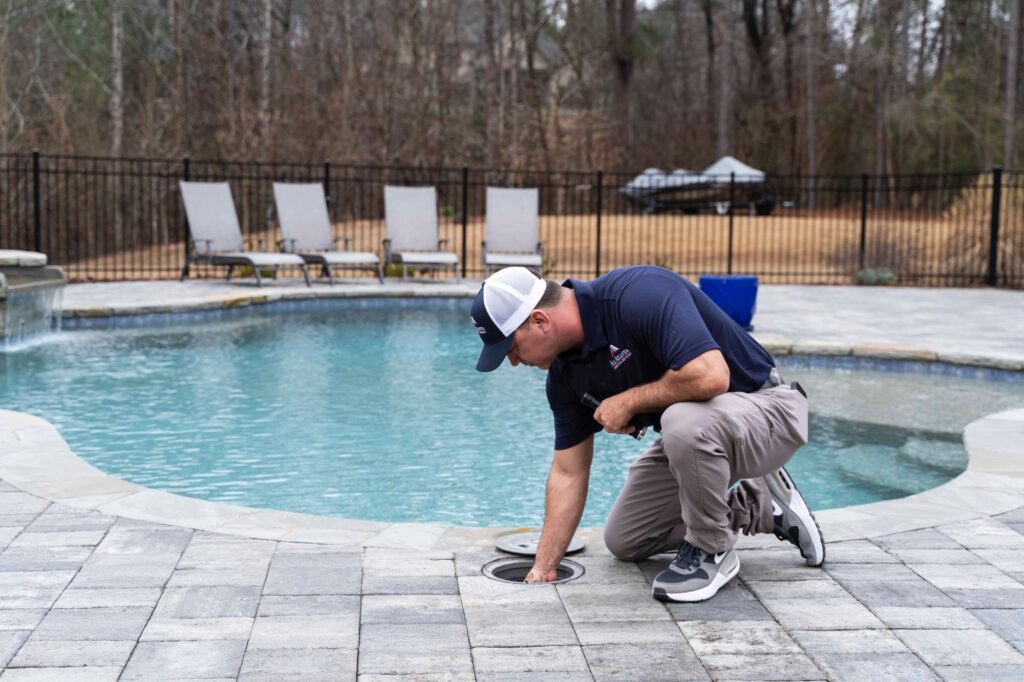
A pool inspection includes a full review of your pool’s structure, equipment, plumbing, electrical systems, water quality, and safety features. Whether you are buying a home with a pool, selling one, or just keeping up with yearly maintenance, a professional pool inspection gives you a clear picture of your pool’s health. According to the U.S. Consumer Product Safety Commission (CPSC), 81 percent of fatal drownings involving children under 15 happen in residential settings. That alone makes regular inspections critical for every pool owner. This article covers everything a pool inspection includes, why it matters, how long it takes, what inspectors look for, and what happens after the inspection is done.
What Does a Pool Inspection Actually Include?
A pool inspection actually includes a detailed look at every major part of your swimming pool and the area around it. The inspector checks the pool’s shell, surface finish, coping, tile, deck, equipment, plumbing, electrical wiring, water chemistry, and all safety features like fencing and alarms. According to the InterNACHI (International Association of Certified Home Inspectors) Standards of Practice, a residential pool inspection covers all readily accessible components and identifies any material defects that may affect the property’s value or safety.
Homeowners in Jefferson, Georgia and the surrounding North Georgia area often schedule pool inspections before the swim season starts. This makes sense because Georgia’s warm climate means pools get heavy use from spring through fall. Catching a cracked tile or a failing pump early can save thousands of dollars in pool repair costs down the road.
The inspection is not just a quick look around. It is a structured process that usually results in a written report. That report details every area that was checked, notes any concerns, and recommends next steps. Think of it as a full health check for your pool.
What Do They Look for in a Pool Inspection?
They look for structural damage, equipment failures, safety hazards, plumbing leaks, electrical problems, and water chemistry imbalances in a pool inspection. Every part of the pool is examined with the goal of finding issues before they become expensive or dangerous.
The inspector starts with a visual review of the entire pool area. They walk the deck looking for cracks, uneven surfaces, and trip hazards. They check the coping, which is the cap around the edge of the pool, for loose or chipped pieces. Damaged coping can let water seep behind the pool shell and cause serious structural problems over time.
Next, they examine the pool shell itself. Whether the pool is concrete, fiberglass, or vinyl, the inspector looks for cracks, stains, pitting, and rough spots. According to industry data, a well-maintained concrete pool can last 50 years or more, but the surface finish needs resurfacing every 10 to 15 years. Vinyl liners typically need replacement every 6 to 12 years. An inspector will note where your pool stands in that timeline.
For homeowners across Jefferson and nearby towns like Braselton, Hoschton, and Athens, the red clay soil common in North Georgia can shift and settle over time. This makes checking for deck movement and structural settling especially important during a pool inspection in the Jefferson area.
What Pool Equipment Gets Checked During an Inspection?
The pool equipment that gets checked during an inspection includes the pump, filter, heater, skimmer, chlorinator or salt system, automation controls, and any other mechanical components. Each piece of equipment is tested to make sure it works correctly and safely.
The pool pump is the heart of the system. It moves water through the filter and back into the pool. According to pool equipment data from Prestige Pools, pool pumps last between 8 and 10 years on average before they start showing wear. The inspector will listen for unusual noises like grinding or screeching and check for visible leaks around the pump housing and connections.
Pool filters are checked next. Sand filters typically last 5 to 7 years before the media needs replacing. Cartridge filters should be swapped out every 1 to 3 years, depending on use. Diatomaceous earth (DE) filters can last up to 10 years with proper care. The inspector looks at filter pressure readings, checks for bypass, and inspects O-rings and clamps.
Pool heaters have an average lifespan of 8 to 12 years. The inspector checks the heater for corrosion, proper ignition, and adequate water flow. If your pool has a salt chlorine system, the salt cell is also inspected. Salt cells typically last around 10,000 hours, which works out to about 4 to 5 years of normal residential use.
Families in Gainesville, Georgia and the surrounding areas often add features like waterfalls, bubblers, and automation systems to their pools. If your pool has extra features, those are reviewed during the inspection too. Every component that uses water, electricity, or moving parts gets a look.
How Long Should a Pool Inspection Take?
A pool inspection should take between 1 and 3 hours, depending on the pool’s size, age, condition, and the number of features. Small to medium pools with standard equipment take about 1 to 1.5 hours. Larger pools or those with spas, water features, and complex automation systems can take 2 to 3 hours.
According to Pool Operation Management, pool inspections for homebuyers typically take between one and two hours. The age of the pool plays a big role. Older pools with more wear and tear take longer because there is more to examine. A pool that has been well maintained with regular pool cleaning will likely go faster than one that has been neglected.
An inspector who rushes through the process is a red flag. A quality inspection covers a lot of ground, from the deep end of the pool to the electrical panel in the equipment pad. Cutting corners during an inspection can mean missing a cracked pipe underground or a safety barrier that does not meet code.
What Are the Signs of an Unhealthy Pool?
The signs of an unhealthy pool are cloudy or green water, strong chemical smell, algae growth, visible cracks in the shell, stained surfaces, low water level, and malfunctioning equipment. Any of these signs points to a problem that a professional inspection can identify and help fix.
Cloudy water is one of the most common warning signs. It usually means the filtration system is not working right, the water chemistry is off, or both. Green water almost always means algae has taken hold, which happens when chlorine levels drop too low.
A strong chlorine smell does not actually mean there is too much chlorine. It usually means there are too many chloramines, which form when chlorine combines with sweat, urine, and other contaminants. This signals poor water chemistry that needs correction.
Cracks in the pool shell, especially ones that keep growing, could mean the ground underneath is shifting. This is a concern for pool owners in the North Georgia foothills around Jefferson and Athens, where soil conditions can change with heavy rain. Stained or rough surfaces tell the inspector that the finish is breaking down and may need resurfacing soon.
Does a Pool Inspection Include Water Testing?
Yes, most professional pool inspections include water testing. The inspector tests the water for chlorine levels, pH, alkalinity, calcium hardness, and sometimes cyanuric acid. These readings tell a lot about the overall health of the pool and the condition of its equipment.
Properly balanced water protects swimmers and protects the pool itself. Water that is too acidic eats away at plaster, metal fittings, and heater components. Water that is too alkaline causes scale buildup that clogs filters and pipes. The Centers for Disease Control and Prevention (CDC) recommends that pool water maintain a pH between 7.2 and 7.8 and a free chlorine level of at least 1 part per million for safe swimming.
Some inspections, especially those following the American Society of Home Inspectors (ASHI) standards, may not include water quality testing as a required step. However, most reputable inspectors will test the water because it gives them a clearer picture of the pool’s condition. If the pool has a salt chlorine generator, the inspector will also test salt levels.
What Safety Features Are Checked in a Pool Inspection?
The safety features checked in a pool inspection are fencing, gates, latches, door alarms, pool covers, drain covers, lighting, ladders, and handrails. Safety is one of the most important parts of any pool inspection because the stakes are so high.
According to a 2024 CDC Vital Signs report, over 4,500 people drowned each year in the United States from 2020 to 2022. That is about 500 more drowning deaths per year compared to 2019. Drowning remains the number one cause of death for children ages 1 to 4. These numbers make pool safety features more than just a checklist item.
In Georgia, pool fences must be at least 48 inches tall. Gates must be self-closing and self-latching, with latches placed at least 54 inches above the ground. If a wall of the home serves as part of the pool barrier, any door that opens to the pool area must have an alarm. The CPSC reports that 81 percent of fatal drownings involving children under 15 occurred at a residential setting. A proper fence and gate system is one of the most effective ways to prevent unauthorized access to the pool.
The inspector also checks drain covers for compliance with the Virginia Graeme Baker Pool and Spa Safety Act (VGB Act), a federal law that requires anti-entrapment drain covers on all public and residential pools. Damaged or missing drain covers are a serious safety hazard that needs immediate attention.
What Can Make You Fail a Pool Inspection?
Things that can make you fail a pool inspection include broken or missing safety fencing, non-compliant gate latches, cracked or missing drain covers, faulty electrical wiring, major structural cracks, equipment that does not work, and water chemistry that is far outside safe ranges.
A pool inspection is not technically a pass-or-fail test for residential pools the way it is for commercial pools. But certain findings can stop a real estate transaction or require immediate action. A fence that does not meet Georgia’s 48-inch minimum height, for example, is a code violation that most buyers and insurance companies will want corrected before closing.
Exposed or improperly grounded electrical wiring near the pool is another serious red flag. The National Electrical Code (NEC) has strict rules about bonding and grounding for pool equipment to prevent electric shock. An inspector who finds wiring issues will flag them as urgent.
Homeowners in Jefferson, Georgia and the surrounding communities who are planning to sell should consider getting a pre-listing pool inspection. Fixing problems before the buyer’s inspector finds them puts you in a stronger negotiating position and helps avoid delays at closing.
How Often Should a Pool Guy Come Out?
A pool guy should come out at least once a week during swim season for routine cleaning and chemical balancing. For a full professional inspection, once a year is the standard recommendation. Pools that are older, heavily used, or have had past problems may benefit from inspections twice a year.
Weekly service typically covers skimming, brushing, vacuuming, testing water chemistry, and checking equipment. This is different from a full inspection, which digs deeper into the structure, plumbing, and electrical systems. Think of weekly service as regular maintenance and an annual inspection as the yearly physical.
According to HGTV, professional pool cleaning and chemical adjustment services run between $80 and $150 per month. That ongoing maintenance keeps small problems from becoming big ones. Homeowners in the Jefferson and Braselton area who invest in regular pool cleaning services typically see fewer surprises during their annual inspection.
What Is the Average Lifespan of an Inground Pool?
The average lifespan of an inground pool is 20 to 50 years or more, depending on the material. Concrete pools can last 50 years or longer with proper maintenance. Fiberglass pools typically last 25 to 30 years. Vinyl liner pools have a shell life of 20 to 30 years, but the liner itself needs replacing every 6 to 12 years.
According to Angi (formerly Angie’s List), concrete inground pools are the longest-lasting type, with some going well beyond 50 years when properly cared for. The catch is that concrete pools need resurfacing every 10 to 15 years, which is a significant expense. Fiberglass pools need less frequent maintenance but cannot be resurfaced in the same way.
This is where annual inspections prove their value. Catching a hairline crack before it becomes a structural issue, or replacing a worn pump before it burns out and damages the plumbing, extends the life of the pool dramatically. A well-cared-for custom pool is an investment that lasts for decades.
Where Is the Most Common Place for Inground Pool Leaks?
The most common place for inground pool leaks is around the skimmer, the main drain, return fittings, and underground plumbing lines. Leaks also frequently occur at the point where the pool shell meets the deck, especially when coping or mastic sealant deteriorates.
Skimmer leaks are particularly common because the skimmer is a separate piece bonded to the pool wall. Over time, temperature changes cause the bond to weaken. North Georgia sees wide temperature swings, with hot summers and occasional freezing nights in winter. Those cycles expand and contract the materials, creating gaps where water can escape.
Underground plumbing leaks are the hardest to detect and the most expensive to fix. During an inspection, the inspector will check for signs of a leak, such as a pool that loses more than a quarter inch of water per day beyond normal evaporation. If a leak is suspected, a separate pressure test may be recommended.
Pools in the Jefferson, Georgia area that are properly winterized each year tend to have fewer leak problems. Professional pool closing protects the plumbing from freeze damage and gives the system a clean start the following spring.
What Are the 3 C’s of Pool Maintenance?
The 3 C’s of pool maintenance are Circulation, Chemistry, and Cleaning. These three things work together to keep your pool water safe, clear, and pleasant to swim in.
Circulation means keeping the water moving. Stagnant water is where algae and bacteria thrive. Your pool pump should run 8 to 12 hours per day to cycle all the water through the filter at least once. During a pool inspection, the inspector checks that the pump is sized correctly for the pool’s volume and that water is circulating evenly with no dead spots.
Chemistry is about keeping the water balanced. pH, chlorine, alkalinity, and calcium hardness all need to stay within specific ranges. Balanced water protects swimmers from skin and eye irritation and protects the pool’s surfaces and equipment from damage.
Cleaning is the physical removal of debris, dirt, and algae. Skimming the surface, brushing the walls, and vacuuming the floor keep the pool looking good and reduce the load on the filter system. Together, the 3 C’s form the foundation of good pool care that any inspection will evaluate.
Does a Pool Add Value to Your Home?
Yes, a pool does add value to your home. According to the National Association of Realtors (NAR), a well-maintained inground pool can increase a home’s value by 5 to 8 percent. In warm-climate states like Georgia, that number can be even higher because the pool is usable for a larger portion of the year.
Data from Redfin shows that homes with pools sell for an estimated $27,199 more on average compared to homes without pools, a figure that rose significantly after the COVID-19 pandemic when demand for backyard amenities surged. Zillow’s analysis found a more modest 1.5 percent premium at the national level, which shows that location matters a great deal.
The key word is “well-maintained.” A neglected pool with cracked surfaces, broken equipment, and murky water does not add value. It scares buyers away. That is why an annual inspection matters so much, especially for homeowners in the Jefferson and Athens area who may be thinking about selling in the next few years. A clean inspection report is a powerful selling tool.
What Is a Common Pool Problem?
A common pool problem is algae growth, which happens when chlorine levels drop too low or the filtration system is not running long enough. Other common problems include equipment failure, leaks, cracked surfaces, clogged filters, and imbalanced water chemistry.
Algae is the most frequent issue pool owners face. It can turn a pool green, yellow, or even black in a matter of days if conditions are right. Warm weather, low sanitizer levels, and poor circulation create the perfect environment for algae. Homeowners in Georgia are especially prone to algae problems during the long, hot summer months.
Equipment failure is the second most common issue. Pool pumps, heaters, and filters all have finite lifespans. When a pump motor starts to fail, it can reduce circulation, which leads to water quality problems. A pool inspection catches these issues in the early stages when repair is still an option, before a full replacement becomes necessary.
Plumbing leaks are another frequent find during inspections. Even a small leak can waste thousands of gallons of water over time and cause erosion around the pool structure. Early detection through regular inspections saves money and prevents larger structural damage.
What Happens After the Pool Inspection?
After the pool inspection, you receive a detailed written report that lists everything the inspector checked, what they found, and what they recommend. The report typically includes photos and notes about each area of concern, from minor maintenance items to urgent safety issues.
If the inspection is part of a home purchase, the buyer can use the report to negotiate repairs with the seller or adjust the purchase price. According to HomeGuide, common issues found during pool inspections include structural cracks, equipment malfunctions, plumbing leaks, water chemistry imbalances, and safety barrier problems.
For current pool owners, the report serves as a maintenance roadmap. It tells you what needs attention now, what can wait, and what to budget for in the coming years. Working with a trusted local pool company to address the findings keeps your pool safe and in good shape for years to come.
Pool Inspection Component Comparison Table
| Inspection Area | What the Inspector Checks | Average Lifespan / Replacement Cycle |
|---|---|---|
| Pool Shell (Concrete) | Cracks, stains, rough spots, structural settling | 50+ years (resurface every 10-15 years) |
| Vinyl Liner | Tears, fading, stretching, seam separation | 6-12 years per liner |
| Pool Pump | Noise, leaks, flow rate, motor condition | 8-10 years |
| Pool Filter (Cartridge) | Pressure readings, media condition, bypass | 1-3 years per cartridge |
| Pool Heater | Ignition, corrosion, water flow, thermostat | 8-12 years |
| Salt Chlorine Cell | Scale buildup, chlorine output, cell condition | 4-5 years |
| Safety Fencing | Height (48″ min in GA), gate latches, climbing resistance | Varies by material |
| Drain Covers | VGB Act compliance, damage, secure attachment | Replace when damaged or expired |
Sources: Prestige Pools (equipment lifespans), ASP – America’s Swimming Pool Company (resurfacing data), InterNACHI (inspection standards), Georgia State Pool Code (fencing requirements).
Frequently Asked Questions
Do I Need a Pool Inspection Before Buying a Home in Jefferson, Georgia?
Yes, you need a pool inspection before buying a home in Jefferson, Georgia or anywhere in the North Georgia area. A standard home inspection usually does not include a thorough review of the pool and its equipment. Pool systems are too complex for a general home inspector to fully evaluate. A dedicated pool inspection can uncover hidden problems that could cost thousands to repair, giving you leverage in negotiations.
How Often Should I Get a Pool Inspection in North Georgia?
You should get a pool inspection in North Georgia at least once a year. The best time is in early spring, before you open the pool for swim season. This allows time to make repairs before the first warm day. Pools older than 15 years or pools with a history of problems may benefit from inspections twice a year. According to WIN Home Inspection, annual inspections help catch problems early and prevent costly repairs.
Can a Pool Be Inspected in the Winter When It Is Closed?
Yes, a pool can be inspected in the winter when it is closed, but the inspection will be limited. The inspector can still evaluate the pool structure, deck, fencing, and some equipment. However, they cannot test the pump, heater, filter, or water chemistry if the pool is winterized and the equipment is shut down. For the most complete inspection, schedule it when the pool is open and running. If you need a winter inspection, a seasonal opening service can get the pool running before the inspector arrives.
What Is the Difference Between a Pool Inspection and Regular Pool Service?
The difference between a pool inspection and regular pool service is the depth of the evaluation. Regular pool service covers routine tasks like skimming, chemical balancing, and filter cleaning. A pool inspection is a comprehensive review of the pool’s structure, equipment, plumbing, electrical systems, and safety features. It results in a written report with detailed findings and recommendations. Regular service keeps the pool clean. An inspection tells you if the pool is safe and sound.
Are Pool Inspections Required by Law in Georgia?
Pool inspections are not required by law for private residential pools in Georgia. However, public pools in the state must meet annual permitting and inspection requirements under the Georgia Department of Public Health. For homebuyers, pool inspections are strongly recommended even though they are not legally mandated. Many mortgage companies and insurance providers request one before finalizing a home purchase.
What Should I Do to Prepare for a Pool Inspection?
To prepare for a pool inspection, make sure the pool is filled to normal water level, all equipment is accessible and powered on, and the pool area is clear of debris and personal items. Remove any pool covers so the inspector can see the surface. If you have records of past repairs, equipment manuals, or maintenance logs, have those available. A clean, accessible pool area helps the inspector do a thorough job and keeps the inspection moving efficiently.
Can a Pool Inspection Reveal Leaks Underground?
A pool inspection can reveal signs of an underground leak, but it cannot always pinpoint the exact location. Inspectors look for indicators like unexplained water loss, wet spots in the yard near the pool, and air bubbles in the return lines. If a leak is suspected, a separate leak detection test using specialized equipment is usually recommended. Homeowners in Jefferson and across North Georgia should address suspected leaks quickly because water erosion in Georgia’s clay soil can cause deck and structural shifting.
Final Thoughts
A pool inspection covers a lot of ground, from the bottom of the pool to the top of the fence. It reviews your pool’s structure, equipment, plumbing, electrical systems, water quality, and safety features. For homeowners in Jefferson, Georgia and the surrounding North Georgia communities, annual inspections are one of the smartest investments you can make. They catch small problems before they become big bills, keep your family safe, and protect the value of your home.
Whether you are buying a home with a pool, selling one, or simply want to know your pool is in good shape for the summer, a professional inspection gives you the facts you need to make confident decisions. According to the National Association of Realtors, a well-maintained pool can boost your home’s value by 5 to 8 percent. Keeping up with inspections and maintenance is how you protect that investment.
Ready to schedule a pool inspection in the Jefferson, Georgia area? Contact Sandals Luxury Pools today to book your appointment. With over a decade of experience building, servicing, and inspecting pools across North Georgia, our team knows exactly what to look for and how to keep your pool in top condition. Reach out now to get your professional pool inspection on the calendar before swim season arrives.
