
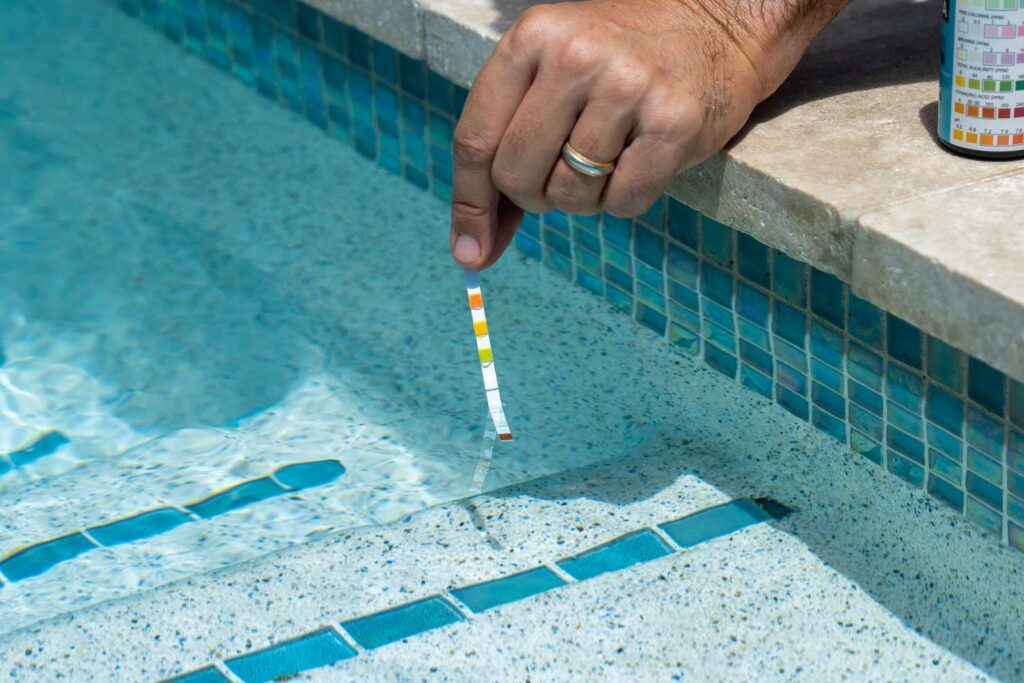
High alkalinity in a swimming pool is caused by a water source that is naturally alkaline, overuse of pool shock, too much baking soda or alkalinity increaser, body oils and sunscreen mixing into the water, and new plaster or concrete surfaces leaching alkaline compounds. The ideal total alkalinity for a swimming pool is 80 to 120 parts per million (ppm). When alkalinity rises above that range, it pushes the pH up, reduces chlorine effectiveness, causes cloudy water, and leads to calcium scaling on pool surfaces and equipment. This guide explains every cause, how to fix high alkalinity safely, and how homeowners in Jefferson, Georgia can keep their pool chemistry balanced all season long.
What Causes High Alkalinity in a Swimming Pool?
High alkalinity in a swimming pool is caused by several common factors that add alkaline substances, mainly bicarbonates and carbonates, to the water. The most frequent causes include a naturally alkaline fill water source, adding too much baking soda or alkalinity increaser, overusing pool shock, body products like sunscreen and lotions entering the water, and freshly plastered or resurfaced pool shells leaching calcium and alkaline minerals into the water.
According to the CDC’s Model Aquatic Health Code, proper water chemistry is essential for both swimmer safety and pathogen control. When total alkalinity drifts above 120 ppm, it becomes very difficult to manage pH, and pH directly controls how well chlorine sanitizes the water. A CDC study of metro-Atlanta swimming pools found that only 89% of tested pools had pH readings within the recommended 7.2 to 7.8 range. Pools that fall outside that range often have an underlying alkalinity problem.
Homeowners in the Jefferson, Georgia area who fill their pools from well water or municipal sources with naturally high mineral content are especially prone to high alkalinity from the start. Testing your fill water before adding any chemicals gives you a baseline to work from.
What Is the Ideal Alkalinity for a Swimming Pool?
The ideal alkalinity for a swimming pool is 80 to 120 parts per million (ppm). This range acts as a buffer that keeps pH stable and prevents wild chemical swings. According to the Florida Administrative Code for swimming pool chemical standards, total alkalinity should stay within 80 to 120 ppm for optimal water quality. Some pool professionals recommend a slightly wider range of 80 to 150 ppm depending on the sanitizer type. Saltwater chlorine generators, for example, often run best with alkalinity between 80 and 100 ppm.
When alkalinity sits within this range, chlorine works at peak efficiency, the water feels comfortable on skin and eyes, and pool surfaces stay protected from both corrosion and scaling. The moment alkalinity climbs above 120 ppm, the water starts resisting pH changes. This makes it harder to bring the pH down, which in turn reduces chlorine’s germ-killing power. A CDC report found that during 2015 to 2019, a total of 208 outbreaks were linked to treated recreational water in the United States, driven in part by poor chemical management in pools.
Regular testing is the only way to know where your alkalinity stands. Professional pool cleaning services include water chemistry testing and adjustment as part of routine maintenance.
Are pH and Alkalinity the Same in a Pool?
No, pH and alkalinity are not the same in a pool, but they are closely related. pH measures how acidic or basic the water is on a scale of 0 to 14. A reading of 7.0 is neutral, below 7.0 is acidic, and above 7.0 is alkaline. Total alkalinity measures the concentration of alkaline substances (bicarbonates, carbonates, and hydroxides) dissolved in the water. Alkalinity acts as a buffer for pH, meaning it controls how much and how quickly pH changes when chemicals or contaminants enter the pool.
Think of alkalinity as the shock absorber for pH. When alkalinity is in the right range (80 to 120 ppm), pH stays stable even when small amounts of acid or base are introduced. When alkalinity is too high, pH gets locked at a high level and resists adjustment. When alkalinity is too low, pH swings wildly with every chemical addition, splash of rain, or bather that enters the water.
According to AQUA Magazine, a leading pool industry publication, the only way to lower total alkalinity is to physically remove carbonate compounds from the water, either by adding acid (which converts bicarbonates to carbon dioxide that off-gasses) or by diluting the water through partial draining and refilling.
Is It Bad to Swim in a Pool With High Alkalinity?
Swimming in a pool with high alkalinity is not immediately dangerous as long as the chlorine level is adequate (1 to 3 ppm) and the pH is still within the acceptable range of 7.2 to 7.8. However, high alkalinity often pushes pH above 7.8, and that is where problems start. According to Pioneer Family Pools, a pool industry resource, water with a pH above 7.8 can cause skin irritation, burning eyes, dry hair, and nasal discomfort. High pH also makes chlorine far less effective at killing bacteria and pathogens.
A CDC analysis found that pool chemical imbalances, including altered pool chemistry, were suspected causes in 38% of the 53 nonconfirmed etiology outbreaks reported between 2015 and 2019. Cloudy water caused by high alkalinity can also obscure visibility, which is a drowning hazard, especially for children. The CDC recommends that if you cannot clearly see the drain at the bottom of the deep end, the pool should not be used.
Families across the Athens and Jefferson, Georgia area should test their pool water at least once a week during swim season. If the alkalinity reads above 120 ppm, take steps to bring it down before the next swim. A pool inspection can catch chemistry issues before they become safety problems.
What Are the Dangers of High Alkalinity?
The dangers of high alkalinity include cloudy water, calcium scaling on pool surfaces and inside equipment, reduced chlorine effectiveness, clogged filters, skin and eye irritation, and shortened equipment lifespan. High alkalinity drives pH upward. When pH rises above 7.8, chlorine loses a large portion of its sanitizing power. According to Swim University, a trusted pool education platform, high pH caused by elevated alkalinity means the pool’s chlorine becomes less effective at killing harmful bacteria and algae.
Calcium scaling is one of the most costly consequences. When alkalinity and pH are both high, the water becomes supersaturated with calcium carbonate. This mineral deposits itself on pool walls, inside pipes, on heater elements, and in filter cartridges. Over time, scaling restricts water flow, reduces heating efficiency, and damages equipment. Homeowners in the Braselton and Hoschton area who notice white, crusty deposits along their waterline or inside their skimmer baskets are likely dealing with high alkalinity and high pH working together.
Keeping alkalinity in check protects the pool’s finish, equipment, and swimmers. Routine pool repair can address damage caused by scaling and corrosion, but prevention through proper chemistry is always cheaper.
Should You Fix pH or Alkalinity First?
You should fix alkalinity first, then adjust pH. Alkalinity is the foundation that pH sits on. If you try to fix pH while alkalinity is out of range, the pH will keep drifting back because the buffer system is not working properly. According to In The Swim, a major pool supply resource, the correct order for balancing pool water is: adjust total alkalinity first, then adjust pH, then adjust calcium hardness, and finally adjust sanitizer levels.
The reason this order matters is that every chemical you add to fix pH will also move alkalinity. Muriatic acid lowers both pH and alkalinity at the same time. Soda ash (sodium carbonate) raises both pH and alkalinity. Baking soda (sodium bicarbonate) raises alkalinity more than pH. Without getting alkalinity right first, you end up chasing numbers in circles. This is what pool professionals call the “yo-yo effect,” and it wastes both time and money on chemicals.
Homeowners in the Jefferson area who are frustrated with pH that keeps climbing no matter how much acid they add almost always have an alkalinity problem hiding underneath.
How to Lower High Alkalinity in a Pool
Lowering high alkalinity in a pool requires adding an acid, either muriatic acid or sodium bisulfate (dry acid), to bring the total alkalinity down to the 80 to 120 ppm range. Both chemicals also lower pH, so the process requires careful, gradual dosing and retesting.
Using Muriatic Acid to Lower Alkalinity
Muriatic acid is the most effective and affordable option for lowering pool alkalinity. According to Swim University, approximately 20 ounces of full-strength muriatic acid will lower the alkalinity by 10 ppm in a 10,000-gallon pool. AQUA Magazine reports a similar figure of 25.6 ounces of 31.45% hydrochloric acid per 10 ppm reduction in 10,000 gallons. Always wear a respirator, chemical-resistant gloves, and eye protection when handling muriatic acid.
The safest method is to dilute the acid in a bucket of water (always add acid to water, never water to acid), then pour the diluted solution slowly around the pool’s perimeter with the pump running. Wait at least 4 to 6 hours before retesting. Do not lower alkalinity by more than 20 ppm in a single treatment. Repeat the process as needed over several days.
Using Sodium Bisulfate (Dry Acid) to Lower Alkalinity
Sodium bisulfate, sold as pH Down or pH Reducer, is a granular acid that is safer and easier to handle than muriatic acid. It works slower and costs more, but it produces no fumes. Dissolve the recommended amount in a bucket of water, then pour the solution around the pool’s deep end. Let it circulate for at least one hour before turning on the pump. Retest after 24 hours.
Using Aeration to Raise pH After Lowering Alkalinity
Because acid lowers both alkalinity and pH, your pH may drop below 7.2 during the process. To raise pH without adding alkalinity back, aerate the pool. Turn your return jets upward, run fountains or bubblers, or use an air compressor to create surface agitation. According to AQUA Magazine, aeration drives carbon dioxide out of the water, which raises pH without changing total alkalinity. This is the only way to raise pH independently of alkalinity.
Homeowners in the Gainesville, Buford, and Jefferson area who have pools with bubblers or deck jets can use those water features to help aerate naturally.
Pool Water Chemistry Comparison Table
| Chemical Parameter | Ideal Range | What Happens When Too High | What Happens When Too Low |
|---|---|---|---|
| Total Alkalinity | 80 to 120 ppm | Cloudy water, scaling, high pH | pH swings wildly, corrosion, staining |
| pH | 7.2 to 7.8 | Weak chlorine, scaling, skin irritation | Corrosion, eye burning, plaster damage |
| Free Chlorine | 1 to 3 ppm | Skin and eye irritation, strong odor | Algae growth, bacteria, unsafe water |
| Calcium Hardness | 200 to 400 ppm | Scaling, cloudy water, clogged pipes | Corrosion, plaster etching |
| Cyanuric Acid (CYA) | 30 to 50 ppm | Chlorine lock, ineffective sanitizer | Chlorine burns off quickly in sunlight |
Sources: CDC Model Aquatic Health Code, Florida Administrative Code, Swim University, In The Swim
Does Shocking a Pool Lower Alkalinity?
No, shocking a pool does not lower alkalinity. In fact, pool shock can raise alkalinity because many shock products contain alkaline compounds. Calcium hypochlorite shock, the most common type, has a high pH of around 12. When you add it to the pool, it temporarily raises both pH and alkalinity. According to Shoreline Pools, a pool service provider, pool owners who over-shock their pools after a busy weekend are one of the most common causes of high alkalinity spikes.
Lithium hypochlorite and dichlor shock have different pH profiles, but none of them lower alkalinity. The only chemicals that lower alkalinity are acids: muriatic acid and sodium bisulfate. If your alkalinity is already high and you need to shock the pool, test and adjust alkalinity first, then shock.
Does Shocking a Pool Raise pH?
Yes, shocking a pool often raises pH temporarily. Calcium hypochlorite, the most widely used pool shock, has a very high pH. When dissolved in pool water, it pushes pH upward. According to Swim University, this is normal and the pH will typically settle back down within 24 to 48 hours as the chlorine dissipates. However, if alkalinity is already elevated, the pH may stay high and refuse to come down on its own.
The solution is to test and balance alkalinity before shocking. Homeowners in Jefferson, Georgia who shock their pool weekly during the hot summer months should check alkalinity every time they test chlorine. Keeping alkalinity within range prevents the pH spike from becoming a persistent problem.
Does Adding Baking Soda to a Pool Lower Alkalinity?
No, adding baking soda to a pool does not lower alkalinity. Baking soda (sodium bicarbonate) is an alkalinity increaser. It raises total alkalinity and has a modest effect on pH. According to Crystal Clear Pools, the recommended dosage for raising alkalinity is 1.5 pounds of sodium bicarbonate per 10,000 gallons of water. If your alkalinity is already high, adding baking soda will make the problem worse.
Baking soda is helpful when alkalinity is too low (below 80 ppm), which causes pH to fluctuate and makes the water corrosive. But it is the wrong tool for high alkalinity. For that, you need an acid.
Does Too Much Chlorine Cause High Alkalinity?
No, too much chlorine does not directly cause high alkalinity. However, the type of chlorine you use can affect alkalinity over time. Liquid chlorine (sodium hypochlorite) has a very high pH of about 13 and will raise pH with each dose. If you consistently add liquid chlorine without also adding acid to compensate, pH and alkalinity will creep upward. On the other hand, trichlor tablets are acidic and will slowly lower both pH and alkalinity over time.
The relationship between chlorine and alkalinity is indirect. What matters most is the total chemical load going into your pool and whether you are balancing each addition. According to Swim University, cyanuric acid (CYA or chlorine stabilizer) is actually the most common chemical that contributes to rising total alkalinity, because it adds alkaline compounds that standard testing reads as part of total alkalinity.
What Lowers Pool Alkalinity Naturally?
Pool alkalinity lowers naturally through rainwater dilution, carbon dioxide off-gassing, and the acidic byproducts of bather use. Rainwater has a slightly acidic pH of about 5.0 to 5.5, so a heavy downpour can dilute and lower both pH and alkalinity. Carbon dioxide from the atmosphere dissolves into pool water and forms carbonic acid, which slowly lowers alkalinity over time. Swimmer perspiration, urine, and body oils also introduce mildly acidic compounds that can bring alkalinity down.
However, these natural processes are slow and unpredictable. They are not a reliable way to manage a pool with significantly elevated alkalinity. If total alkalinity is above 150 ppm, waiting for it to come down on its own will take far too long. You need to add acid. Homeowners across Athens, Winder, and the greater North Georgia area should treat chemical imbalances promptly rather than hoping nature will fix them.
Is 180 Alkalinity High?
Yes, 180 alkalinity is high for a swimming pool. The recommended range is 80 to 120 ppm. At 180 ppm, the water is significantly over-buffered, which means pH will resist any attempt to bring it down. Chlorine effectiveness drops, the water often turns cloudy, and calcium scaling becomes a real risk. According to WaterGuru, when alkalinity is high, it can cause cloudy water, clogged filters, and discomfort for swimmers.
To bring alkalinity from 180 ppm down to 100 ppm, you would need to lower it by 80 ppm. Using muriatic acid at a rate of approximately 20 ounces per 10 ppm reduction in 10,000 gallons, that would require roughly 160 ounces (about 1.25 gallons) of acid, added gradually over several days with testing between each dose. Do not try to lower alkalinity by 80 ppm in a single treatment, as this will crash the pH and can damage pool surfaces.
How Long After Adjusting Alkalinity Can I Adjust pH?
You should wait at least 4 to 6 hours after adjusting alkalinity before adjusting pH. This gives the acid time to circulate fully and the water chemistry time to stabilize. According to AquaDoc, a pool maintenance resource, adding acid in small doses and waiting between applications prevents overcorrection and protects pool surfaces from sudden chemistry changes.
After lowering alkalinity with acid, test the water. If pH has dropped below 7.2, you can raise it through aeration rather than adding soda ash or pH increaser, which would push alkalinity back up. This “acid and aerate” method is the gold standard for lowering alkalinity without permanently dragging pH down with it.
How Long Does It Take for a Pool to Clear Up After Chemicals?
A pool typically takes 24 to 48 hours to clear up after adding chemicals to correct alkalinity and pH. The pump and filter need to run continuously during this time to circulate the treated water and remove suspended particles that cause cloudiness. If the water was severely cloudy due to high alkalinity and calcium scaling, it may take up to 72 hours with the filter running around the clock.
Adding a pool clarifier after balancing the chemistry can speed up the clearing process. Clarifiers clump tiny particles together so the filter can catch them. If the filter is clogged with calcium deposits from prolonged high alkalinity, cleaning or replacing the filter media may be necessary before the water will fully clear. A pool cleaning service can handle the full process, from chemical balancing to filter maintenance.
Can Pool Alkalinity Raise on Its Own?
Yes, pool alkalinity can raise on its own over time. Every time you add chemicals with alkaline properties, top off the pool with high-alkalinity fill water, or allow body products and organic matter to accumulate, the total alkalinity increases. According to Barrier Reef Pools, oil, sunblock, and lotion from swimmers are common contributors to rising alkalinity. Pools that receive frequent shock treatments also see alkalinity climb because most shock products contain alkaline compounds.
New plaster and concrete pools are especially prone to alkalinity creep during the first few months. Fresh plaster leaches calcium hydroxide into the water, which drives alkalinity and pH upward. This is normal during the curing process and typically stabilizes within 30 to 60 days. Homeowners in Jefferson, Georgia who recently had a custom pool built should test water chemistry frequently during the first two months and adjust as needed.
When Should You Not Swim in the Pool?
You should not swim in a pool when the chlorine is below 1 ppm, the pH is above 7.8 or below 7.2, the water is cloudy enough that you cannot see the drain at the deep end, or you have just added chemicals and they have not had time to circulate. The CDC recommends waiting at least one hour after adding most pool chemicals before swimming, and longer for acid treatments.
High alkalinity alone does not make a pool immediately unsafe, but the secondary effects of high alkalinity, specifically elevated pH and reduced chlorine effectiveness, can create conditions where bacteria and pathogens thrive. During 2015 to 2017, the CDC estimated that pool chemical injuries sent approximately 13,508 people to U.S. emergency departments, with nearly half of those being children. Proper water balance prevents both chemical irritation and pathogen exposure.
Families in the Dacula, Lawrenceville, and North Georgia area should make water testing a non-negotiable part of their pool routine. If any reading is out of range, correct it before letting anyone swim. A professional seasonal opening service gets the water balanced right at the start of swim season.
Is Soda Ash the Same as Muriatic Acid?
No, soda ash is not the same as muriatic acid. They are chemical opposites. Soda ash (sodium carbonate) is a base that raises both pH and alkalinity. Muriatic acid (hydrochloric acid) is an acid that lowers both pH and alkalinity. Adding soda ash to fix low pH will increase alkalinity. Adding muriatic acid to fix high alkalinity will decrease pH. This is why balancing pool chemistry requires careful, step-by-step adjustment rather than dumping in chemicals randomly.
AQUA Magazine explains that the classic mistake pool owners make is adding muriatic acid to lower pH, then adding soda ash to raise pH, and wondering why alkalinity keeps climbing. The two chemicals cancel each other out on pH, but soda ash adds new carbonates that raise alkalinity even further. The correct approach is to use acid to lower both pH and alkalinity, then use aeration (not soda ash) to bring pH back up independently.
How to Bring Down Pool Alkalinity Quickly
To bring down pool alkalinity quickly, add muriatic acid to the pool with the pump running, targeting a reduction of no more than 20 ppm per treatment. According to Orenda Technologies, a pool chemistry company, lowering alkalinity by more than 20 ppm at a time can crash the pH and damage pool surfaces. The fastest safe method is to add a dose of acid, wait 4 to 6 hours, retest, and repeat. Most pools with moderately high alkalinity (130 to 160 ppm) can be brought back into range within two to three days using this method.
For pools with very high alkalinity (above 200 ppm), a partial drain and refill with lower-alkalinity water can speed up the process significantly. This is especially effective when the fill water has lower mineral content than the pool water.
Pool owners in the Monroe, Statham, and Jefferson area who are dealing with stubborn alkalinity issues should consider a full water chemistry analysis as part of a professional cleaning visit.
Why Is My Pool Alkalinity Always High?
Your pool alkalinity is always high because of one or more ongoing causes that keep adding alkaline compounds to the water faster than they are consumed or removed. The most common reasons are high-alkalinity fill water, frequent use of soda ash or baking soda, overuse of calcium hypochlorite shock, a freshly plastered pool surface, heavy swimmer loads with lots of sunscreen and body products, and using a sanitizer system that does not produce enough acid to offset the alkalinity buildup.
According to Swim University, cyanuric acid (CYA) is also a hidden contributor. High CYA levels can artificially inflate total alkalinity readings on standard test kits. If your CYA is above 50 ppm, subtract about one-third of the CYA reading from your total alkalinity test result to get a more accurate picture of your true carbonate alkalinity.
The only permanent fix for chronically high alkalinity is identifying and addressing the root cause. If the fill water is the problem, consider using a pre-filter or blending with a lower-alkalinity water source. If chemical additions are the issue, switch to products that do not raise alkalinity (like liquid chlorine paired with regular acid additions). Closing the pool properly each fall with a pool closing service also prevents over-treatment during the off-season.
Frequently Asked Questions
How Often Should I Test Pool Alkalinity in Jefferson, Georgia?
You should test pool alkalinity in Jefferson, Georgia at least once per week during swim season and at least twice per month during the off-season. The warm, humid North Georgia climate accelerates chemical reactions in pool water. Heavy summer rain, high bather loads, and frequent shock treatments can shift alkalinity rapidly. A reliable liquid titration test kit gives more accurate results than test strips for alkalinity readings.
Does Rain Lower Pool Alkalinity in North Georgia?
Yes, rain can lower pool alkalinity in North Georgia because rainwater is naturally acidic, with a typical pH of 5.0 to 5.5. A heavy downpour dilutes the pool water and introduces mildly acidic water that brings both pH and alkalinity down. However, rain is not a reliable or predictable way to manage alkalinity. After any significant rainfall, test the water and adjust chemicals as needed.
Can High Alkalinity Damage My Pool Equipment?
Yes, high alkalinity can damage pool equipment over time. When alkalinity pushes pH above 7.8, calcium carbonate precipitates out of the water and deposits inside pipes, on heater coils, inside filter cartridges, and on pump impellers. This scaling restricts water flow, reduces heating efficiency, and shortens the lifespan of expensive equipment. Homeowners in the Athens and Gainesville area who notice reduced water flow or a heater that takes longer to warm the pool may have a scaling problem caused by high alkalinity.
Is It Better to Have High Alkalinity or Low Alkalinity?
Neither extreme is ideal, but low alkalinity is generally more immediately harmful to pool surfaces and equipment because acidic water is corrosive. High alkalinity causes scaling and cloudiness that are annoying but typically slower to cause permanent damage. The goal is always to stay within 80 to 120 ppm. According to the CDC, balanced pool chemistry is the primary barrier against both equipment damage and pathogen transmission.
What Should I Do If Both pH and Alkalinity Are High in My Pool?
If both pH and alkalinity are high in your pool, add muriatic acid or sodium bisulfate to bring both down together. Start by lowering the pH to about 7.0, which will also pull total alkalinity down. Then allow the pH to naturally rise through aeration. According to AQUA Magazine, repeating this acid-and-aerate cycle is the most effective method for reducing alkalinity without leaving the pH stuck at a low, corrosive level.
How Long After Adding Alkalinity Chemicals Can I Swim?
You can swim about 30 minutes to one hour after adding an alkalinity increaser like baking soda, as long as the product has fully dissolved and circulated. After adding acid to lower alkalinity, wait at least one hour and retest the water before swimming. The pH should be between 7.2 and 7.8 and the chlorine between 1 and 3 ppm before anyone enters the pool.
Does Sunlight Lower pH in a Pool?
Yes, sunlight can indirectly lower pH in a pool. Ultraviolet rays break down chlorine, and as chlorine dissipates, it can cause a slight shift in pH. However, this effect is minor. The bigger role of sunlight is destroying unstabilized chlorine, which is why cyanuric acid (pool stabilizer) is used to protect chlorine from UV degradation. Without adequate CYA, you burn through chlorine quickly and may over-dose chemicals trying to keep up, which throws off alkalinity and pH.
Final Thoughts
High alkalinity in a swimming pool is one of the most common water chemistry problems homeowners face, and it is also one of the most fixable. The key is understanding what causes it, testing regularly, and correcting imbalances with the right chemical in the right order. Alkalinity first, then pH, then sanitizer. Homeowners in Jefferson, Georgia and across the North Georgia area benefit from a climate that makes pool ownership enjoyable for months each year, but that same warm, humid climate demands consistent water chemistry management.
If your pool water is cloudy, your pH will not come down, or you keep seeing white scale on the waterline, high alkalinity is likely the culprit. Sandals Luxury Pools has been helping families across Jefferson, Athens, Gainesville, Braselton, and the surrounding communities keep their pools in perfect condition for over a decade. Whether you need professional pool cleaning, a full water chemistry overhaul, or advice on your next pool project, their team is ready to help. Contact them today to schedule a consultation.
