
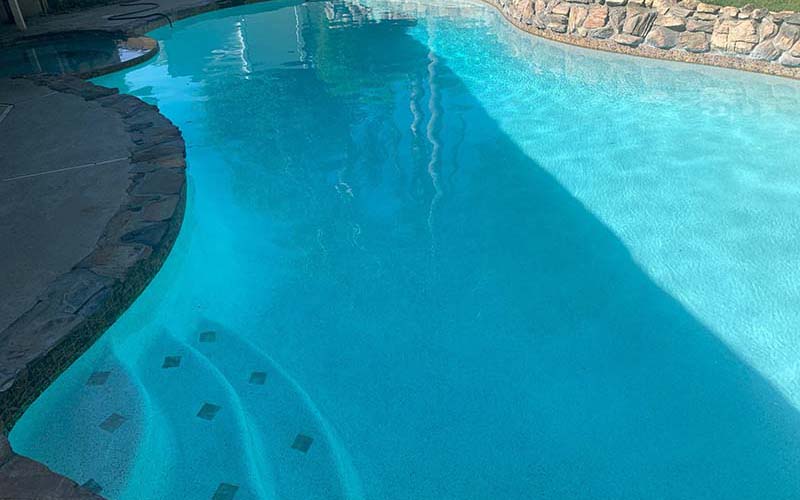
A saltwater pool and a chlorine pool both use chlorine to keep the water clean, but they do it in very different ways. A saltwater pool uses a salt chlorine generator to turn dissolved salt into chlorine through a process called electrolysis. A traditional chlorine pool requires you to add chlorine by hand, usually in tablet or liquid form. The result is that saltwater pools have lower chlorine levels, softer water, and less of the harsh chemical smell that many swimmers dislike. This guide breaks down every major difference between saltwater and chlorine pools, including cost, maintenance, health effects, lifespan, and which type works best for homeowners in Jefferson, Georgia and the surrounding North Georgia communities.
Is It Better To Have a Saltwater Pool or a Chlorinated Pool?
It is better to have a saltwater pool if you want softer water, lower chlorine levels, and less hands-on maintenance. It is better to have a chlorinated pool if you want a lower upfront cost and simpler equipment. Both pool types sanitize the water with chlorine, so neither is unsafe. The real differences come down to how that chlorine gets into the water and how the pool feels when you swim in it.
According to the Pool & Hot Tub Alliance (PHTA), there are roughly 10.7 million swimming pools in the United States. Data from Pool Research estimates that 10 to 15 percent of those pools are saltwater, and that number keeps growing every year. Over 40 percent of pool owners now choose salt chlorine generators over traditional liquid chlorine, according to a 2026 report from WifiTalents.
Homeowners across Jefferson, Georgia and nearby areas like Braselton, Hoschton, and Athens are making this choice right now. The warm Georgia climate means pools get heavy use from spring through fall, so picking the right sanitization system matters. Families who spend a lot of time in the water often prefer saltwater for the comfort it provides.
A custom pool can be built with either system, and switching from chlorine to saltwater later is also an option. The key is knowing what each system demands before you commit.
What Is the Difference Between a Saltwater Pool and a Chlorine Pool?
The difference between a saltwater pool and a chlorine pool is how the chlorine is made and added to the water. In a saltwater pool, pool-grade salt is dissolved in the water and a salt chlorine generator converts that salt into chlorine through electrolysis. In a chlorine pool, you add chlorine manually using tablets, liquid, or granules.
A common myth is that saltwater pools are chlorine-free. They are not. Saltwater pools still contain chlorine, just at lower and more steady levels. According to Leslie’s Pool Supplies, saltwater pools have a salt concentration of about 3,000 to 4,000 parts per million (ppm), which is roughly one-tenth the salinity of ocean water. This is why the water does not taste or feel salty at all.
The chlorine generator does the work automatically. Once the salt is in the water, the generator runs the salty water through electrically charged plates inside a salt cell. This creates hypochlorous acid, the same sanitizer used in chlorine pools. After the chlorine does its job, it converts back into salt and cycles through the cell again. This creates a nearly endless supply of chlorine without you having to buy or handle chemicals.
Traditional chlorine pools use chlorine tablets (the most common method), liquid sodium hypochlorite, or granular chlorine. Each form requires regular manual dosing. Chlorine pools have been the industry standard for over 50 years, and they are still the most widely used system. According to Pool Research, about 95 percent of swimming pools in the U.S. still use chlorine in some form.
Homeowners in North Georgia who are considering a new pool build should weigh these differences carefully. A pool inspection can also help existing pool owners decide if a conversion makes sense for their setup.
What Are the Pros and Cons of a Saltwater Pool?
The pros of a saltwater pool are softer water, lower chlorine levels, less skin and eye irritation, reduced chemical smell, and lower long-term maintenance costs. The cons of a saltwater pool are a higher upfront cost, potential corrosion of certain metals and stone, the need to replace the salt cell every few years, and the fact that the generator will not produce chlorine in water below 60 degrees Fahrenheit.
Many pool owners in Jefferson and across Jackson County love saltwater pools because the water feels silky smooth. The lower chlorine levels mean less irritation for kids, adults, and anyone with sensitive skin. According to the Centers for Disease Control and Prevention (CDC), traditional chlorine pools produce more chloramines, which are the chemical compounds that cause red eyes, itchy skin, and that strong “chlorine smell” people associate with pools.
On the cost side, a salt chlorine generator typically costs between $1,500 and $2,500 for the equipment, plus $300 to $500 for installation. Data from River Pools shows that the salt cell inside the generator lasts 3 to 7 years and costs $500 to $900 to replace. The control board has a similar lifespan and replacement cost.
Salt can also cause corrosion to soft natural stone, stainless steel ladders, and pool lights if the water chemistry is not properly balanced. According to AQUA Magazine, the higher salt concentration in saltwater pools has the potential to damage equipment and fixtures, especially around areas with constant water splash. Sacrificial zinc anodes and proper bonding can reduce this risk greatly.
What Are the Pros and Cons of a Chlorine Pool?
The pros of a chlorine pool are a lower upfront cost, simpler equipment, decades of proven performance, and easy access to repair parts and service professionals. The cons of a chlorine pool are higher ongoing chemical costs, more frequent manual maintenance, a stronger chemical smell, and greater skin and eye irritation from chloramines.
Chlorine pools have been the default for more than five decades. The equipment is straightforward, and any pool professional in the Jefferson, Georgia area can service a chlorine system with ease. There is no salt cell to worry about, and the system runs on a basic pump and filtration setup.
The downside is that chlorine pools cost more to maintain over time. According to Shasta Pool Supply, traditional chlorine pools require $300 to $800 per year in chemical costs, while saltwater pools need only $70 to $100 per year in salt and supplemental chemicals. That difference adds up fast over the life of a pool.
Chlorine products also need careful storage. Liquid and tablet chlorine are harsh chemicals that can be dangerous if handled improperly. The CDC notes that chlorine combined with sweat, dirt, and urine in pool water forms chloramines, which irritate the eyes, skin, and respiratory system. This is a bigger concern in chlorine pools because the chlorine levels are higher and less consistent than in saltwater pools.
Families in Braselton, Hoschton, and Gainesville who want a pool but prefer a simpler installation often start with a chlorine system. Scheduling routine pool cleaning services can help keep a chlorine pool well-balanced and reduce the impact of chloramines.
Are Saltwater Pools Bad for Your Health?
No, saltwater pools are not bad for your health. Saltwater pools are actually gentler on the body than traditional chlorine pools because they produce fewer chloramines. Chloramines are the chemical irritants that cause red eyes, dry skin, breathing issues, and that strong chemical smell many swimmers experience.
The CDC confirms that chloramines form when chlorine mixes with sweat, dirt, and urine in pool water. These compounds irritate the skin, eyes, and respiratory tract. Since saltwater pools maintain lower and more consistent chlorine levels, they produce significantly fewer chloramines than traditional chlorine pools.
A study published through the National Library of Medicine found that high chloramine levels in pool water were strongly associated with illness, including coughing (84 percent of cases), eye irritation (78 percent), and rash (34 percent). These effects were primarily observed in traditional chlorine pools with poor maintenance.
The salt concentration in a properly maintained saltwater pool is about 3,200 ppm, which is similar to the salt content in human tears. This is one reason the water feels so comfortable on the eyes. For homeowners across North Georgia, especially those with young children or family members with asthma or eczema, a saltwater pool can be a healthier choice.
Do Salt Water Pools Smell?
No, salt water pools do not smell like chlorine the way traditional pools do. The strong “pool smell” people notice is not actually from chlorine itself. It comes from chloramines, which are formed when chlorine reacts with organic matter like sweat and body oils. Saltwater pools produce far fewer chloramines, so they have little to no chemical odor.
According to the CDC, chloramines are the real cause of that familiar pool smell. Chloramines are heavier than air and settle just above the water’s surface. In traditional chlorine pools, these compounds build up faster because chlorine is added in larger, less consistent doses.
Saltwater pools release chlorine at a slow, steady rate through electrolysis. This keeps the chlorine levels consistent and prevents the spikes that lead to heavy chloramine buildup. The result is a pool that smells clean and fresh rather than like chemicals. Many families in Athens and Commerce, Georgia have switched to saltwater for this reason alone.
What Kind of Pool Requires the Least Maintenance?
A saltwater pool requires the least maintenance of the two main pool types. The salt chlorine generator handles chlorine production automatically, which means you do not need to buy, store, or manually add chlorine. You still need to test pH and free chlorine levels weekly, check salt levels monthly, and clean the salt cell a few times per year. But the overall time commitment is much lower.
According to data from the swimming pool industry, professional pool maintenance costs an average of $80 to $150 per month. Saltwater pool owners often spend less because the system does most of the chemical work on its own. Chlorine pool owners must test and adjust chemical levels more frequently, shock the pool regularly, and purchase chlorine products throughout the swim season.
That said, saltwater pools are not completely hands-off. The salt cell builds up calcium scale over time and needs to be cleaned every 500 hours, which is about every three months for most homes. Many modern systems have self-cleaning features that reduce this task. Pool owners in Jefferson who want to simplify upkeep even further can pair a saltwater system with routine seasonal opening services and professional maintenance.
What Is the Life Expectancy of a Saltwater Pool?
The life expectancy of a saltwater pool structure is the same as a traditional pool, which is 20 to 30 years or more depending on the materials and maintenance. The salt chlorine generator, which is the key piece of equipment that sets saltwater pools apart, has a shorter lifespan of 3 to 7 years for the salt cell and 3 to 7 years for the control board.
According to River Pools, the salt cell is rated for approximately 10,000 operating hours. For most residential pools running 8 to 12 hours per day, that translates to about 5 to 7 years. Replacement salt cells cost between $400 and $900 depending on the brand and pool size. The control board costs $500 to $900 to replace.
The pool shell itself, whether it is concrete, fiberglass, or vinyl liner, is not affected by the low salt levels in the water when chemistry is properly maintained. Fiberglass pools can last 30 years or more, while concrete pools may need resurfacing every 10 to 15 years regardless of the sanitization system.
Homeowners near Winder and Loganville who invest in regular pool repair and maintenance will get the longest life out of both the pool structure and the saltwater equipment.
Does a Saltwater Pool Raise Your Blood Pressure?
No, a saltwater pool does not raise your blood pressure. The salt concentration in a saltwater pool is extremely low, around 3,000 to 4,000 ppm, compared to ocean water at roughly 35,000 ppm. You are not ingesting the salt water during normal swimming, and the amount of salt that touches your skin is not enough to affect blood pressure.
Blood pressure concerns related to salt come from dietary sodium intake, not from skin contact with low-salinity water. There is no published medical research linking swimming in a saltwater pool to increased blood pressure. In fact, swimming in general is one of the best forms of exercise for cardiovascular health. The American Heart Association recognizes swimming as a heart-healthy activity that can help lower blood pressure over time.
Do Saltwater Pools Attract Bugs?
No, saltwater pools do not attract bugs any more than chlorine pools do. Insects like water bugs, mosquitoes, and beetles are attracted to standing water and light, not to salt. Both pool types are equally likely to attract bugs if the water is stagnant or the pool is not properly maintained.
Keeping your pool pump running, maintaining proper chlorine levels (which both saltwater and chlorine pools do), and skimming regularly will keep bugs away regardless of pool type. Homeowners across Jackson County and Barrow County should also keep landscaping trimmed back from the pool area to reduce bug activity.
What Ruins a Saltwater Pool?
What ruins a saltwater pool is poor water chemistry, neglected equipment, and failure to maintain the salt cell. When salt levels, pH, and calcium hardness are out of balance, the water becomes corrosive and can damage pool surfaces, equipment, and fixtures. Ignoring the salt cell leads to calcium scale buildup, reduced chlorine output, and eventually a dead cell that needs full replacement.
According to AQUA Magazine, saltwater has the potential to corrode metal fixtures, stainless steel ladders, and soft natural stone like travertine and limestone if the chemistry is not managed. The salt level in a pool is only about 3,200 ppm, which is quite low. But without regular testing and balancing, even that small amount of salt can accelerate wear.
The fix is simple: test your water regularly, clean the salt cell every three months, install a sacrificial zinc anode to protect metal components, and schedule professional maintenance. Families in Arcade and Bethlehem, Georgia who keep up with these basics will not see the corrosion problems that give saltwater pools a bad name.
Do You Need a Different Pump for a Salt Water Pool?
No, you do not need a different pump for a salt water pool. Standard pool pumps work fine with saltwater systems. The main addition is the salt chlorine generator, which is plumbed into the return line after the filter, heater, and pump. The pump itself does not change.
However, variable-speed pumps are a smart upgrade for saltwater pools because they allow better flow control and energy savings. According to a report from WifiTalents, replacing a single-speed pump with a variable-speed pump saves about $1,500 over three years. Better flow control also helps the salt cell operate more efficiently and last longer.
Your existing pool equipment can usually be adapted for a saltwater conversion. A pool professional can confirm whether your current pump, filter, and plumbing are compatible.
How Often Do You Have To Replace the Salt in a Saltwater Pool?
You rarely have to replace all the salt in a saltwater pool because salt does not evaporate or get consumed during the chlorine generation process. Once the chlorine sanitizes the water, it converts back into salt and cycles through the generator again. You only need to add more salt after heavy rain dilutes the water, after backwashing the filter, or after significant splash-out.
Most residential saltwater pools need about one 40-pound bag of pool-grade salt per year for topping off, which costs between $10 and $40 per bag. The initial salt fill for a medium-sized pool requires about 400 to 600 pounds of salt. Always use 99 percent pure pool-grade sodium chloride to avoid damaging the salt cell or staining the pool.
Salt levels should be tested monthly and kept between 2,700 and 3,900 ppm, depending on the manufacturer’s recommendation. Homeowners in Hoschton and Sugar Hill who stay on top of salt testing will keep their systems running smoothly without surprises.
How Do I Keep My Salt Water Pool Crystal Clear?
You keep your salt water pool crystal clear by testing the water weekly, keeping the pH between 7.2 and 7.6, maintaining salt levels in the recommended range, cleaning the salt cell every three months, running the pump at least 8 hours per day, and skimming debris regularly.
The ideal free chlorine level for a saltwater pool is 1 to 3 ppm. If the chlorine drops too low, algae and bacteria can take hold quickly, especially during the hot Georgia summers. If the pH drifts too high, which is common in saltwater pools due to the electrolysis process, the chlorine becomes less effective.
According to pool industry data, a pool pump should run at least 8 hours per day to properly circulate and filter the water. Variable-speed pumps let you run the system longer at a lower speed, which saves energy while improving water clarity. Scheduling regular professional pool cleaning is the easiest way to keep your water sparkling all season.
Does a Salt Water Pool Need To Be Heated?
A salt water pool does not need to be heated, but heating it extends the swim season and helps the salt chlorine generator work properly. Salt chlorine generators will not produce chlorine when the water temperature drops below 60 degrees Fahrenheit. In North Georgia, where fall nights can get cool by October, heating the pool keeps the generator active and the water comfortable.
A pool heater can account for up to 30 percent of a home’s total energy bill during the cooler months, according to industry data. Solar pool covers and heat pumps are energy-efficient alternatives that many homeowners in Jefferson and Braselton use to stretch their pool season without high energy costs.
If you plan to close your pool for the winter, be sure to winterize the salt cell properly. Remove it, clean it, and store it indoors. Scheduling a professional pool closing service protects both the pool structure and the saltwater equipment from freeze damage.
Why Don’t Salt Water Pools Smell Like Chlorine?
Salt water pools don’t smell like chlorine because they produce far fewer chloramines than traditional chlorine pools. Chloramines are the chemical irritants responsible for the strong “pool smell,” not chlorine itself. Since saltwater generators release chlorine at a low, steady rate through electrolysis, fewer chloramines form in the water and in the air above it.
The CDC explains that chloramines form when free chlorine binds with nitrogen-containing compounds from sweat, urine, and body oils. Traditional chlorine pools experience bigger chlorine spikes from manual dosing, which creates more opportunities for chloramine formation. Saltwater pools avoid this because the generator maintains a consistent, lower level of chlorine around the clock.
Are Saltwater Pools High Maintenance?
No, saltwater pools are not high maintenance compared to chlorine pools. They require less hands-on chemical work because the salt chlorine generator produces chlorine automatically. You still need to test the water weekly, check salt levels monthly, clean the salt cell quarterly, and monitor pH levels. But the overall workload is noticeably less than a traditional chlorine pool.
According to industry data, chlorine pools need more frequent chemical testing and adjustment, weekly shocking, and regular purchases of chlorine tablets or liquid. Saltwater pool owners skip most of these steps. The trade-off is that the salt cell and generator require periodic attention and eventual replacement, which is a maintenance task that chlorine pool owners never face.
For homeowners across North Georgia who want a low-effort pool experience, saltwater is the better choice. Pairing it with a service plan from a professional pool company makes it even easier.
Saltwater Pool vs Chlorine Pool: Side-by-Side Comparison
| Feature | Saltwater Pool | Chlorine Pool |
|---|---|---|
| How Chlorine Is Added | Generated automatically by a salt cell | Added manually via tablets, liquid, or granules |
| Upfront Equipment Cost | $1,500 to $2,500 for the generator | Lower, no special generator needed |
| Annual Chemical Cost | $70 to $100 per year | $300 to $800 per year |
| Water Feel | Soft, silky, smooth | Can feel harsher on skin |
| Eye and Skin Irritation | Minimal (fewer chloramines) | More common (higher chloramine levels) |
| Chemical Smell | Little to none | Noticeable, especially with poor balance |
| Maintenance Level | Lower, generator does most work | Higher, requires manual dosing and shocking |
| Salt Cell Replacement | Every 3 to 7 years ($400 to $900) | Not applicable |
| Corrosion Risk | Higher for certain metals and stone if unmanaged | Lower, but still possible with poor chemistry |
| Pool Lifespan | 20 to 30+ years | 20 to 30+ years |
Sources: Pool & Hot Tub Alliance (PHTA), River Pools, Shasta Pool Supply, CDC, Leslie’s Pool Supplies, WifiTalents, Pool Research
Do You Need To Shower After Being in a Saltwater Pool?
Yes, you should shower after being in a saltwater pool, just like you should after swimming in any pool. Rinsing off removes residual chlorine, salt, and any other chemicals from your skin and hair. Even though saltwater pools are gentler, the water still contains chlorine and dissolved minerals that can dry out your skin if left on after swimming.
The CDC also recommends showering before entering any pool to reduce the amount of sweat, dirt, and body oils that mix with chlorine and create chloramines. A quick rinse before and after swimming keeps you comfortable and helps keep the pool water cleaner for everyone.
Why Do People Put Baking Soda in Their Swimming Pools?
People put baking soda in their swimming pools to raise the total alkalinity of the water. Total alkalinity acts as a buffer for pH, keeping it stable and preventing sudden swings that can make the water uncomfortable or corrosive. Both saltwater and chlorine pools benefit from proper alkalinity levels, which should be maintained between 80 and 120 ppm.
Baking soda (sodium bicarbonate) is a safe, inexpensive way to adjust alkalinity without drastically changing pH. This is especially helpful in saltwater pools, where the electrolysis process tends to push pH higher over time. Adding baking soda helps stabilize the water and protect pool surfaces and equipment.
Can You Convert a Chlorine Pool to a Saltwater Pool?
Yes, you can convert a chlorine pool to a saltwater pool. The conversion involves installing a salt chlorine generator on the return plumbing line and adding pool-grade salt to the water. Most existing pools can be converted without major changes to the pump, filter, or plumbing.
The conversion cost ranges from $1,000 to $5,000 depending on pool size and the generator model, according to Family Handyman. Pool owners in Gainesville and Dacula, Georgia who are considering a switch should have a professional evaluate their current equipment first. Some older metal fixtures may need to be upgraded to salt-resistant materials.
A professional pool inspection is the best first step before any conversion. This helps identify potential corrosion risks and confirms that the plumbing can handle a salt system.
Frequently Asked Questions
Is a Saltwater Pool or Chlorine Pool Better for Families in Jefferson, Georgia?
A saltwater pool is generally better for families in Jefferson, Georgia because it produces softer water with fewer chemical irritants. The lower chloramine levels mean less eye redness, less skin dryness, and no harsh chemical smell. This matters especially for kids who swim multiple times per week during the long North Georgia pool season. According to the CDC, chloramines are the primary cause of skin, eye, and respiratory irritation in pool swimmers.
How Much Does It Cost To Maintain a Saltwater Pool in North Georgia?
It costs roughly $70 to $100 per year in salt and supplemental chemicals to maintain a saltwater pool in North Georgia, according to data from Shasta Pool Supply. Add in a salt cell replacement every 3 to 7 years at $400 to $900, and the total is still often less than the $300 to $800 per year that chlorine pool owners spend on chemicals alone. Professional maintenance services typically run $80 to $150 per month for either pool type.
Can Sandals Luxury Pools Build a Saltwater Pool?
Yes. Sandals Luxury Pools builds custom pools in Jefferson, Georgia and surrounding communities including Braselton, Athens, Hoschton, Gainesville, and Winder. Whether you want a saltwater system or a traditional chlorine setup, the team designs and builds luxury pools with the sanitization system that fits your lifestyle.
Do Saltwater Pools Damage Pool Decks in the Jefferson Area?
Saltwater pools can damage soft natural stone and certain concrete finishes if the water chemistry is not properly maintained. However, when pH, salt levels, and calcium hardness are balanced, the risk is minimal. According to AQUA Magazine, proper sealing of stone surfaces and the use of salt-resistant materials around the pool area prevents most damage. Many Jefferson homeowners pair saltwater pools with durable hardscaping materials to avoid any issues.
What Happens if the Salt Cell Stops Working?
If the salt cell stops working, the pool will stop producing chlorine and the water will become unsafe for swimming within a few days. You can manually add liquid chlorine as a temporary fix while the cell is repaired or replaced. Salt cells typically last 5 to 7 years, according to Pool Research, and replacement costs range from $400 to $900. A professional can diagnose whether the issue is the cell itself or the control board.
Is It Hard To Find Saltwater Pool Service in Braselton and Hoschton?
No, it is not hard to find saltwater pool service in Braselton and Hoschton. Saltwater pools have become popular across North Georgia, and professional pool service companies in the area are well-equipped to handle them. Scheduling routine maintenance helps keep the generator, cell, and water chemistry in top shape year-round.
Should I Close My Saltwater Pool for Winter in North Georgia?
Yes, most pool owners in North Georgia should close their saltwater pool for winter. Since salt chlorine generators stop producing chlorine when water drops below 60 degrees Fahrenheit, the pool cannot sanitize itself during the coldest months. Proper winterization includes removing and cleaning the salt cell, lowering the water level, balancing the chemistry, and covering the pool. A professional pool closing service protects your investment from freeze damage.
Final Thoughts
Both saltwater pools and chlorine pools keep your water clean and safe for swimming. The biggest differences come down to comfort, maintenance effort, and long-term cost. Saltwater pools offer softer water, fewer irritants, less chemical smell, and lower annual chemical expenses. Chlorine pools offer a lower upfront cost and simpler equipment. For families in Jefferson, Georgia and the surrounding North Georgia communities who want a more comfortable, lower-maintenance swim experience, saltwater is the stronger choice.
If you are ready to build a new pool or upgrade your current system, Sandals Luxury Pools is here to help. As North Georgia’s top-rated pool builder, the team specializes in custom pool construction with the features and sanitization system that match your lifestyle. Contact Sandals Luxury Pools today to schedule a consultation and start turning your backyard into the retreat you deserve.
