
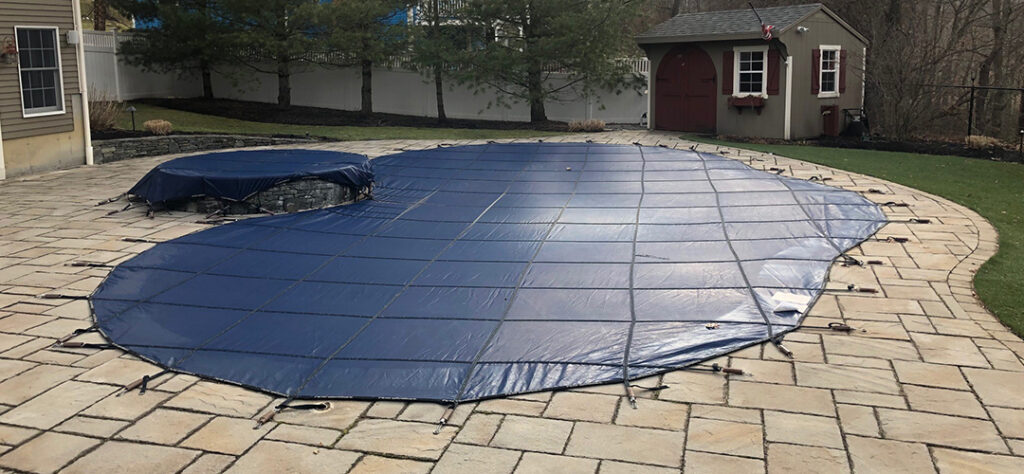
To winterize an inground pool properly, you need to clean the pool, balance the water chemistry, lower the water level, blow out the plumbing lines, add winterizing chemicals, and install a secure pool cover. Skipping any of these steps can lead to freeze damage that costs hundreds or even thousands of dollars to fix. According to Angi, pool repair costs average around $701 but can climb well above $1,000 for freeze-related damage. This guide walks you through every step of winterizing an inground pool so your investment stays safe all winter long, especially for homeowners in Jefferson, Georgia and surrounding North Georgia communities.
How Do You Winterize an Inground Pool Step by Step?
You winterize an inground pool step by step by cleaning the pool, balancing chemicals, lowering the water, blowing out plumbing lines, draining equipment, adding winterizing chemicals, and covering the pool. Each step must happen in a specific order for full protection.
The U.S. is home to more than 10.7 million swimming pools, according to Jobera. About 59% of those are inground, according to the Pool and Hot Tub Alliance. That means millions of pool owners face the same question every fall. Pool owners in North Georgia, from Jefferson to Braselton and Athens, deal with winter temperatures that regularly dip below freezing. A proper closing now saves a stressful and expensive opening in the spring.
The annual cost of pool maintenance ranges from $3,000 to $6,000, according to RenoSys. A big chunk of that goes toward fixing problems caused by poor winterization. Pool owners who take the time to close their pool the right way avoid most of those surprise repair bills.
What Month Should You Winterize a Pool?
The best month to winterize a pool depends on your local climate, but the rule of thumb is to close your pool when outdoor temperatures stay below 65°F on a regular basis. For homeowners in Jefferson, Georgia, that usually falls between late October and mid-November.
Closing too early is a common mistake. Warm water uses up sanitizer faster than cool water. That means algae can grow under your cover if you close during a warm spell. On the other hand, waiting too long puts your pipes and equipment at risk once the first hard freeze hits. According to the National Weather Service, North Georgia averages its first frost in late October, making early to mid-November the sweet spot for most pool owners in the area.
What Chemicals Are Needed to Winterize an Inground Pool?
The chemicals needed to winterize an inground pool include chlorine shock, algaecide, a pH adjuster, alkalinity increaser, calcium hardness increaser, and a stain and scale preventer. These chemicals keep the water balanced and clean during the months your pool sits unused.
Before adding anything, test your water. Your targets should be a pH between 7.2 and 7.6, alkalinity between 80 and 150 ppm, calcium hardness between 175 and 225 ppm, and a chlorine level between 1 and 3 ppm. According to the Association of Pool and Spa Professionals, maintaining correct water balance before closing is the single most important factor in preventing surface damage over the winter.
Homeowners near Athens and Gainesville, Georgia often deal with naturally soft water, which means calcium hardness levels may need an extra boost before closing. Failing to adjust this can cause the water to become aggressive, which eats away at plaster and grout over the cold months. Orenda Technologies notes that cold water changes the Langelier Saturation Index, making otherwise balanced water corrosive during winter.
What Is the Correct Order to Add Pool Chemicals?
The correct order to add pool chemicals when winterizing is to first adjust alkalinity, then pH, then calcium hardness, then shock the pool, and finally add algaecide. Never add shock and algaecide at the same time because the shock will destroy the algaecide before it can work.
After shocking, let the pump run for at least 8 to 12 hours so the chemicals spread evenly. Wait 24 hours before adding algaecide. A standard dose is about 16 to 32 ounces of algaecide per 10,000 gallons, according to product guidelines from major pool chemical manufacturers. Once all chemicals are mixed in, you can move on to lowering the water and draining equipment.
Getting a professional pool inspection before closing can catch small issues like minor leaks or worn seals that could become big problems once your pool sits dormant for months.
Do You Have to Put Chemicals in Your Pool to Winterize It?
Yes, you have to put chemicals in your pool to winterize it. Without proper chemical treatment, algae and bacteria will grow in the standing water over the winter. That leads to staining, surface damage, and a much harder spring opening.
Some pool owners think cold water stops algae growth entirely. That is not true. Algae spores can survive in cold temperatures and bloom as soon as the water warms up even slightly. A 2023 report by the Centers for Disease Control and Prevention found that improperly treated recreational water remains one of the top causes of waterborne illness outbreaks. Shocking your pool and adding algaecide before closing creates a chemical barrier that lasts through the winter.
Pool owners in Winder and Hoschton, Georgia sometimes skip chemicals to save money. But a green, stained pool in the spring can cost far more to restore than a simple winterizing chemical kit. According to HomeGuide, pool leak repairs alone range from $500 to $1,500 on average.
How Far Down Do You Drain Your Inground Pool for Winter?
You drain your inground pool 4 to 6 inches below the skimmer opening if you use a mesh safety cover, or about 3 to 4 inches below the skimmer if you have a solid winter cover. Never lower the water more than 18 inches, because doing so puts too much stress on the cover and can even cause structural damage.
Water provides important structural support for your pool shell. According to the American Society of Civil Engineers, groundwater pressure can push against an empty or near-empty pool shell, causing it to shift or even pop out of the ground. This is especially true in areas with clay-heavy soil, which is common across Jackson County and much of North Georgia.
To lower the water, use your pool pump’s waste setting or a submersible pump. Check local regulations before draining, since chlorinated water may not be allowed into storm drains in some Georgia communities.
Is It Okay to Leave a Concrete Pool Empty?
No, it is not okay to leave a concrete pool empty. An empty concrete pool can crack, shift, or lift out of the ground due to hydrostatic pressure from groundwater pushing up against the pool shell.
This risk is higher during the wet winter months in North Georgia. Heavy rainfall between November and March saturates the soil around your pool. Without the weight of water inside to push back, groundwater pressure can cause serious structural damage. According to the International Association of Certified Home Inspectors, pool pop-ups from hydrostatic pressure are among the most expensive pool repairs, sometimes running into the tens of thousands of dollars. Always leave water in your pool during winter, lowered only to the recommended level.
At What Temperature Will Inground Pool Pipes Freeze?
Inground pool pipes freeze when water inside them is exposed to temperatures at or below 32°F (0°C) for a sustained period. Above-ground equipment like pumps and filters can start freezing in under an hour during a hard freeze, while underground pipes usually need several hours to days of continuous freezing before ice forms.
According to pool industry experts, water in a 2-inch pipe can freeze solid in about 8 hours when temperatures stay around 20 to 25°F without the pump running. Wind chill speeds up the process for exposed equipment because it pulls heat away from pipes faster. Homeowners in Braselton and Commerce, Georgia sometimes experience sudden temperature drops in December and January that catch them off guard.
Water expands by roughly 9% to 10% when it freezes. That expansion creates enough force to crack PVC pipes, split pump housings, and destroy filter tanks. According to HomeAdvisor, freeze damage to a pump, filter, or heater can cost $500 to $2,000 to repair. In severe cases with multiple damaged components, repair bills can climb much higher. Most homeowners insurance policies do not cover freeze damage to pools because it is considered preventable maintenance.
Will My Pool Pipes Freeze in One Night?
Yes, your pool pipes can freeze in one night if temperatures drop below 32°F for several hours and the water is not moving. Above-ground pipes and equipment are the most vulnerable, and ice can start forming in as little as one hour during a hard freeze.
Underground pipes are safer because the surrounding soil provides insulation, but they are not immune. If temperatures stay in the low 20s or teens for an extended period, even buried lines can freeze. The key factor is whether water is moving. Running your pump during a freeze keeps water circulating and makes it much harder for ice to form. But this only works if you have power. During ice storms in North Georgia, power outages can leave your pool equipment sitting still in freezing temperatures for hours.
That is why properly blowing out your lines and draining equipment before winter is so important. Homeowners who faced pool equipment freeze damage after recent Georgia cold snaps learned this lesson the hard way.
What Happens If a Pool Is Not Winterized?
If a pool is not winterized, the water left in pipes and equipment can freeze and expand, cracking plumbing lines, splitting pump housings, and destroying filters and heaters. On top of that, unbalanced water chemistry leads to algae blooms, surface staining, and scaling that require costly remediation in the spring.
According to Pool Magazine, cold snaps across the United States have repeatedly caused widespread freeze damage to pools, leaving contractors scrambling to make emergency repairs. A single freeze event can damage your pump, filter, heater, skimmer, and underground plumbing all at once. When multiple components fail, the total repair bill can reach thousands of dollars.
Beyond equipment damage, unprotected pool surfaces suffer too. Ice expansion can crack tile, loosen grout, and tear vinyl liners. A pool resurfacing job costs $6 to $15 per square foot according to HomeGuide, which adds up to $6,000 to $15,000 for an average-sized pool. That is a steep price to pay for skipping a few hours of winterization work.
Is It Too Early to Close the Pool in September?
Yes, September is usually too early to close the pool. Pool experts recommend waiting until water temperatures consistently stay below 65°F before winterizing. Closing too early while the water is still warm speeds up sanitizer loss and increases the chance of algae growing under the cover.
In Jefferson, Georgia, September daytime highs still regularly reach the upper 80s. Even October can bring warm stretches. The best practice for North Georgia pool owners is to keep the pool running and chemically treated until temperatures drop consistently in late October or November. This gives you a cleaner pool when you reopen in the spring and extends the life of your winterizing chemicals.
How Do You Blow Out Pool Lines for Winter?
You blow out pool lines for winter by using an air compressor or a high-volume blower to push air through every plumbing line from the equipment pad back to the pool. Once you see air bubbles coming out of the return jets and skimmer, you plug those fittings with winterizing plugs to keep water from flowing back in.
This step removes over 95% of the water from your plumbing lines, according to pool service professionals. Start with the return lines. Connect the blower to the return pipe at the filter, then watch for bubbles at each return jet in the pool. Plug each jet with an expandable rubber plug as soon as you see strong air flow.
Next, blow out the skimmer lines. Air will push up and out of the skimmer. Once the water turns to a fine mist, install a skimmer guard (also called a Gizzmo) into the skimmer throat. This hollow plastic device absorbs the pressure of expanding ice and protects the skimmer from cracking. A $5 skimmer guard can save you from a $1,200 or more skimmer replacement, according to Angi.
If you are not comfortable using an air compressor, a professional pool closing service in North Georgia can handle this critical step and make sure every line is cleared properly.
Do I Need to Put Antifreeze in My Pool Lines?
No, you do not need to put antifreeze in your pool lines if you have properly blown out all the water from the plumbing. Antifreeze is only needed as a backup if you cannot completely remove water from the lines.
If you do use antifreeze, always choose non-toxic propylene glycol pool antifreeze. Never use automotive antifreeze, which contains ethylene glycol and is highly toxic to people, pets, and the environment. According to In The Swim, the recommended dose is about 1 gallon of pool antifreeze for every 10 feet of water-filled pipe.
Antifreeze works best in the skimmer line and return line. It is less effective in the main drain line because the antifreeze, being heavier than water, tends to sink down and dilute into the pool. Also, never pour antifreeze directly into your pump or onto pool equipment. The glycol and salts in antifreeze can damage rubber seals and metal components.
What Kind of Antifreeze Do You Use to Winterize a Pool?
The kind of antifreeze you use to winterize a pool is non-toxic, propylene glycol-based pool antifreeze. It is specifically made for swimming pools and is safe for swimmers and water chemistry. Concentrated formulas protect pipes down to temperatures as low as -50°F.
According to Today’s Homeowner, pool antifreeze typically costs between $15 and $30 per gallon. For a standard inground pool in the Jefferson, Georgia area, most homeowners need 2 to 4 gallons depending on the length of their plumbing runs. Propylene glycol does not break down over time, so you can reuse it for several seasons by topping off the amount each fall.
Should You Run a Pool Pump During a Freeze?
Yes, you should run a pool pump during a freeze if your pool has not been winterized and closed. Moving water is much harder to freeze than still water. Keeping your pump running with all valves open during a freeze event is one of the most effective ways to prevent pipe damage in an un-winterized pool.
However, running the pump is not a long-term winter strategy. It works for short cold snaps, but it is not reliable for extended freezing periods, especially if you lose power during an ice storm. According to In The Swim, homeowners in mild climates should set a temperature alert on their phone for 37°F and turn the pump on when temperatures drop near that level. Some modern pool controllers have built-in freeze protection sensors that automatically start the pump when the air temperature reaches a preset threshold.
For pool owners in Dacula and Lawrenceville, Georgia who keep their pools open year-round, a freeze protection device is a smart investment. But for most North Georgia homeowners, a full winterization is the safer and more reliable choice. A properly closed pool does not need the pump running at all during winter.
How to Wrap Pool Pipes for Winter DIY
To wrap pool pipes for winter, cover all exposed above-ground PVC plumbing with foam pipe insulation sleeves or insulation tape. Focus on the pipes between the pump, filter, heater, and pool connections. Secure the insulation with zip ties or duct tape to prevent it from falling off during wind or rain.
Insulation slows heat loss but does not stop it entirely. It buys you extra time during a freeze, but it cannot replace proper winterization. Self-regulating heat cables are another option. These cables wrap around pipes and automatically adjust their heat output based on the temperature. They are especially useful for pool owners who do not fully winterize.
For equipment pads near the house, keeping a tarp over the equipment with a low-wattage incandescent light bulb underneath can raise the temperature just enough to prevent freezing during a short cold snap. Just make sure never to cover the pool heater itself for safety reasons.
How Many Gallons Is a 20×40 Pool With a Deep End?
A 20×40 pool with a deep end holds roughly 25,000 to 30,000 gallons of water, depending on the depth profile. A pool with a 3.5-foot shallow end and an 8-foot deep end averages about 5.75 feet of depth, which puts the total volume at approximately 27,000 gallons.
The formula is length times width times average depth times 7.5 (the number of gallons in one cubic foot of water). Knowing your pool’s volume is critical for winterization because chemical doses, antifreeze amounts, and shock treatment all depend on gallons. For example, most shock products call for 1 pound per 10,000 gallons, so a 27,000-gallon pool would need about 2.7 pounds of shock.
If you are unsure about your pool’s volume, the team at Sandals Luxury Pools can help you calculate it during a routine service visit.
Pool Winterization: Comparison of Key Steps and Risks
| Winterization Step | What Happens If Skipped | Estimated Repair Cost |
|---|---|---|
| Balance water chemistry | Algae blooms, staining, surface scaling | $500 – $3,000+ for cleaning and resurfacing |
| Blow out plumbing lines | Frozen and cracked pipes | $500 – $3,000 for pipe replacement |
| Drain pump, filter, and heater | Cracked pump housing, broken filter tank, damaged heater | $500 – $2,000+ per component |
| Install skimmer guard | Cracked skimmer from ice expansion | $1,200+ for skimmer replacement |
| Lower water level | Ice damage to tile, coping, and skimmer | $2,500 – $5,000 for tile and coping repair |
| Install winter cover | Debris buildup, contaminated water, algae growth | $500 – $1,500+ for spring cleanup |
Sources: Angi, HomeGuide, HomeAdvisor, Pool Magazine
What Is Forbidden in Most Swimming Pools During Winterization?
What is forbidden in most swimming pools during winterization is completely draining the pool, running equipment after the water level has been lowered past the skimmer, and using automotive antifreeze instead of pool-safe antifreeze.
Draining a pool completely removes the weight that holds the shell in place against groundwater pressure. In areas with high water tables or clay soil, like much of Jackson County, Georgia, an empty pool can literally float out of the ground. Running the pump after lowering water below the skimmer pulls air into the system, which can burn out the motor. And automotive antifreeze is toxic and reacts dangerously with pool chemicals, especially chlorine.
Also, never break thick ice on the pool surface during winter. According to Rising Sun Pools, breaking ice thicker than a quarter inch can crack tile, damage coping, and harm the pool surface. Let ice thaw naturally instead.
Is It Normal to Lose Half an Inch of Water a Day in a Pool?
Yes, it is normal to lose up to half an inch of water a day from an inground pool due to evaporation, wind, and splash-out during swimming season. According to the U.S. Department of Energy, an uncovered pool can lose up to 1 inch of water per week from evaporation alone in warm climates.
However, if your pool is covered for winter and you notice the water level dropping steadily, that is a sign of a leak. Pool leak repairs cost $500 to $1,500 on average, according to HomeGuide. Catching a leak early prevents it from getting worse over the winter. A pool inspection before closing can identify leaks before they cause bigger problems.
What Is the Life Expectancy of a Concrete Pool?
The life expectancy of a concrete pool is 50 years or more with proper maintenance, according to the National Plasterers Council. However, the interior surface typically needs resurfacing every 10 to 15 years, and equipment like pumps and heaters has a shorter lifespan of 8 to 12 years.
Proper winterization plays a direct role in how long your pool lasts. Repeated freeze-thaw cycles cause micro-cracking in concrete and plaster. Over time, those small cracks grow into bigger ones that require expensive repairs. Pool resurfacing alone costs $6,000 to $15,000, according to HomeGuide. Homeowners in the Jefferson, Georgia area who winterize their pools correctly every year get significantly more life out of their pool surfaces and equipment.
A custom-built concrete pool is a major investment, and winterization is one of the simplest ways to protect that investment year after year.
How to Cover Your Pool for Winter
To cover your pool for winter, choose either a mesh safety cover or a solid winter cover, position it tightly over the pool, and secure it with anchors or water bags depending on the cover type. A good cover keeps out debris, blocks sunlight to prevent algae, and adds a layer of safety.
Safety covers anchor into the pool deck with spring-loaded straps and brass anchors. They support the weight of a person or pet that accidentally steps on them, which makes them the safer option. Solid covers block all light and debris but require a cover pump to remove standing water and snowmelt. According to the U.S. Consumer Product Safety Commission, pool covers are one of the most effective layers of protection against accidental drowning during the off-season.
Before installing the cover, check it for tears or weak spots. If the coping or deck has rough edges, place foam or soft material around the perimeter to protect the cover from abrasion. For an average inground pool, 2 to 3 air pillows can help absorb ice expansion and reduce stress on the pool walls in areas that experience hard freezes.
Frequently Asked Questions
How Much Does It Cost to Winterize an Inground Pool in Jefferson, Georgia?
The cost to winterize an inground pool in Jefferson, Georgia varies based on pool size and the services included, but most professional pool closings include water treatment, line blowing, equipment draining, and cover installation. According to HomeAdvisor, professional pool closing services across the U.S. typically range from $150 to $500. Pool owners in North Georgia who hire a professional for this job often save money in the long run by avoiding freeze damage that can cost thousands to repair.
When Should Pool Owners in North Georgia Close Their Pool?
Pool owners in North Georgia should close their pool when outdoor temperatures consistently stay below 65°F, which usually happens between late October and mid-November. The Jefferson, Georgia area typically sees its first frost by late October, according to the National Weather Service. Waiting for consistently cool weather helps winterizing chemicals last longer and prevents algae growth under the cover.
Can I Winterize My Pool Myself or Should I Hire a Professional?
You can winterize your pool yourself if you have the right tools, chemicals, and knowledge. However, the most critical step, blowing out the plumbing lines, requires an air compressor or high-volume blower and some experience. A mistake during this step can leave water in the lines, which leads to cracked pipes. Many homeowners in Athens and Braselton, Georgia choose to hire a professional for peace of mind, especially for the line-blowing and equipment draining steps.
What Happens If It Freezes Before I Winterize My Pool?
If it freezes before you winterize your pool, immediately turn on the pool pump to keep water moving through the pipes. Open all valves so water flows through every line. If the power goes out, remove drain plugs from the pump, filter, and heater to let water drain out before it freezes. Cover exposed equipment with heavy blankets. According to HomeAdvisor, freeze damage to pool equipment can cost $500 to $2,000 or more for homeowners in the Jefferson, Georgia area.
Do I Need a Pool Cover for Winter in Georgia?
Yes, you need a pool cover for winter in Georgia. Even though Georgia winters are milder than northern states, temperatures in North Georgia regularly drop below freezing. A winter cover keeps debris out, blocks sunlight to prevent algae, reduces chemical loss, and adds a safety barrier. According to Latham Pool Products, leaving a pool uncovered during winter leads to more maintenance work and higher costs when reopening in the spring.
How Do I Prepare My Pool Equipment for Freezing Weather in North Georgia?
To prepare your pool equipment for freezing weather in North Georgia, drain all water from the pump, filter, heater, chlorinator, and any other equipment on the pad. Remove drain plugs and store them in the pump basket so you can find them easily in the spring. Use an air compressor to blow out remaining water from the equipment and plumbing lines. For pool repair needs after freeze damage, a qualified technician should inspect every component before you restart the system in the spring.
Is It Better to Use a Mesh or Solid Pool Cover for Winter?
A mesh pool cover is better for most homeowners because it allows rainwater and snowmelt to filter through while keeping out leaves and debris. Mesh covers do not need a cover pump and are lighter to install. Solid covers block all water and light, which keeps the pool cleaner, but they require a cover pump to remove standing water. The best choice depends on your pool size, local weather, and budget. Homeowners in Gainesville and Oakwood, Georgia who deal with heavy leaf fall from hardwood trees often prefer mesh covers for easier maintenance.
Final Thoughts
Winterizing your inground pool the right way is one of the most important things you can do as a pool owner. Every step matters, from balancing your water chemistry to blowing out the lines and securing a tight cover. Pool owners in Jefferson, Georgia and across North Georgia face real freeze risks every winter, and the cost of skipping winterization can easily run into thousands of dollars.
With more than 10.7 million pools across the country and a pool construction market valued at $16.5 billion in 2025 according to IBISWorld, it is clear that pools are a serious investment worth protecting. A few hours of work in the fall saves you time, money, and stress when spring rolls around.
If you want expert help closing your pool this season, reach out to Sandals Luxury Pools in Jefferson, Georgia. Their experienced team handles everything from water treatment and line blowing to equipment draining and cover installation. Whether you need a full pool closing service or just want advice on protecting your pool through the winter, call (770) 771-1839 or visit their website to schedule your consultation today. Do not wait until the first frost to start thinking about winterization. Get ahead of the cold and protect your pool now.
