
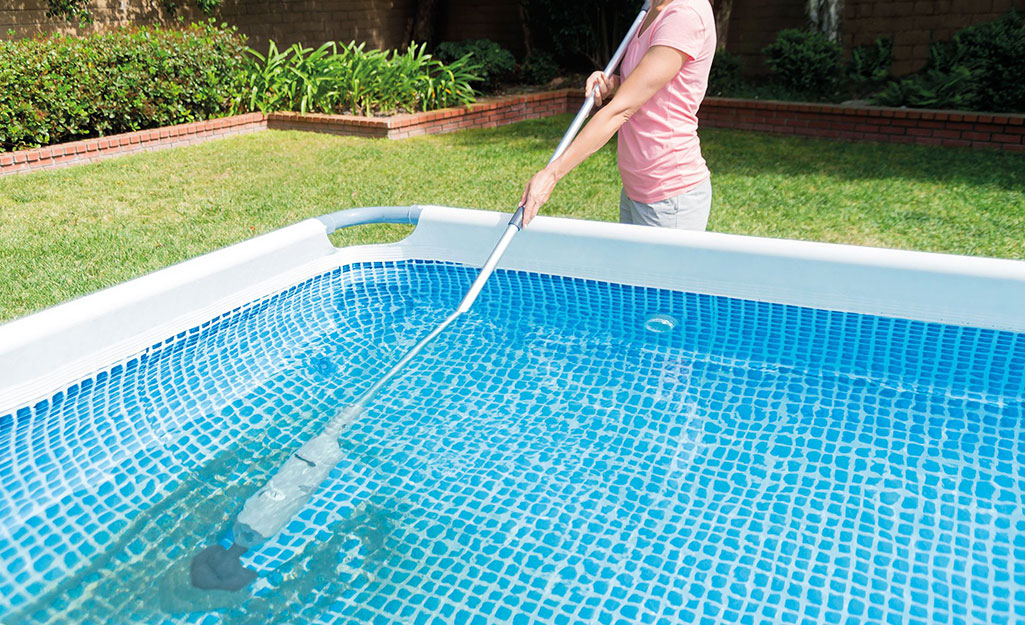
Yes, you can vacuum a pool without a skimmer by using a garden hose vacuum, a submersible pump, a siphon method, or a cordless robotic cleaner. Each method bypasses the skimmer entirely and still removes dirt, debris, and algae from the pool floor. Pool owners with above-ground pools, Intex-style setups, or broken skimmers in Jefferson, Georgia and across North Georgia can keep their water clean using any of these alternatives. This guide covers every method step by step, along with tips for keeping your pool spotless even without a working skimmer.
How Can I Vacuum My Pool Without a Skimmer?
You can vacuum your pool without a skimmer by using one of four main methods: a garden hose-powered vacuum, a portable submersible pump, a gravity siphon, or a battery-powered robotic pool cleaner. Each method works without connecting to the skimmer line, making them ideal for pools that lack a built-in skimmer or have one that is damaged.
According to the Pool and Hot Tub Alliance (PHTA), the United States is home to over 10.7 million swimming pools, with approximately 41% being above-ground models. Many above-ground pools, especially smaller inflatable and soft-sided models, do not come with a traditional skimmer. This means millions of pool owners across the country need alternative vacuuming methods to keep their water clean.
For homeowners in Jefferson, Georgia and surrounding areas like Braselton, Hoschton, and Winder, summer heat makes pool debris pile up fast. Trees, pollen, and Georgia red clay can settle on the pool floor within days. Having a reliable method to vacuum without a skimmer keeps the water safe and swimmable all season long.
Professional pool cleaning services can handle all types of pool setups, including those without standard skimmer systems.
How to Vacuum a Pool Without Going Through the Filter?
To vacuum a pool without going through the filter, use the “vacuum to waste” setting on a multiport valve, a garden hose vacuum with a debris bag, or a siphon that drains water directly out of the pool. These methods send dirty water and debris outside the pool instead of running it through the filtration system.
Vacuuming to waste is the preferred method when dealing with heavy debris, algae, or fine sediment that would clog your filter. According to Swim University, one of the leading pool education resources, the “Waste” setting on a multiport valve bypasses the filter entirely and sends contaminated water straight out through the waste port. This is different from the “Backwash” setting, which reverses water flow through the filter to clean it.
Here is how to vacuum to waste step by step:
Step 1: Turn off the pool pump. Set your multiport valve to the “Waste” position. Never change the valve position while the pump is running, as this can damage the valve and internal components.
Step 2: Attach the vacuum head to the telescopic pole and connect the vacuum hose to the head.
Step 3: Submerge the hose in the pool and push air out by feeding it slowly through the water until no more bubbles appear.
Step 4: Plug the free end of the hose into the suction port or skimmer inlet (if available). If you have no skimmer at all, use a submersible pump or garden hose vacuum instead.
Step 5: Turn the pump back on. The dirty water will flow directly out of the waste line. Move slowly across the pool floor to pick up all debris.
Step 6: Refill the pool with fresh water as you vacuum, since water level will drop. Keep the water at least halfway up the skimmer opening or pump intake to avoid running the pump dry.
This method works well for pools in the North Georgia area after heavy storms that wash red clay, leaves, and pollen into the water. Pool owners in Athens, Gainesville, and Monroe know how quickly Georgia storms can turn clear water murky. If your filtration system needs attention, a pool repair service can get your equipment running properly again.
What Can You Use Instead of a Pool Vacuum?
Instead of a pool vacuum, you can use a deep leaf net, a pool brush combined with good filtration, a manual siphon with a garden hose, or a flocculant chemical that settles debris to the bottom for easier removal. While none of these are as effective as a proper vacuum, they can keep your pool reasonably clean in a pinch.
A deep leaf rake or bag net attached to a telescopic pole can scoop debris off the pool floor. It works best for larger items like leaves, twigs, and bugs. For fine sediment and sand, a brush and filter combination is more practical. Brush the pool walls and floor to suspend the particles in the water, then let the filter capture them over the next 12 to 24 hours.
According to ResearchAndMarkets.com, the U.S. pool maintenance and cleaning services market was valued at $8.08 billion in 2023 and is expected to reach $10.33 billion by 2029. This growth shows that more homeowners are investing in both equipment and professional help to keep their pools clean, as manual methods are time-consuming and less effective than proper vacuuming.
Flocculant is a chemical that clumps tiny particles together and sinks them to the pool floor. After 24 to 48 hours, you can vacuum the clumped debris out on the waste setting. This is a great option for cloudy water caused by fine particles that the filter alone cannot catch.
How to Vacuum a Pool Manually Without a Pump?
To vacuum a pool manually without a pump, use a gravity siphon. Submerge one end of a garden hose in the pool, start the siphon by sucking on the other end or using a priming method, and then let gravity pull the water and debris out of the pool to a lower drainage point.
Here is the step-by-step process:
Step 1: Attach a vacuum head to a telescopic pole. Connect a long garden hose to the vacuum head.
Step 2: Submerge the entire hose in the pool to fill it completely with water. This removes all air from the line.
Step 3: While keeping the vacuum end submerged, pull the free end of the hose out of the pool and direct it to a lower point in the yard where you want the water to drain.
Step 4: Once the siphon starts, water will flow continuously from the pool through the hose. Move the vacuum head slowly across the pool floor to pick up debris as the water drains.
Step 5: Keep an eye on the water level. You will lose water during this process, so plan to refill afterward.
This siphon method works especially well for above-ground pools that sit higher than the surrounding yard. The greater the height difference between the pool water surface and the drain point, the stronger the siphon flow will be. Pool owners in Oakwood, Commerce, and other parts of North Georgia with sloped yards have a natural advantage for this method.
How to Clean the Bottom of a Pool Without a Vacuum?
To clean the bottom of a pool without a vacuum, brush the floor to stir up debris, run the filter continuously for 24 to 48 hours, and use a clarifier or flocculant to help the filter capture fine particles. For larger debris, use a deep leaf net to scoop it off the bottom.
Brushing is the foundation of this approach. A stiff pool brush on a telescopic pole loosens dirt, algae, and sediment from the pool floor. Once suspended in the water, the filtration system can capture the particles. According to pool maintenance experts, running the filter for at least 8 to 12 hours per day is standard practice, but after brushing a dirty pool, running it for a full 24 hours gives the best results.
Adding a pool clarifier after brushing helps the process. Clarifiers work by causing tiny particles to clump together into larger pieces that the filter can trap more easily. This is especially useful for fine silt and pollen, which are common in Jefferson, Georgia during spring and early summer when trees are actively producing pollen.
For pool owners who want their water to stay crystal clear without the daily effort, investing in a robotic pool cleaner is a smart long-term solution. According to a survey cited by Pool and Spa Marketing, approximately 75% of pool owners consider technological features like smart navigation important when purchasing an automatic pool cleaner. An estimated 60% of new pool installations now include a robotic cleaner from the start.
Regular pool cleaning and maintenance takes the guesswork and hard labor out of keeping your pool floor spotless.
Is There a Hoseless Pool Vacuum?
Yes, there is a hoseless pool vacuum. Cordless robotic pool cleaners and battery-powered handheld pool vacuums operate without any hose connection. They use built-in rechargeable batteries and onboard filtration to collect debris independently.
Robotic pool cleaners are the most advanced hoseless option. They drive across the pool floor and walls using onboard motors, scrub surfaces with rotating brushes, and collect debris in a built-in filter cartridge or bag. They do not need a skimmer, pump, or hose to operate. According to Fortune Business Insights, the global robotic pool cleaner market is projected to grow from $2.17 billion in 2025 to $5.9 billion by 2034, showing how rapidly this technology is being adopted.
Battery-powered handheld vacuums are a more affordable hoseless option. They look like large underwater wands and use rechargeable batteries to create suction. They work best for spot cleaning small areas and are ideal for spas, above-ground pools, and quick touch-ups between full cleanings.
According to Business Research Insights, cordless and robotic vacuum models accounted for about 32% of all new pool robot shipments globally by 2023. In the United States alone, online shipments of robotic pool cleaners exceeded 500,000 units in 2021. These numbers show that hoseless pool cleaning is no longer a niche product; it is becoming the standard.
Homeowners in North Georgia who have custom-built pools with unique shapes or features like waterfalls often find robotic cleaners especially useful because they can navigate complex pool designs without needing skimmer line modifications.
Should I Run the Pool Pump While Vacuuming the Pool?
Yes, you should run the pool pump while vacuuming the pool if you are using a suction-side or manual vacuum connected to the filtration system. The pump creates the suction that pulls water and debris through the vacuum hose and into the filter or waste line. Without the pump running, there is no suction and the vacuum will not work.
The exception is when using a standalone device like a robotic cleaner, garden hose vacuum, or siphon method. These do not rely on the pool pump at all. Robotic cleaners have their own motors and filtration. Garden hose vacuums use water pressure from the hose to create suction. Siphons use gravity.
When vacuuming with the pump running, check the pump strainer basket and filter pressure gauge regularly. If the basket fills up with debris, suction will drop and vacuuming becomes ineffective. According to pool maintenance best practices, you should empty the pump strainer basket before starting and check it at least once during the vacuuming session. After vacuuming, clean or backwash the filter to remove trapped debris and restore proper flow.
If your pump is not creating strong suction, there may be a clog, air leak, or mechanical issue that needs attention. A pool repair specialist can diagnose and fix pump problems quickly to keep your system running at full power.
How to Manually Vacuum a Pool With a Sand Filter?
To manually vacuum a pool with a sand filter, set the multiport valve to “Filter” for light debris or “Waste” for heavy debris and algae. Attach the vacuum head, pole, and hose, prime the hose to remove air, connect to the skimmer or suction port, and vacuum slowly across the pool floor.
Sand filters are common in both above-ground and inground pools throughout North Georgia. They work by trapping debris in a bed of silica sand as water passes through. For routine vacuuming of light dirt and small particles, the “Filter” setting works fine. The sand captures the debris, and the clean water returns to the pool.
For heavier debris like dead algae, large amounts of dirt, or Georgia red clay, switch to the “Waste” setting. This sends the dirty water out of the pool entirely, bypassing the sand bed. This prevents the filter from getting overwhelmed and clogged with fine particles that could pass through the sand and return to the pool as cloudy water.
According to the CDC, keeping pool water clean and properly filtered is essential for preventing the spread of waterborne pathogens. The CDC’s Model Aquatic Health Code (MAHC) recommends that residential pool owners run their filtration systems long enough each day to fully turn over the pool’s water volume. For most home pools, that means 8 to 12 hours of pump run time per day.
After vacuuming with a sand filter on the “Filter” setting, always check the pressure gauge. If pressure has risen 8 to 10 psi above the clean starting pressure, it is time to backwash the filter. Backwashing reverses the water flow through the sand to flush out trapped debris.
What Is the Best Way to Vacuum a Pool?
The best way to vacuum a pool depends on the pool type, the amount of debris, and the equipment available. For inground pools with a working skimmer and pump, manual vacuuming through the skimmer is the most thorough method. For pools without a skimmer, a robotic cleaner offers the best combination of convenience and cleaning power.
Here is a comparison of the most common pool vacuuming methods:
| Vacuum Method | Requires Skimmer? | Requires Pump? | Best For | Estimated Cost |
|---|---|---|---|---|
| Manual Vacuum (via skimmer) | Yes | Yes | Inground pools, thorough cleaning | $30 – $80 |
| Garden Hose Vacuum | No | No | Above-ground pools, light debris | $20 – $50 |
| Submersible Pump Vacuum | No | External pump | Heavy debris, draining and cleaning | $50 – $150 |
| Gravity Siphon | No | No | Budget option, above-ground pools | $0 – $20 |
| Battery Handheld Vacuum | No | No | Spot cleaning, spas, small pools | $50 – $200 |
| Robotic Pool Cleaner | No | No | All pool types, hands-free cleaning | $300 – $1,500+ |
Cost estimates based on 2024 industry averages from Pool and Hot Tub Alliance data and major retailer pricing. Actual costs may vary based on brand and features.
No matter which method you choose, vacuuming at least once per week during swim season is recommended by pool maintenance experts to prevent algae buildup and keep water clear.
How Many Times a Week Should You Vacuum Your Pool?
You should vacuum your pool at least once per week during swim season. Pools with heavy tree cover, high bather loads, or frequent storms may need vacuuming two to three times per week. During the off-season, vacuuming every two weeks is usually enough to prevent buildup.
According to pool maintenance professionals, weekly vacuuming is the minimum standard for keeping water clear and preventing algae from taking hold. Algae spores are always present in the environment and can enter your pool through wind, rain, and swimmers. Regular vacuuming removes the organic matter that algae feed on, cutting off their food supply before they can bloom.
Homeowners across the Jefferson, Georgia area know that North Georgia’s warm summers and frequent thunderstorms create ideal conditions for fast debris buildup. Pollen from pine trees, oak trees, and other vegetation blankets pools in spring. Summer storms wash dirt and leaves into the water. Staying on top of vacuuming prevents these from turning into bigger problems like algae outbreaks or clogged filters.
According to HomeGuide estimates, homeowners typically spend between $3,000 and $6,000 per year on pool maintenance, chemicals, electricity, and seasonal services. Regular vacuuming can reduce overall maintenance costs by preventing algae treatments, filter replacements, and chemical imbalances that come from neglected pool floors.
Why Is Dirty Water Returning to My Pool While Vacuuming?
Dirty water returns to your pool while vacuuming because the filter is either full, damaged, or the debris is too fine for the filter media to catch. This is most common with sand filters, which can allow very fine particles like dead algae, silt, and clay to pass through and re-enter the pool.
If you notice cloudy or dirty water coming back through the return jets while vacuuming, stop and check these things:
Full or dirty filter. A filter that has not been cleaned or backwashed recently will not trap debris effectively. Clean or backwash the filter before resuming.
Debris too fine for the filter. Sand filters can miss particles smaller than 20 to 40 microns. Diatomaceous earth (DE) filters capture particles down to about 3 to 5 microns. If your sand filter is letting fine debris through, switch the valve to “Waste” to bypass the filter entirely.
Cracked or worn filter media. Damaged sand, torn cartridge elements, or depleted DE grids allow debris to pass through. Inspect and replace filter media as needed.
Broken multiport valve. If the valve internals (called the spider gasket) are worn or cracked, water can leak between settings, sending dirty water back into the pool even when set to “Filter” or “Waste.”
If you cannot resolve the issue on your own, a pool inspection can identify the exact cause and recommend the right fix.
Will a Shocking Pool Get Rid of Algae?
Yes, shocking a pool will kill algae, but it will not remove the dead algae from the water. After shocking, you still need to vacuum the dead algae out and run the filter continuously until the water clears. Shocking without follow-up vacuuming leaves dead algae floating in the water, which causes cloudy, murky conditions.
According to Swim University, green algae requires a double dose of shock (2 pounds per 10,000 gallons), while black algae may need triple or even quadruple the normal dose. After shocking, brush the pool walls and floor to dislodge algae, then vacuum to waste to remove the dead material without sending it through the filter.
The CDC recommends maintaining chlorine levels between 1 and 3 ppm for residential pools to prevent algae and bacteria growth. After a shock treatment, chlorine levels will be much higher and need to drop below 5 ppm before swimming is safe again. Test your water 24 hours after shocking to check levels.
Pool owners in Barrow County, Jackson County, and throughout the greater Jefferson area often deal with algae after heavy summer rains dilute chlorine and lower pH. Combining a shock treatment with proper vacuuming and chemical balancing is the fastest way to get the pool back to clear, swimmable condition.
How Long Does It Take to Manually Vacuum a Pool?
Manually vacuuming a pool takes 30 minutes to 2 hours depending on the pool size, the amount of debris, and the vacuuming method used. A small above-ground pool with light debris can be done in 30 minutes. A large inground pool with heavy algae or sediment may take 1.5 to 2 hours or more.
The key to efficient manual vacuuming is moving slowly. Fast, jerky movements kick debris up into the water column instead of sucking it into the vacuum. Use long, slow, overlapping strokes, starting at the shallow end and working toward the deep end. Each pass should overlap the previous one by about half the width of the vacuum head to avoid leaving stripes of dirt.
According to pool service professionals, an automatic robotic cleaner can clean a standard residential pool in 2 to 4 hours with no manual effort. While the upfront cost is higher, the time savings over a full swim season is significant, especially for busy families in Dacula, Buford, and Sugar Hill who would rather spend their weekends enjoying the pool than cleaning it.
Can I Turn My Shop Vac Into a Pool Vacuum?
Yes, you can use a wet/dry shop vacuum to clean a pool in certain situations, but it is not ideal for regular use. A shop vac can suction water and debris from shallow areas, steps, and the pool floor near the edges. It works best for small above-ground pools, spas, or for spot cleaning specific dirty areas.
The major limitation is capacity. A typical shop vac holds 5 to 16 gallons, which means you will need to empty it frequently. It also cannot reach the deeper areas of inground pools without getting the electrical unit dangerously close to the water. Always use a shop vac rated for wet use and keep the motor unit safely away from the pool edge to avoid electrical hazards.
For regular pool cleaning, a dedicated pool vacuum, whether manual, hose-powered, or robotic, is far more practical and safer than a shop vac.
Where Does the Dirt Go When Vacuuming a Pool?
When vacuuming a pool, the dirt goes into the pool’s filtration system (sand filter, cartridge filter, or DE filter) when set to “Filter,” or it exits the pool entirely through the waste line when set to “Waste.” With garden hose vacuums, dirt collects in an attached mesh bag. With robotic cleaners, it goes into an onboard filter cartridge or bag.
On the “Filter” setting, debris travels from the vacuum head through the hose, into the skimmer or suction port, through the pump strainer basket, and then into the filter. The filter traps the debris and returns clean water to the pool through the return jets. Over time, trapped debris increases filter pressure, which is why regular backwashing or cartridge cleaning is important.
On the “Waste” setting, debris-laden water bypasses the filter completely and exits through the waste or drain port. This is the preferred setting for vacuuming heavy debris, algae, or fine sediment that could clog or pass through the filter. Keep in mind that this method drains water from the pool, so you will need to add fresh water afterward.
What Happens if You Vacuum Without a Filter?
If you vacuum without a filter, one of two things happens. If you are vacuuming to waste, the dirty water exits the pool through the waste line and never touches the filter, which is perfectly fine and actually recommended for heavy debris. If you somehow bypass both the filter and the waste line, dirty water would simply recirculate back into the pool, accomplishing nothing.
Never remove your filter cartridge or DE grids and then vacuum on the “Filter” setting. This would send unfiltered, dirty water straight back into the pool. If your filter is damaged or missing, always vacuum to waste or use a standalone device like a robotic cleaner that has its own built-in filtration.
Proper equipment maintenance makes a big difference in vacuuming effectiveness. A professional pool cleaning team can inspect your filter, pump, and vacuum equipment to make sure everything is working at peak performance.
How to Clean a Dirty Pool Fast at Home?
To clean a dirty pool fast at home, follow this order: skim the surface, brush the walls and floor, vacuum to waste, shock the water, run the filter continuously, and rebalance chemicals the next day. This sequence tackles every layer of the problem in the most efficient order.
1. Skim the surface. Use a leaf rake or skimmer net to remove all floating debris. This takes 5 to 15 minutes and prevents surface debris from sinking to the bottom.
2. Brush everything. Use a stiff pool brush on a telescopic pole to scrub the walls, floor, steps, and any crevices. This loosens algae and dirt so it can be vacuumed and filtered.
3. Vacuum to waste. Connect your vacuum and set the filter to “Waste.” Vacuum the entire pool floor slowly and thoroughly. Refill water as needed to maintain proper level.
4. Shock the pool. Add a double dose of pool shock (2 lbs per 10,000 gallons for green algae). Do this in the evening so sunlight does not burn off the chlorine before it can work.
5. Run the filter 24 hours. Keep the pump running nonstop until the water clears. Clean or backwash the filter at least once during this period.
6. Test and balance. After 24 hours, test pH (target 7.2 to 7.6), alkalinity (80 to 120 ppm), and chlorine (1 to 3 ppm). Adjust as needed.
Homeowners in Jefferson and across North Georgia can follow this process after heavy storms or at the start of swim season to get their pool back to clear, safe condition quickly. If the job feels overwhelming, a seasonal pool opening service handles everything from start to finish.
Frequently Asked Questions
Can You Use Dawn Dish Soap to Clean a Pool Cover?
Yes, you can use a small amount of Dawn dish soap mixed with water to clean a pool cover. Dawn is gentle enough to remove dirt, pollen, and grime without damaging the cover material. Rinse the cover thoroughly with a garden hose after scrubbing to remove all soap residue. Do not let soapy water drain into the pool, as even small amounts of soap can cause foaming and throw off your water chemistry.
How Often Should Pool Owners in Jefferson, Georgia Vacuum Their Pool?
Pool owners in Jefferson, Georgia should vacuum at least once per week during swim season and after every major storm. North Georgia’s warm climate, pine pollen, and summer thunderstorms create conditions where debris piles up fast. Weekly vacuuming prevents algae, keeps filters clean, and reduces the need for extra chemical treatments.
Can I Shock My Pool While Vacuuming?
No, you should not shock your pool while vacuuming. Vacuum first to remove as much debris and algae as possible, then shock afterward. Vacuuming first removes the organic matter that consumes chlorine, so the shock treatment works more effectively on the remaining contaminants. Always wait at least 24 hours after shocking before retesting and swimming.
Do You Run the Filter When Vacuuming a Pool?
Yes, you run the filter when vacuuming a pool with a suction-side or manual vacuum. The filter system creates the suction that powers the vacuum. Set the filter to “Filter” for light cleaning or “Waste” for heavy debris. The only time you do not need the filter running is when using a standalone device like a robotic cleaner or garden hose vacuum.
What Happens if I Never Vacuum My Pool?
If you never vacuum your pool, debris will accumulate on the floor, creating a breeding ground for algae and bacteria. Over time, the water will turn cloudy and eventually green. Algae will coat the walls and floor, clog your filter, and increase chemical demand. According to the CDC, improperly maintained pools can harbor harmful pathogens like E. coli, Giardia, and Cryptosporidium that cause illness. Neglecting vacuuming can also lead to staining on pool surfaces that becomes permanent if left too long.
Is a Robotic Pool Cleaner Worth the Investment for North Georgia Pool Owners?
A robotic pool cleaner is worth the investment for most North Georgia pool owners. With frequent pollen, storms, and warm temperatures that promote algae growth, having an automatic cleaner that runs on its own saves significant time and effort. According to Fortune Business Insights, the robotic pool cleaner market is growing at over 12% annually, driven by homeowners who want hands-free pool maintenance. For families in Braselton, Hoschton, and surrounding areas, a robotic cleaner can pay for itself in reduced chemical use and fewer professional cleaning visits.
Where Can I Get Help With Pool Cleaning in Jefferson, GA?
Pool owners in Jefferson, GA can get professional pool cleaning and maintenance from experienced local service providers who handle everything from vacuuming and chemical balancing to filter maintenance and equipment repair. Having a trained team manage your pool ensures it stays clean, safe, and ready for swimming all season long without the stress of doing it yourself.
Final Thoughts
Vacuuming a pool without a skimmer is completely doable with the right approach. Garden hose vacuums, submersible pumps, gravity siphons, and robotic cleaners all give you effective ways to keep your pool floor clean without relying on a built-in skimmer. The best method for you depends on your pool type, budget, and how much time you want to spend on maintenance. Whatever method you choose, vacuuming at least once per week is essential to prevent algae, maintain water clarity, and protect your equipment.
Pool owners in Jefferson, Georgia and throughout North Georgia face unique challenges with pollen, red clay, and summer storms that dump debris into the water fast. Staying ahead of these problems with regular vacuuming and proper water chemistry keeps your pool safe, clean, and ready for your family to enjoy.
If you need help with pool cleaning, maintenance, equipment repair, or anything else pool-related, Sandals Luxury Pools has been serving Jefferson and all of North Georgia for over a decade. From routine pool cleaning services to full inspections and repairs, our team is ready to keep your pool in perfect shape. Call us today at (770) 771-1839 or visit our website to schedule a consultation.
