
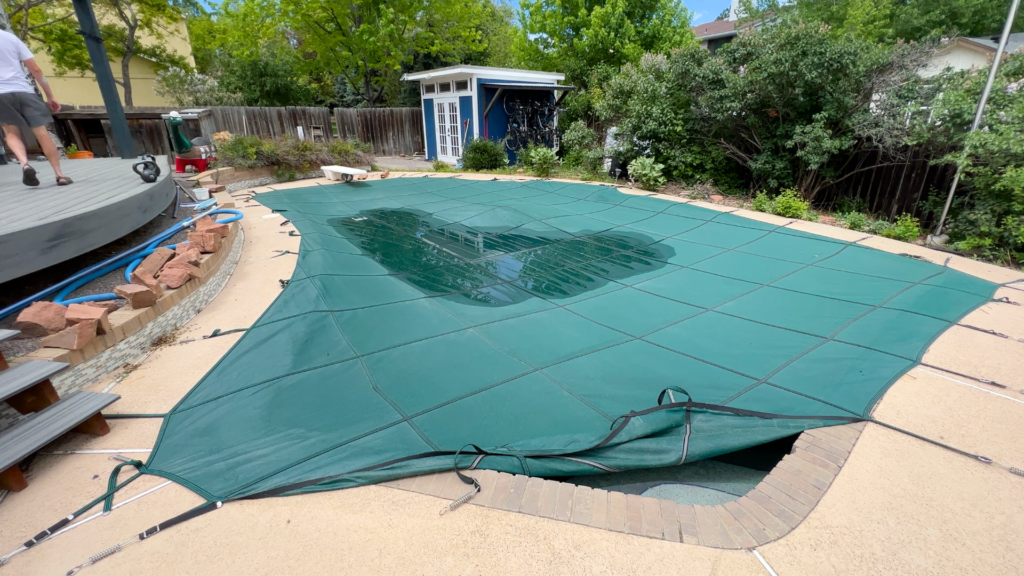
You open a pool for the first time by removing the winter cover, inspecting and reconnecting your equipment, filling the pool to the correct level, starting the pump and filter, balancing the water chemistry, and shocking the pool. The whole process takes one to two days. According to the Pool & Hot Tub Alliance, there are over 10.7 million swimming pools in the United States, and every single one needs a proper opening each season. Whether you are opening a brand-new pool or handling your first spring startup in Jefferson, Georgia, this step-by-step guide walks you through every detail so your pool is clean, safe, and swim-ready.
How To Open a Pool for Beginners
You open a pool for beginners by breaking the process into simple steps and gathering all your supplies before you start. The key is to work in the right order: cover first, equipment second, water third, chemicals last. Rushing through any step can lead to cloudy water, damaged equipment, or an extra week of waiting before you can swim.
According to HomeGuide, the average cost to have a professional open a pool ranges from $300 to $500. If you do it yourself, you can save most of that money by spending a few hours over a weekend. Homeowners in Jefferson, Georgia and surrounding areas like Athens, Braselton, and Gainesville typically open their pools in late March or April once daytime temperatures stay above 70 degrees consistently.
Opening too early invites algae problems. Opening too late means you are fighting green water instead of enjoying it. The sweet spot in North Georgia is mid-April, right before pollen season winds down and temperatures start climbing.
What Chemicals Do I Put in My Pool When I First Open It?
The chemicals you put in your pool when you first open it are a pH adjuster, an alkalinity increaser or decreaser, a calcium hardness increaser, chlorine shock, and algaecide. You may also need stabilizer (cyanuric acid) to protect the chlorine from breaking down in sunlight.
Before adding anything, test your water first. Use test strips or a liquid test kit to check the pH, total alkalinity, calcium hardness, and free chlorine levels. According to Fresh Water Systems, you must always adjust alkalinity before adjusting pH, because alkalinity changes directly affect pH readings.
Here is the order to follow when adding chemicals to your pool for the first time. Adjust total alkalinity to 80 to 120 parts per million (ppm). Then adjust pH to 7.2 to 7.6. Next, adjust calcium hardness to 200 to 400 ppm. After that, add stabilizer if the level is below 30 ppm. Finally, shock the pool and add algaecide. According to the global swimming pool chemical market data published by Reports and Data, the pool chemical industry reached $2.21 billion in 2024, growing at a rate of 4.2% per year, which shows just how essential these products are to pool owners everywhere.
Homeowners across the Jefferson, Georgia area should bring a water sample to a local pool supply store for a professional baseline test at the start of each season. This gives you the most accurate starting point for your pool cleaning and chemical routine.
Should You Shock Your Pool When You First Open It?
Yes, you should shock your pool when you first open it. Shocking raises the chlorine level high enough to kill bacteria, algae spores, and other contaminants that built up over the winter. This process is called breakpoint chlorination, and it is the fastest way to sanitize stagnant water.
According to the CDC, pool chemicals account for roughly 4,500 emergency department visits each year in the United States. Most of these injuries happen because people breathe in fumes when opening chemical containers or mix chemicals incorrectly. Always wear safety goggles and gloves when handling shock, and never mix different chemicals together.
Add the shock in the evening or at dusk so the sun does not burn off the chlorine before it can do its job. Run the pump for at least 24 hours after shocking. Do not swim until the free chlorine level drops back down to 1 to 3 ppm, which usually takes 24 to 48 hours.
Which Pool Chemical Do You Balance First?
The pool chemical you balance first is total alkalinity. Total alkalinity acts as a buffer for your pH level. If the alkalinity is too low or too high, your pH will swing wildly every time you add anything to the water.
According to Fresh Water Systems, the ideal total alkalinity range is 80 to 120 ppm. To raise alkalinity, add baking soda (sodium bicarbonate). For a 10,000-gallon pool, 1.5 pounds of baking soda raises the total alkalinity by about 10 ppm. To lower alkalinity, use muriatic acid or a pH decreaser product.
Once alkalinity is in range, move on to pH. The ideal pH range is 7.2 to 7.6. After pH, adjust calcium hardness. This order matters because each chemical affects the others. Working out of order means you will end up chasing numbers all day instead of enjoying your pool.
What Is the First Thing You Do After You Fill a Pool?
The first thing you do after you fill a pool is turn on the pump and filter system and let the water circulate for 12 to 24 hours before testing or adding chemicals. Circulating the water mixes it thoroughly and gives you an accurate reading when you test the chemistry.
According to Swimmingpool.com, it is recommended to have your water tested professionally when opening your pool and once monthly throughout the season. If your home in Jefferson, Georgia uses well water, you may need a hose filter attachment to prevent metals and minerals from entering the pool during the fill. Iron, copper, and manganese in well water can stain pool surfaces and make chemical balancing harder.
While the water circulates, inspect the pool for any cracks, stains, or damage to the surface. A pool inspection at this stage catches small problems before they become expensive repairs.
How Many Days Does It Take To Open a Pool?
It takes one to two days to open a pool properly. Day one is for removing the cover, cleaning the pool, reconnecting the equipment, filling the water, and starting the pump. Day two is for testing the water, adding chemicals, shocking the pool, and letting the filtration system run for a full 24-hour cycle.
According to Lowe’s, you should let the pump run for 24 hours when you first open the pool, then maintain 8 to 12 hours of daily filtration throughout the swim season. Rushing the process and trying to swim on day one usually leads to cloudy water and irritated skin because the chemicals have not had time to balance.
Homeowners in the Winder, Monroe, and Dacula areas near Jefferson, Georgia who are short on time can schedule a seasonal opening service to get the job done correctly by a professional crew.
Can You Swim in a New Pool Without Chemicals?
No, you cannot safely swim in a new pool without chemicals. Pool water that is not treated with sanitizer becomes a breeding ground for bacteria, viruses, and algae. According to the CDC, untreated recreational water can spread illnesses including E. coli, Cryptosporidium, and Giardia.
Even a freshly filled pool with clean tap water needs sanitizer added right away. Municipal water contains some chlorine, but not nearly enough to keep a pool safe for swimming. The free chlorine level in a pool needs to stay between 1 and 3 ppm at all times. Tap water typically has less than 1 ppm by the time it reaches your house.
Adding chemicals is not optional. It is the single most important part of pool ownership. According to Cristallo Pools, annual chemical costs for a residential pool range from $500 to $3,600 depending on pool size, type, and sanitization system. That breaks down to as little as $40 to $80 per month for a standard chlorine pool.
What Are the Three C’s of Pool Cleaning?
The three C’s of pool cleaning are Circulation, Chemistry, and Cleaning. These three areas cover everything you need to keep your water safe and clear all season long.
Circulation means running your pump and filter long enough each day to turn over all the water in your pool. For most residential pools, 8 to 12 hours of daily run time is the standard. Good circulation prevents dead zones where algae can grow. According to the U.S. Department of Energy, variable-speed pool pumps can cut energy costs by up to 70% compared to single-speed models, making longer run times much more affordable.
Chemistry means testing and balancing your water at least once a week. Check pH, chlorine, and alkalinity regularly. Adjust as needed to keep levels in the ideal range.
Cleaning means skimming the surface, brushing the walls and floor, and vacuuming debris at least once a week. Brushing is especially important because it breaks up biofilm and prevents algae from taking hold. Pool owners across Athens, Hoschton, and Loganville near Jefferson, Georgia who follow the three C’s consistently spend far less on repairs and chemicals over the life of their pool.
What To Put in a Pool When First Opening
What to put in a pool when first opening includes alkalinity increaser or decreaser, pH adjuster, calcium hardness increaser, chlorine shock, stabilizer (cyanuric acid), and algaecide. Many pool supply stores sell all-in-one startup kits that bundle these chemicals together at a discount.
According to HomeAdvisor, chemicals for a fiberglass pool cost about $175 per year, vinyl pools run about $400, and concrete pools can reach $750 annually. The opening dose is usually the largest chemical expense of the entire season because you are treating water that has been sitting for months.
Always add chemicals one at a time with the pump running. Wait at least 15 to 30 minutes between additions. Never pour different chemicals into the same bucket or add them to the same spot in the pool at the same time. According to CDC data, mixing incompatible pool chemicals was a leading factor in 21% of chemical injury cases reported to state health agencies.
Do You Just Pour Shock Directly Into the Pool?
No, you should not just pour shock directly into the pool without preparation. For granular shock (calcium hypochlorite), dissolve it in a bucket of pool water first, then pour the mixture around the edges of the pool with the pump running. Pouring undissolved granules directly onto a vinyl liner can bleach and damage the surface.
For liquid shock (sodium hypochlorite), you can pour it directly into the pool near the return jets so it mixes quickly. Always add shock in the evening to prevent the sun from burning off the chlorine before it works.
According to Swim University, achieving breakpoint chlorination requires adding enough shock to raise the free chlorine level to at least 10 times the combined chlorine level. This completely eliminates chloramines, which are the compounds that cause the strong “pool smell” and eye irritation. If your custom pool uses a saltwater system, the shocking process is slightly different and may involve using the boost function on your salt chlorinator instead of adding granular shock.
Is It Expensive To Run a Pool Pump 24 Hours a Day?
Yes, it is expensive to run a pool pump 24 hours a day if you have a single-speed pump. According to HomeAdvisor, homeowners pay as much as $300 per year in electricity just to operate their pool pump during normal run times of 8 to 12 hours per day. Running a single-speed pump around the clock could double or triple that cost.
A variable-speed pump solves this problem. According to the U.S. Department of Energy, variable-speed pumps use up to 70% less electricity than single-speed models. They run at lower speeds for longer periods, which actually improves filtration and saves money. Many pool owners in Jefferson, Georgia who upgrade to variable-speed pumps see the investment pay for itself within two to three years.
You only need to run the pump 24 hours a day for the first day or two after opening. After that, 8 to 12 hours per day is enough to keep the water clean and circulating properly.
What Is the Annual Cost of Owning a Pool?
The annual cost of owning a pool is $3,000 to $6,000, including maintenance, chemicals, electricity, water, and minor repairs. According to HomeGuide, annual maintenance alone runs $960 to $1,800, with most homeowners spending around $1,400 per year. According to RenoSys and industry data, the total all-in cost of pool ownership, including opening, closing, chemicals, electricity, water, insurance, and occasional repairs, falls in the $3,000 to $6,000 range for most residential pools.
The type of pool matters. Fiberglass pools have the lowest annual maintenance costs because their smooth, non-porous surface resists algae and requires fewer chemicals. Concrete pools are the most expensive to maintain because they need more chemicals to keep the pH balanced and require resurfacing every 10 to 15 years.
According to NerdWallet, pool ownership also increases your homeowners insurance by $17 to $25 per month and may raise property taxes because an inground pool typically adds 5% to 7% to a home’s value. For homeowners in the Jefferson, Georgia area, the investment pays back in lifestyle, family enjoyment, and property value for years to come.
What Is the Most Expensive Part of a Pool?
The most expensive part of a pool is the initial construction and installation. According to RubyHome, the average cost of an inground pool in the United States is $65,000. After that, the most expensive ongoing costs are resurfacing (for concrete pools), equipment replacement, and major repairs.
According to HomeAdvisor, pool repairs average $250 to $1,200 depending on the work needed. Resurfacing a concrete pool can cost $4,000 to $8,000 or more. Replacing a pool pump runs $500 to $1,500, and a new heater can exceed $2,000.
The good news is that regular maintenance dramatically reduces these big-ticket expenses. A pool that gets weekly cleaning, consistent chemical balance, and an annual professional inspection lasts decades longer than one that is neglected. The team at Sandals Luxury Pools builds pools with 8-inch rebar reinforced walls and floors, which means the structure is built to last from day one.
Why Do People Put Baking Soda in Their Swimming Pools?
People put baking soda in their swimming pools to raise the total alkalinity of the water. Baking soda is sodium bicarbonate, and it is one of the safest and cheapest ways to increase alkalinity without dramatically changing the pH at the same time.
According to Fresh Water Systems, adding 1.5 pounds of baking soda to a 10,000-gallon pool raises the total alkalinity by about 10 ppm. This is important because alkalinity acts as a shock absorber for pH. Without proper alkalinity, every rain shower, every swimmer, and every chemical addition sends the pH swinging up and down.
Baking soda is widely available at grocery stores and costs a fraction of what branded pool alkalinity products charge. Just make sure you are only using plain sodium bicarbonate with no added ingredients. Pool owners across Braselton, Oakwood, and Statham near Jefferson, Georgia often keep a large bag of baking soda on hand throughout the swim season for quick alkalinity adjustments.
What Should Every Pool Owner Have?
Every pool owner should have a reliable test kit (strips or liquid), a telescoping pole with a skimmer net and brush attachment, a pool vacuum (manual or robotic), a supply of chlorine tablets or liquid, pH adjuster, alkalinity increaser, shock, and algaecide. A hose filter for filling the pool and a pool cover for the off-season are also important.
Safety equipment is just as critical. According to the CDC, an average of 379 children younger than 15 drown in swimming pools or spas each year in the United States. Every pool should have a fence with a self-closing, self-latching gate, a safety cover, a rescue hook or life ring, and a phone nearby for emergencies.
A good relationship with a trusted pool repair service is also valuable. Equipment breaks down, liners tear, and plaster cracks over time. Having a professional you can call quickly makes all the difference when something goes wrong in the middle of swim season.
What Time of Year Should You Open Your Pool?
The time of year you should open your pool is when daytime temperatures consistently reach 70 degrees or higher. In most of the southeastern United States, that means late March through mid-April. Opening earlier than needed wastes chemicals and energy. Opening too late gives algae a head start that can take weeks to fix.
According to Fresh Water Systems, opening a pool before pollen season winds down can clog filters and cause algae problems. In North Georgia, pollen is typically heaviest in late March and early April. Pool owners in Jefferson, Georgia and surrounding communities like Commerce, Nicholson, and Winterville often find that mid- to late April is the ideal window.
If your pool has a heater, you can open a week or two earlier and warm the water while the air temperatures catch up. This extends your swim season without a significant increase in chemical or maintenance costs.
What Is the 80/20 Rule in Swimming?
The 80/20 rule in swimming means that 80% of pool problems come from 20% of the causes. In practical terms, the vast majority of water quality issues, equipment failures, and costly repairs can be traced back to a small number of maintenance mistakes: poor chemical balance, inadequate filtration, and neglecting regular cleaning.
If you focus on those three things, keeping your chemistry in range, running your pump long enough each day, and brushing and skimming weekly, you will avoid 80% of the headaches that come with pool ownership. According to HomeAdvisor, homeowners who handle basic weekly maintenance themselves save up to $1,000 per year compared to those who rely entirely on professional services.
The remaining 20% of problems, things like equipment failure, plumbing leaks, or surface damage, still require professional help. Regular pool inspections catch these issues early and keep the repair costs low.
Is It Better To Run Your Pool Pump During the Day or at Night?
It is better to run your pool pump during the day because that is when the pool is exposed to sunlight, which breaks down chlorine. Running the pump during peak sun hours keeps the water circulating and filters out debris and contaminants at the time they are most active.
Running the pump at night saves money on electricity in areas with time-of-use billing, but it means your chlorine is unprotected during the hottest part of the day. The best compromise is to run the pump during the morning and afternoon hours and turn it off overnight.
According to the U.S. Department of Energy, a variable-speed pump on a low setting can run for 12 or more hours a day at a fraction of the cost of a single-speed pump running for 8 hours. This gives you better filtration, steadier chemical levels, and lower energy bills, all at the same time.
Pool Opening Chemical Guide: What You Need and When To Add It
| Chemical | Purpose | Ideal Range | When To Add |
|---|---|---|---|
| Baking Soda / Alkalinity Increaser | Raises total alkalinity | 80 – 120 ppm | First, before all other chemicals |
| pH Increaser (Soda Ash) or pH Decreaser (Muriatic Acid) | Adjusts pH level | 7.2 – 7.6 | Second, after alkalinity is balanced |
| Calcium Hardness Increaser | Prevents surface damage from soft water | 200 – 400 ppm | Third, after pH is set |
| Stabilizer (Cyanuric Acid) | Protects chlorine from UV breakdown | 30 – 50 ppm | Fourth, before adding chlorine |
| Chlorine Shock | Kills bacteria, algae, and contaminants | 10x combined chlorine level | Fifth, at dusk with pump running |
| Algaecide | Prevents algae growth | Per label directions | Last, after shock has circulated 24 hours |
Sources: Fresh Water Systems, Swim University, Swimmingpool.com, CDC
What Chemicals Should I Put in My Pool When Closing?
The chemicals you should put in your pool when closing are a winter shock treatment, a winter algaecide, and a phosphate remover. These chemicals keep the water clean and clear throughout the off-season so your spring opening goes smoothly.
According to HomeGuide, winterizing chemical kits typically cost $21 to $61 depending on pool size. Some pool owners also use a slow-dissolving “winter pill” that releases chemicals gradually over several months for about $20.
Before closing, balance the water chemistry one final time. Lower the water level to below the skimmer line, blow out the plumbing lines with an air compressor, and add antifreeze to the pipes. A professional pool closing service handles all of these steps and protects your equipment from freeze damage during North Georgia’s cold winter months.
What Do I Put in My Pool First, Shock or Algaecide?
You put shock in your pool first, before algaecide. Shock destroys algae and bacteria with a powerful dose of chlorine. Algaecide is a preventative that keeps algae from coming back after the shock has done its work.
If you add algaecide at the same time as shock, the high chlorine levels can break down the algaecide before it has a chance to work. According to Swim University, you should wait at least 24 hours after shocking before adding algaecide. This gives the chlorine time to drop back to normal levels so the algaecide can be effective.
Think of shock as the heavy hitter that cleans up the mess, and algaecide as the security guard that keeps the mess from coming back. Both are important for a successful pool opening, but timing matters.
How Much Money Does It Cost To Open a Pool?
The cost to open a pool ranges from $300 to $500 when you hire a professional, according to HomeGuide. If you open the pool yourself, your costs will be limited to chemicals and any replacement parts for worn-out equipment, which typically runs $50 to $150 for the chemicals and startup supplies.
According to HomeAdvisor, professional pool opening services typically include removing and cleaning the cover, reconnecting equipment, filling the pool, testing the water, balancing the chemicals, and running the filtration system. Vacuuming adds about $85 per hour if the pool needs heavy cleaning after the winter.
Homeowners in Lawrenceville, Sugar Hill, and Buford near Jefferson, Georgia who invest in a proper closing service in the fall often find their spring opening is faster, cheaper, and less stressful because the pool was protected correctly over the winter.
Frequently Asked Questions
How Many Days Does It Take To Open a Pool for the First Time?
It takes one to two days to open a pool for the first time. Day one covers the physical setup: removing the cover, reconnecting equipment, filling the pool, and starting the pump. Day two covers the chemical work: testing, balancing, shocking, and running the filter for 24 hours. Homeowners in Jefferson, Georgia and surrounding areas should plan for a full weekend to do the job right.
What Is the First Chemical You Put in a Pool?
The first chemical you put in a pool is an alkalinity adjuster, typically baking soda to raise total alkalinity to the 80 to 120 ppm range. According to Fresh Water Systems, alkalinity must be balanced first because it directly affects pH stability. Getting this step right makes every other chemical addition easier and more predictable.
Can You Swim in a Pool the Same Day You Shock It?
No, you cannot swim in a pool the same day you shock it. You need to wait until the free chlorine level drops below 3 ppm, which usually takes 24 to 48 hours. Swimming in heavily chlorinated water can cause skin irritation, red eyes, and respiratory discomfort. According to the CDC, about two-thirds of pool chemical injuries happen during the summer swim season, so always test before you swim.
Do I Need To Add Chlorine or Shock First in My Pool?
You need to add shock first when opening your pool. Shock is a concentrated dose of chlorine that sanitizes the water after months of sitting idle. Regular chlorine tablets are for ongoing maintenance after the pool is already balanced. After shocking and waiting 24 hours, you can place chlorine tablets in a floater or the skimmer to maintain the daily sanitizer level throughout the season.
What Is the Best Time of Day To Put Algaecide in the Pool?
The best time of day to put algaecide in the pool is in the morning. This allows the product to circulate during the hottest part of the day when algae is most active. Always add algaecide at least 24 hours after shocking. In Jefferson, Georgia, where summer sun and humidity create perfect algae conditions, weekly algaecide treatments help keep the water clear all season.
Do You Pour Algaecide Directly Into a Pool?
Yes, you pour algaecide directly into the pool with the pump running. Pour it slowly around the edges of the pool near the return jets so it distributes evenly. Do not pour it directly into the skimmer. Most algaecides work best when the pH is between 7.2 and 7.6, so make sure your water is balanced before adding it.
How Long Should You Wait To Swim After Opening Your Pool?
You should wait 24 to 48 hours after shocking before swimming in your newly opened pool. Test the water with strips or a liquid kit to confirm the free chlorine level is between 1 and 3 ppm. Also check that pH is in the 7.2 to 7.6 range. According to the CDC, improper chemical levels are a leading cause of recreational water illness, so testing before the first swim of the season is not optional.
Final Thoughts
Opening a pool for the first time feels like a big job, but it is really just a series of small steps done in the right order. Remove the cover. Clean and inspect everything. Fill the pool. Start the pump. Test the water. Balance the chemicals. Shock it. Wait a day. Swim.
According to industry data, the average pool owner spends $960 to $1,800 per year on maintenance, with $300 to $500 going toward the opening alone. The homeowners who spend the least over the long run are the ones who do the opening correctly, stick to a weekly maintenance routine, and catch small problems before they turn into big ones. The U.S. pool construction industry is valued at $16.5 billion in 2025 according to RenoSys, which shows that pools remain one of the most popular home investments in America.
If you live in Jefferson, Georgia or anywhere across North Georgia, the team at Sandals Luxury Pools is here to make pool ownership easy. Whether you need help with your first opening, a seasonal opening service, or you are ready to build the custom pool of your dreams, contact Sandals Luxury Pools today. With over a decade of experience building and servicing luxury pools across Metro Atlanta, your perfect backyard is just a phone call away.
