
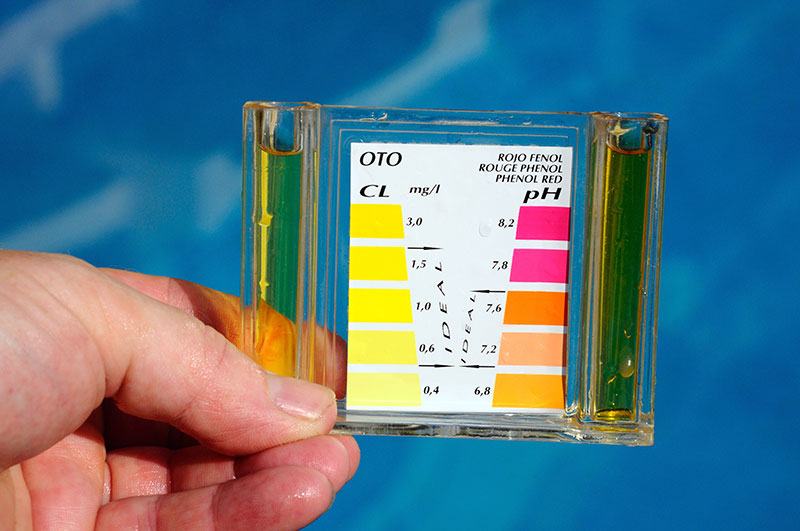
You lower pH in a pool by adding a pH decreaser, either muriatic acid or sodium bisulfate (dry acid), directly to the pool water. The ideal pH range for a swimming pool is 7.2 to 7.6. If your pool’s pH climbs above 7.8, the chlorine becomes less effective, the water turns cloudy, and swimmers may feel skin and eye irritation. This guide walks you step by step through how to lower pool pH safely, what chemicals to use, how much to add, what causes high pH in the first place, and how to keep it from rising again. Whether you have a chlorine pool or a saltwater system, the process is the same for homeowners in Jefferson, Georgia and across North Georgia.
How To Lower pH in a Pool Quickly and Safely
You lower pH in a pool quickly and safely by testing the water first, choosing either muriatic acid or sodium bisulfate, calculating the correct dose based on your pool size, and adding the chemical with the pump running. The whole process takes less than 30 minutes of active work, and the pH should drop to the target range within 4 to 6 hours.
According to the CDC, swimming pool water should be maintained at a pH between 7.2 and 7.8 for swimmer safety and comfort. The ideal target is 7.4 to 7.6, which matches the natural pH of human eyes and mucous membranes. Data from the National Swimming Pool Foundation’s Pool and Spa Operator Handbook shows that at a pH of 7.5, about 50 percent of the chlorine in the water is in its active, germ-killing form (hypochlorous acid). At a pH of 8.0, that drops to just 25 percent.
This matters for pool owners in Jefferson, Braselton, and Hoschton because the warm Georgia summers push pool usage up, which means more sweat, sunscreen, and organic matter entering the water. If the pH is too high, the chlorine cannot do its job. Bacteria and algae get a foothold, the water gets hazy, and you end up spending more time and money on chemicals trying to catch up.
Here is the step-by-step process to lower pH the right way.
Step 1: Test Your Pool Water
Test the pool water using a liquid test kit or digital pH meter for the most accurate reading. Test strips also work but are less precise. You need to know two numbers: the current pH and the total alkalinity (TA). Total alkalinity acts as a buffer for pH, and it affects how easily the pH can be moved. The ideal TA range is 80 to 120 ppm, according to the Pool & Hot Tub Alliance (PHTA).
If both pH and TA are high, a single acid treatment will lower both at the same time. If only the pH is high but TA is in range, you will need a smaller dose and may need to aerate the pool afterward to bring pH up slightly without raising TA.
Step 2: Choose Your pH Decreaser
The two chemicals used to lower pH in pools are muriatic acid (hydrochloric acid) and sodium bisulfate (dry acid). Both are sold at pool supply stores and big box retailers. Muriatic acid is a liquid and is more cost-effective per dose. According to Orenda Technologies, 10.5 pounds of sodium bisulfate is roughly equal to one gallon of muriatic acid in terms of pH-lowering power. Sodium bisulfate is a granular powder and is easier and safer to handle.
Pool owners with plaster surfaces or saltwater systems should use muriatic acid instead of sodium bisulfate. Dry acid leaves behind sulfates in the water, and according to Orenda Technologies, one pound of sodium bisulfate adds 9.6 ppm of sulfate per 10,000 gallons. Over time, excess sulfates can damage plaster finishes and corrode salt chlorine generator parts.
Step 3: Calculate the Correct Dose
The right dose depends on your pool’s volume and how far the pH needs to drop. A general rule from Swim University is that about one quart of muriatic acid (31.45 percent strength) per 15,000 gallons will lower the pH from above 7.8 back into the ideal range. For a 10,000-gallon pool, roughly 20 ounces of muriatic acid will lower total alkalinity by about 10 ppm.
Always start with a smaller dose than you think you need. You can always add more acid, but you cannot take it back once it is in the water. Never add more than half a gallon of muriatic acid to the pool at one time. If more is needed, wait at least 4 to 6 hours, retest, and add another dose.
Homeowners across Athens and Gainesville, Georgia who are not sure about dosing should bring a water sample to a local pool supply store or schedule a professional pool cleaning service for accurate testing and treatment.
Step 4: Add the Chemical to the Pool
There are two common methods for adding muriatic acid to a pool. The first is to turn on the pump and slowly pour the acid near the return jets so the water circulates it throughout the pool. The second is to turn off the pump, pour the acid into the deep end, let it settle, and then turn the pump back on after a few minutes. Both methods work.
For sodium bisulfate, sprinkle the granules evenly across the water surface with the pump running. Some pool owners dissolve it in a bucket of water first for more even distribution.
Safety is critical. Always wear chemical-resistant gloves and eye protection when handling pool acid. Never mix muriatic acid with other chemicals. Always add acid to water, never water to acid. Pour from low to the water surface to avoid splashback. Work upwind so fumes blow away from you.
Step 5: Wait, Retest, and Adjust
Let the pump run for at least 4 to 6 hours after adding acid. Then retest the pH and TA. If the pH is still above 7.6, add another small dose of acid and wait again. According to Atlas Scientific, you should not wait more than 24 hours between retesting. The goal is a pH of 7.4 to 7.6 with a total alkalinity of 80 to 120 ppm.
If you overshoot and the pH drops below 7.2, you can raise it by aerating the pool. Turn the return jets upward, run water features, or run the pump on high speed. Aeration raises pH without changing TA, which is the safest correction method. Soda ash (sodium carbonate) can also raise pH, but it will raise TA at the same time.
What Causes Pool pH To Stay High?
Pool pH stays high because of high total alkalinity, the type of sanitizer being used, water features that aerate the pool, the local water supply, and environmental factors like algae growth. Fixing the root cause is just as important as adding acid, because without it, the pH will keep climbing back up.
High total alkalinity is the number one reason pH stays high. TA acts as a buffer, and when it is above 120 ppm, it resists pH changes and keeps pushing the pH upward. Lowering the TA with acid is the first step in getting pH under control.
Saltwater chlorine generators are another major cause of rising pH. The electrolysis process that creates chlorine in a saltwater pool produces sodium hydroxide, which is highly alkaline. According to Pool Chemical Calculator, salt water systems are one of the biggest reasons for pH drift in residential pools. Pool owners in Jefferson, Georgia who have saltwater pools may find themselves adding acid on a weekly basis to keep pH in range.
Liquid chlorine (sodium hypochlorite) also raises pH every time it is added. Calcium hypochlorite pool shock has a very high pH and can spike both pH and calcium hardness after treatment. Even the tap water used to fill or top off a pool can have a pH above 7.5, depending on the local water supply.
Water features like waterfalls, fountains, bubblers, and deck jets all aerate the water. Aeration releases carbon dioxide from the pool, and since CO2 is acidic, losing it causes the pH to rise. Pools with multiple water features in Braselton and Hoschton will typically see faster pH drift than pools without them.
What Happens if Pool pH Is Too High?
If pool pH is too high, chlorine becomes much less effective, the water turns cloudy, calcium scale forms on surfaces and equipment, and swimmers experience skin and eye irritation. A pH above 7.8 creates real problems that get worse the longer they go unaddressed.
Data from the National Swimming Pool Foundation shows that at a pH of 7.0, about 80 percent of chlorine is in its active form. At a pH of 7.5, that drops to about 50 percent. At a pH of 8.0, only 25 percent of the chlorine is active. At 8.5, it falls to less than 10 percent. This means a pool with a pH of 8.0 needs nearly twice as much chlorine to achieve the same sanitation as a pool at 7.5.
The CDC confirms that pH between 7.2 and 7.8 is needed for both swimmer comfort and effective disinfection. A swimmer’s body has a natural pH in that same range, so water outside of it causes burning eyes, dry skin, and irritated nasal passages.
Scale buildup is another serious consequence. When pH and calcium hardness are both high, calcium carbonate deposits form on pool walls, tile lines, inside heaters, and on salt cells. These deposits restrict water flow, reduce heater efficiency, and shorten equipment life. Homeowners near Winder and Loganville who notice white crusty buildup along the waterline should test pH immediately and consider scheduling a pool repair visit if equipment has been affected.
Does Shocking a Pool Raise pH?
Yes, shocking a pool can raise pH depending on the type of shock used. Calcium hypochlorite (cal-hypo) shock has a very high pH of around 11.8 to 12.0. Adding it to the pool will spike the pH and also raise calcium hardness. Liquid chlorine (sodium hypochlorite) has a pH of about 13 and will raise pH as well.
Dichlor shock (sodium dichloro-s-triazinetrione) has a nearly neutral pH around 6.5 to 7.0, so it has little effect on pH. However, dichlor adds cyanuric acid (stabilizer) to the water, which can build up over time.
The Pool & Hot Tub Alliance recommends never shocking a pool if the pH or total alkalinity is outside the normal range. Always test and adjust pH before shocking. If you shock first and the pH is already high, the chlorine will be far less effective, and the pH will climb even higher. This wastes chemical and time.
Families across Jackson County who shock their pools regularly during peak summer should always check pH before and after each shock treatment. A quick test and a small dose of acid before shocking can make the treatment far more effective.
What Lowers pH Quickly?
Muriatic acid lowers pH quickly. It is a liquid acid that begins working immediately upon contact with pool water and can bring pH into range within 4 to 6 hours in most residential pools. Sodium bisulfate (dry acid) also lowers pH but works slightly slower because the granules need to dissolve first.
Between the two, muriatic acid is faster, cheaper per dose, and more widely available. According to Swim University, a quart of muriatic acid will bring pH from above 7.8 back into the ideal range in a 15,000-gallon pool. Muriatic acid is available at most hardware stores for about $8 to $12 per gallon, making it one of the most affordable pool chemicals.
Sodium bisulfate is the safer option for homeowners who are uncomfortable handling liquid acid. It comes as a powder, does not produce fumes, and is easier to store. However, it costs more per dose and adds sulfates to the water. For pools with plaster finishes or custom pool surfaces, muriatic acid is generally the better long-term choice.
Can Baking Soda Lower pH in a Pool?
No, baking soda does not lower pH in a pool. Baking soda (sodium bicarbonate) raises total alkalinity and has a very slight upward effect on pH. It is used to increase TA, not decrease it. If your pH is too high, adding baking soda will make the problem worse.
Baking soda has a pH of about 8.3. When added to pool water, it buffers the water and raises alkalinity, which in turn supports a higher pH. According to the Trouble Free Pool community, adding 200 ounces of baking soda to a 34,000-gallon pool raises TA by about 26 ppm while only nudging pH up by about 0.05. So while baking soda does not dramatically raise pH, it certainly does not lower it.
If you need to lower pH, use muriatic acid or sodium bisulfate. If you need to raise alkalinity without raising pH much, baking soda is the right tool. These two situations are different, and mixing them up is one of the most common mistakes pool owners make.
What Lowers pH but Not Alkalinity?
There is no common pool chemical that lowers pH without also lowering alkalinity. Both muriatic acid and sodium bisulfate lower pH and TA at the same time because they neutralize the bicarbonate alkalinity in the water. However, CO2 injection lowers pH with a much smaller effect on alkalinity compared to other acids.
CO2 injection is common in commercial pools with automatic chemical controllers. According to Orenda Technologies, 1 pound of CO2 is equal to about 32.8 fluid ounces of muriatic acid in terms of pH reduction, but CO2 does not reduce alkalinity the same way. For residential pools in Jefferson, Georgia, CO2 systems are rare and expensive, so most homeowners use acid and then manage TA separately if needed.
If the acid drops both your pH and TA below the desired levels, add baking soda to raise TA back up. According to pool dosing data, about 1.4 pounds of baking soda per 10,000 gallons raises TA by 10 ppm with almost no change to pH. Then, if pH is still a little low, aerate the pool to bring pH up naturally without raising TA further.
How To Lower pH Without Muriatic Acid
You lower pH without muriatic acid by using sodium bisulfate (dry acid), which is the most common alternative. Dry acid comes in granular powder form, does not produce harsh fumes, and is easier to handle for homeowners who prefer a safer option.
According to Orenda Technologies, 10.5 pounds of sodium bisulfate is roughly equal to one gallon of muriatic acid. Dry acid is sold at every pool supply store and is often labeled as “pH Minus” or “pH Decreaser.” Sprinkle it across the pool surface with the pump running, wait 4 hours, and retest.
Some pool owners ask about natural alternatives like vinegar or lemon juice. These acidic liquids do have low pH (around 2.0 to 3.0), but they are not recommended for pool use. They introduce large amounts of organic material into the water, which feeds bacteria, creates chlorine demand, and can turn the water cloudy. They are also nearly impossible to dose accurately. Stick with muriatic acid or sodium bisulfate for reliable results.
Homeowners across Athens and Commerce, Georgia who want help choosing the right product for their pool type can schedule a professional pool inspection to get a full water analysis and personalized recommendation.
How Long Does It Take for Muriatic Acid To Lower pH?
Muriatic acid begins lowering pH immediately upon contact with pool water. Most residential pools will see the full effect within 4 to 6 hours of adding acid with the pump running. In some cases, it may take up to 24 hours for the chemistry to fully stabilize, especially if total alkalinity is very high.
According to Atlas Scientific, you should retest the water after 6 hours but not wait longer than 24 hours to check. If pH is still above 7.6 after the first dose, add another small amount of acid and continue the cycle. The key is patience, as adding too much acid at once can crash the pH below 7.0 and create acidic conditions that corrode pool equipment and irritate swimmers.
For a 10,000-gallon pool with a pH of 7.8, approximately 12 to 16 ounces of muriatic acid (31.45 percent strength) should bring the pH back into the 7.4 to 7.6 range. For a pool at 8.0 or above, you may need 20 to 25 ounces, but add it in stages rather than all at once.
Does Cloudy Pool Water Mean High pH?
Yes, cloudy pool water often means high pH, but it is not the only cause. When pH rises above 7.8, calcium in the water can come out of solution and form tiny particles that make the water look hazy or milky. High pH also reduces chlorine effectiveness, which allows bacteria and algae to start growing and further cloud the water.
According to the Pool Water Treatment Advisory Group (PWTAG), high pH causes lime precipitation, which is the white haze that forms when calcium carbonate is no longer dissolved in the water. The higher the pH and the higher the calcium hardness, the worse the cloudiness gets.
Other causes of cloudy water include low chlorine, poor filtration, high total dissolved solids, and algae. But high pH is the most common culprit and should be tested first. If the pH is above 7.8, lower it with acid and see if the water clears within 24 to 48 hours. If not, check the filter and chlorine levels next.
Pool owners in Dacula and Buford who notice persistent cloudiness should have the water professionally tested. Scheduling routine pool cleaning can prevent cloudy water from becoming a recurring issue.
Should I Shock My Pool if pH Is High?
No, you should not shock your pool if pH is high. Lower the pH first, then shock. The Pool & Hot Tub Alliance advises never shocking a pool when pH or total alkalinity is outside the acceptable range. If you shock at a high pH, the chlorine will not work effectively, and you will waste both the shock and your time.
As referenced earlier, chlorine effectiveness drops dramatically as pH rises. At a pH of 8.0, only about 25 percent of the chlorine in the water is in its active form. Shocking at that level means three-quarters of the shock treatment is doing almost nothing.
The correct order is: test the water, adjust pH to 7.2 to 7.6, wait for the pH to stabilize, and then shock the pool. This gives the chlorine the best chance to kill bacteria, algae, and other contaminants. After shocking, retest the pH again since cal-hypo and liquid chlorine shock will push the pH back up.
Will Pool pH Lower on Its Own?
Pool pH will sometimes lower on its own, but not reliably or quickly enough to fix a high pH problem. Rainwater, which has a pH of about 5.6, can lower pool pH slightly during heavy storms. Chlorine tablets (trichlor) have a very low pH of about 2.8 and gradually lower pH over time as they dissolve. Heavy bather loads also introduce organic acids from sweat and body oils that can push pH down slightly.
However, waiting for pH to drop on its own is not a good strategy. High pH causes real damage to your chlorine levels, water clarity, and equipment every day it stays elevated. If the pH is above 7.8, add acid. Do not wait for nature to fix it.
In North Georgia, the long swim season from April through October means pools see heavy use for months. That constant use combined with the warm temperatures makes regular pH testing and adjustment a must. Homeowners who stay on top of weekly testing save money on chemicals and avoid costly equipment repairs down the road.
What Type of Chlorine Lowers pH?
Trichlor chlorine tablets lower pH over time because they have a very low pH of about 2.8 to 3.0. Trichlor is the most common form of chlorine used in residential pools, and its acidic nature gradually drives pH and alkalinity down as the tablets dissolve in the skimmer or a floating chlorinator.
However, trichlor also adds cyanuric acid (stabilizer) to the water. According to data from Pool Water Treatment Advisory Group, if cyanuric acid levels get too high (above 100 ppm), chlorine becomes much less effective regardless of pH. So while trichlor can help control pH drift, it creates its own set of problems if not monitored.
Liquid chlorine (sodium hypochlorite) and cal-hypo shock both raise pH when added to the pool. Dichlor shock is close to neutral. No form of chlorine should be relied on as the primary method of pH adjustment. Always use muriatic acid or sodium bisulfate for deliberate pH control.
Do I Adjust pH or Shock First?
You adjust pH first, then shock. Shocking a pool with high pH is a waste of chemical because the chlorine cannot work properly in alkaline water. Lower the pH to between 7.2 and 7.6, let it circulate and stabilize, and then add the shock treatment.
According to Pulliam Pools, the recommended order for chemical adjustments is calcium hardness first, then chlorine, then cyanuric acid, then alkalinity, and then pH. This order prevents each chemical from interfering with the others. Since shock affects pH, adjusting pH last (right before shocking) gives you the best starting point for effective disinfection.
After shocking, wait at least 8 hours and retest. If the pH has risen above 7.6 again (which is common after cal-hypo or liquid chlorine shock), add a small dose of acid to bring it back down.
Does Sunlight Lower pH in a Pool?
No, sunlight does not directly lower pH in a pool. Sunlight breaks down chlorine through a process called photodegradation, but this does not change pH. If anything, sunlight can indirectly raise pH by promoting algae growth, which consumes CO2 from the water. Since CO2 is acidic, losing it causes the pH to go up.
According to Atlas Scientific, algae growth is one of the causes of rising pH in pools. Algae consume carbon dioxide during photosynthesis. Less CO2 in the water means less carbonic acid, which means a higher pH. This is why pools that turn green from algae often also test with a high pH.
Cyanuric acid (pool stabilizer) protects chlorine from UV breakdown. According to data from Pulliam Pools, without stabilizer in the water, sunlight can destroy up to 95 percent of chlorine within the first hour. Maintaining cyanuric acid between 30 and 50 ppm for outdoor pools is critical, especially during the bright Georgia summers.
Will pH in a Pool Rise Naturally?
Yes, pH in a pool rises naturally over time due to aeration, outgassing of carbon dioxide, use of liquid chlorine, saltwater chlorine generation, high alkalinity, and bather load. In most outdoor residential pools, pH trends upward more often than downward.
Aeration is the biggest factor. Every time water is agitated, whether by swimmers, waterfalls, bubblers, return jets, or wind, CO2 escapes from the water. Since CO2 is acidic, losing it raises the pH. Pools with waterfalls, spillover spas, and deck jets will see pH rise faster than a still pool with no features.
Salt chlorine generators also push pH upward during the electrolysis process. According to Pool Chemical Calculator, saltwater pools are one of the biggest drivers of pH drift. Pool owners in Jefferson and surrounding areas who have saltwater systems should plan to test and adjust pH at least once per week during the swim season.
How Long Does a pH Decreaser Take To Work?
A pH decreaser takes 4 to 6 hours to fully circulate and stabilize in a residential swimming pool. Muriatic acid begins working on contact, while sodium bisulfate (dry acid) needs a few minutes to dissolve before it starts lowering pH. Full circulation with the pump running is required for even distribution.
Always retest after the waiting period. If the pH has not dropped enough, add another small dose and wait another 4 to 6 hours. Never add a second dose without testing first. Overcorrecting pH below 7.0 can damage pool plaster, corrode metal fixtures, and make the water uncomfortable for swimmers.
Families with spillover spas connected to their main pool should note that pH changes in the pool will also affect the spa water. Test both bodies of water separately after treatment to confirm that pH levels are balanced across the entire system.
How Much Muriatic Acid To Lower pH in a 10,000-Gallon Pool?
For a 10,000-gallon pool, roughly 12 to 16 fluid ounces of muriatic acid (31.45 percent strength) will lower the pH by about 0.2 to 0.3 units. According to a general dosing guideline from Clearwater Pool Systems, about one quart of muriatic acid per 10,000 gallons will lower the pH by 0.1. Always start with less than the calculated amount and add more after retesting.
| Pool Size (Gallons) | Current pH | Approximate Muriatic Acid Dose | Expected pH Drop |
|---|---|---|---|
| 10,000 | 7.8 | 12 to 16 fl oz | 0.2 to 0.3 |
| 10,000 | 8.0 | 20 to 25 fl oz | 0.3 to 0.5 |
| 15,000 | 7.8 | 18 to 24 fl oz | 0.2 to 0.3 |
| 15,000 | 8.0 | 30 to 38 fl oz | 0.3 to 0.5 |
| 20,000 | 7.8 | 24 to 32 fl oz | 0.2 to 0.3 |
| 20,000 | 8.0 | 40 to 50 fl oz | 0.3 to 0.5 |
Sources: Swim University, Clearwater Pool Systems, Orenda Technologies, Atlas Scientific. Doses are approximate for 31.45% muriatic acid. Always start with a lower dose and retest before adding more. Results vary based on total alkalinity, water temperature, and pool chemistry.
Never add more than half a gallon (64 fluid ounces) of muriatic acid to a residential pool at one time. If more is needed, wait at least 4 hours, retest, and add in stages. This protects the pool surface, equipment, and swimmers.
How To Bring pH Down in a Pool Naturally
You can bring pH down in a pool naturally by allowing rainwater to enter the pool (rain has a pH of about 5.6), by reducing aeration from water features, or by partially draining and refilling with lower-pH tap water. However, natural methods are slow, imprecise, and unreliable compared to using muriatic acid or sodium bisulfate.
Some pool owners ask about using vinegar or lemon juice. While both are acidic (pH 2.0 to 3.0), they introduce organic material that feeds bacteria and increases chlorine demand. They are also nearly impossible to dose accurately. According to Pool Advisor, using household acids is not recommended because the cost and side effects outweigh the small amount of pH reduction they provide.
For pool owners in North Georgia who prefer minimal chemical use, the most practical “natural” approach is to reduce the amount of aeration in the pool. Turning off waterfalls, sheer descents, and other features when the pool is not in use slows down CO2 loss and helps prevent pH from rising as fast. This works best as a prevention strategy rather than a fix for pH that is already too high.
Is It Better To Run Your Pool Pump During the Day or at Night?
It is better to run your pool pump during the day when the sun is strongest and the pool is being used. The pump circulates water through the filter, distributes chemicals evenly, and helps maintain consistent chlorine and pH levels. Sunlight breaks down chlorine fastest during the afternoon hours, so running the pump during the day keeps the water properly filtered and sanitized during the time of greatest chlorine demand.
According to pool industry data, a pool pump should run for at least 8 hours per day to properly circulate and filter all the water. A variable-speed pump can run longer at a lower speed, which saves energy while improving water quality.
Running the pump at night can save money on electricity during off-peak hours, but it means the pool is unfiltered and uncirculated during the hottest part of the day. For most pool owners in Jefferson and Braselton, running the pump during daylight hours from 8 AM to 4 PM or 10 AM to 6 PM gives the best balance of water quality and energy use.
After adding pH decreaser, the pump should run continuously for at least 4 to 6 hours to distribute the chemical evenly. Plan acid additions for the morning so the pump can circulate the treatment throughout the day. A well-maintained pool with balanced chemistry starts with a solid pump schedule. Homeowners who want to optimize their setup can schedule a pool inspection to review equipment and circulation.
How Long To Wait After Putting a pH Decreaser in the Pool?
Wait at least 4 to 6 hours after putting a pH decreaser in the pool before retesting the water. Keep the pump running during this time so the chemical mixes thoroughly. Do not swim in the pool until the pH has been retested and confirmed to be within the safe range of 7.2 to 7.8.
If you used muriatic acid, avoid swimming for at least 30 minutes after the pump has fully distributed the acid. If a large dose was added, wait longer and test before allowing anyone in. According to Atlas Scientific, the water should be retested after 6 hours but no later than 24 hours after treatment.
For safety, always store pool chemicals in a cool, dry place away from children, pets, and direct sunlight. Muriatic acid and sodium bisulfate should never be stored near each other or near any other pool chemicals. Follow the storage instructions on every product label.
Frequently Asked Questions
How Often Should I Test Pool pH in Jefferson, Georgia?
You should test pool pH at least once per week during the swim season in Jefferson, Georgia, and twice per week during the hottest summer months when pool use is heavy. The warm North Georgia climate, combined with high bather loads and water features, causes pH to drift faster than in cooler regions. According to ARM & HAMMER, pool pH should ideally be tested daily, but weekly testing is the minimum for residential pools.
Why Does My Pool pH Keep Going Up in Braselton?
Your pool pH keeps going up in Braselton because of aeration from water features, saltwater chlorine generation, high total alkalinity, or the use of liquid chlorine. All of these factors push pH upward. Pools with waterfalls, deck jets, and spillover spas lose CO2 faster, which causes pH to climb. Test TA and bring it into the 80 to 120 ppm range to slow pH drift.
Can Sandals Luxury Pools Help With Pool Water Chemistry?
Yes. Sandals Luxury Pools provides pool cleaning, maintenance, and inspection services for homeowners in Jefferson, Georgia and the surrounding communities including Braselton, Hoschton, Athens, Gainesville, and Winder. Their team can test your water, adjust pH and other chemical levels, and set up a maintenance schedule to keep your pool balanced all season.
Is Muriatic Acid Safe To Use in My Pool?
Yes, muriatic acid is safe to use in your pool when handled correctly. It is the most commonly used acid in the swimming pool industry. Always wear gloves and eye protection, work in a well-ventilated area, and never add more than half a gallon at a time. Diluting it in a bucket of water at a 10:1 ratio before adding it to the pool makes it even safer to handle.
What Should I Do if My pH Drops Too Low After Adding Acid?
If your pH drops too low (below 7.2) after adding acid, aerate the pool by turning the return jets upward, running water features, and running the pump on high speed. Aeration raises pH naturally without increasing total alkalinity. According to Swim University, this is the safest method to bring pH back up after overcorrecting. If aeration alone is not enough, add a small amount of soda ash (sodium carbonate) to raise pH.
How Do Pool Water Features Affect pH in North Georgia Pools?
Pool water features like waterfalls, bubblers, deck jets, and sheer descents all increase aeration, which releases CO2 from the water and raises pH. According to Orenda Technologies, pools with vanishing edges and spa spillovers see faster pH rise than pools without these features. Homeowners in Jefferson and Braselton who have water features should test pH more frequently and keep muriatic acid on hand for regular adjustments.
Should I Hire a Professional To Balance My Pool Chemistry?
Yes, hiring a professional is a smart choice if you are not comfortable handling pool chemicals or if your pH keeps drifting despite regular treatment. A professional can run a full water analysis, identify the root cause of pH problems, and set up a maintenance plan. Scheduling routine pool cleaning services with an experienced team saves time and prevents expensive chemical and equipment issues.
Final Thoughts
Lowering pH in a pool is one of the most important parts of pool ownership. High pH reduces chlorine effectiveness, causes cloudy water, creates scale buildup, and makes swimming uncomfortable. The fix is straightforward: test the water, add muriatic acid or sodium bisulfate, wait for it to circulate, and retest. The key is staying consistent with weekly testing and catching pH drift early before it turns into a bigger problem. For homeowners in Jefferson, Georgia and across North Georgia, the warm climate and long swim season make pH management a year-round priority.
If you need help getting your pool water balanced or want a professional to handle it for you, Sandals Luxury Pools is ready to help. From custom pool builds to ongoing maintenance and pool cleaning services, the team serves Jefferson, Braselton, Hoschton, Athens, Gainesville, and all surrounding North Georgia communities. Contact Sandals Luxury Pools today to schedule a consultation or set up a maintenance plan so you can spend more time swimming and less time worrying about water chemistry.
