
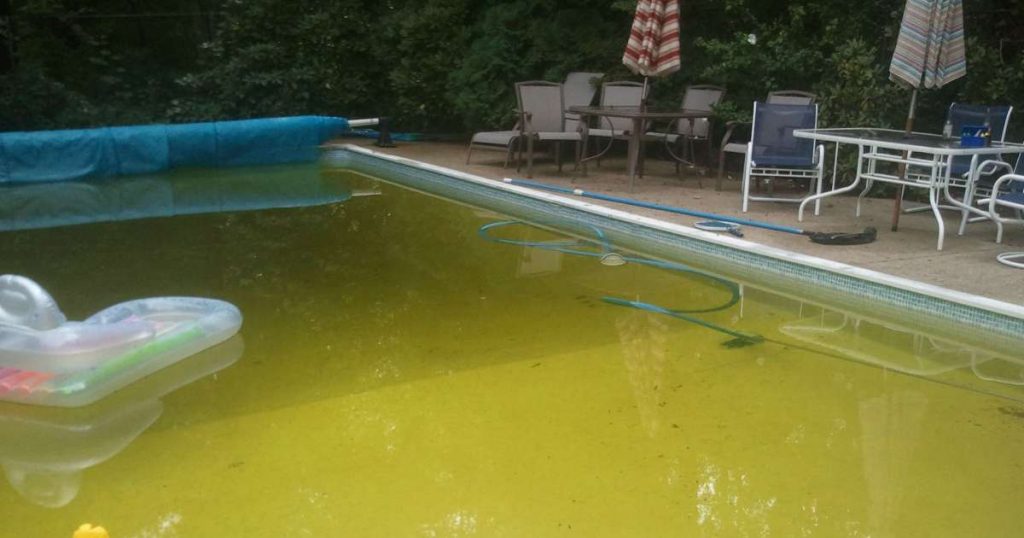
To get rid of yellow algae in a pool, you need to brush all pool surfaces, triple-shock the water with calcium hypochlorite, apply a mustard algae-specific algaecide, clean every piece of pool equipment that touched the water, and run your filter for at least 24 hours straight. Yellow algae, also called mustard algae, is chlorine-resistant, so regular chlorine levels will not kill it. You need a much more aggressive approach than what works for common green algae. This guide walks pool owners in Jefferson, Georgia and surrounding areas through every step of identifying, removing, and preventing yellow algae from coming back.
What Is Yellow Algae in a Pool and Why Is It So Hard to Kill?
Yellow algae in a pool is a chlorine-resistant form of algae that appears as yellowish, mustard-colored dust on pool walls, floors, and shady areas. It is also called mustard algae. According to AQUA Magazine (a Pool & Hot Tub Alliance publication), the most common species of mustard algae is Eustigmatos vischeri, and its physical structure makes it highly resistant to normal chlorine levels of 1 to 4 ppm.
What makes yellow algae so hard to kill is its built-in defense system. According to BioGuard, mustard algae contains compounds that act as a shield against the oxidation effects of sanitizers. This protective coating lets it survive even in pools with adequate chlorine. That is why a normal dose of pool shock barely slows it down.
Yellow algae is also sneaky. It looks a lot like sand, dirt, or pollen sitting on the bottom or sides of your pool. Many pool owners in Jefferson, Georgia brush it away and think the problem is solved. But unlike dirt, yellow algae comes back within a day or two because the spores are still alive in the water, in the filter, and on pool equipment.
According to United Chemical, mustard algae is the most common form of swimming pool algae across the southern United States, from Florida to California. Pool owners in warm, humid climates like North Georgia are especially likely to encounter it during the transition from spring into summer. Proper pool cleaning on a regular schedule is the best first defense against an outbreak.
Is It Okay to Swim in a Pool With Yellow Algae?
No, it is not okay to swim in a pool with yellow algae. While mustard algae itself is not directly toxic to humans in small amounts, it can harbor dangerous bacteria. According to Leslie’s Pool Supplies, an overgrowth of mustard algae can shelter harmful bacteria such as E. coli, which can cause serious illness.
There are other safety risks too. According to Teserra Outdoors, algae makes pool surfaces extremely slippery, which increases the risk of falls that can cause bruises, cuts, and broken bones. Algae also clouds the water, which makes it harder to see swimmers who may be struggling. The CDC notes that cloudy pool water is a recognized safety hazard because it limits visibility and slows rescue response times.
According to AQUA Magazine, while the presence of algae in a properly sanitized pool (1 to 4 ppm free chlorine) does not necessarily indicate a direct health risk, algae that multiplies rapidly and reduces visibility creates a serious safety concern. When that happens, the pool should be closed until the water clears.
The bottom line is simple. If you see yellow algae in your pool, stay out until it is fully treated. Pool owners in Athens, Braselton, and other communities near Jefferson, Georgia should treat any algae sighting as urgent and take action the same day.
Why Does My Pool Have Yellow Algae?
Your pool has yellow algae because of low chlorine levels, poor circulation, inadequate filtration, or cross-contamination from pool toys, swimsuits, or equipment. These factors allow mustard algae spores to take root and grow on your pool surfaces.
According to the Pool Training Academy, mustard algae is primarily a problem in the southern region of the United States, where warm temperatures and long swim seasons create ideal growing conditions. The warm, humid summers in Jefferson, Georgia and the surrounding North Georgia area make local pools especially vulnerable.
Low chlorine is the number one cause. According to Doc Deans Pools, the two constants behind every yellow algae outbreak are a lack of chlorine and a lack of filtration. If your chlorine drops below effective levels for even a short time, mustard algae spores can begin to colonize. Pool leaks make this problem worse because they drain away stabilizer (cyanuric acid) that helps chlorine work in heat and sunlight.
Cross-contamination is another major factor. According to Clear Comfort, mustard algae can hitch a ride on swimsuits, pool toys, cleaning tools, and even pets. If any of these items were in a lake, another pool, or natural body of water, they can introduce algae spores into your pool without you realizing it.
Poor water circulation creates dead zones where algae love to hide. Corners, steps, behind ladders, and shady areas are prime spots. Making sure your pump runs at least 8 to 12 hours per day and that your return jets are aimed to eliminate dead spots goes a long way in prevention. A pool inspection can identify circulation problems before they lead to an algae outbreak.
How Do I Get Rid of Yellow Algae in My Pool Fast?
You get rid of yellow algae in your pool fast by following a multi-step treatment process that includes cleaning equipment, brushing, shocking at triple or quadruple strength, applying a mustard-specific algaecide, and running your filter nonstop for 24 to 48 hours. Here is the step-by-step process.
Step 1: Remove and clean everything. Take all toys, floats, pool brushes, vacuum hoses, and accessories out of the pool. Wash soft items like swimsuits in hot water with detergent. Scrub hard items with a diluted bleach solution. According to the Pool Training Academy, contaminated equipment is one of the most common ways mustard algae gets reintroduced after treatment.
Step 2: Clean or backwash your filter. Mustard algae can live inside your filter. If you have a cartridge filter, remove and clean the cartridges thoroughly. If you have a sand or DE filter, backwash it completely. According to Clear Comfort, a thorough filter cleaning before treatment is necessary so that the filter can do its job during the shock process.
Step 3: Brush every surface. Use a stiff-bristle pool brush to scrub all walls, floors, steps, corners, and shady spots. For plaster and concrete pools, a stainless steel brush works best. For vinyl or fiberglass pools, use a nylon brush to avoid damage. Brushing breaks up the algae’s protective layer and exposes it to the chemicals. Pool owners in Jefferson, Georgia who have concrete pools built by custom pool builders should use a brush rated for their specific surface type.
Step 4: Balance your water chemistry. Before shocking, test and adjust your water. According to Clear Comfort, pH should be between 7.2 and 7.4, alkalinity between 60 and 120 ppm, and cyanuric acid between 20 and 40 ppm. Properly balanced water lets the shock treatment work at full power.
Step 5: Triple-shock your pool. Yellow algae requires three to four times the normal shock dose. According to ASP Pool Co., you should use three times the recommended amount of calcium hypochlorite shock for yellow algae. According to Leslie’s Pool Supplies, you should shock three separate times with 12-hour gaps between each application for severe cases. Run your pump 24 hours a day during the entire treatment.
Step 6: Add a mustard algae-specific algaecide. After shocking, apply an algaecide made specifically for yellow or mustard algae. Products like Yellow Treat from United Chemical or Yellowtrine from Applied Biochemists are designed to penetrate the protective coating that regular chlorine cannot break through. Follow the dosage directions on the label exactly.
Step 7: Vacuum and clean up. Once the algae is dead, vacuum the pool to waste if possible. This sends the dead algae out of the pool instead of back through the filter. Backwash or clean your filter again after vacuuming. Test your water chemistry and rebalance as needed.
Does Shock Kill Mustard Algae?
Yes, shock does kill mustard algae, but only at very high doses. A normal dose of pool shock will not work. According to AQUA Magazine, mustard algae is highly resistant to standard chlorine levels of 1 to 4 ppm. Shock treatments of more than 5 ppm, combined with a metal-based or specialized algaecide, are generally the most effective approach.
According to Swimming Pool Help Forum data, fighting yellow algae with chlorine alone requires lowering the pH to 7.2 and then raising the free chlorine to a shock level of 60% of the cyanuric acid level, maintained for at least 2 to 3 days. For most pool owners, this is a much higher and longer dose than what is used for green algae.
The practical approach is to combine shock with a mustard algae-specific product. According to Leslie’s Pool Supplies, the recommended treatment involves using a product like Yellow Out first, then following it with three rounds of calcium hypochlorite shock spaced 12 hours apart. This one-two punch breaks through the algae’s protective coating and then kills it with concentrated chlorine.
Always shock your pool after sunset. Sunlight breaks down chlorine rapidly, so shocking at night gives the chemicals more time to work. Keep the pump running continuously for 24 to 48 hours after treatment.
What Is the Best Algaecide for Yellow Algae?
The best algaecide for yellow algae is one specifically formulated to target mustard algae. General-purpose algaecides are not strong enough. According to United Chemical, their Yellow Treat product is specifically engineered to penetrate the protective coating of mustard algae and allow the sanitizer to destroy it from the inside out.
Other effective options include Yellowtrine from Applied Biochemists, which uses a specialized formula to attack mustard algae at the cellular level, and Banish from BioGuard, which kills all types of algae including mustard algae within 24 hours. According to Doc Deans Pools, polyquat algaecides and copper-based algaecides are also effective for severe yellow algae cases.
The key is to always use the algaecide after shocking, not before. The shock treatment weakens the algae, and the algaecide finishes it off. According to Pristine Pool Academy, you should wait until chlorine levels begin to come back down before adding the algaecide, then continue running the pump for another 24 hours.
Pool owners across Jefferson, Hoschton, and Winder, Georgia who deal with recurring yellow algae should keep a mustard-specific algaecide on hand at all times so they can act fast at the first sign of a breakout.
Can Too Much Chlorine Make a Pool Yellow?
No, too much chlorine does not make a pool yellow. Excess chlorine can cause cloudy or whitish water, bleach swimsuits, and irritate skin and eyes, but it does not turn the pool yellow. If your pool has a yellow tint or yellow spots on the walls and floor, the cause is almost certainly yellow algae, pollen, or mineral staining from metals like iron in the water.
To tell the difference between pollen and yellow algae, brush the yellow substance off the wall. If it disperses into a cloud and then settles back within a day or two, it is yellow algae. If it floats away and does not come back, it is likely pollen. According to Amenity Pool Services, yellow algae feels more like dust or fine sand, while pollen floats on the surface and can be skimmed off.
If the yellow discoloration is a stain that will not brush off at all, it could be iron or other mineral deposits. A professional pool inspection in Jefferson, Georgia can help determine whether the issue is algae, minerals, or something else entirely.
Why Is Mustard Algae Coming Back in My Pool?
Mustard algae keeps coming back in your pool because spores are surviving the treatment process. The most common reasons for reinfection are not cleaning pool equipment and accessories, not thoroughly brushing all surfaces before shocking, not using a high enough shock dose, and not cleaning the filter during treatment.
According to Pristine Pool Academy, mustard algae is the “pool version of glitter” because it clings to everything and reappears just when you think it is gone. The spores attach to swimsuits, pool toys, brushes, vacuum hoses, and even the inside of your filter. If any of these items are not sanitized during treatment, they will reintroduce the algae to the pool within days.
According to Swimming Pool Help Forum, maintaining a minimum free chlorine level of 15% of the cyanuric acid level is required to keep yellow algae from returning. This is double the maintenance level needed to prevent green algae (7.5% of cyanuric acid). Pool owners who let their chlorine slip below this threshold, even briefly, are inviting mustard algae back.
Circulation issues also play a role. If your pool has dead zones where water does not flow well, algae can hide and regrow even after a full treatment. Adjusting your return jets and running the pump for at least 8 to 12 hours daily helps eliminate these problem areas. For persistent issues, a pool repair service can evaluate your circulation system and make adjustments.
How to Get Rid of Algae in a Pool in 24 Hours?
To get rid of algae in a pool in 24 hours, you need to act aggressively with brushing, a heavy shock treatment, and continuous filtration. This is more realistic for green algae than for yellow or black algae, which often require 48 to 72 hours or more of treatment.
For green algae, brush the entire pool, double-shock with calcium hypochlorite, add an algaecide, and run the filter 24 hours straight. According to AQUA Magazine, even severe green algae outbreaks with zero visibility can often be controlled with a single shock treatment of 5 to 10 ppm free chlorine.
For yellow algae, 24 hours is usually not enough. Because it is chlorine-resistant, you need multiple rounds of shock treatment spaced 12 hours apart, plus a specialized algaecide. Realistically, plan for 48 to 72 hours to fully clear a mustard algae outbreak. Cutting corners on the timeline almost always leads to the algae coming back.
According to Orenda Technologies, green algae can replicate as fast as every 3 to 6 hours under ideal conditions. That means every hour you wait to start treatment, the problem gets significantly worse. The moment you spot any algae, begin treatment immediately.
Should You Vacuum Algae Out of a Pool?
Yes, you should vacuum algae out of a pool after you have brushed and shocked the water. Vacuuming removes the dead algae that settles on the bottom after treatment. If possible, vacuum to waste rather than through the filter. This sends the dead algae directly out of the pool instead of trapping it in your filter where it can cause clogs.
According to the Pool Training Academy, when treating mustard algae specifically, you should set your filtration valve to waste and vacuum the loosened algae directly out of the pool. This is important because mustard algae spores can survive inside the filter and recontaminate the water if they are not fully removed.
After vacuuming, clean or backwash your filter again. Then check your water level, since vacuuming to waste removes pool water. Top off the pool and retest your chemical levels. Homeowners in the Jefferson, Georgia area who are not sure how to vacuum to waste or do not have the right valve setup can call a professional pool cleaning team to handle the job correctly.
What Color Is Pool Algae When It Dies?
Pool algae turns grayish-white or cloudy when it dies. Living green algae is bright green, and living yellow algae has that distinctive mustard color. Once the algae is killed by shock treatment, the dead cells lose their pigment and turn a dull gray or white color. The water may also become very cloudy as the dead algae particles float freely before settling.
This cloudy, grayish water after shocking is actually a good sign. It means the treatment is working. The dead algae needs to be removed by filtration and vacuuming. Run your filter continuously and backwash or clean it as needed until the water clears. Adding a water clarifier after the chlorine levels drop back to normal can help speed up the clearing process.
If the water stays green or yellow after 24 to 48 hours of treatment, the algae is likely still alive. Brush the pool again, retest the chlorine levels, and add another round of shock. For yellow algae, persistence is key because it can survive treatments that would kill green algae easily.
What Kills Algae in a Pool Besides Chlorine?
Besides chlorine, algaecides, copper-based treatments, and sodium bromide-based products kill algae in a pool. Each works differently and targets different types of algae.
Copper-based algaecides are effective against all types of pool algae, including mustard algae. According to Doc Deans Pools, copper algaecides like SeaKlear and products like Pool Rx are among the top choices for treating yellow algae. However, copper must be used carefully because too much can stain pool surfaces blue-green.
Sodium bromide products, like Yellow Out and Yellow Treat, work specifically against mustard algae. According to Swimming Pool Help Forum, these products convert chlorine into bromine in the water, which is more effective at penetrating mustard algae’s protective coating. They are not technically “non-chlorine” solutions since they work alongside chlorine, but they dramatically boost its effectiveness against resistant algae.
Polyquat algaecides (polyquaternary ammonium compounds) are a non-metallic option that prevents algae from growing. These are better for prevention than for killing an active outbreak. According to multiple pool chemical manufacturers, polyquat algaecides do not foam or stain, making them safe for weekly maintenance use.
Proper filtration is also critical. According to Medallion Energy, DE filters can trap particles as small as 2 to 5 microns, which includes most algae cells. Even the best chemicals need a working filter to fully clear algae from the water. Homeowners in Gainesville, Winder, and across North Georgia should have their filtration system checked if algae keeps returning despite proper chemical treatment.
Will Dawn Dish Soap Remove Algae From a Pool?
No, Dawn dish soap will not remove algae from a pool. Dish soap is not designed for pool use, and adding it to your pool creates foam, throws off your water chemistry, and can introduce phosphates that actually feed algae growth. There is no shortcut here. Killing algae requires proper pool chemicals like chlorine shock and algaecide.
According to WaterTex Pools, while dish soap cuts through grease on dishes, it is not effective against the biological structure of algae. Using it in your pool can cause excessive foaming and may take days to fully clear out of the system. Some dish soaps contain phosphates, which are nutrients that algae feed on, potentially making the problem worse.
Stick to pool-grade chemicals. A calcium hypochlorite shock, a mustard algae-specific algaecide, and proper brushing and filtration are the only reliable methods for removing yellow algae. If the DIY approach is not working, professional pool cleaning in Jefferson, Georgia can get the job done right.
Pool Algae Type Comparison Table
| Feature | Green Algae | Yellow (Mustard) Algae | Black Algae |
|---|---|---|---|
| Appearance | Bright green, slimy | Yellow/mustard dust | Dark blue-green spots |
| Location | Floats in water, coats walls | Clings to shady walls/floors | Embeds in plaster/concrete |
| Chlorine Resistance | Low | High | Very high |
| Shock Dose Needed | 2x normal | 3x to 4x normal | 4x normal |
| Spreads Via Equipment | Rarely | Yes, very easily | Rarely |
| Difficulty to Remove | Easy | Moderate to hard | Very hard |
| Treatment Time | 24 hours | 48–72 hours | 5–7 days |
| Special Algaecide Needed | No (general works) | Yes (mustard-specific) | Yes (black algae-specific) |
Sources: AQUA Magazine / Pool & Hot Tub Alliance, United Chemical, ASP Pool Co., Orenda Technologies, Leslie’s Pool Supplies
Can Mustard Algae Survive Winter?
Yes, mustard algae can survive winter. The spores go dormant in cold temperatures but do not die. Once the water warms back up in spring, the algae can begin growing again if conditions are right. This is why many pool owners in North Georgia see yellow algae pop up every year as temperatures rise in April and May.
According to Doc Deans Pools, the transition from winter into spring is the most common time for yellow algae to appear. Pools that were not properly closed or had low chlorine levels going into winter are especially vulnerable. Making sure your pool is treated and balanced before closing is one of the most effective ways to prevent a spring algae outbreak.
A thorough pool closing service includes balancing water chemistry, shocking the pool, adding a winter algaecide, and cleaning the filter. This gives your pool the best chance of staying algae-free through the off-season.
What Happens if You Put Too Much Algaecide in Your Pool?
If you put too much algaecide in your pool, it can cause foaming on the water surface, skin and eye irritation for swimmers, and staining of pool surfaces (especially with copper-based products). Excess algaecide can also interfere with your chlorine’s ability to sanitize the water effectively.
Copper-based algaecides are the biggest concern for overdosing. Too much copper in the water can turn blonde hair green and leave blue-green stains on pool walls and floors. According to United Chemical, these stains can be difficult and expensive to remove once they set in.
If you accidentally add too much algaecide, the best course of action is to run the filter continuously, avoid swimming until levels normalize, and dilute the concentration by adding fresh water to the pool. The excess algaecide will break down over time with continued filtration and sunlight exposure. Always follow the dosage directions on the product label exactly.
Is Yellow Algae Resistant to Chlorine?
Yes, yellow algae is resistant to chlorine. This is the defining characteristic that separates mustard algae from common green algae. According to AQUA Magazine, mustard algae’s physical structure makes it highly resistant to normal chlorine levels of 1 to 4 ppm. Standard pool maintenance chlorine will not kill it.
According to BioGuard, mustard algae contains compounds that serve as a defense mechanism against oxidation by sanitizers. This means the algae can survive in chlorinated water that would easily kill green algae. That is why treatment requires shock levels three to four times higher than normal, combined with a specialty algaecide designed to break through the protective coating.
According to Swimming Pool Help Forum, to maintain a pool free of yellow algae, you need to keep free chlorine at a minimum of 15% of your cyanuric acid level. For a pool with 50 ppm cyanuric acid, that means maintaining at least 7.5 ppm free chlorine at all times. This is a significantly higher maintenance level than what most pool owners are used to.
Frequently Asked Questions
Will a Shocking Pool Get Rid of Yellow Algae?
Yes, shocking your pool will get rid of yellow algae, but you must use three to four times the normal shock dose. A single standard shock treatment is not strong enough because mustard algae resists regular chlorine levels. For best results, combine the heavy shock treatment with a mustard algae-specific algaecide and run your pump for at least 24 hours straight. Pool owners in Jefferson, Georgia should plan for 48 to 72 hours of treatment time.
What Color Is Toxic Algae in a Pool?
Toxic algae, also called cyanobacteria or blue-green algae, appears as dark blue-green or black spots in a pool. According to the CDC, cyanobacteria is the most common cause of harmful algal blooms in fresh water and can produce toxins that cause skin rashes, gastrointestinal illness, and respiratory problems. The yellow algae found in swimming pools is not the same organism as toxic cyanobacteria, but any algae in a pool should be treated as a serious water quality issue.
How Long Does It Take to Get Rid of Mustard Algae in a Jefferson, Georgia Pool?
It takes 48 to 72 hours to get rid of mustard algae in a Jefferson, Georgia pool when following the full treatment protocol. This includes multiple rounds of shock treatment spaced 12 hours apart, continuous filtration, and follow-up with algaecide. Severe cases may take up to a week. The warm climate in North Georgia makes it especially important to act quickly and follow every step to prevent the algae from coming back.
Will Clorox Algaecide Kill Mustard Algae?
Clorox Pool & Spa algaecide can help treat mustard algae when used as part of a complete treatment plan. According to Clorox Pool & Spa, their products are formulated to kill and prevent green, mustard, and black algae. However, for best results with stubborn yellow algae, many pool professionals recommend using a specialty mustard algae product like Yellow Treat or Yellowtrine alongside heavy shock treatment.
How Do Pool Owners in North Georgia Prevent Yellow Algae?
Pool owners in North Georgia prevent yellow algae by maintaining free chlorine levels above 4 ppm, running the pump 8 to 12 hours daily, brushing pool surfaces weekly, and rinsing all pool toys and swimsuits before use. According to the Pool Training Academy, testing water chemistry at least 2 to 3 times per week during hot weather is critical. Scheduling regular professional pool cleaning takes the guesswork out of prevention.
What Kills Algae in a Pool Without Chemicals?
There is no reliable way to kill algae in a pool without chemicals. UV sanitation systems and ozone generators can help reduce algae growth as a supplement to chlorine, but they cannot eliminate an active algae outbreak on their own. Brushing and vacuuming remove visible algae but do not kill the spores. The only proven method for killing yellow algae is aggressive chlorine shock combined with a specialty algaecide. Prevention through proper maintenance is always easier than treatment.
When Should Jefferson, Georgia Pool Owners Open Their Pools to Avoid Algae?
Jefferson, Georgia pool owners should open their pools in early to mid-March before water temperatures consistently rise above 60 degrees Fahrenheit. Once water warms past this point, algae growth accelerates. Opening early and getting the chemicals balanced before it gets hot gives you a head start. A seasonal pool opening service includes testing, balancing, and treating the water so your pool is clear and algae-free from day one.
Final Thoughts
Yellow algae is one of the most frustrating problems a pool owner can face. Its chlorine resistance, ability to spread through equipment, and habit of coming back again and again make it a genuine challenge. But it is completely beatable with the right approach. Brush thoroughly, shock aggressively, use a mustard-specific algaecide, clean everything that touched the water, and run your filter nonstop during treatment. Then stay on top of your chlorine levels and weekly maintenance to keep it from returning.
For pool owners in Jefferson, Georgia and surrounding communities like Athens, Braselton, Gainesville, and Hoschton, Sandals Luxury Pools is here to help with every aspect of pool care. Whether you need help treating a stubborn algae problem, want a professional to handle your weekly maintenance, or are ready to build the pool of your dreams, the team has you covered. Contact Sandals Luxury Pools for pool cleaning services today and get back to enjoying crystal-clear water all season long.
