
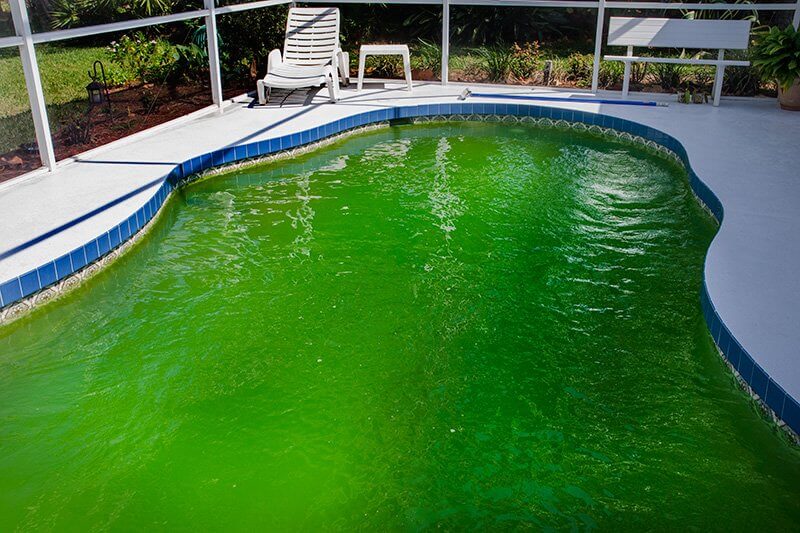
Yes, you can clear up a green swimming pool fast by shocking the water with a high dose of chlorine, brushing the walls and floor, running the filter around the clock, and balancing your water chemistry. A light green pool can start to clear within 24 hours, while a dark green pool usually takes 3 to 5 days with proper treatment. This guide walks you through every step, answers the most common questions pool owners in Jefferson, Georgia and North Georgia ask, and helps you decide if professional help is the right call.
Why Is My Pool Green and What Causes It?
A pool turns green because algae are growing in the water. Algae are tiny plant-like organisms that thrive in warm, sunny conditions with low chlorine levels. According to the CDC, free available chlorine at a concentration of at least 1 part per million (ppm) can kill most waterborne pathogens within minutes. When chlorine drops below that level, algae take hold fast.
Pool owners in Jefferson, Georgia know this challenge well. Georgia’s humid subtropical climate pushes pool water temperatures above 80°F for months at a time. According to WeatherSpark climate data, Atlanta sees average daily highs around 88°F in July. That heat, combined with North Georgia’s intense afternoon thunderstorms, creates the perfect environment for algae to bloom.
The three main causes of green pool water are low chlorine levels, poor filtration, and unbalanced pH. A pH above 7.8 makes chlorine less effective, even if the levels look fine on a test strip. High cyanuric acid (CYA) levels above 50 ppm can also slow chlorine’s ability to kill algae. According to the Pool and Hot Tub Alliance, roughly 8% of U.S. households own a swimming pool, and algae problems affect approximately 15% of those pools each year in humid climates like North Georgia.
Pools with natural waterfalls or features with crevices can develop algae faster because water does not circulate as well in those areas. Homeowners across Braselton, Hoschton, and Commerce often see green water after spring rains wash pollen, red clay, and organic debris into their pools.
How to Clean a Green Pool in 24 Hours?
Cleaning a green pool in 24 hours is possible only if the water is light green, meaning the algae bloom just started. A light green pool has visible algae, but you can still see the bottom. You will need to shock the pool aggressively, brush every surface, and run the filter non-stop for 24 hours to see results that fast.
For a truly dark green or black-green pool, 24 hours is not enough. According to pool industry professionals, the average green algae bloom takes between 4 to 5 days to fully clear. Dark green water may require repeated shock treatments over several days.
Here is the step-by-step process for a light green pool you want to clear in 24 hours. First, remove large debris from the water using a leaf net. Second, brush the entire pool, including walls, stairs, and corners, using a steel bristle brush for concrete pools or a nylon bristle brush for fiberglass and vinyl pools. Third, test the water for pH, alkalinity, and chlorine. Fourth, adjust pH to between 7.2 and 7.6 so the shock treatment works at full strength. Fifth, add a heavy dose of calcium hypochlorite shock in the evening. Sixth, run the pump and filter for 24 hours straight.
Homeowners in Jefferson and the surrounding Jackson County area should keep in mind that Georgia’s warm nights mean algae can recover quickly if the shock dose is too light. Double or triple your normal shock amount for a green pool.
Does Shocking a Pool Get Rid of Algae?
Yes, shocking a pool does get rid of algae. Pool shock raises the free chlorine level high enough to kill algae cells and bacteria in the water. According to the CDC’s Model Aquatic Health Code, chlorine is the primary barrier to pathogen transmission in treated recreational water. For a green pool, you need to raise free chlorine to 20 to 30 ppm, far above the normal 1 to 3 ppm range.
The type of shock matters. Calcium hypochlorite (cal-hypo) with at least 65% to 70% available chlorine is the best choice for killing algae. Non-chlorine shock will not kill algae. According to pool chemistry experts, one pound of cal-hypo shock treats about 10,000 gallons of pool water at a normal maintenance dose. For a green pool, you need two to four times that amount.
Shocking should always be done in the evening or at night. Sunlight breaks down chlorine quickly. In North Georgia, where summer days bring strong UV exposure, shocking during the day can waste up to half your chlorine before it gets a chance to kill the algae. The pool cleaning team in Jefferson typically recommends evening treatments for this reason.
How Many Pounds of Shock Does It Take to Clear a Green Pool?
The number of pounds of shock it takes to clear a green pool depends on the pool size and how dark the water is. For a standard 20,000-gallon pool, you need 6 to 8 pounds of cal-hypo shock (65% available chlorine) if the water is light green. For dark green water, you need up to 10 pounds per 20,000 gallons. For a black-green swamp, you may need 12 or more pounds.
Here is a general guide based on pool volume and algae severity.
| Pool Size (Gallons) | Light Green | Medium Green | Dark Green |
|---|---|---|---|
| 10,000 | 3-4 lbs | 4-5 lbs | 5-6 lbs |
| 15,000 | 4-5 lbs | 5-7 lbs | 7-8 lbs |
| 20,000 | 6-8 lbs | 8-10 lbs | 10-12 lbs |
| 30,000 | 8-10 lbs | 10-14 lbs | 14-18 lbs |
Sources: Pool chemistry dosage data from pool maintenance industry standards. Cal-hypo shock at 65% available chlorine. Amounts may vary by product concentration.
If you shock the pool and the water does not change color overnight, add another round the next evening. You cannot over-shock a pool. The more chlorine you add, the faster the algae dies. Many homeowners in Braselton and Hoschton underestimate how much shock a severely green pool needs, which delays the clearing process.
How Long Does It Take for a Green Pool to Clear?
A green pool typically takes 3 to 5 days to fully clear after proper shock treatment and continuous filtration. A light green pool can show improvement within 12 to 24 hours. A dark green pool may take up to a week, sometimes longer if the filter is undersized or clogged.
According to pool service professionals, DE (diatomaceous earth) filters clear green pools about 50% faster than sand filters because they trap finer particles. Cartridge filters fall somewhere in between. No matter which filter type you have, run it 24 hours a day and backwash three to four times per day until the water clears. According to HomeGuide, the annual cost of pool ownership ranges from $3,000 to $6,000, and a large share of that goes toward chemical treatments and filtration to prevent exactly this type of problem.
After shocking, the pool typically goes from green to cloudy white or light blue. That is a good sign. It means the algae are dead. A pool clarifier can help clump tiny particles together so the filter can remove them faster. Pools throughout Jackson County, from Jefferson to Commerce and Arcade, deal with this process every spring and summer.
What Kills Algae in a Pool Quickly?
Chlorine kills algae in a pool quickly. Specifically, a large dose of calcium hypochlorite shock is the fastest and most effective way to kill pool algae. Liquid chlorine (sodium hypochlorite) also works and dissolves faster in water, though it is heavier to carry and pour.
Algaecide can help as a follow-up treatment, but it should not be your primary weapon against a green pool. Apply algaecide 24 hours after shocking to prevent regrowth. According to the CDC’s recreational water health data, 208 outbreaks associated with treated recreational water were reported during 2015 to 2019, underscoring how important proper pool sanitation is for health and safety.
For homeowners in North Georgia, where pool water temperatures routinely exceed 85°F during summer, algae reproduction goes into overdrive. Research from Algae Research Supply shows that algae cells can double their population every 3 to 6 hours when water temperatures are above 85°F. That is why aggressive chlorine treatment, not slow-acting alternatives, is the only reliable way to kill an active bloom fast.
What Kills Green Algae in Water Naturally?
There is no reliable natural method to kill green algae in pool water fast. Sunlight actually helps algae grow because algae use photosynthesis to reproduce. While some pool owners ask about vinegar, baking soda, or salt, none of these kill algae effectively in a swimming pool setting.
Baking soda raises alkalinity and pH but does not kill algae. Salt generates chlorine through a salt chlorinator, but a salt system alone cannot produce enough chlorine to fight an active bloom. You still need to shock the pool separately.
The only proven, fast way to kill green algae is chlorine. If you prefer lower-chemical maintenance going forward, talk to a professional about custom pool designs that incorporate better circulation, UV sanitation systems, or saltwater chlorine generators. But for an active green pool, chlorine shock is non-negotiable.
Will Baking Soda Fix a Green Pool?
No, baking soda will not fix a green pool. Baking soda raises alkalinity and pH levels in pool water, but it cannot kill algae. A green pool needs chlorine to kill the algae, not a pH adjustment.
Baking soda can be helpful as part of the process. If your pH is low (below 7.2) and your alkalinity is low (below 80 ppm), adding baking soda to raise those levels before shocking will help the chlorine work more effectively. But on its own, baking soda does nothing to clear green water.
Homeowners across Jefferson, Braselton, and Hoschton should test their water before adding anything. A simple test kit will tell you exactly where your pH, alkalinity, chlorine, and CYA levels stand. According to the Jobera Pool Industry Report, the United States has 10.7 million swimming pools, and chemical misuse is one of the top causes of water quality problems. Adding the wrong product wastes money and time.
Can Too Much Shock Turn Your Pool Green?
No, too much chlorine shock will not turn your pool green. In fact, more chlorine helps kill green algae faster. However, if your pool water has a high concentration of metals like copper, a large dose of shock can oxidize those metals and cause a green tint in the water. This green looks different from algae. The water appears clear but has a greenish or teal hue.
If you shock the pool and the water turns green but stays clear (not cloudy), the issue is metals, not algae. You will need a metal sequestrant product to bind the metals and remove them through the filter. A professional pool inspection can identify whether the green is from algae, metals, or both.
How Long After You Shock a Pool Will It Clear Up?
After you shock a pool, it starts to clear up within 8 to 24 hours if the algae bloom is light. For a moderate green pool, expect noticeable improvement within 24 to 48 hours. A severe algae bloom may take 3 to 7 days of repeated treatments, filtering, and backwashing to fully clear.
Never swim in a pool that was just shocked. The free chlorine level must drop below 3 to 5 ppm before the water is safe for swimming. Test the water before letting anyone in. According to a CDC report on pool chemical injuries, an estimated 13,508 emergency department visits occurred during 2015 to 2017 in the U.S. because of pool chemical injuries, with over 36% of those patients being children under 18. Handle pool chemicals carefully and follow label directions.
Should You Vacuum Algae Out of a Pool?
Yes, you should vacuum algae out of a pool, but only after shocking. Vacuuming live algae before treatment just spreads it around. Once the algae is dead and settles to the bottom as a grayish-white residue, vacuum it out using the “waste” setting on your multiport valve. This sends the dead algae out of the pool instead of back through the filter.
If your pool has too much debris on the bottom, do not use an automatic cleaner. Use a manual vacuum head and pole for better control. If you cannot see the bottom of the pool at all, do not vacuum yet. Wait for the shock and filter to clear the water enough so you can see where you are vacuuming.
Families in Arcade, Commerce, and the Jefferson area often find heavy debris after Georgia’s spring storms. Vacuuming to waste removes the mess faster but does lower your water level. You will need to add fresh water afterward and rebalance your chemicals.
What Chlorine Level Kills Algae?
A free chlorine level of 10 to 30 ppm kills algae in a swimming pool. The exact level depends on how bad the bloom is. For a light green pool, 10 to 15 ppm is usually enough. For a dark green pool, aim for 20 to 30 ppm. Normal daily chlorine levels of 1 to 3 ppm are not strong enough to kill an active algae bloom.
pH plays a critical role here. Chlorine works best when pH is between 7.2 and 7.6. A pH above 7.8 drastically reduces chlorine’s killing power. According to the CDC’s Model Aquatic Health Code, pools should maintain a minimum of 1 ppm free chlorine during normal operation. During a shock treatment, you are temporarily raising that level far above normal to overwhelm and kill the algae.
CYA (stabilizer) also affects how hard your chlorine works. The Pool and Hot Tub Alliance recommends keeping CYA between 30 and 50 ppm. Higher CYA levels require proportionally higher chlorine levels to maintain the same disinfection power. Pools in Jefferson, Georgia that use chlorine tablets year-round sometimes see CYA climb above 100 ppm, making shock treatments less effective. Partial drain and refill is the only way to lower CYA.
Can You Swim in a Pool With Algae on the Bottom?
No, you should not swim in a pool with algae on the bottom. Algae itself can cause skin rashes and eye irritation. More importantly, algae harbors bacteria and other pathogens that can cause illness. According to CDC surveillance data, Cryptosporidium alone caused 76 outbreaks in treated recreational water during 2015 to 2019, resulting in 2,492 cases of illness.
Even if the algae looks minor, it signals that the chlorine level is too low to keep the water safe. Wait until the water is fully clear, the algae is gone, and the free chlorine level has returned to a safe range of 1 to 5 ppm before swimming.
What Color Is Pool Algae When It Dies?
Pool algae turns gray or white when it dies. After a successful shock treatment, the green color fades and the water often turns cloudy white or light gray. This cloudy water is dead algae particles suspended in the pool. The filter will remove these particles over the next 24 to 48 hours with continuous operation.
If the water stays green after 24 hours of running the filter, the algae is not dead yet. Add more shock and keep filtering. Backwash the filter frequently because dead algae clogs it fast. For DE filters, add fresh DE powder to the skimmer after each backwash for the fastest results.
How to Make Pool Water Crystal Clear?
To make pool water crystal clear, you need proper chemical balance, good filtration, and regular cleaning. Start by testing your water and adjusting pH to 7.2 to 7.6, alkalinity to 80 to 120 ppm, and free chlorine to 1 to 3 ppm. Run your filter at least 8 to 12 hours per day during swim season.
A pool clarifier or flocculant can speed up the process after treating a green pool. Clarifiers bind tiny particles together so the filter can trap them. Flocculants drop particles to the bottom for vacuuming. According to the U.S. pool maintenance industry, homeowners spend between $3,000 and $6,000 per year on pool upkeep, and a big part of that goes toward maintaining water clarity.
Regular brushing prevents algae from getting a foothold. Brush your pool walls, steps, and corners at least once a week. Pools with textured surfaces, like concrete or pebble finishes common in North Georgia custom builds, need more frequent brushing because algae clings to rough surfaces. Weekly pool cleaning services keep water clear without the guesswork.
Can I Use Baking Soda in My Pool Instead of Chlorine?
No, you cannot use baking soda instead of chlorine. Baking soda is sodium bicarbonate. It raises alkalinity and slightly raises pH, but it has zero ability to sanitize water or kill bacteria, viruses, or algae. Chlorine is the only widely available chemical that does all three of those jobs in a swimming pool.
Baking soda is a useful pool chemical, just not as a replacement for chlorine. If your alkalinity is low, baking soda is an affordable way to bring it up. But it should always be used alongside chlorine, never instead of it.
What Is the Cheapest Way to Chlorinate Your Pool?
The cheapest way to chlorinate a pool is by using liquid chlorine (sodium hypochlorite), which is sold at most home improvement and pool supply stores. It costs less per gallon than specialty pool shock products, works quickly, and does not add CYA (stabilizer) to your water.
Chlorine tablets are convenient for daily maintenance because they dissolve slowly in a floater or chlorinator, but they add CYA to the water over time. According to pool chemistry data, excess CYA above 50 ppm reduces chlorine effectiveness and is difficult to lower without draining water. Liquid chlorine avoids that problem entirely.
For pool owners in Jefferson and surrounding areas who want long-term savings with less hands-on work, a saltwater chlorine generator is another option. It converts salt into chlorine automatically. The upfront cost is higher, but the ongoing chemical cost is lower. The team at Sandals Luxury Pools can help homeowners choose the right sanitation system for their pool and budget.
How to Keep a Pool Clear Without Chemicals?
Keeping a pool completely clear without any chemicals is not realistic for a traditional swimming pool. All pools need some form of sanitizer to prevent bacteria and algae growth. However, you can reduce the amount of chemicals needed by improving circulation, adding a UV or ozone sanitation system, using a quality pool cover, and keeping the pool clean through regular brushing and skimming.
According to Renosys industry data, there are 10.7 million swimming pools in the United States, and virtually all of them use some form of chemical treatment. Natural swimming pools exist, but they use biological filtration zones with aquatic plants instead of chemicals. They are a separate category and not a standard backyard pool.
If your goal is to lower chemical use, regular pool maintenance is the most effective approach. A clean pool with good circulation uses less chlorine than a neglected one. Running the pump 8 to 12 hours per day, brushing weekly, and keeping the filter clean go a long way.
Why Is My Pool Still Green After 24 Hours?
Your pool is still green after 24 hours because the shock treatment was not strong enough, the pH was too high for the chlorine to work properly, or the filter is not running long enough. If the free chlorine dropped back to zero within a few hours, the algae consumed it before it could do its job. That means you need more shock.
High CYA levels are another common cause. If CYA is above 80 to 100 ppm, even a heavy shock treatment will struggle to kill the algae. In that case, you need to drain a portion of the pool water and refill with fresh water to lower the CYA before shocking again.
Also check your filter. A dirty or malfunctioning filter cannot remove dead algae from the water. If the filter pressure is high, backwash it. If the filter media is old or damaged, it may need to be replaced. Pool owners around Hoschton and Braselton should get a pool equipment checkup if the pool will not clear after repeated treatments.
What Chemical Keeps Pool Water Clear?
Chlorine is the chemical that keeps pool water clear. Free available chlorine kills bacteria, viruses, and algae, which are the primary causes of cloudy and green water. According to the CDC, at concentrations of at least 1 ppm, free chlorine kills most pool pathogens within minutes.
Maintaining balanced pH (7.2 to 7.6), proper alkalinity (80 to 120 ppm), and appropriate CYA levels (30 to 50 ppm) all support chlorine’s effectiveness. A pool with balanced chemistry stays clear with far less effort than one that is constantly out of range.
Will Shocking a Pool Clear the Water?
Yes, shocking a pool will clear the water if the cloudiness or green color is caused by algae, bacteria, or organic contamination. Shock raises chlorine to a level that destroys these contaminants. The dead particles then get filtered out, leaving the water clear.
Shocking will not clear water that is cloudy from high calcium hardness, metals, or excessive CYA. Those issues require different treatments. Test your water first to identify the cause before assuming shock is the answer. Many pool supply stores in the Jefferson, Georgia area offer free water testing.
What Home Remedy Can I Use to Clear My Pool?
There is no reliable home remedy to clear a green pool. Bleach (unscented household bleach) is the closest thing to a home remedy that actually works because it contains sodium hypochlorite, the same active ingredient in liquid pool chlorine. You can use bleach in a pinch, but you will need a lot of it, roughly 3 to 4 gallons per 10,000 gallons of pool water for a shock treatment.
Do not use vinegar, hydrogen peroxide, rubbing alcohol, or dish soap. These products either do not kill algae or will create foam, residue, or chemical reactions that make the problem worse.
How to Prevent Your Pool From Turning Green?
The best way to prevent a pool from turning green is to maintain consistent chlorine levels, run the filter daily, brush the pool weekly, and test the water at least twice per week during swim season. According to the CDC’s healthy swimming guidelines, maintaining at least 1 ppm of free chlorine and keeping pH between 7.2 and 7.8 prevents most pool-related waterborne illness and algae problems.
In Georgia’s warm and humid climate, prevention is even more important because algae grow faster here than in cooler regions. Pool water above 85°F with low chlorine can turn green within a single day. Homeowners in Jefferson, Commerce, Braselton, and Hoschton should treat their pools proactively, especially from May through September when temperatures and humidity peak.
A seasonal pool opening service sets your water chemistry up correctly from the start of the season. Proper chemical balance from day one means fewer emergency treatments later. Adding a weekly dose of algaecide as a preventive measure also reduces the risk of an outbreak, especially in pools surrounded by trees or in shaded areas.
Regular pool inspections catch equipment problems, like a failing pump or cracked filter housing, before they cause water quality issues. A pool with weak circulation is far more likely to develop algae than one with a properly functioning pump and return jet system.
Frequently Asked Questions
How Do I Get My Pool From Green to Blue Fast in Jefferson, Georgia?
You get your pool from green to blue fast in Jefferson, Georgia by shocking the water heavily with calcium hypochlorite, lowering the pH to 7.2, and running the filter 24 hours a day. Georgia’s hot summers mean your chlorine gets used up faster, so you may need to double shock. Backwash the filter three to four times per day until the water clears. Most pools in the Jefferson area clear within 3 to 5 days with this approach.
Can You Fix a Green Pool Overnight?
No, you cannot fix a green pool overnight in most cases. A very light green tint might clear within 12 to 24 hours with aggressive shocking and non-stop filtration. But a moderately to heavily green pool takes 3 to 5 days minimum. According to pool industry data, the average algae bloom needs multiple days of treatment and filtering to fully resolve.
Is It Safe to Swim in a Slightly Green Pool in North Georgia?
No, it is not safe to swim in a slightly green pool. Even light green water means the chlorine level is too low to protect swimmers from bacteria and pathogens. According to the CDC, Cryptosporidium alone caused nearly 2,500 illnesses from treated recreational water during 2015 to 2019. Wait until the water is completely clear and chlorine levels are back to 1 to 5 ppm.
What Should Pool Owners in Braselton and Hoschton Do to Prevent Algae?
Pool owners in Braselton and Hoschton should run their pool pumps at least 8 to 12 hours daily, test chlorine and pH twice per week, brush pool surfaces weekly, and schedule professional pool cleaning on a regular basis. Georgia’s warm, humid conditions from May through September create ideal algae growing conditions. Maintaining at least 2 to 3 ppm of free chlorine at all times is critical during those months.
Does Rain Make Pool Algae Worse in Georgia?
Yes, rain makes pool algae worse in Georgia. Georgia rainwater has a pH around 5.5 to 6.0, which dilutes chlorine and lowers pH and alkalinity when it enters the pool. Rain also washes pollen, dirt, and organic debris into the water, feeding algae growth. After any heavy rain in the Jefferson or North Georgia area, test your water and shock if chlorine has dropped below 1 ppm.
How Much Does It Cost to Treat a Green Pool Professionally?
A one-time professional green pool cleanup typically costs between $200 and $500, depending on the severity and the size of the pool. According to HomeGuide, ongoing monthly pool maintenance costs range from $80 to $150. Investing in regular maintenance prevents green pool emergencies and saves money over time compared to repeated chemical treatments and cleanups.
When Should I Call a Professional Instead of DIY?
Call a professional if your pool has been green for more than a week despite shocking, if you cannot see the bottom at all, if your pump or filter is not working correctly, or if you are unsure about your water chemistry. A pool closing done incorrectly in the fall often leads to a green mess in the spring that requires professional intervention.
Final Thoughts
Clearing up a green swimming pool fast comes down to three things: killing the algae with strong chlorine shock, removing the dead algae through continuous filtration, and preventing the problem from coming back with balanced water chemistry. Pool owners in Jefferson, Braselton, Hoschton, and across North Georgia face an extended algae season because of the region’s heat and humidity. Staying ahead of the problem with regular testing, brushing, and proper chemical levels is always easier and cheaper than fighting a full-blown algae bloom.
If your pool is green right now, or if you want to make sure it never turns green again, Sandals Luxury Pools is here to help. The team serves homeowners across Jefferson, Georgia and the surrounding communities with professional pool cleaning, repair, inspection, and maintenance services. Call (770) 771-1839 or visit the contact page to schedule a consultation and get your pool back to crystal clear.
