
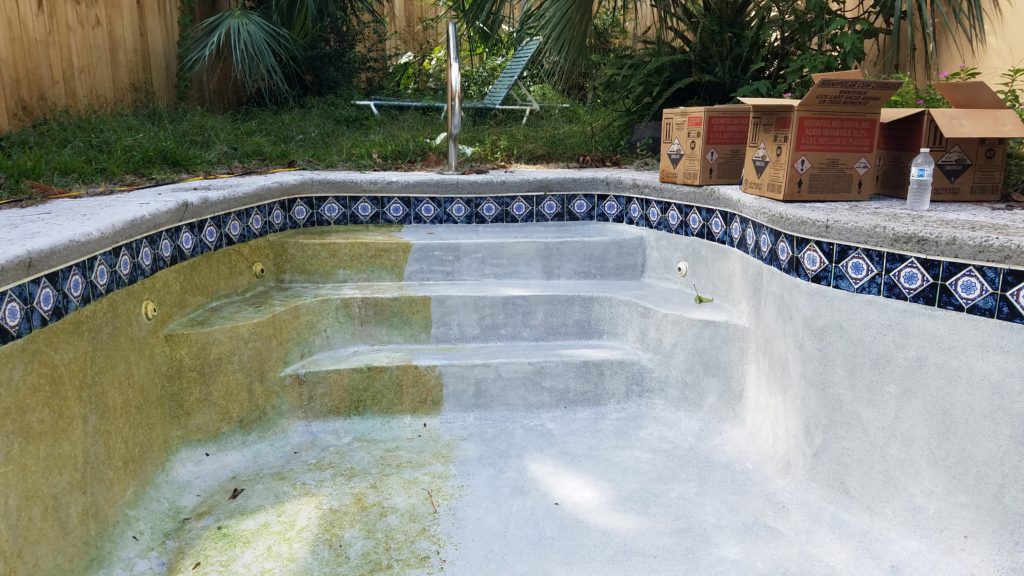
Acid washing a pool surface safely requires draining the pool, mixing muriatic acid with water at a 1:1 ratio, scrubbing the surface in small sections, and rinsing thoroughly within 30 to 60 seconds. This process strips a thin layer of plaster to remove stubborn stains, mineral deposits, and algae buildup that regular cleaning cannot fix. It should only be done on concrete, gunite, or plaster pools every 3 to 7 years. This guide walks homeowners in Jefferson, Georgia and surrounding areas through every step, the safety gear required, and when to call a professional instead.
What Does Acid Washing a Pool Surface Do?
Acid washing a pool surface removes a thin layer of plaster, concrete, or exposed aggregate to reveal fresh, clean material underneath. The process uses muriatic acid (also called hydrochloric acid) to dissolve embedded stains, calcium deposits, metal discoloration, and algae residue that no amount of scrubbing or chemical treatment can remove on its own. Think of it as a deep exfoliation for your pool. The old, stained surface is stripped away, and a brighter, smoother finish takes its place.
According to HomeGuide, professional acid washing can restore roughly 70% to 80% of a pool’s original brightness. This makes it one of the most effective ways to bring a neglected or heavily stained pool back to life. Homeowners across Jefferson, Georgia and the surrounding North Georgia communities often turn to acid washing after a long winter when algae has taken hold or calcium scaling has built up over several seasons.
Acid washing is not the same as regular pool cleaning services. Regular cleaning addresses surface debris, chemical balance, and filtration. Acid washing goes deeper, physically removing material from the pool’s interior surface.
Does Acid Wash Damage a Pool?
Yes, acid wash can damage a pool if done incorrectly or too frequently. Because the process strips away a thin layer of the pool’s plaster or aggregate surface, each acid wash permanently reduces the thickness of the finish. According to Swimming Pool Steve, a respected industry educator, pool plaster should only be acid washed once or twice in its entire service life. Using acid that is too concentrated, leaving it on the surface too long, or scrubbing too aggressively can etch the plaster, leaving it rough and porous.
A rough surface is more than just uncomfortable underfoot. Etched plaster traps dirt and algae spores, which makes future staining happen faster and makes the pool harder to maintain. The Pool Stain Removers, an industry resource, reports that many pool owners regret acid washing because they were not told the process permanently alters the surface texture. Quartz, pebble, and glass bead finishes can typically only handle one to two acid washes before they start to deteriorate.
The bottom line is this: acid washing is a powerful tool, but it is not a routine maintenance task. It should only be used when stains are too deep for standard cleaning methods. A professional pool inspection can help determine if acid washing is truly needed or if a less aggressive approach will work.
How Do I Know If My Pool Needs an Acid Wash?
You know your pool needs an acid wash if you can see persistent stains, heavy calcium scaling, or widespread discoloration that does not respond to scrubbing, shock treatments, or chemical stain removers. A good rule of thumb comes from In The Swim, a major pool supply company: if you cannot see the bottom of the shallow end, the pool likely needs to be drained and acid washed. If the floor is still visible, you can probably fix the problem with chemicals, filtering, and elbow grease alone.
Common signs that point toward an acid wash include white, chalky calcium deposits on the walls, blue or green metallic stains from copper or iron in the water, brown or black organic stains from leaves and algae, and a grayish haze that makes white plaster look dingy. Pools in the North Georgia area are especially prone to mineral staining because the local water supply often contains dissolved iron and other metals.
If your pool has gone through a full winter season without proper closing and the water has turned green or black, an acid wash may be the fastest path back to clean, clear water. A proper pool closing service each fall can prevent these problems from happening in the first place.
How Many Times Can a Pool Be Acid Washed?
A pool can be acid washed one to two times over the life of its plaster or aggregate finish when done with a mild acid solution. According to Swimming Pool Steve, the smooth, hard-troweled surface of pool plaster is what makes it waterproof. Each acid wash removes some of that surface, exposing the rougher sand and cement mix underneath. After one or two mild acid washes, the plaster may become too thin or too rough to wash again safely.
Standard plaster finishes are about half an inch thick. Pebble, quartz, and glass bead finishes vary in thickness but are also limited in how many washes they can handle. Nelson Pool Company confirms that quartz, bead, and pebble-tec surfaces can only withstand one to two rounds of acid washing before showing signs of damage. After that, the surface will need to be replastered.
For homeowners in Athens, Braselton, and the greater Jefferson area, this means acid washing should be treated as a last resort, not a seasonal habit. Regular maintenance, balanced water chemistry, and professional cleaning keep most pools looking great without ever needing an acid wash.
Will Acid Clear a Cloudy Pool?
No, acid alone will not clear a cloudy pool. Cloudy pool water is usually caused by poor filtration, unbalanced chemicals, high calcium hardness, or an algae bloom. Adding muriatic acid directly to a filled pool will lower the pH and alkalinity, but it will not filter out suspended particles or kill algae. Acid washing, which involves draining the pool and scrubbing the surface, addresses stains on the plaster itself, not cloudiness in the water.
To clear a cloudy pool, you need to fix the root cause. Test the water chemistry, clean or replace the filter, shock the pool with chlorine, and run the pump until the water clears. According to the CDC, balanced pool chemistry is critical for both water clarity and swimmer safety. The recommended pH range for pool water is 7.2 to 7.8, and free chlorine should stay at 1 to 3 parts per million. If the cloudiness persists after balancing and shocking, a professional assessment may reveal a hidden issue like a failing filter or a leak.
How Long to Wait to Swim After Acid Wash?
You should wait at least 24 to 48 hours to swim after a full acid wash and refill. The pool water needs to be completely rebalanced before anyone gets in. After refilling, test the pH, total alkalinity, calcium hardness, and chlorine levels. The water should reach a pH of 7.2 to 7.8, total alkalinity of 80 to 120 parts per million, and free chlorine of 1 to 3 parts per million before swimming.
Nelson Pool Company notes that some sources say you can swim as soon as 2 hours after the water is balanced. However, the safer approach is to wait a full day, test the water multiple times, and confirm that all chemical levels are stable. Acid residue that is not fully neutralized can cause skin irritation, eye burning, and damage to swimsuits and pool equipment.
Families in the Gainesville, Hoschton, and Jefferson area who schedule an acid wash before pool season should plan for at least two to three days of total downtime, including draining, washing, refilling, and chemical balancing.
What Surfaces Should Never Be Cleaned With Acid?
Vinyl, fiberglass, acrylic, and painted pool surfaces should never be cleaned with muriatic acid. Acid washing is only safe for concrete, gunite, plaster, and exposed aggregate surfaces like pebble-tec and quartz. According to Poolie, a pool industry resource, acid is too aggressive for vinyl and fiberglass and will cause permanent damage, including discoloration, weakening of the material, and surface deterioration.
Beyond pool surfaces, muriatic acid should never be used on natural stone coping, certain types of tile grout, or any metal fixtures without proper protection. Petroleum jelly applied to metal components like handrails, ladder bolts, and light rims can prevent oxidation and corrosion during the acid wash process. United Chemical, a pool product manufacturer, recommends covering all metal fixtures before starting any acid treatment.
If you are unsure what your pool surface is made of, a pool repair professional can identify the material and recommend the right cleaning method.
Which Is Better, pH Down or Muriatic Acid?
Muriatic acid is more effective and more affordable than pH Down (sodium bisulfate) for lowering pool pH and alkalinity. However, muriatic acid is also more dangerous to handle. pH Down comes in a dry granular form that is easier to store and safer for homeowners to use. Muriatic acid is a liquid that produces strong, harmful fumes and can cause severe chemical burns on contact with skin or eyes.
According to data from the CDC, pool chemical injuries led to an estimated 13,508 emergency department visits in the United States during 2015 to 2017. About 36% of those injuries involved children or teenagers, and a large percentage happened at residential pools. The University of Arizona Health Sciences reports that inhaling fumes from pool chemicals like muriatic acid can cause coughing, chest pain, and shortness of breath, while skin contact can lead to chemical burns.
For routine pH adjustments in a filled pool, pH Down is the safer choice for most homeowners. Muriatic acid is best left for acid washing and heavy-duty tasks handled by trained professionals.
Can I Add 1 Gallon of Muriatic Acid to a Pool?
Yes, you can add 1 gallon of muriatic acid to a pool, but only if the pool is large enough and the pH and alkalinity levels call for that much. For a standard 10,000-gallon residential pool, 1 gallon of muriatic acid at 31.45% concentration will lower the pH significantly. Adding too much acid at once creates “hot spots” of concentrated acid that can etch the plaster, bleach the finish, and burn swimmers who enter the water too soon.
The safe approach is to add acid gradually, never more than one quart at a time for a standard residential pool. Pour the acid into the deep end with the pump running, let it circulate for at least 30 minutes, and then retest before adding more. According to Swim University, a leading pool education resource, you should always wait at least one hour after adding muriatic acid before swimming. For routine pH management in a well-maintained pool, most adjustments require far less than a gallon.
How to Acid Wash a Pool Surface Safely: Step by Step
Acid washing a pool surface safely follows a specific sequence. Skipping steps or rushing the process can damage the plaster, create safety hazards, or leave the pool in worse shape than before. Here is the full process that professionals in the Jefferson, Georgia area follow.
Step 1: Gather Safety Gear and Supplies
Before touching any chemicals, put on a respirator rated for acid fumes, chemical-resistant gloves, splash-proof goggles, rubber boots, and long-sleeved protective clothing. You will also need two garden hoses (one without a nozzle running constantly), a stiff acid brush, a submersible pump, muriatic acid, soda ash (pH increaser), and several five-gallon buckets. Keep a water source running at all times. According to the Acid Magic manufacturer, even reduced-fume acid products still require full protective gear.
Step 2: Drain the Pool
Use a submersible pump to drain the pool completely. As the water drops, scrub the walls with an algae brush to remove loose debris before it dries and hardens. Keep the surfaces wet with a hose to prevent the plaster from baking in the sun. Remove hydrostatic relief plugs in the deep end to prevent groundwater pressure from pushing the pool shell out of the ground. Draining typically takes 8 to 14 hours for a standard residential pool.
Step 3: Mix the Acid Solution
Mix one part muriatic acid with one part water in a bucket. Always add acid to water, never water to acid. Adding water to acid can cause a violent reaction that splashes concentrated acid. A 1:1 ratio is standard for most residential acid washes. For lighter stains, a weaker 1:8 or 1:10 ratio with more aggressive scrubbing is safer for the plaster, according to industry expert Swimming Pool Steve.
Step 4: Apply, Scrub, and Rinse in Sections
Wet a small section of the pool wall with the hose. Pour the acid mixture from the top of the wall and let it run down while a helper follows behind with the acid brush, scrubbing the surface. Let the acid sit for no more than 30 seconds on horizontal surfaces and 60 to 90 seconds on walls. Rinse thoroughly with the hose immediately after scrubbing. Never let acid sit on any surface longer than necessary. According to In The Swim, acid does not deplete on its own, it continues to etch until completely diluted and rinsed away.
Step 5: Neutralize and Pump Out Waste
As dirty acid water collects in the deep end, add soda ash (about 2 pounds per gallon of acid used) to neutralize it. Stir with a pool brush and test the pH. The wastewater should reach a pH of about 7.0 to 7.6 before disposal. Use the submersible pump to remove the neutralized water. Check with your local municipality in Jefferson or Jackson County about proper disposal, as rules vary by location.
Step 6: Refill and Rebalance
Refill the pool with fresh water as soon as possible. Do not leave an empty concrete pool exposed to sunlight and temperature changes for extended periods, as this can cause cracking and surface damage. Once filled, balance the pH, alkalinity, calcium hardness, and chlorine levels before swimming. A full rebalancing typically takes 24 to 48 hours. Schedule a seasonal opening service to have this done professionally.
Acid Wash Process Comparison Table
| Factor | Traditional Drain Acid Wash | No-Drain Acid Wash |
|---|---|---|
| Pool Draining Required | Yes, completely drained | No, water stays in the pool |
| Process Duration | 4 to 5 hours (plus 8 to 14 hours to drain) | 3 to 7 days |
| Stain Removal Effectiveness | High, direct acid contact | Moderate, diluted acid in water |
| Average Professional Cost | $300 to $700 (Angi, HomeGuide) | $200 to $500 |
| Risk of Structural Damage | Higher (hydrostatic uplift possible) | Lower (pool stays filled) |
| Safe for Metal Fixtures | Yes, with petroleum jelly protection | No, low pH can corrode metal parts |
| Best For | Heavy stains, severe algae, full restoration | Light to moderate staining, water conservation |
Sources: Angi, HomeGuide, In The Swim, United Chemical, Nelson Pool Company
How Much Does It Cost to Acid Wash a Pool?
The average cost to acid wash a pool is about $450 for a standard residential pool, with most homeowners paying between $300 and $700. According to Angi, acid washing runs approximately $0.40 to $0.60 per square foot of total surface area, including walls and floor. HomeGuide places the range slightly higher at $0.50 to $0.75 per square foot. Professional pool maintenance technicians typically charge $80 to $200 per hour, and a standard acid wash takes about four hours of hands-on work.
On top of the wash itself, homeowners should budget $90 to $270 to refill the pool with fresh water, plus the cost of chemicals to rebalance the water after refilling. DIY acid washing costs as little as $30 to $50 for chemicals, but the safety risks and potential for permanent surface damage make professional service the better choice for most homeowners in the Winder, Buford, and Jefferson area.
What Happens If You Put Too Much Muriatic Acid in the Pool at Once?
Putting too much muriatic acid in a pool at once drops the pH to dangerously low levels, which can etch the plaster, corrode metal fittings, damage the pump and filter, and cause chemical burns to swimmers. Extremely low pH (below 7.0) creates corrosive water that dissolves calcium from the plaster surface, leaving it rough and pitted. Metal components like heater elements, ladder bolts, and light housings can corrode rapidly in acidic water.
According to the CDC, the ideal pool pH is between 7.2 and 7.8. Water below 7.0 is acidic enough to irritate eyes, skin, and mucous membranes. If you accidentally over-dose with acid, immediately add soda ash or pH increaser to raise the pH back to safe levels. Run the pump continuously and retest every 30 minutes until the water stabilizes. Do not allow anyone to swim until the pH is confirmed between 7.2 and 7.8.
Will an Acid Wash Get Rid of Black Algae?
Yes, an acid wash will get rid of black algae on plaster and concrete pool surfaces. Black algae is one of the most stubborn pool problems because it sends roots deep into porous plaster. Regular brushing and chlorine shock often fail to kill it completely because the roots survive beneath the surface. Acid washing strips away the top layer of plaster where the algae roots are embedded, removing the organism at its source.
According to In The Swim, pools that have experienced years of repeated algae blooms benefit greatly from a full drain and acid wash combined with a filter media change. The acid removes the stained, algae-embedded plaster, while new filter media prevents surviving spores from reinfecting the pool. For homeowners in the Loganville and Monroe, Georgia area dealing with recurring black algae, an acid wash may be the only way to break the cycle.
Do You Have to Drain the Pool to Do an Acid Wash?
No, you do not always have to drain the pool to do an acid wash. A “no-drain acid wash” is an alternative method where the pool water pH is lowered to extremely acidic levels (around 1.0) and the total alkalinity is brought to zero. The pool is then brushed multiple times a day for three to seven days. According to In The Swim, this method creates a corrosive water environment that slowly dissolves scale and stains without emptying the pool.
The no-drain method is less effective than a traditional drain-and-wash for heavy staining. It also poses risks to metal fixtures, rubber gaskets, and pool equipment because the entire body of water becomes highly acidic. The pump must stay off during the process, and all shiny or soft metal components should be removed or protected. United Chemical offers a no-drain acid wash product that includes a sequestering agent to keep dissolved minerals from re-depositing on the surface.
For most pools with significant staining, a full drain and traditional acid wash delivers better results. But in areas where water conservation is a concern or where draining could risk structural damage from high groundwater, the no-drain method is a reasonable compromise.
What Is the Most Expensive Part of a Pool?
The most expensive part of a pool is the shell construction, which includes excavation, steel reinforcement, and the concrete or gunite application. According to HomeGuide, the average cost to build an in-ground pool in the United States ranges from $35,000 to $120,000, with the shell accounting for the largest single portion of that expense. The interior finish (plaster, pebble, or quartz) is the second most expensive component, and it is also the part most directly affected by acid washing.
This is why acid washing matters so much. Every acid wash removes a small amount of that expensive interior finish. Doing it too often or too aggressively shortens the lifespan of the finish and moves up the timeline for a full replastering, which can cost $5,000 to $15,000 or more for a standard residential pool. Protecting that finish with regular maintenance, balanced water chemistry, and proper seasonal care is one of the smartest investments a pool owner can make.
Homeowners in the Jefferson, Georgia area who want to protect their pool investment should schedule routine maintenance and a custom pool consultation to discuss surface options that resist staining and reduce the need for acid washing.
What to Do After Acid Washing a Pool?
After acid washing a pool, you need to refill with fresh water, rebalance the chemistry, inspect the surface for damage, and restart the filtration system. Start by refilling the pool as quickly as possible. An empty concrete pool exposed to sun and temperature swings can crack, warp, or lift. Once filled, test and adjust the pH (7.2 to 7.8), total alkalinity (80 to 120 ppm), calcium hardness (200 to 400 ppm), and free chlorine (1 to 3 ppm). According to the Acid Magic manufacturer, you should not use soda ash to raise pH during this stage because it can cause stains and scale to reform. Instead, use a pH increaser dissolved in a bucket of water and poured slowly around the pool.
Run the pump and filter continuously for at least 24 hours after refilling. Brush the walls and floor to remove any remaining loose material. Inspect the surface for rough spots, streaks, or areas where the acid may have etched deeper than intended. If the plaster feels like sandpaper, it may need professional attention. A full pool inspection after an acid wash catches these issues early.
How to Get Crystal Clear Pool Water Without Acid Washing
Getting crystal clear pool water without acid washing starts with consistent maintenance: balanced chemistry, regular brushing, clean filters, and proper circulation. Most cloudy or stained pools can be restored without the aggressive step of acid washing. The key is addressing problems early before stains set into the plaster.
Shock the pool with a high dose of chlorine to kill algae and bacteria. Run the filter 24 hours a day until the water clears. Brush the walls and floor twice a week. Use a clarifier to clump tiny particles so the filter can catch them. Test the water at least once a week and adjust chemicals as needed. According to the CDC, maintaining proper free chlorine levels (1 to 3 ppm) and pH (7.2 to 7.8) prevents most algae growth before it starts.
For stubborn mineral stains, try a sequestering agent or a vitamin C (ascorbic acid) treatment before jumping to a full acid wash. These gentler methods can lift many types of metal stains without removing any plaster. Regular pool cleaning keeps the water clear and reduces the chance of ever needing an acid wash.
Is Acid Wash Still in Style?
Yes, acid washing is still in style as a pool restoration technique, but it is becoming less common as pool owners learn about its long-term effects on plaster. The trend in the pool industry is shifting toward less aggressive stain removal methods, better preventative maintenance, and more durable pool surfaces that resist staining in the first place. Pebble, quartz, and glass bead finishes are now more popular than traditional white plaster partly because they are more resistant to discoloration and last longer between major cleanings.
That said, acid washing still has its place. For pools with severe neglect, heavy black algae, or years of mineral buildup, nothing else works as fast or as thoroughly. The key is to treat acid washing as a rare, targeted solution, not a regular part of the maintenance calendar. Pool builders in the Athens and Jefferson, Georgia area are increasingly recommending stain-resistant finishes and proper water chemistry management to keep pools looking clean year after year.
Frequently Asked Questions
How Often Should You Acid Wash a Pool in North Georgia?
You should acid wash a pool in North Georgia no more than once every 5 to 7 years, and only when stains cannot be removed by other methods. The warm, humid climate in the Jefferson and Athens area promotes algae growth, but regular maintenance, proper chemical balance, and seasonal cleaning keep most pools in good shape without acid washing. According to Flamingo Pools, acid washing more often than every 5 years can cause damage to the pool walls and floor.
Can You Acid Wash a Fiberglass Pool?
No, you cannot acid wash a fiberglass pool with muriatic acid. Fiberglass pools require specialized, gentler cleaners designed for their smooth gel coat surface. Muriatic acid will permanently damage, discolor, and weaken fiberglass. If a fiberglass pool has stains, an ascorbic acid (vitamin C) treatment or an enzyme-based cleaner is the safe alternative.
Is It Safe to Acid Wash a Pool Yourself in Jefferson, Georgia?
Acid washing a pool yourself in Jefferson, Georgia is possible but not recommended unless you have experience handling hazardous chemicals. Muriatic acid produces toxic fumes and can cause severe burns on contact. The CDC reports that pool chemical injuries sent an estimated 13,508 people to U.S. emergency rooms during 2015 to 2017, with about 36% of those being children or teens. Hiring a licensed professional is the safest approach.
What Is the Best Time of Year to Acid Wash a Pool Near Athens, Georgia?
The best time of year to acid wash a pool near Athens, Georgia is early spring, before the swim season begins. Temperatures should be mild, not too hot and not freezing. Acid washing in extreme heat can cause the plaster to dry too fast and crack. Early spring gives you time to refill, balance the water, and have the pool ready for summer.
How Long Does a Pool Acid Wash Take?
A pool acid wash takes about 4 to 5 hours of hands-on work for a standard residential pool, according to Nelson Pool Company. This does not include the 8 to 14 hours needed to drain the pool or the 24 to 48 hours needed for refilling and chemical rebalancing. The total turnaround from start to swim-ready is typically two to three days.
Does Acid Washing a Pool Affect the Warranty?
Yes, acid washing a pool can affect the warranty on the interior finish. Many plaster and aggregate finish manufacturers void their warranty if the surface has been acid washed improperly or too frequently. Always check the warranty terms for your specific pool finish before scheduling an acid wash. If your pool is still under warranty, contact your builder first to discuss the safest cleaning options.
What Is an Alternative to Acid Washing a Pool in Braselton, Georgia?
An alternative to acid washing a pool in Braselton, Georgia is a chlorine wash, which uses a strong bleach solution instead of muriatic acid. Chlorine washes are effective at removing algae stains and organic discoloration without stripping plaster. For metal stains, an ascorbic acid treatment can lift iron, copper, and manganese discoloration without the harsh effects of muriatic acid. These methods are safer for the pool surface and require less downtime.
Final Thoughts
Acid washing a pool surface safely is a powerful restoration tool, but it is not something to take lightly. It involves dangerous chemicals, precise timing, and a real risk of permanent surface damage if done wrong. For most homeowners in Jefferson, Georgia and across the North Georgia area, the smartest approach is to prevent stains through consistent water chemistry, regular brushing, and professional seasonal care. When stains do get out of control, a professional acid wash done correctly can bring a pool back to life and add years of enjoyment.
If your pool is showing signs of stubborn staining, scaling, or algae that will not go away, reach out to Sandals Luxury Pools for expert advice. Their experienced team serves homeowners across Jefferson, Braselton, Athens, Gainesville, and the entire North Georgia region with everything from professional pool cleaning to full pool restoration. Contact them today to schedule a consultation and find out the best solution for your pool.
