
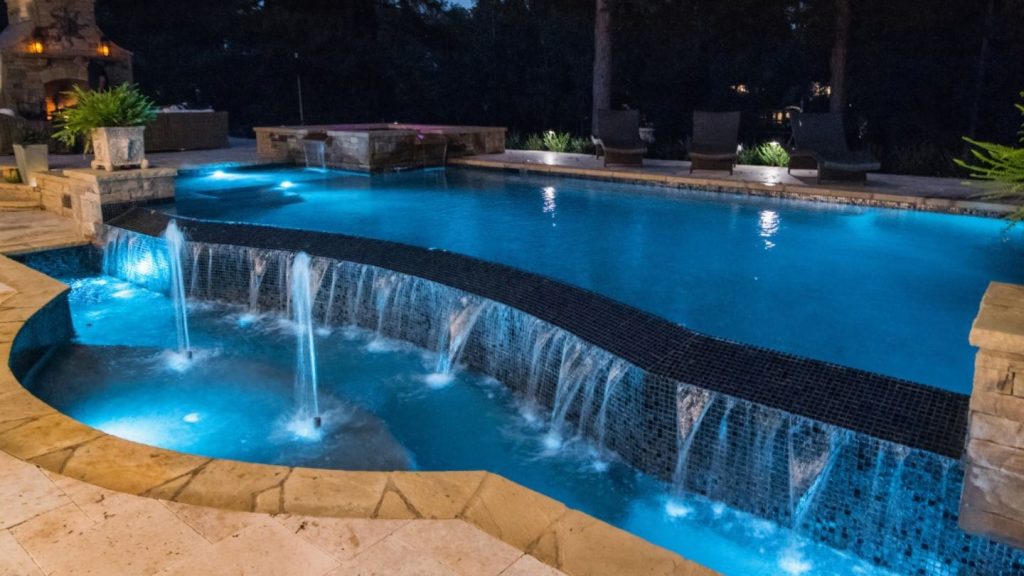
A residential swimming pool should be between 3 and 6 feet deep for most families. The shallow end typically starts at 3 to 4 feet, and the deep end reaches 5 to 6 feet. If you want a diving board, the minimum safe depth is 8 feet. The right depth depends on how you plan to use the pool, who will swim in it, and your local building codes. This guide covers everything homeowners in Jefferson, Georgia and surrounding areas need to know about choosing the best pool depth for safety, fun, and long-term value.
How Deep Should a Residential Swimming Pool Be?
A residential swimming pool should be between 3 and 8 feet deep, depending on its purpose. According to Dimensions.com, the shallow end of most private pools measures 3 to 4 feet, while the deep end ranges from 5 to 6 feet. Pools with diving boards need at least 8 to 10 feet of depth in the diving area. Most families in the Jefferson, Georgia area find that a pool with a gradual slope from 3 feet to 5 or 6 feet covers all their needs.
Pool depth is not just about personal preference. It affects safety, construction costs, maintenance expenses, and even your home’s resale value. The National Association of Realtors estimates that a well-designed pool can add 5% to 8% to a home’s value. Getting the depth right from the start means you avoid costly changes later.
Families who invest in a custom pool can work with their builder to design multi-depth zones that fit every swimmer in the household, from toddlers to adults.
What Is the Most Popular Depth of a Pool?
The most popular depth of a pool for residential use is a multi-depth design that ranges from 3 feet in the shallow end to 5 or 6 feet in the deep end. According to data from Dimensions.com, this range works for the widest variety of activities, from casual play to lap swimming. Many modern family pools in North Georgia use a “sport bottom” layout where both ends sit at 3.5 to 4 feet and the center dips to about 5 feet. This setup is popular because it gives everyone a safe standing depth while still allowing for swimming and games.
The Pool & Hot Tub Alliance (PHTA) reports there are roughly 10.7 million swimming pools in the United States, with about 10.4 million of those being residential. The vast majority of these residential pools fall within the 3-to-6-foot depth range because it balances safety with fun.
Is a 6 Foot Pool Deep Enough?
Yes, a 6 foot pool is deep enough for most residential activities. A 6-foot deep end gives adults plenty of room to swim, tread water, and play games. It also allows for safe feet-first jumping from the pool edge. According to pool industry guidelines, 6 feet of depth is not safe for a traditional diving board, but it can work well with a jumping rock or low platform entry. Many pool builders across the Athens, Georgia area recommend this depth as the sweet spot between fun and safety.
Homeowners who plan to add a waterslide should also consider a 6-foot deep end. A waterslide paired with a proper depth creates a thrilling backyard experience without the added cost and risk of a diving pool.
Is a 5 Foot Pool Too Shallow?
No, a 5 foot pool is not too shallow for general family use. A 5-foot maximum depth works well for water games, casual swimming, and socializing. It allows most adults to stand comfortably while keeping heads above water. According to the Aquatic Exercise Association, pools in the 3-to-5-foot range are ideal for shallow-water aerobics, water walking, and recreational swimming. For homeowners in Braselton, Hoschton, and the greater Jefferson area who want a safe, versatile backyard pool, 5 feet is a practical choice.
Where a 5-foot pool falls short is diving. A pool this shallow is not safe for any kind of head-first entry. If diving or deep-water play is a priority, you will need at least 8 feet in the deep end.
Is 3 Feet Deep Enough to Swim?
Yes, 3 feet is deep enough to swim for children and for adults doing certain exercises. Young children can learn basic swim strokes in 3 feet of water while still touching the bottom. For adults, 3 feet is comfortable for wading, lounging, and standing, but it is too shallow for full swimming strokes. Adults typically need at least 4 feet of water to swim laps without scraping their hands on the bottom. A 3-foot shallow end is perfect as a play zone for kids and a relaxation area for adults, especially on a sun shelf or tanning ledge.
According to a study published by the National Institutes of Health, formal swim lessons reduce drowning risk among children ages 1 to 4 by up to 88%. Having a safe, shallow area where kids can practice is a smart part of any pool design.
How Deep Is the Average Backyard Pool?
The average backyard pool is about 5 feet deep at its deepest point. Most residential pools in the United States use a multi-depth profile, starting at 3 to 4 feet in the shallow end and reaching 5 to 6 feet at the deep end. According to HomeGuide, most pools range from 3 to 6 feet deep, with some deep ends between 5 and 9 feet. The average family pool holds between 10,000 and 18,000 gallons of water, depending on its size and depth.
In the North Georgia climate, where pool season runs from late spring through early fall, a 5 to 6 foot deep end gives families the best return on their investment. It keeps construction and maintenance costs manageable while providing enough depth for a range of activities.
Can You Jump in a 4 Foot Pool?
Yes, you can jump feet-first into a 4 foot pool, but only with caution. A 4-foot depth is safe for gentle feet-first entries by children and smaller adults. It is not safe for cannonballs, flips, or any kind of head-first diving. According to pool safety experts at Counsilman-Hunsaker, diving from the side of a pool should be limited to water deeper than 5 feet. Parents should set clear rules about jumping in shallow areas, especially for younger children.
The U.S. Consumer Product Safety Commission (CPSC) reports that between 2019 and 2021, an average of 358 children under age 15 fatally drowned in pools or spas each year. About 80% of those drownings happened in residential settings. Choosing the right depth and enforcing safety rules are two of the most effective ways to prevent accidents.
What Is the Safest Depth for a Pool?
The safest depth for a pool depends on who will use it. For families with young children, a pool that gradually slopes from 3 feet to 5 feet is the safest design. The Children’s Safety Network reports that four-sided isolation fencing around a pool reduces a child’s drowning risk by 83% compared to three-sided fencing. Depth alone does not make a pool safe. Supervision, barriers, and pool rules all work together.
For households with children under 12, many safety experts recommend a maximum depth of 4 to 5 feet. According to the CDC, drowning is the number one cause of unintentional death for children ages 1 to 4. A gradual slope with no sudden drop-offs gives kids more time to react if they step into deeper water. A thorough pool inspection can also catch safety hazards before they become serious problems.
How Deep Does a Pool Need to Be for a Diving Board?
A pool needs to be at least 7.5 to 9 feet deep for a diving board. The American National Standards Institute (ANSI) sets the minimum diving well depth at 7.5 to 9 feet, depending on the board height and pool configuration. The ANSI/APSP-1 standard for residential in-ground swimming pools requires that pools with a diving board be at least 16 feet wide and 32 feet long. The minimum depth directly under the board must be at least 8.5 feet, extending at least 12 feet forward from the board’s tip.
Deeper pools cost more to build and maintain. Pools deeper than 7.5 feet require significantly more excavation, concrete, and steel reinforcement. According to Angi, adding depth to an existing pool costs between $10,000 and $50,000 depending on the size. For many homeowners in the Jefferson, Georgia area, a jumping rock at a 6-foot depth is a safer and more affordable alternative to a full diving board setup.
Why Are Pools Getting Rid of Diving Boards?
Pools are getting rid of diving boards because of safety risks, liability concerns, and higher construction costs. Diving board injuries account for a significant share of pool-related emergency room visits. According to the CPSC, nonfatal pool-related injuries send an average of 6,500 children to the emergency room each year. Insurance companies often charge higher premiums for pools with diving boards, and many local building codes have added stricter depth and clearance requirements that make diving boards impractical for standard-sized residential pools.
Modern pool design trends favor features like tanning ledges, bubblers, and waterfall features instead of diving boards. A natural waterfall or a set of deck jets can add excitement to a backyard pool without requiring a dangerously deep diving well.
Can I Dig My Own Inground Pool?
Yes, you can dig your own inground pool in most areas, but it is not recommended. Pool construction involves complex engineering, plumbing, electrical work, and local permitting that go far beyond digging a hole. Most municipalities, including those in Jackson County and the greater Jefferson, Georgia area, require building permits and inspections for pool construction. Improper excavation can lead to structural failure, drainage issues, and code violations that cost more to fix than a professional build.
According to HomeGuide, the average cost to build an in-ground pool in the United States ranges from $35,000 to $120,000 depending on materials and features. Working with an experienced builder from the start helps avoid costly mistakes. A professional team handles soil testing, permits, drainage, reinforcement, and finishing, so the pool lasts for decades.
What Is the Best Pool Depth for Lap Swimming?
The best pool depth for lap swimming is a consistent 4 to 5 feet throughout the lane. This depth allows swimmers to execute proper strokes without scraping the bottom and gives enough room for flip turns. According to competitive pool standards, lap pools should be at least 25 feet long with a uniform depth. For homeowners in Gainesville, Buford, and the surrounding North Georgia region who swim for exercise, a rectangular pool with a steady 4-foot depth is efficient and cost-effective to build.
Lap swimmers also benefit from longer pools. A length of 30 feet or more gives enough room for continuous swimming without frequent turns. Some families add a swim-in-place current system for smaller yards, which lets swimmers train without needing a full-length pool.
What Is the Best Depth for Water Walking?
The best depth for water walking is waist to chest level, which translates to about 3.5 to 4.5 feet for most adults. The Aquatic Exercise Association recommends pools between 3 and 5 feet deep for shallow-water exercise classes. At chest depth, the water reduces body weight impact by about 75%, according to research from the National Federation of Professional Trainers. This makes water walking an excellent low-impact workout for people with arthritis, joint pain, or mobility issues.
Water walking has become one of the fastest-growing pool exercises in the country. The CDC reports that nearly 40 million adults in the United States do not know how to swim. Water walking in a shallow pool gives these adults a safe way to exercise in the water without full swimming skills. A pool with a 3-to-5-foot range serves double duty for both recreation and fitness.
Does a Shallow Pool Make You Slower?
Yes, a shallow pool can make you slower because of increased drag and turbulence. When water depth is too shallow, the waves created by a swimmer’s body bounce off the bottom and create resistance. According to competitive swimming research, deeper water produces less wave interference, which lets swimmers move faster and more efficiently. FINA (now World Aquatics) requires Olympic pools to be at least 2 meters (about 6.5 feet) deep to reduce this wave drag during competitions.
For recreational swimmers in a backyard pool, this difference is small. Most families will not notice a speed difference between a 5-foot and 6-foot pool. But if you train seriously or use your pool for exercise, choosing a deeper profile helps reduce turbulence and improves the swimming experience.
How Does Pool Depth Affect Construction Costs?
Pool depth directly increases construction costs because deeper pools need more excavation, more concrete, more steel reinforcement, and more water to fill. According to Blue Haven Pools, each additional foot of depth adds more digging time, more structural materials, and more finishing work. A pool that goes from 6 feet deep to 8 feet deep may require additional engineering to handle the increased water pressure on the walls and floor.
Maintenance costs also rise with depth. Deeper pools hold more water, which means more chemicals, more energy to heat, and longer filtration cycles. For homeowners in the Winder, Loganville, and Jefferson area who want a balance between depth and budget, a 3-to-6-foot design gives the most versatility without the cost jump that comes with a full 8-foot diving pool.
Regular pool cleaning services help keep any pool running efficiently, no matter the depth.
What Are the 5 Rules in a Swimming Pool?
The 5 most common rules in a swimming pool are: no diving in the shallow end, no running on the pool deck, no swimming alone, no glass near the pool, and always supervise children. These rules exist because of the serious safety risks that come with residential pools. The CPSC reports that 75% of fatal child drownings in pools involved children under 5 years old, and about 69% of those children were not expected to be in or near the pool at the time.
For homeowners in Jefferson, Georgia and across North Georgia, posting clear pool rules near the water is a simple step that can prevent tragedy. Many local codes also require fencing, self-closing gates, and alarms. A proper pool closing service at the end of each season adds another layer of safety by securing the pool when it is not in use.
Is It Better to Put Sand or Dirt Under a Pool?
Sand is better than dirt to put under a pool in most situations. Sand creates a smooth, level base that protects the pool floor from rocks and roots. Dirt can settle unevenly over time, causing dips and bumps in the pool bottom. For above-ground pools, a 2-to-3-inch layer of sand is the industry standard base material. For inground pools, the base preparation depends on the soil conditions at the build site.
In the red clay soil common across North Georgia, proper base preparation is especially important. Clay soil expands and contracts with moisture changes, which can stress pool walls and floors. Professional pool builders test the soil before construction begins and use the right combination of gravel, sand, and compaction to create a stable foundation that lasts.
How Does Pool Depth Affect Home Value?
Pool depth affects home value because it determines the pool’s versatility and appeal to buyers. According to the National Association of Realtors, a pool can boost a home’s value by 5% to 8%. A Redfin analysis found that homes with pools commanded $27,199 more in value post-pandemic, up from $16,137 before 2020. Pools with a practical depth range of 3 to 6 feet tend to attract the widest pool of buyers because they work for families with children, fitness swimmers, and casual users alike.
An overly deep pool (8 feet or more) can actually scare off some buyers, especially families with young children who see it as a safety liability. In the Jefferson and Athens, Georgia real estate market, a well-designed pool with moderate depth, quality finishes, and good landscaping adds the most value. An annual seasonal opening service keeps the pool looking its best for potential buyers.
Residential Pool Depth Comparison Table
| Pool Use | Recommended Depth | Key Notes |
|---|---|---|
| Children’s Play Area | 2 to 3.5 feet | Tanning ledges (6 to 18 inches) work well for toddlers |
| General Family Swimming | 3 to 5 feet | Most popular residential range (Dimensions.com) |
| Lap Swimming | 4 to 5 feet (consistent) | Minimum 25-foot length recommended |
| Water Walking / Aerobics | 3.5 to 4.5 feet | Aquatic Exercise Association recommendation |
| Water Games (Volleyball, Basketball) | 3.5 to 4.5 feet | Players need to stand and maneuver easily |
| Feet-First Jumping | 5 to 6 feet | Safe for edge jumping without a diving board |
| Diving Board | 7.5 to 9 feet minimum | ANSI/APSP standard; pool must be 16×32 feet minimum |
Sources: Dimensions.com, Aquatic Exercise Association, American National Standards Institute (ANSI), Counsilman-Hunsaker
What Is the 80/20 Rule in Swimming?
The 80/20 rule in swimming means that 80% of your training should be at low intensity and 20% at high intensity. This principle comes from endurance training research and applies to competitive swimmers who want to build aerobic fitness without overtraining. For backyard pool owners, the 80/20 rule is a good guideline for structuring a fitness routine. Spend most of your time doing steady, moderate laps or water walking, and push hard for shorter bursts.
This rule also matters for pool depth planning. If 80% of your pool time will be casual swimming and relaxing, a 3-to-5-foot depth range covers that perfectly. The remaining 20% of more intense swimming or jumping works fine in a 5-to-6-foot deep end. You do not need an 8-foot diving pool for a workout that follows the 80/20 approach.
What Is the 25/10 Rule in Swimming?
The 25/10 rule in swimming is a lifeguard scanning protocol. Lifeguards should be able to scan their entire zone of responsibility within 25 seconds and reach any swimmer in distress within 10 seconds. This rule was developed by the American Red Cross and is used in public and commercial pool settings. While residential pools do not have lifeguards, the principle matters. It highlights why pool depth, clear sightlines, and adult supervision are so important.
For families with backyard pools near Dacula, Lawrenceville, or anywhere in North Georgia, the 25/10 rule is a reminder to always keep eyes on the water. A pool with a gradual depth change and no hidden corners makes it easier for parents to watch everyone at once.
Frequently Asked Questions
What Is the Best Pool Depth for a Family in Jefferson, Georgia?
The best pool depth for a family in Jefferson, Georgia is a gradual slope from 3 feet to 5 or 6 feet. This range works for kids, teens, and adults. It allows for safe play in the shallow end and enough room for swimming in the deep end. Many families across Jackson County and the North Georgia region choose this design because it covers the widest range of activities without the added expense of a diving-depth pool.
Do I Need a Permit to Build a Pool in North Georgia?
Yes, you need a permit to build a pool in North Georgia. Jackson County and most surrounding municipalities require building permits for inground pool construction. Your pool builder handles the permit process as part of the construction project. Permits cover everything from setback requirements and fencing to electrical and plumbing inspections. Starting without a permit can lead to fines and forced removal.
How Deep Should a Pool Be for Kids in the Athens, Georgia Area?
A pool for kids in the Athens, Georgia area should have a shallow end of about 3 feet. According to the CDC, drowning is the leading cause of death for children ages 1 to 4. A gradual slope from 3 feet to no more than 5 feet gives children room to play and learn while reducing the risk of sudden depth changes. A tanning ledge at 6 to 12 inches deep is also a great add-on for toddlers and small pets.
How Long Does a Pool Last in Georgia’s Climate?
A well-built gunite or concrete pool in Georgia’s climate can last 50 years or more with proper care. Fiberglass pools typically last 25 to 30 years. The hot summers and mild winters in North Georgia are ideal for pool ownership, but regular maintenance is still necessary. Annual inspections, seasonal opening and closing services, and consistent cleaning all extend the life of the pool.
What Pool Depth Is Best for Water Aerobics Near Gainesville, Georgia?
The best pool depth for water aerobics near Gainesville, Georgia is 3.5 to 4.5 feet. This depth keeps the water at chest level for most adults, which the Aquatic Exercise Association says is ideal for shallow-water exercise. At this depth, the water reduces body weight impact by about 75%, making it perfect for people with joint pain, arthritis, or those recovering from injuries.
Does Pool Depth Affect Insurance Rates?
Yes, pool depth can affect insurance rates. Pools with diving boards and deep ends above 8 feet often carry higher liability risk, which can increase homeowner’s insurance premiums. According to Houselogic, the National Association of Realtors’ homeowner resource, increasing liability coverage from $100,000 to $500,000 costs less than a few dollars per month. However, removing a diving board or choosing a shallower design may help keep premiums lower.
How Often Should I Have My Pool Inspected in Jefferson, Georgia?
You should have your pool inspected at least once a year in Jefferson, Georgia. An annual inspection catches problems like cracks, leaks, equipment failures, and safety hazards before they get worse. Many homeowners in the Jefferson and Athens area schedule inspections before the swim season starts. A professional pool repair service can fix any issues found during the inspection quickly.
Final Thoughts
The right pool depth makes all the difference between a pool that sits unused and one that becomes the center of your backyard life. For most families in Jefferson, Georgia and the surrounding North Georgia area, a pool with a 3-foot shallow end that slopes gradually to a 5-or-6-foot deep end hits the mark. It covers casual swimming, kids’ play, water exercise, and even feet-first jumping without the extra cost and risk of a full diving pool. Safety features like fencing, alarms, and clear depth markers are just as important as the depth itself.
If you are ready to build the pool your family has been dreaming about, Sandals Luxury Pools is here to help. With over a decade of experience building custom pools in Jefferson and surrounding areas, their team will design the perfect depth, shape, and features for your backyard. Contact them today to schedule a consultation and take the first step toward your own backyard oasis.
