Cold Plunge Installation in Jefferson, GA
Homeowners across Jefferson, from the estate lots near The Manor to growing communities off U.S. Highway 129, are adding custom cold plunge installations to their backyard wellness spaces. Sandals Luxury Pools, Inc., based at 54 Mark Dodd Road, roughly five minutes from Jefferson City Park, designs and builds permanent cold plunge features that pair beautifully with custom pools, spillover spas, and hardscapes, delivering a genuine recovery-focused outdoor retreat right here in Jackson County.
Why Jefferson Backyards Are Ideal for Cold Plunge Builds
Jefferson sits along U.S. 129 with convenient access to I-85, drawing a growing wave of active homeowners and families who want more from their outdoor space than a standard pool. Properties in neighborhoods like The Manor, communities near Crows Lake, and acreage lots off Sellers Mill Road offer the square footage and elevation variation that make a dedicated cold plunge feature viable without crowding the yard. North Georgia summers push temperatures well past 90°F for months at a time, making a properly chilled plunge basin a daily-use amenity, not a seasonal novelty. When cold immersion therapy is built in rather than bolted on, it holds temperature more reliably, looks far better, and holds its value as part of the overall property.
Your Dream Pool Awaits
What a Built-In Cold Plunge Actually Includes
A cold plunge installation from Sandals Luxury Pools is a permanent, custom-built feature, not a freestanding tub placed on a pad. The shell is formed from gunite, the same high-strength construction used in every gunite pool Sandals builds across Metro Atlanta and North Georgia. Typical cold plunge basins run between 50 and 60 degrees Fahrenheit, maintained by a dedicated chilling and filtration system. Finish options include pebble aggregate, tile, and natural stone, all selected for slip resistance and long-term durability under Jefferson’s sun. Bench depth, basin dimensions, entry steps, and surrounding coping are all determined during the collaborative design session so the finished feature fits the space and the household’s intended use.
Pairing a Cold Plunge With the Broader Backyard Plan
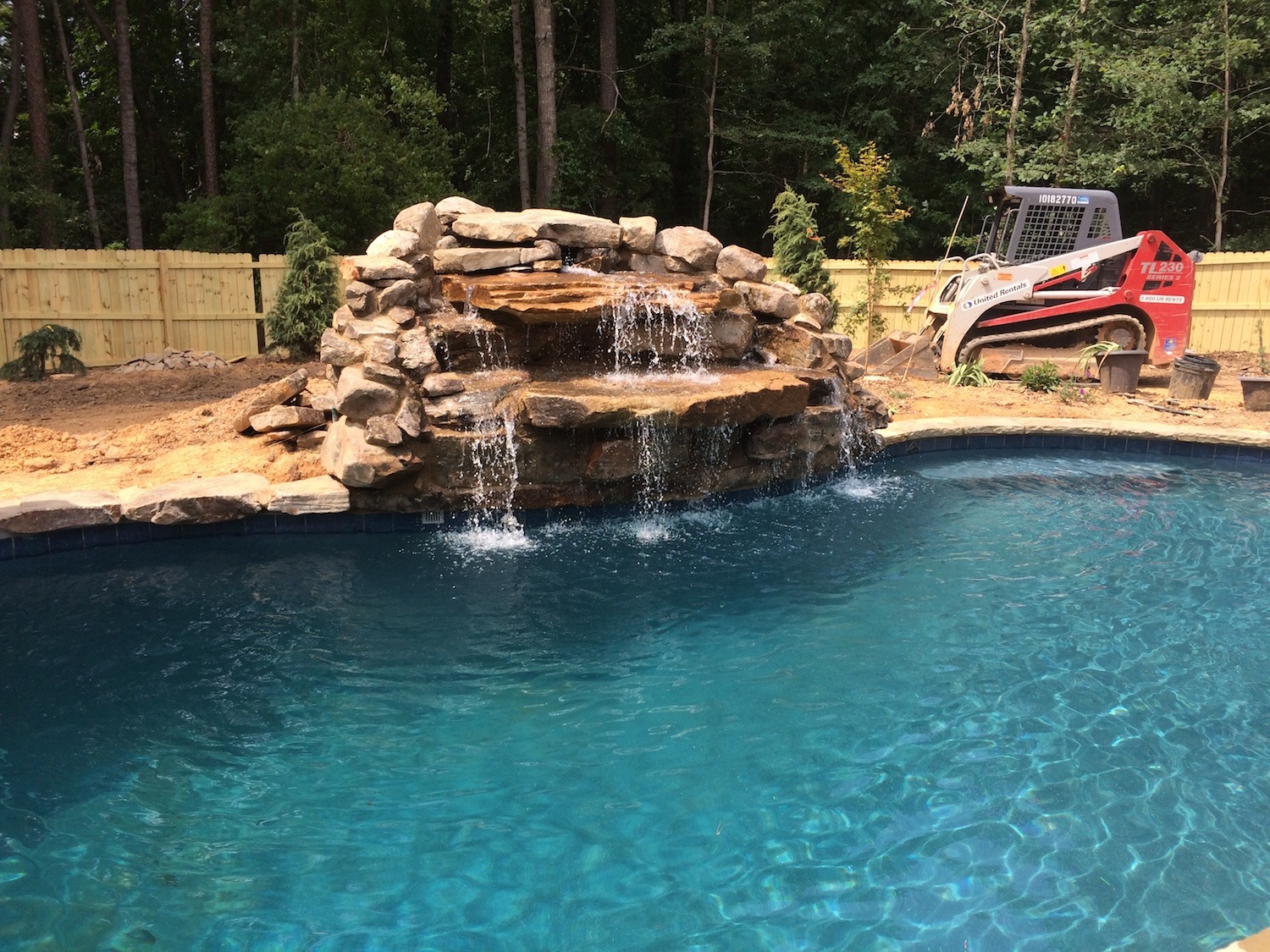
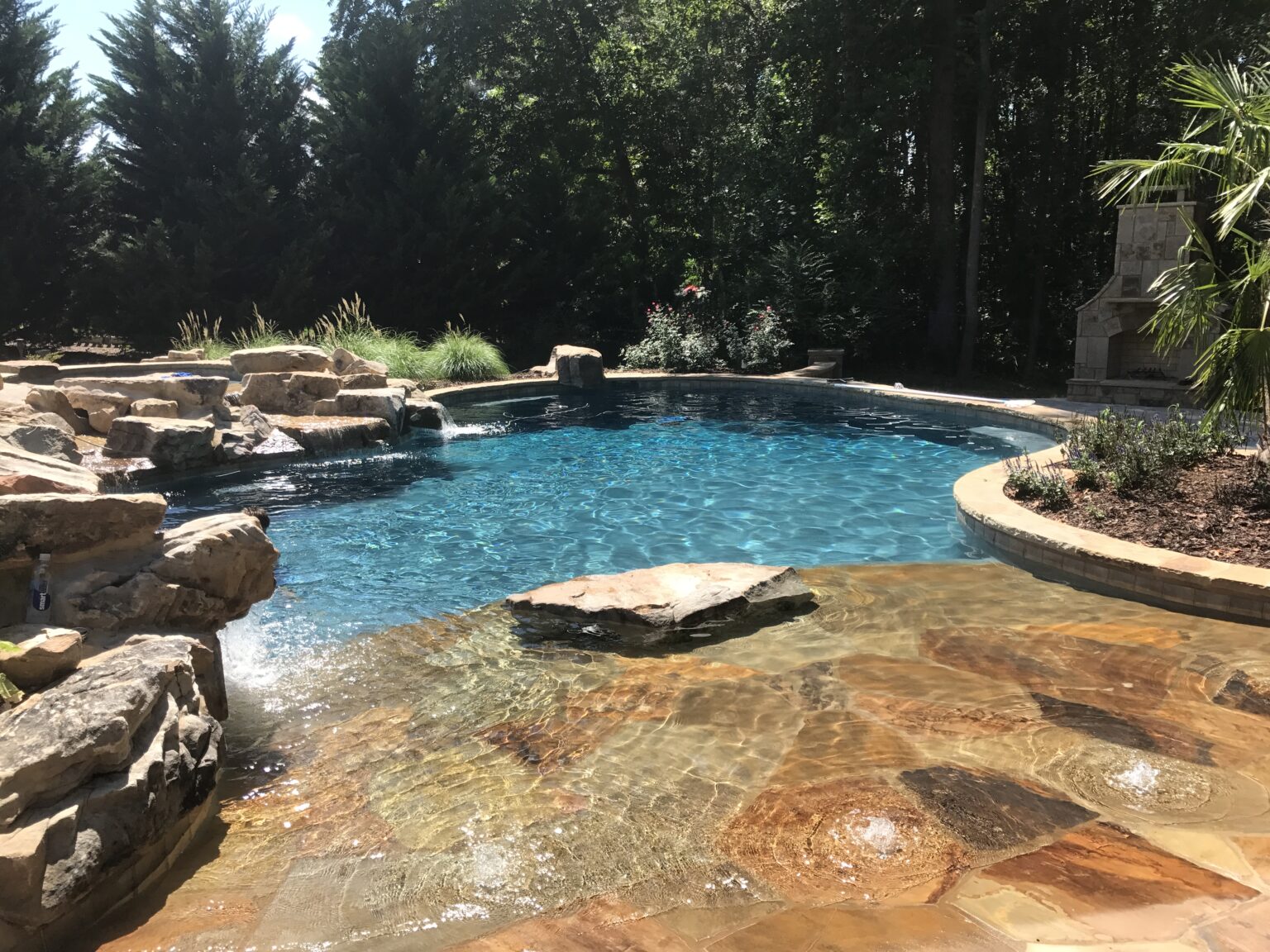
The most effective cold plunge installations in Jefferson are those planned alongside the rest of the outdoor project from the start. Contrast therapy, alternating between a hot spillover spa and a cold plunge basin, delivers the greatest physical recovery benefit when both features are positioned deliberately relative to each other and the surrounding deck. Sandals handles the full scope, including patios, outdoor kitchens, fire pits, and natural waterfalls, so the cold plunge reads as a designed element of a cohesive backyard, not an afterthought. One builder, one project plan, one point of accountability from excavation through final startup.
Tell us about your dream pool project — we typically respond within one business day.
Cold Plunge Temperature, Filtration, and Year-Round Function
Maintaining a cold plunge at the right temperature in North Georgia requires a chilling system sized for both summer ambient heat and the basin’s water volume. Sandals works through the mechanical specifications during the design phase so the installed equipment matches the build, avoiding the common mistake of undersized chillers that struggle when Jackson County afternoons hit peak heat in July and August. Filtration cycles keep the water clear between uses without demanding daily manual intervention. Because Jefferson winters are generally mild, the basin remains usable for cold immersion year-round, and pool automation systems can be integrated so temperature, filtration schedules, and lighting are all managed from a phone.
Our extensive pool installation process ensures that you save time, money, and the headache of hiring multiple contractors. This approach works well, regardless of the project size. Take a look at the process!
Finish, Coping, and Surround Materials Worth Discussing
The materials around a cold plunge basin take more wear than most homeowners anticipate. Wet-to-dry foot traffic, repeated immersion cycles, and Georgia’s UV intensity all factor into material selection. Sandals’ design conversations cover interior finishes, coping profiles, and deck surfaces that perform well in these conditions. Pebble aggregate interiors offer texture underfoot and hold their appearance over time. For the surrounding deck, brushed concrete, natural stone, and porcelain pavers all carry different maintenance requirements and aesthetic outcomes. The tile band and waterline tile also play a visual role, framing the basin and connecting it to the broader pool or spa design. Pool coping installation choices significantly affect both the safety and the finished look of the cold plunge edge.
Sandals’ Six-Step Build Process for Your Cold Plunge Project
Every cold plunge installation Sandals builds follows the same disciplined six-step sequence that governs all custom pool and outdoor-living projects across Jefferson and the broader Jackson County service area. The process moves from form and excavate, through shotcrete shell formation, tile and stone application, deck and pebble finish, fill and mechanical startup, and then site clean-up. This structure keeps the project on a defined schedule and gives homeowners clear visibility into where the build stands at every phase. Clients interested in adding pool lighting or a pool heater installation alongside the cold plunge basin can have those systems incorporated during construction rather than retrofitted later, which simplifies the plumbing and electrical runs considerably. Financing for the full project is available through Lyon Financial at lyonfinancial.net.


We have a property off U.S. 129 with a decent-sized backyard, and Sandals put together a cold plunge and spillover spa combination that genuinely changed how we use the space. The attention to the finish work, especially the coping detail around the plunge basin, was exactly what we had in mind. Couldn’t be happier with how it all came together.
Harriet Noelle Crampton
I was skeptical about fitting a cold plunge into our lot near Crows Lake without it looking out of place. Sandals’ design process put that worry to rest fast. They suggested a layout that tied the plunge feature into the existing patio and fire pit area, and the finished product looks like it was always supposed to be there. Really solid craftsmanship throughout.
Dominic Rae Shuttleworth
After years of driving to a wellness studio, having a built-in cold plunge at our Jefferson home has been a practical win every single week. Sandals handled everything from the gunite work to the chilling system, and the whole project ran on a clear schedule. The team communicated through every phase and the cleanup at the end was impressive. We also added an outdoor kitchen on the same project, which made sense financially.
Lorena Kay Ashworth
Yes. While many cold plunge installations in Jefferson are part of a broader backyard project that includes a pool, spa, and hardscapes, Sandals can design and build a dedicated cold plunge basin as its own feature. The gunite construction process, mechanical systems, and surrounding coping and deck work are all scoped to the individual project. A design consultation helps determine the right size, finish, and equipment for the specific yard and intended use pattern.
Clay soil common across Jackson County expands when saturated and contracts during dry periods, creating lateral pressure on buried shell structures over time. Sandals accounts for these soil conditions during the excavation and shotcrete phases, ensuring the shell thickness and reinforcement are appropriate for the site. Proper backfill material and compaction practices around the basin also reduce the risk of settling or movement that could affect the cold plunge’s finish and plumbing connections long-term.
A built-in cold plunge is treated structurally as an in-ground pool under Georgia and Jackson County permitting requirements, which means a standard pool construction permit applies. Sandals manages the permitting process on behalf of the homeowner, handling the application, plan submission, and required inspections through each phase of the build. Homeowners near community developments with HOA oversight, such as those along Sterling on the Lake or Chateau Elan corridors in the Braselton area, may also need HOA approval before work begins.
A properly specified chilling unit can hold a cold plunge basin between 50 and 60 degrees Fahrenheit even during Jefferson’s hottest summer weeks, provided the system is sized for both the water volume and the ambient heat load. An undersized unit will cycle continuously and struggle to reach target temperatures on the hottest afternoons. Sandals works through the mechanical specifications at the design stage so the installed chiller matches the basin dimensions and the regional climate, avoiding this common sizing error.
Retrofitting a cold plunge to an existing pool setting requires evaluating the available yard space, the existing deck layout, and where dedicated plumbing and electrical runs can be extended or added. Sandals reviews the existing setup during the design consultation and identifies whether a freestanding gunite basin beside the pool is the best route or whether integrating the feature into a hardscape redesign makes more sense. In many cases, a retrofit cold plunge is paired with updated pool renovation work to give the overall yard a cohesive finished appearance.
Pebble aggregate finishes are widely used in cold plunge basins because they provide natural texture underfoot, resist staining, and hold up well against the repeated thermal cycling of a chilled environment. Tile finishes offer a cleaner, more contemporary look and are easier to inspect for early signs of wear. Sandals discusses both the aesthetic goals and the practical use pattern during the design session, since a household that uses the cold plunge multiple times daily has different durability priorities than one using it a few times a week.
A portable unit sits above grade, loses temperature faster due to minimal insulation and sun exposure, and requires more frequent water changes to stay hygienic. A built-in gunite cold plunge is set into the ground, holds temperature more efficiently with a dedicated chilling system, uses continuous filtration to keep water clear, and is finished with the same materials as the surrounding pool and deck. The result looks designed rather than added, adds measurable property value, and functions reliably year-round in North Georgia’s climate without the maintenance friction of a freestanding unit.
Yes. Pool automation systems can be incorporated during the cold plunge build to allow remote monitoring and control of the chilling system, filtration schedule, and basin lighting from a smartphone or tablet. Having automation built in during construction is considerably simpler than adding it later, as the controls and wiring are run as part of the original mechanical installation. This is particularly useful for Jefferson homeowners who travel or want the basin at target temperature before they step outside.
A cold plunge paired with a spillover spa creates a contrast therapy circuit in the backyard, which is the configuration most requested by active homeowners and fitness-focused families. Adding a fire pit or outdoor fireplace nearby gives a warm recovery zone during cooler months. An outdoor kitchen rounds out the space for households that entertain regularly. Building these features under one project with Sandals keeps the design cohesive and avoids mismatched finishes that result from staging additions through different contractors over several years.
Yes. Sandals offers pool maintenance, pool cleaning services, and pool inspection services across the Jefferson and Jackson County service area. For a cold plunge basin, maintenance typically covers water chemistry balance, filtration system checks, chiller performance verification, and inspection of the shell finish and coping for early wear. Keeping water chemistry correctly balanced in a cold plunge is especially important because lower water temperatures can affect sanitizer effectiveness differently than a standard pool environment.